
US-Iran talks and rising tensions in the Middle East fueled demand for safe-haven assets, leaving US stock futures under pressure during the Asian session on Friday, February 27.
The absence of a breakthrough in US-Iran talks raised fears of a US military strike against Iran, potentially kick-starting a regional war.
Meanwhile, Japanese economic data fueled speculation about an H1 2026 BoJ rate hike, strengthening the yen. The stronger yen sent USD/JPY below 156 in morning trading, cooling yen carry trades into US assets.
While geopolitical risks remain a headwind, ongoing expectations of an H1 2026 Fed rate cut support a bullish medium-term outlook for US stock futures.
Below, I’ll outline the key market drivers, the medium-term outlook, and the technical levels traders should watch.

Japanese Economic Indicators Send Mixed Signals to the BoJ
Tokyo’s headline inflation edged higher in February, while the more influential ‘core-core’ inflation softened from 2.0% in January to 1.8% in February. The drop below the BoJ’s 2% target would likely ease bets on an April BoJ rate hike.
However, a sharp pickup in consumer spending could fuel demand-driven inflation, supporting a more hawkish BoJ rate path. Retail sales rose 1.8% year-on-year in January, recovering from December’s 0.9% drop.
Notably, USD/JPY fell from a morning high of 156.121 to a low of 155.669 after the data, reflecting sentiment toward the BoJ policy stance. The Nikkei responded to the economic data, falling 0.56% in the morning session. For US stock futures, the prospect of narrowing US-Japan rate differentials in favor of the yen could make yen carry trades less profitable, potentially leading to unwinds. Yen carry trade unwinds can dry up liquidity, impacting risk assets as seen in mid-2024.
Dow Jones Price Forecast
Every new Dow Jones analysis as it publishes, today's technical signal and key levels, live price — on one page.
See all Dow Jones forecasts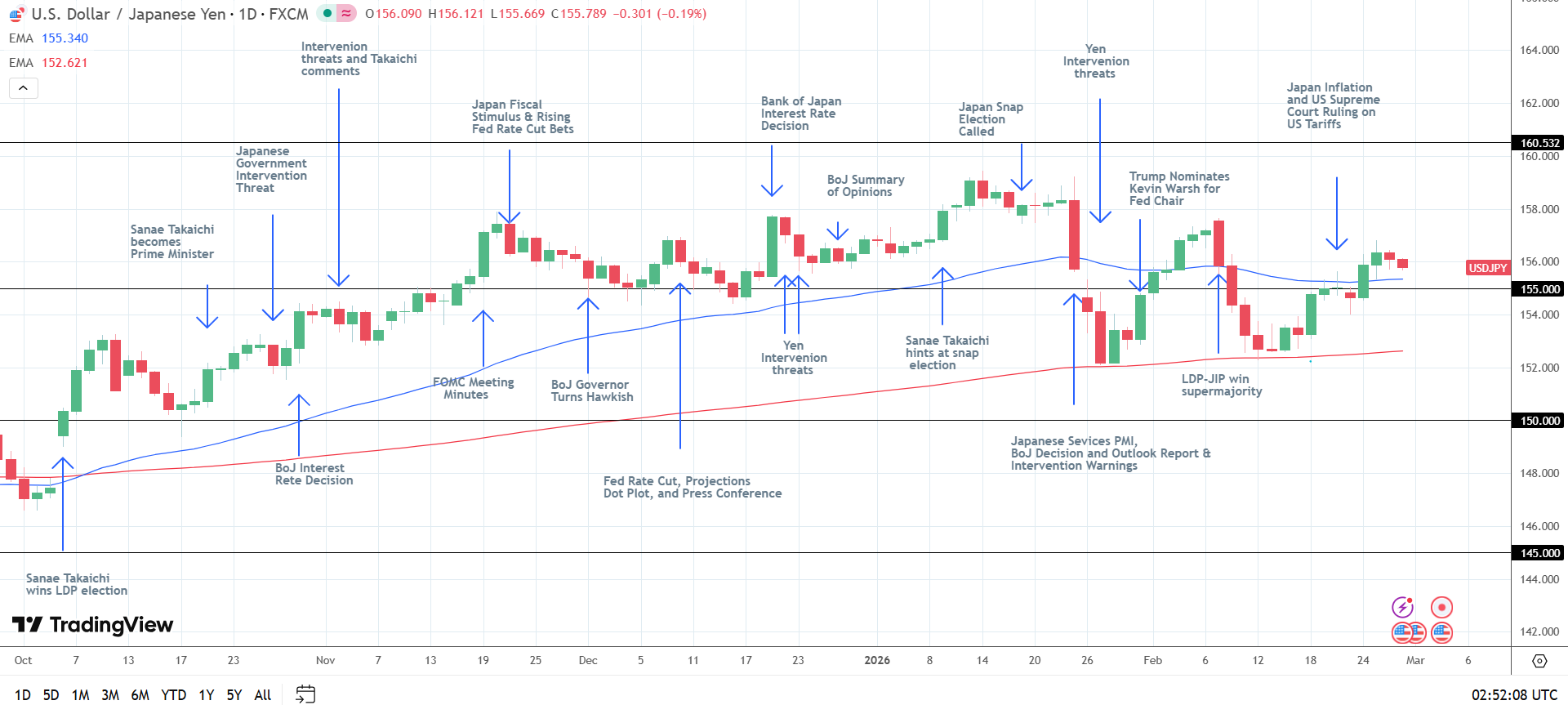
US Inflation, the Fed, and the Middle East in Focus
US futures posted losses during the Asian session on February 27. The Dow Jones E-mini fell 262 points, while the Nasdaq 100 E-mini and the S&P 500 E-mini dropped 66 points and 24 points, respectively.
Later in Friday’s session, US producer prices will influence sentiment toward the Fed policy stance and demand for risk assets. Economists expect producer prices to rise 2.6% year-on-year in January, down from 3.0% in December. Furthermore, economists forecast core producer prices to increase 3.0%, down from 3.3% in December.
Weaker-than-expected numbers would signal a softer inflation outlook, boosting bets on a June Fed rate cut. Lower borrowing costs could lift earnings and stock valuations, supporting the bullish medium-term outlook.
According to the CME FedWatch Tool, the probability of a June Fed cut has fallen from 58.6% on February 19 to 47.8% on February 26, weighing on risk assets. Nevertheless, markets remain optimistic about two Fed rate cuts in 2026, with a year-end target rate of 3.00%-3.25%. A June Fed rate cut remains pivotal to the year-end target rate and the bullish medium- to longer-term outlook for US stock futures.
Key Technical Levels for Dow Jones, Nasdaq 100, and S&P 500
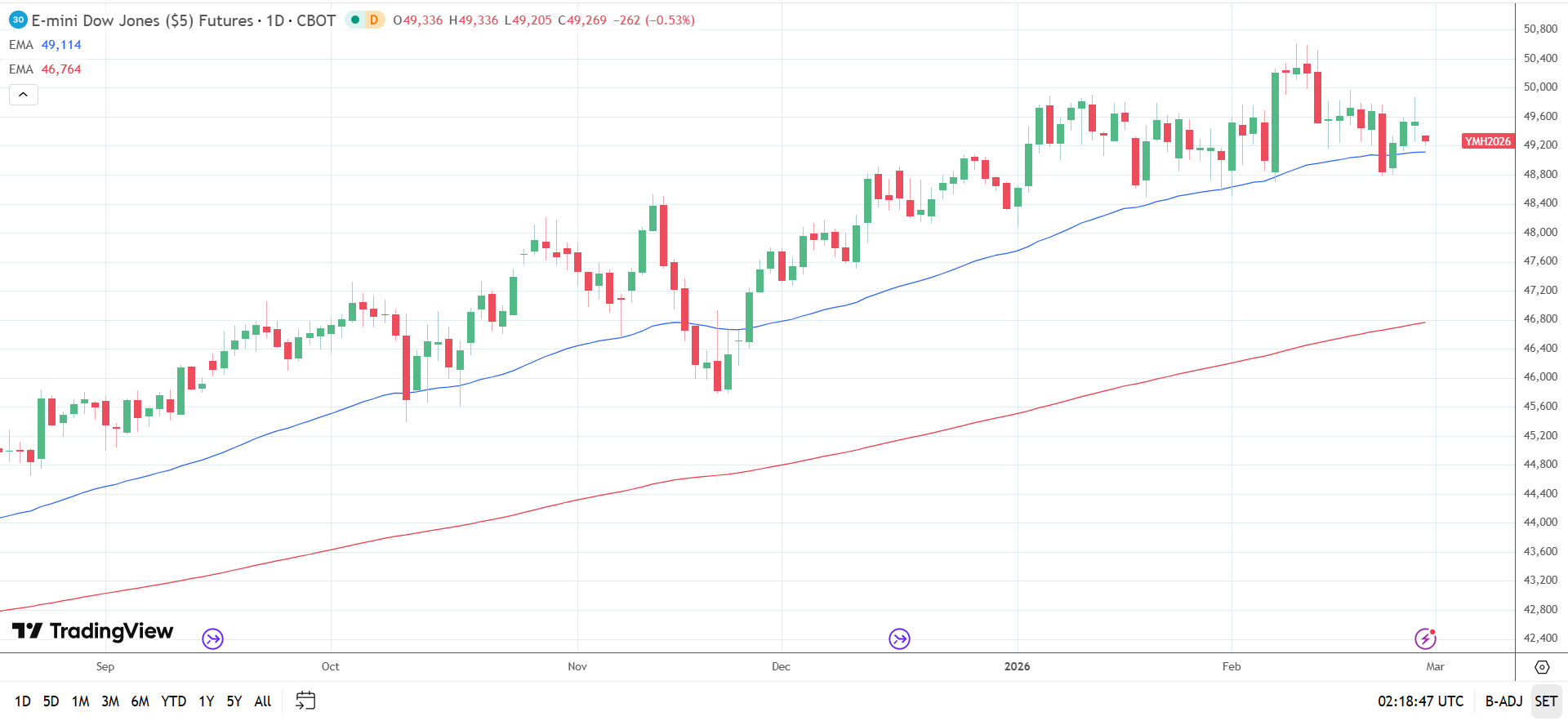
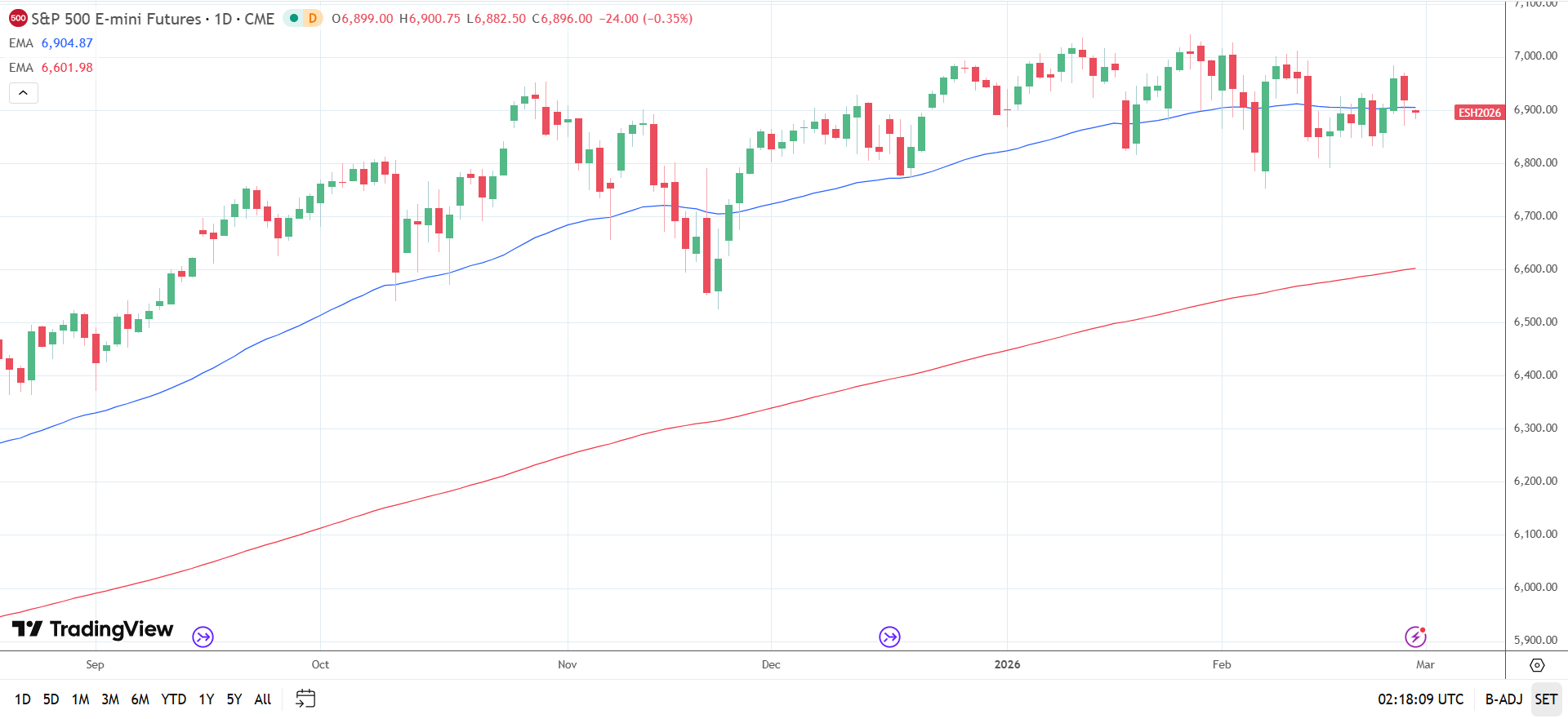
Despite the morning pullback, the Dow Jones E-mini remained above its 50-day and 200-day EMAs. The EMA positions indicate a bullish bias. However, the Nasdaq 100 E-mini and the S&P 500 E-mini traded below their 50-day EMAs, while holding above their 200-day EMAs. The EMA positions indicate a bearish near-term bias, but a bullish longer-term outlook.
Meanwhile, Fed rate cut hopes align with the longer-term technicals and the bullish medium-term projection.
Near-term trends hinge on US economic indicators, Fed chatter, and geopolitical risk in the Middle East. Key levels to monitor include:
Dow Jones
- Resistance: 50,000, the February 10 record high of 50,611, and then 51,000.
- Support: the 50-day EMA (49,114) and then 48,500.
Nasdaq 100
- Resistance: the 50-day EMA (25,293), and then the October 30 record high of 26,399.
- Support: 25,000, 24,500, and then the 200-day EMA (24,184).
S&P 500
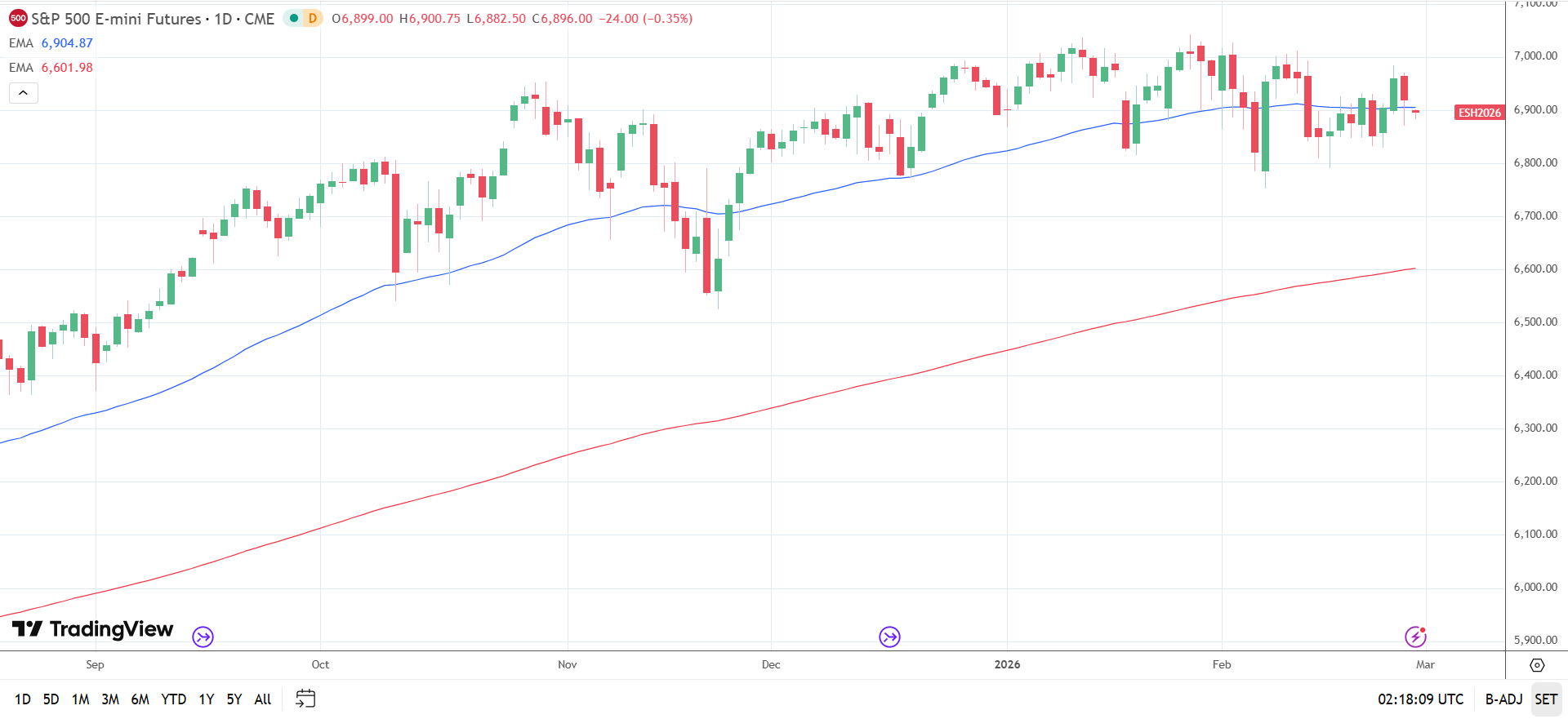
- Resistance: the 50-day EMA (6,905), 7,000, and then the January 13 high of 7,036.
- Support: 6,750, and then the 200-day EMA (6,602).
Outlook: US Inflation-Linked Data and the Fed Key to Bullish Sentiment
In my opinion, the short-term price outlook remains cautiously bullish. Meanwhile, ongoing hopes for a June Fed rate cut reaffirm the bullish medium-term outlook. These favorable fundamentals align with longer-term technicals for US stock futures.
However, several events could likely derail the bullish medium-term outlook, including:
- A US-Iran conflict.
- The Bank of Japan estimates a hawkish neutral rate (1.5%-2.5%). Narrowing rate differentials could trigger a yen carry trade unwind. Such a scenario would invalidate the cautiously bullish short-term outlook.
- US economic data and the Fed cool rate cut bets.
Conclusion: Bullish Bias Remains Intact
In summary, expectations of multiple Fed rate cuts in 2026 and a cautiously hawkish BoJ affirm the medium-term outlook for US stock futures. However, a BoJ or Fed pivot to a more hawkish policy stance would weigh on risk assets. Importantly, bets on multiple Fed rate cuts in 2026 will likely hinge on a June cut, reflecting the significance of incoming US indicators for US stock futures.
Despite the lingering risks of yen carry trade unwinds and a potential US-Iran conflict, US stock futures may strike new highs if the Fed signals a June cut, countering yen carry trade unwind drains, supporting a bullish longer-term outlook.
Follow our live coverage and consult the economic calendar for real-time market updates.