
Market focus shifts to US-Iran talks, weighing on risk sentiment. US stock futures declined during the Asian session on Thursday, February 26, potentially snapping a two-day winning streak, underscoring downside risks for risk assets.
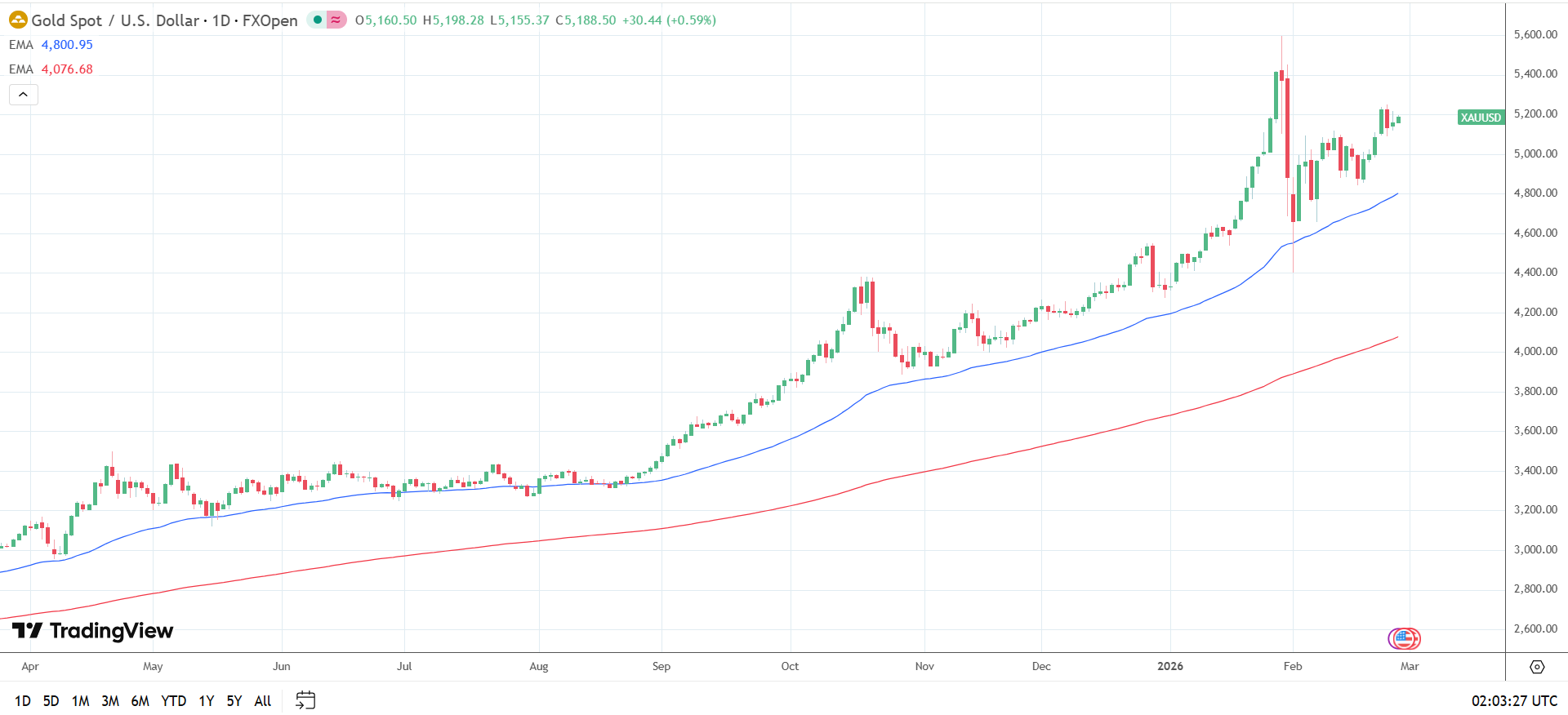
Overnight, Nvidia’s (NVDA) strong earnings forecast for Q1 topped consensus, boosting demand for risk assets. However, the positive sentiment faded as rising tensions in the Middle East weighed on sentiment. Concerns about the potential fallout from failed US-Iran talks fueled demand for safe-haven assets. Gold advanced 0.61% to $5,190 in morning trading.
While risk assets are exposed to rising geopolitical risks, expectations of an H1 2026 Fed rate cut support a bullish medium-term outlook for US stock futures.
Below, I’ll outline the key market drivers, the medium-term outlook, and the technical levels traders should watch.

US-Iran Talks Take Center Stage
The US and Iran are set to meet on February 26, forcing markets to adjust positions in risk assets in the event of failed talks. The third round of talks remains focused on Iran’s enrichment program and ballistic missiles. Last week, President Trump gave Iran 10-15 days to reach an agreement, or face the consequences. A 10-day timeline implies a deal must be reached by March 1.
WTI Crude Oil advanced 0.35% to $65.585 in morning trading, underscoring market jitters about a potential US military strike on key Iranian sites. Significantly, a full-blown US-Iran conflict would likely derail the bullish medium-term outlook.
Dow Jones Price Forecast
Every new Dow Jones analysis as it publishes, today's technical signal and key levels, live price — on one page.
See all Dow Jones forecasts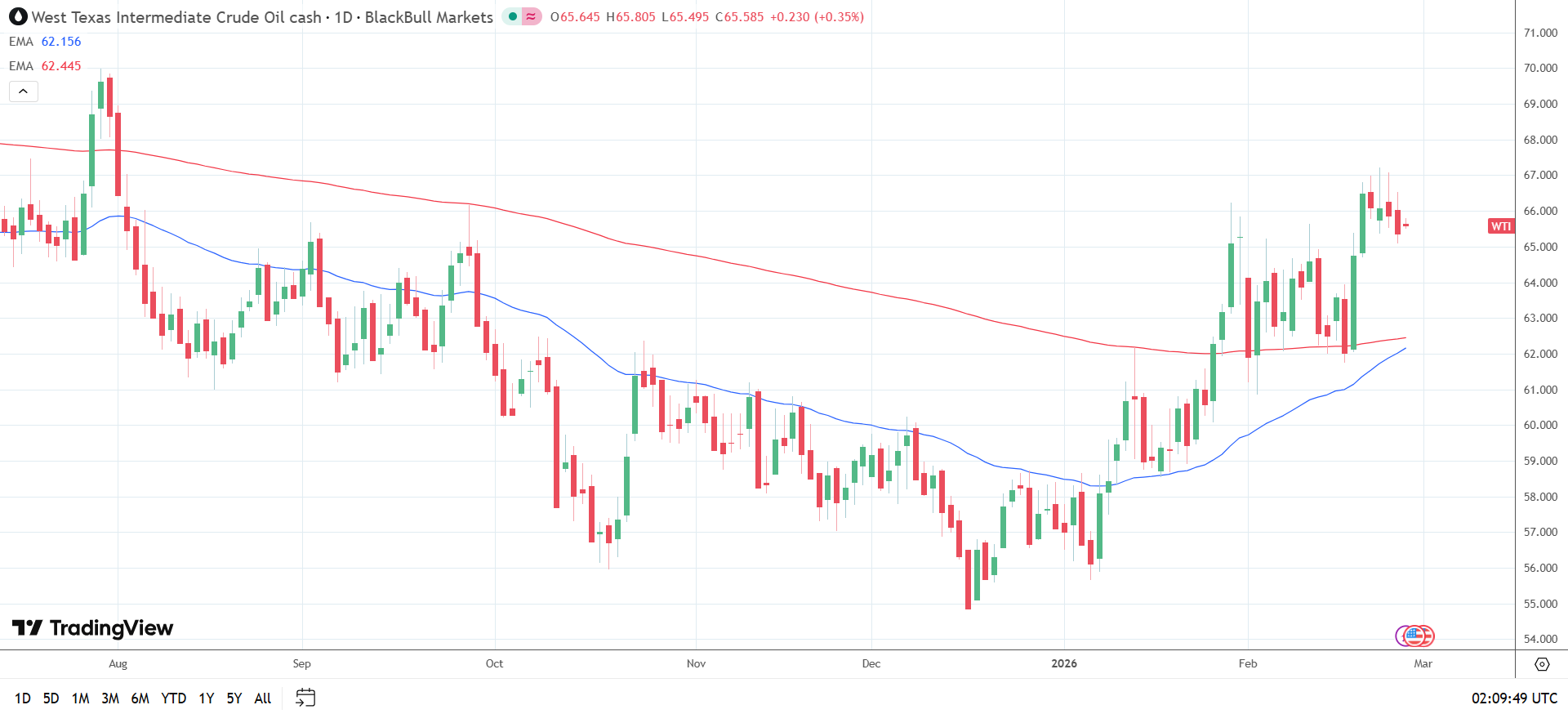
Trump, US Economic Data, and the Fed in Focus
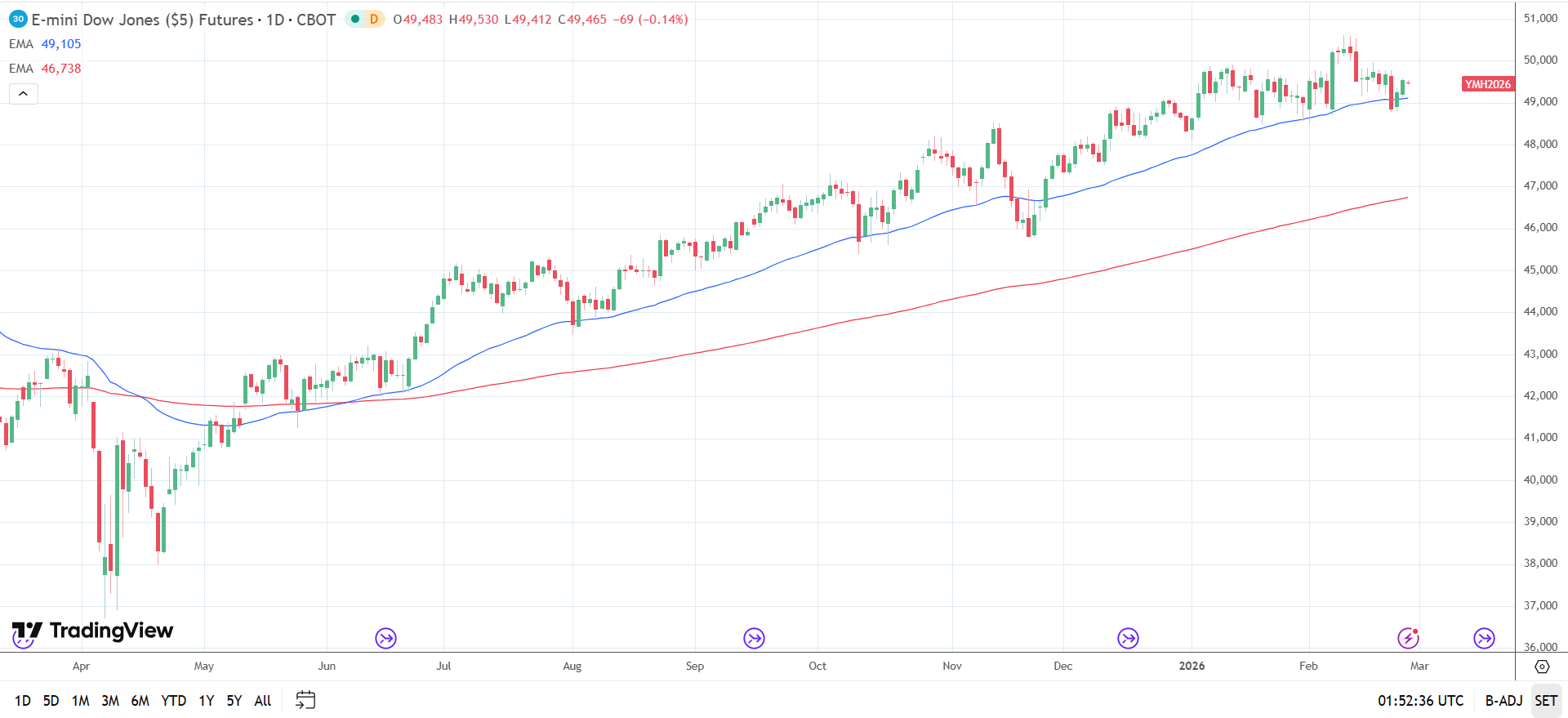
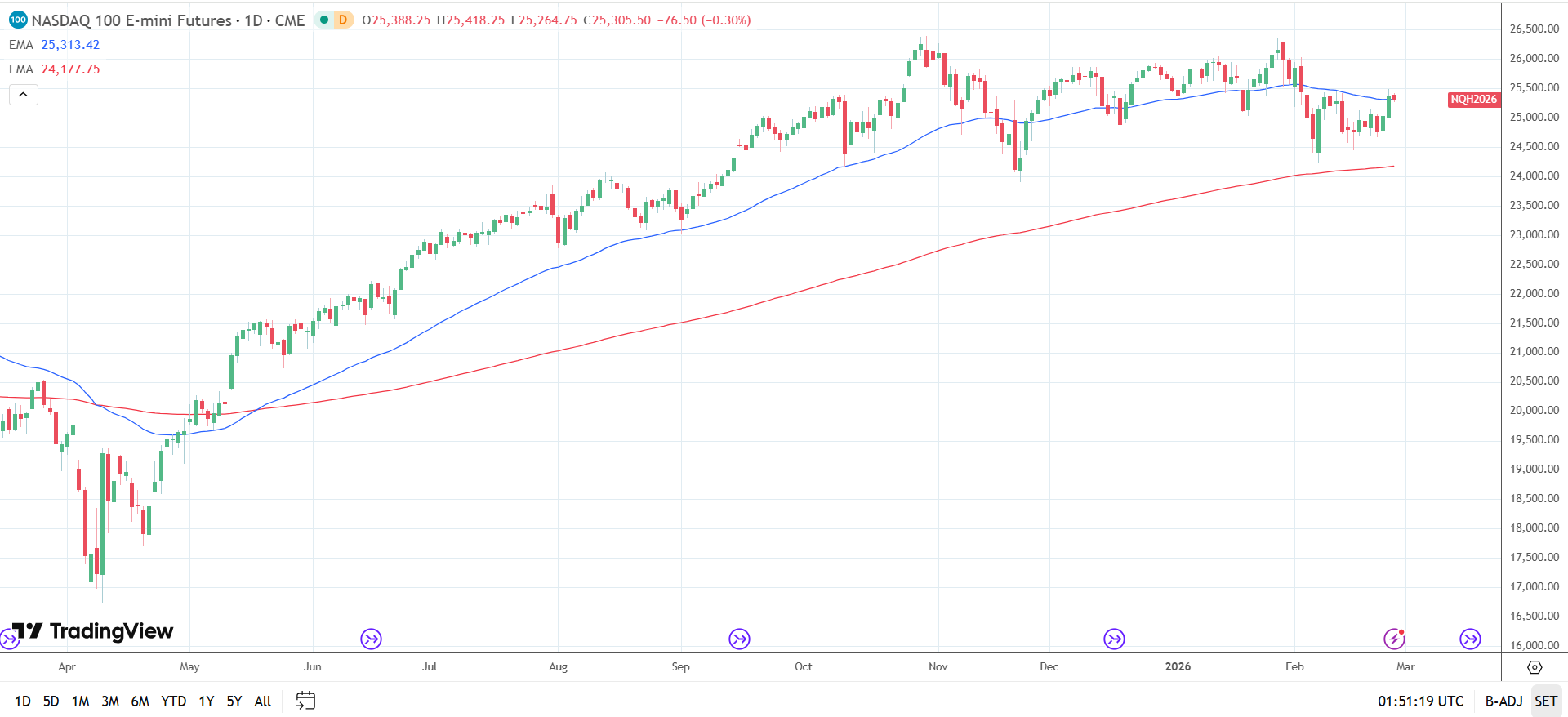
US futures dipped during the Asian session on February 25. The Dow Jones E-mini fell 69 points, while the Nasdaq 100 E-mini and the S&P 500 E-mini declined 77 points and 10 points, respectively.
Later in Thursday’s session, US jobless claims will influence sentiment toward the Fed rate path and risk appetite. Economists forecast initial jobless claims will increase from 206k (week ending February 14) to 215k (week ending February 21).
A lower jobless claims reading would support a more hawkish Fed rate path, weighing on US stock futures. Fading bets on a June Fed rate cut have weighed on demand for US stock futures in early 2026.
According to the CME FedWatch Tool, the probability of a June Fed cut fell from 62.2% on February 18 to 45.2% on February 25, weighing on risk sentiment. Nevertheless, markets continue to price in two Fed rate cuts in 2026, with a year-end target rate of 3.00%-3.25%. However, a June Fed rate cut remains crucial to the year-end target rate and the bullish medium- to longer-term outlook for US stock futures.
Key Technical Levels for Dow Jones, Nasdaq 100, and S&P 500
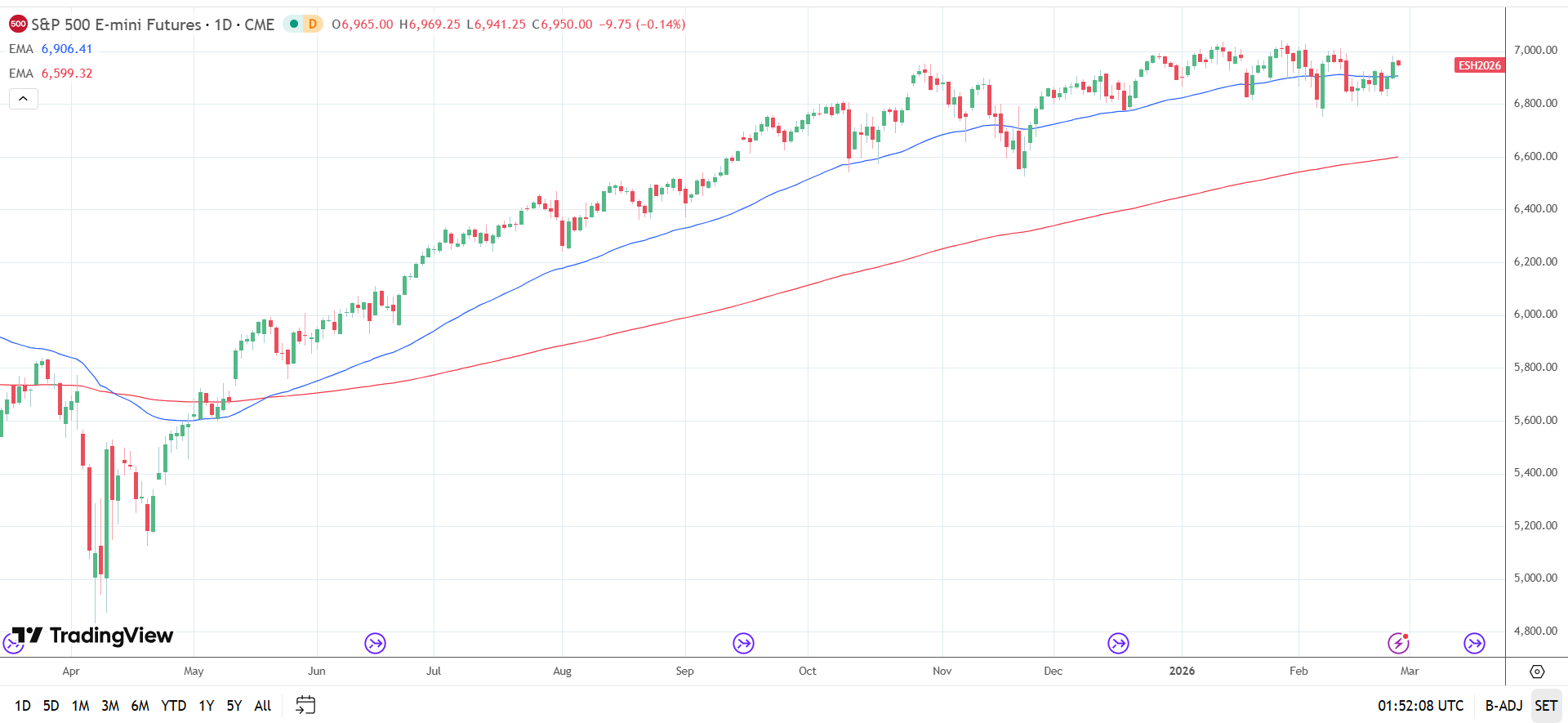
Despite the morning pullback, the Dow Jones E-mini and the S&P 500 E-mini remain above their 50-day and 200-day EMAs. The EMA positions signal a bullish bias. However, the Nasdaq 100 E-mini traded below its 50-day EMA, while holding above its 200-day EMA. The EMA positions indicate a bearish near-term bias, but a bullish longer-term outlook.
The technicals broadly support a cautiously bullish near-term outlook. Rate cut hopes align with the longer-term technicals and the bullish medium-term projection.
Near-term trends hinge on US economic data, Fed rhetoric, and geopolitical risk in the Middle East. Key levels to monitor include:
Dow Jones
- Resistance: 50,000, the February 10 record high of 50,611, and then 51,000.
- Support: the 50-day EMA (49,105) and then 48,500.
Nasdaq 100
- Resistance: the 50-day EMA (25,313), and then the October 30 record high of 26,399.
- Support: 25,000, 24,500, and then the 200-day EMA (24,178).
S&P 500
- Resistance: 7,000 and then the January 13 high of 7,036.
- Support: the 50-day EMA (6,906), 6,750, and then the 200-day EMA (6,599).
Outlook: US Labor Market Data and the Fed Key to Bullish Sentiment
In my opinion, the short-term price outlook remains cautiously bullish. Meanwhile, hopes for a June Fed rate cut reaffirm the bullish medium-term outlook. These positive fundamentals align with longer-term technicals for US stock futures.
However, several scenarios could likely challenge the bullish medium-term outlook, including:
- A full-blown US-Iran conflict.
- The Bank of Japan declares a higher-than-expected neutral interest rate (hawkish: potentially 1.5%-2.5%). Narrowing rate differentials could trigger a yen carry trade unwind as seen in mid-2024. Reduced liquidity would weigh on US risk assets. Such a scenario would invalidate the cautiously bullish short-term outlook.
- US economic indicators and the Fed dampen rate cut bets.
Conclusion: Bullish Bias Remains Intact
In summary, ongoing expectations of multiple Fed rate cuts in 2026 and a cautiously hawkish BoJ support the medium-term outlook for US stock futures. However, a BoJ or Fed pivot to a more hawkish rate path would weigh on risk assets. Importantly, bets on multiple Fed rate cuts in 2026 will likely hinge on a June cut, underscoring the importance of incoming US indicators for US stock futures.
Despite the risks of yen carry trade unwinds and a potential US-Iran conflict, US stock futures may strike new highs if the Fed signals a June cut. Lower borrowing rates would increase market liquidity, countering yen carry trade unwind drains, supporting a bullish longer-term outlook.
Follow our live coverage and consult the economic calendar for real-time market updates.