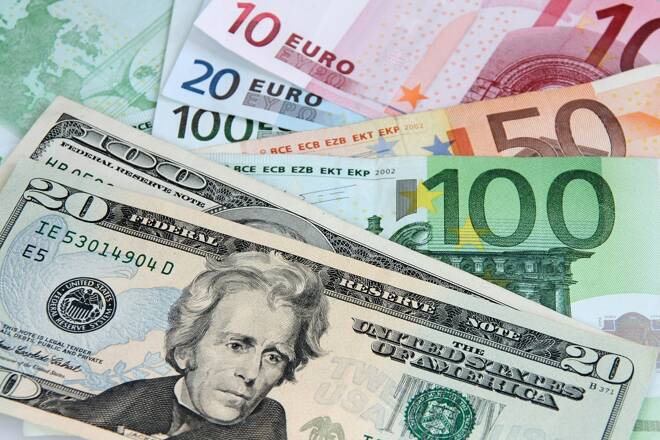
Amid EUR/USD fluctuations, German inflation rates and IMF meetings become the market focal points before US inflation numbers and Fed minutes.
On Tuesday, the EUR/USD gained 0.37%. Reversing a 0.17% loss from Monday, the EUR/USD ended the day at $1.06051. The EUR/USD fell to a low of $1.05543 before reaching a high of $1.06197.
Finalized German inflation figures for September drew investor interest on Wednesday. The German annual inflation rate softened from 6.1% to 4.5% vs. a prelim 4.5%.
According to Destatis,
The softer inflation figures supported ECB plans to leave interest rates unchanged. However, inflation remains elevated relative to target, forcing the ECB to keep rates higher for longer at the expense of the euro area economy.
Higher interest rates increase borrowing costs, leading firms to reduce staff and wages. Reduced disposable income can make consumers limit non-essential spending, affecting the euro area economy. With private consumption making up over 50% of the Eurozone GDP and the services sector over 70%, a decrease in spending impacts the economy significantly.
On Tuesday, the IMF downwardly revised growth forecasts for China and the Eurozone.
A weaker Eurozone economic outlook, elevated inflation, and higher for longer ECB interest rates will likely further impact the economy. The trajectory looks precarious for the EUR/USD, with the Middle East conflict another consideration for investors.
ECB President Lagarde is on the ECB calendar to speak on Wednesday. Comments relating to the IMF forecasts and interest rates will influence the EUR/USD.
The ECB Consumer Expectations Survey is also crucial. It could raise recession concerns if consumer expectations decline regarding income, labor, and the economy. A significant drop in consumer sentiment may offset the impact of dovish Fed remarks on the EUR/USD.
US producer prices will capture investor attention on Wednesday. A significant increase might challenge beliefs about the Fed pausing rate hikes. Higher producer prices affect consumer prices. A tight labor market boosts consumer spending, leading to demand-driven inflation. This report comes before the crucial US CPI Report.
With inflation in the spotlight again, FOMC member commentary also warrants consideration. FOMC members Christopher Waller and Raphael Bostic will speak before the Fed releases the FOMC meeting minutes.
The IMF upwardly revised the US growth forecast for 2023. A pickup in inflationary pressures could reignite bets on a Fed rate hike.
US inflation numbers, the IMF economic forecasts, and uncertainty about the Middle East conflict may return the EUR/USD to sub-$1.05. Near-term direction likely hinges on forward guidance and geopolitics.
The EUR/USD sat below the 50-day and 200-day EMAs, affirming bearish price signals.
A EUR/USD break above the $1.06342 resistance level would support a move toward the 50-day EMA.
Central bank commentary, news updates from the Middle East, and US producer prices will be pre-Fed minutes focal points.
Hawkish Fed commentary and a larger-than-expected rise in consumer prices may bring the $1.05230 support level into play. A break below the support level would give the bears a run at $1.05.
The 14-period Daily RSI, standing at 46.88, suggests that the EUR/USD could fall through the $1.05230 support level before entering oversold territory.
The EUR/USD hovers above the 50-day EMA while remaining below the 200-day EMA, sending bullish short-term but bearish longer-term price signals. A EUR/USD break above the $1.06342 resistance level would support a move to the 200-day EMA.
However, a fall through the 50-day EMA would bring the $1.05230 support level into play.
The 14-period RSI on the 4-hour chart, 60.39, indicates that the EUR/USD could break above the $1.06342 resistance level before entering overbought territory.
With over 28 years of experience in the financial industry, Bob has worked with various global rating agencies and multinational banks. Currently he is covering currencies, commodities, alternative asset classes and global equities, focusing mostly on European and Asian markets.