The gold (XAU) and silver (XAG) prices responded swiftly to the new tensions in the Middle East. The global markets became more uncertain with the announcement of a U.S. naval blockade. The risk sentiment deteriorated, and investors shifted to safe-haven assets. However, gold and silver open with a gap downside and consolidate below key levels on Monday.
The WTI Oil (CL) and Brent Oil (BCO) open with a gap upside and trade above $104. The recent escalation in the Middle East and the supply disruptions indicate that oil prices are heading to $150.
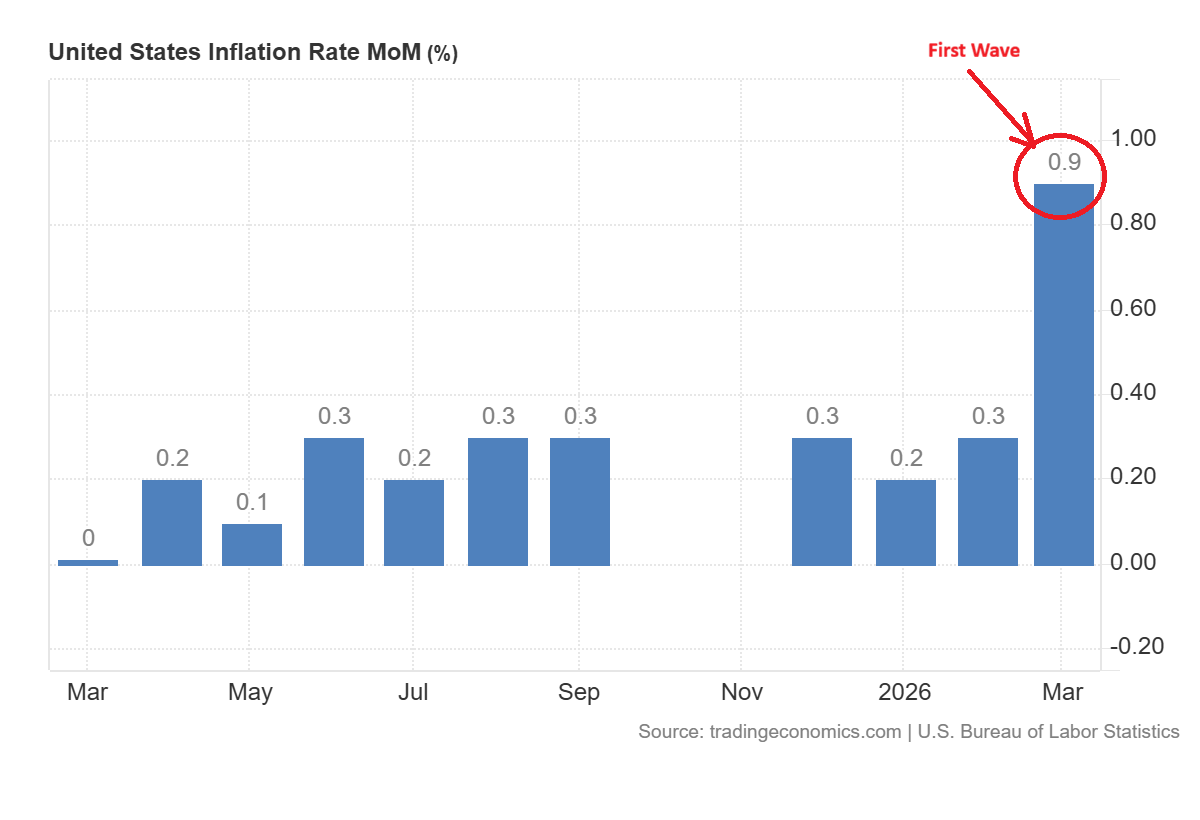
These higher expectations of oil prices indicate inflationary pressure in global economies. Energy prices are passed on to transport, production and consumer prices. This puts pressure on gold as a store of value in the face of inflation. The first wave of inflation was already observed as the CPI surged to 0.9% in March 2026 as seen in the chart below. The series of inflation waves during the US-Iran war is discussed here.
On the other hand, silver demand will be determined by the strength of industrial demand as costs increase. At the same time, recession risks started to build in the background. An extended Strait of Hormuz blockage can slow the growth of the major economies. Under these circumstances, gold will benefit from fear and declining real yields. However, the first impact of the rising oil prices might be negative on gold and silver prices.

Gold Price Analysis – Key Levels and Resistance in Focus
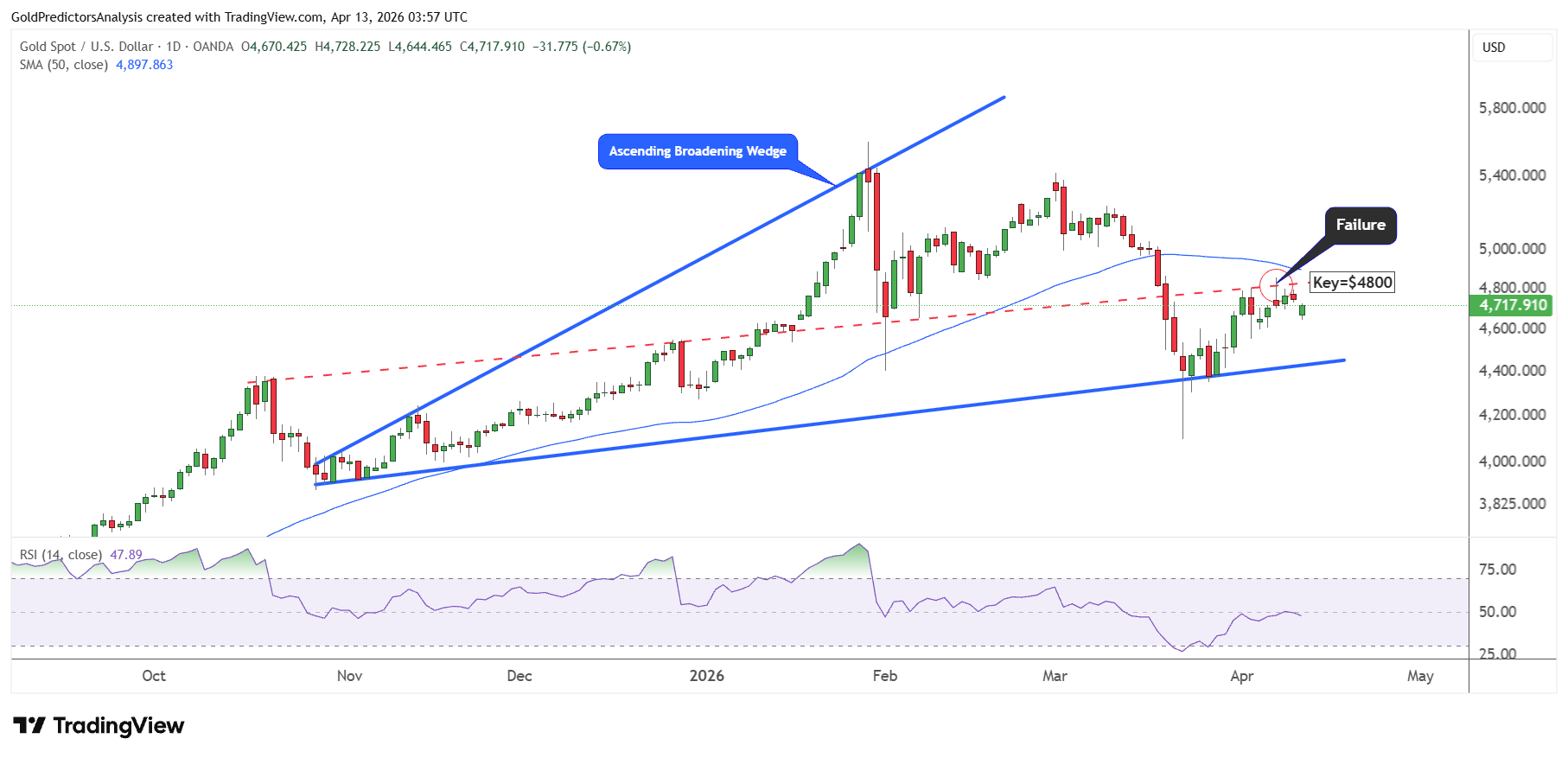
The daily chart for spot gold shows that the price failed to break above $4,800 and dropped lower. The failure of the US-Iran ceasefire deal put further pressure on the gold price, and gold opened lower below $4,700.
As long as the price remains below $4,800, the gold price may consolidate between $4,400 and $4,800.
On the other hand, the RSI is also fluctuating below the mid-level, which keeps strong resistance in the gold market at $4,800.
The 4-hour chart for spot gold also shows strong consolidation above the red highlighted area at $4,400. A break above $4,800 will push spot gold to the $5,000 area, and a break above $5,000 will likely convert the sideways trend to a bullish trend in the gold market.
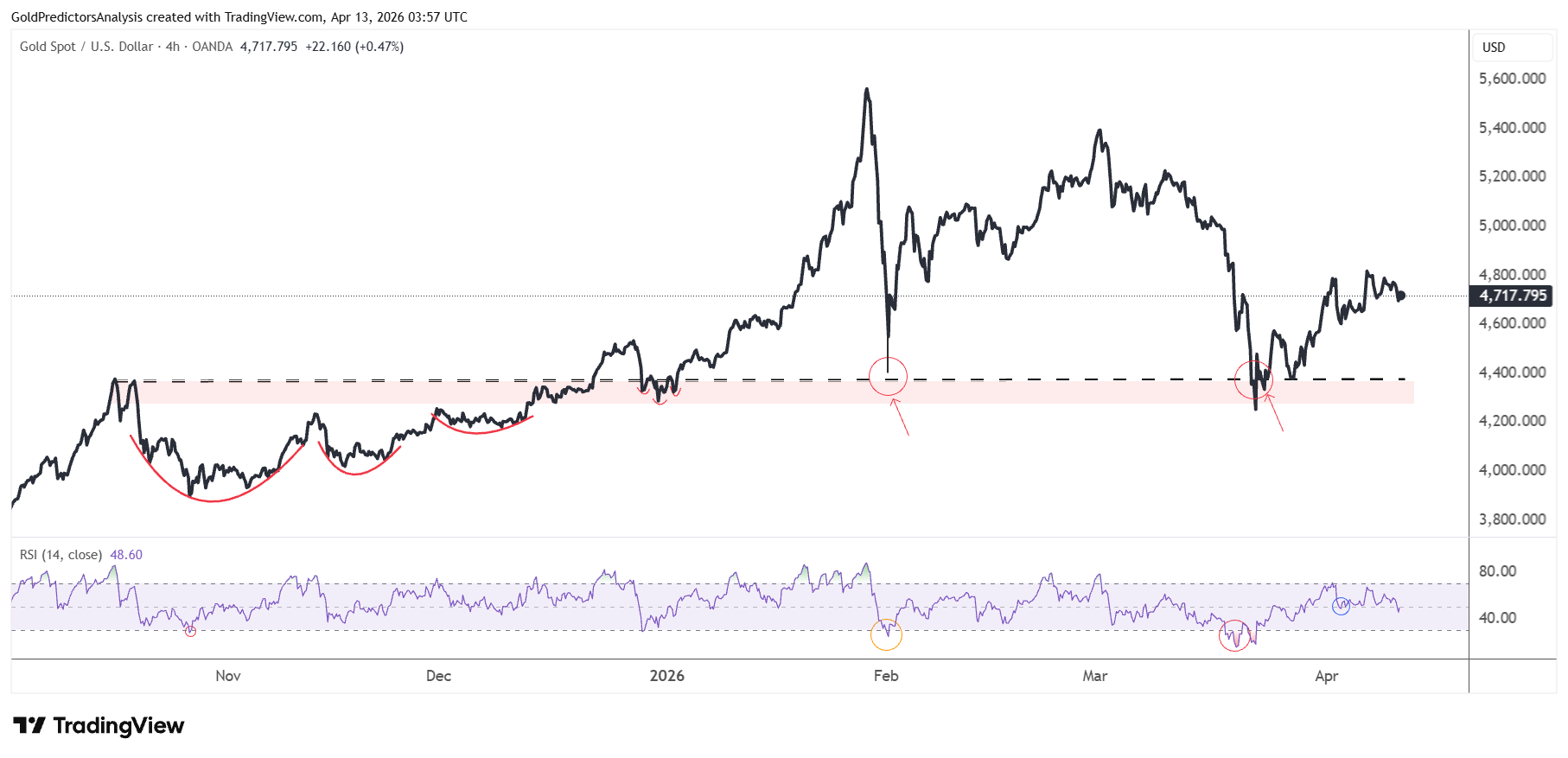
The overall price structure in gold has remained strongly bullish since the last quarter of 2025. As long as the price remains above $4,000, the next move in the spot gold will likely be towards the $6,000 area.
Gold Price Forecast
Every new Gold analysis as it publishes, today's technical signal and key levels, live price — on one page.
See all Gold forecastsSilver Price Analysis – Consolidation Within a Bullish Structure
The daily chart for spot silver also shows strong consolidation above the $72 area after rebounding from the major support zone of $60. As long as the silver price remains above the $72 level, the next move in silver might be higher. However, another push towards the orange and red zone area will likely offer the last buying opportunity in the silver market.
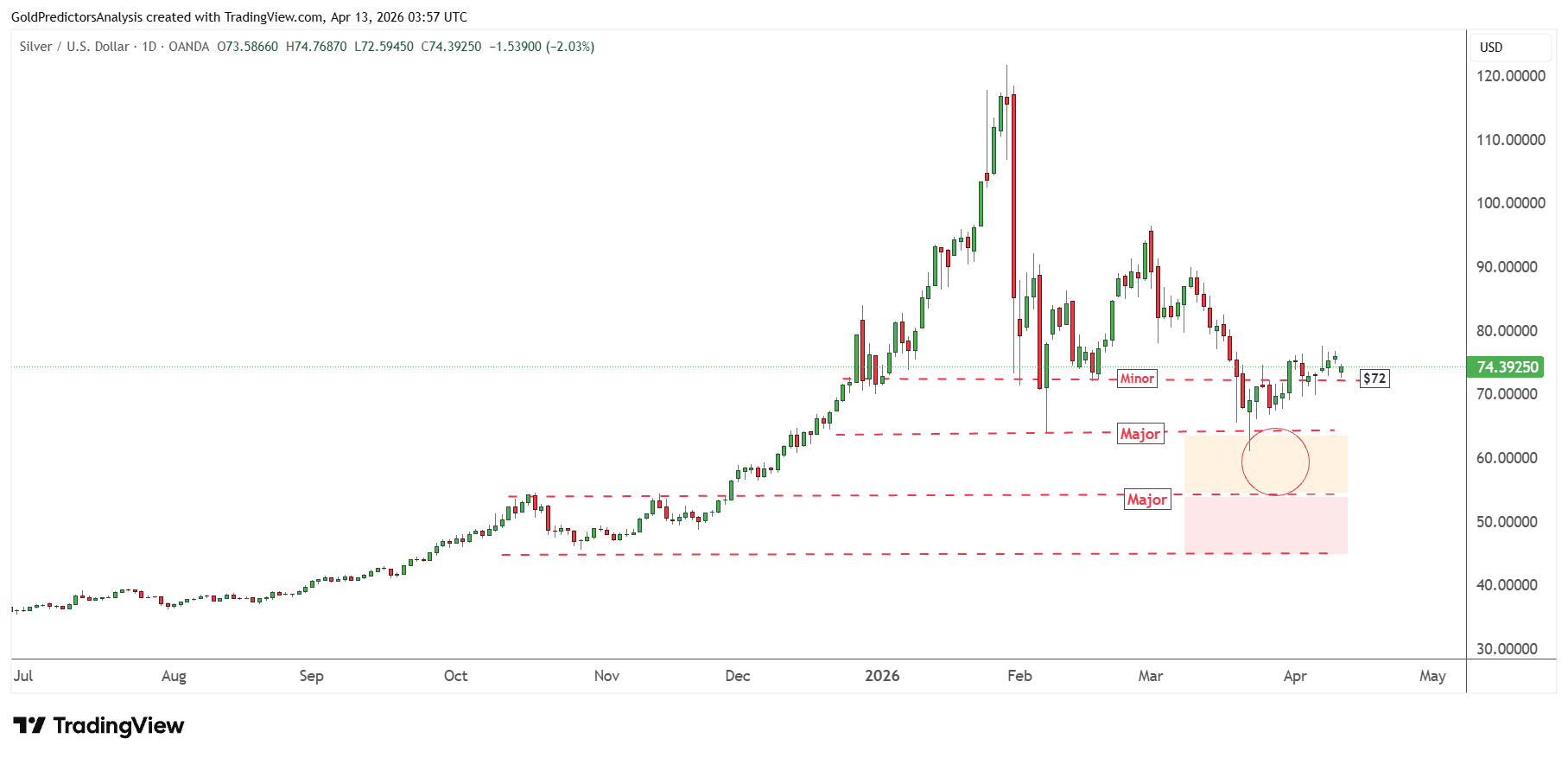
As long as silver remains below $100, prices may consolidate in a wide range. However, a break above $100 will indicate that a bottom is formed, and the price will likely push to new record levels.
The 4-hour chart for spot silver shows strong consolidation within the borderline of the ascending broadening wedge pattern. The red highlighted zone around the support line of the ascending broadening wedge pattern indicates that the silver price remains below the levels seen when the Fed held rates during the latest meeting.
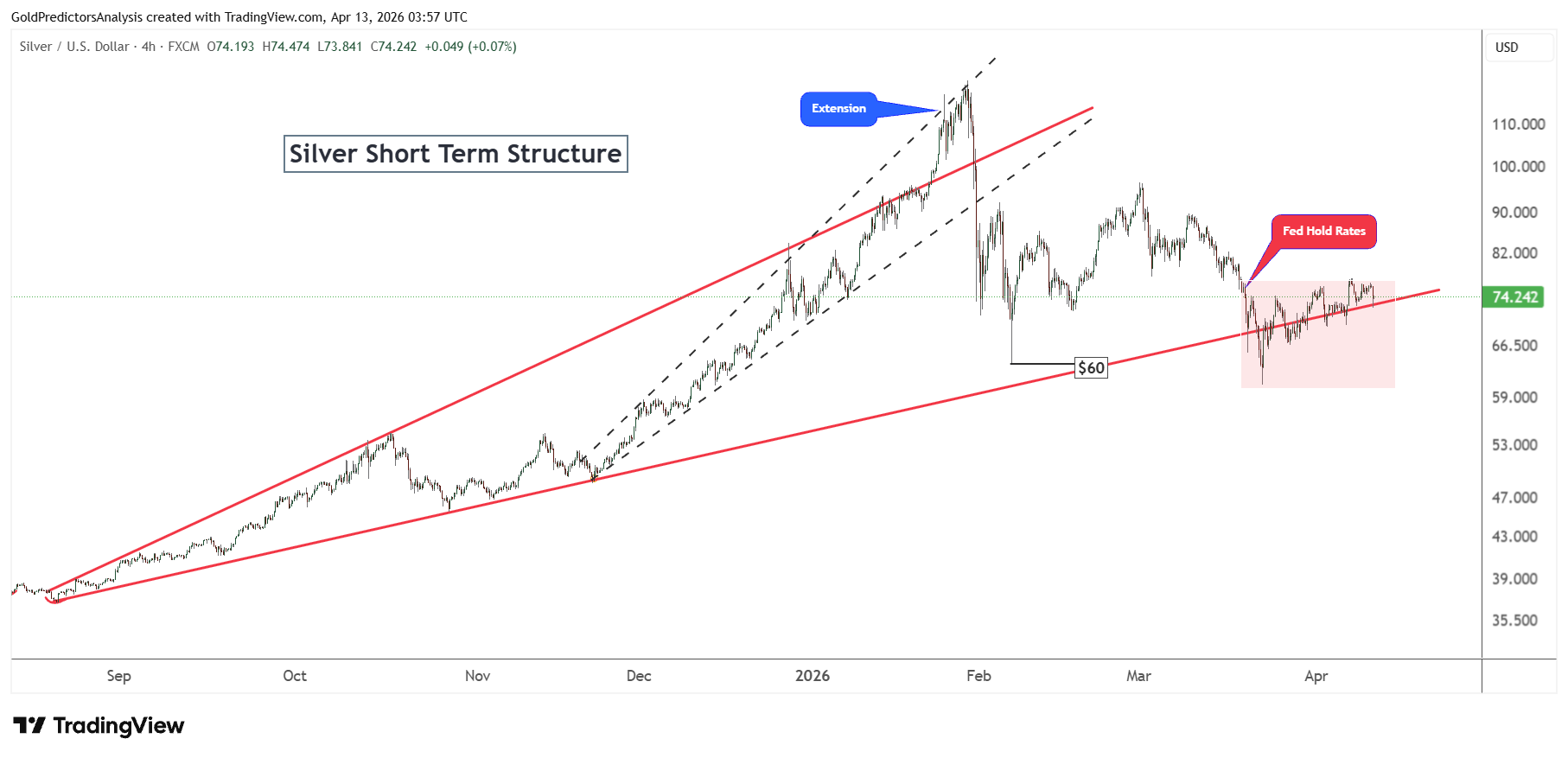
As long as silver remains above $60, the structure still suggests an upward move. However, silver may show consolidation in the short term and build a base before the next move higher.
Bottom Line
Gold and silver are vulnerable to geopolitical tensions and an increase in oil prices. The rising cost of energy is exerting pressure on inflation and creating uncertainty in the global markets. Both metals can remain under pressure in the short run with the change of volatility and risk sentiment. However, the bigger gold framework is strongly bullish and is backed by inflation and safe haven demand. Silver can move with gold and will also be influenced by the industrial demand. Both metals can stabilize and make the next move higher as long as the $4,000 in gold and $50 in silver hold.
If you’d like to know more about how to trade gold and silver, please visit our educational area.