Dollar Slipped and Gold Grabbed Its First Real Bid in Weeks
Spot Gold settled at $4,088.39 Friday, up $61.47 or 1.53%. August Comex gold futures finished at $4,096.30, up $48.70 or 1.20%. The rally came after the metal hit its lowest level in more than seven months earlier in the week when it briefly broke to $3,959.08. Friday was the best session in weeks but the weekly picture still tells the bearish story. Gold lost roughly 2.1% for the week and this is the fourth consecutive weekly decline.
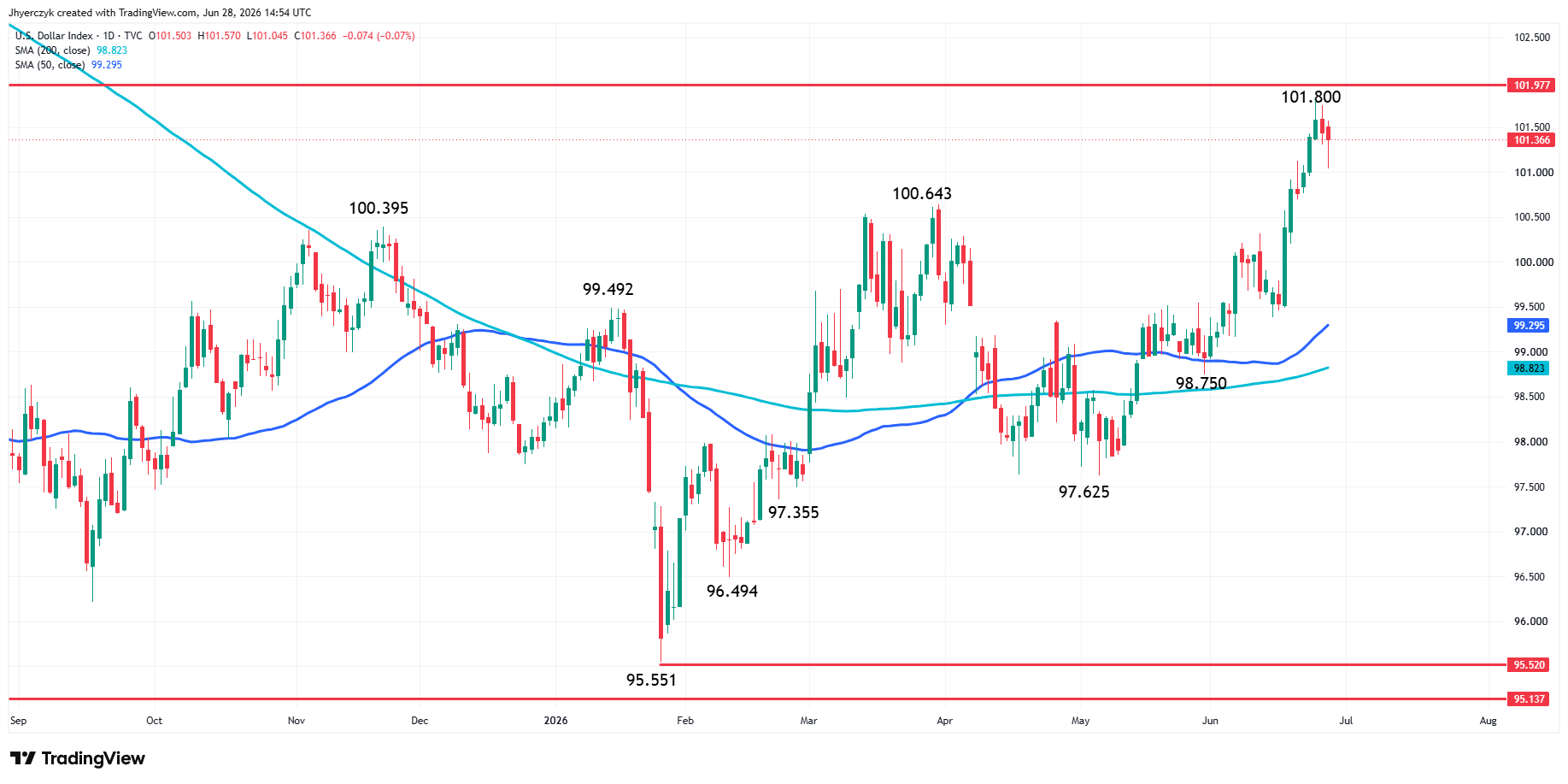
The dollar pulling back for a second straight session opened the door. Falling crude oil took some of the inflation urgency out of the rate conversation. The September hike probability on CME FedWatch dropped to about 59% from roughly 64% earlier in the week. That combination was enough for buyers to step back in after weeks of one-directional selling. Whether they stay depends on what happens to the dollar and rate expectations next week.

The PCE Number Did Not Make Things Worse
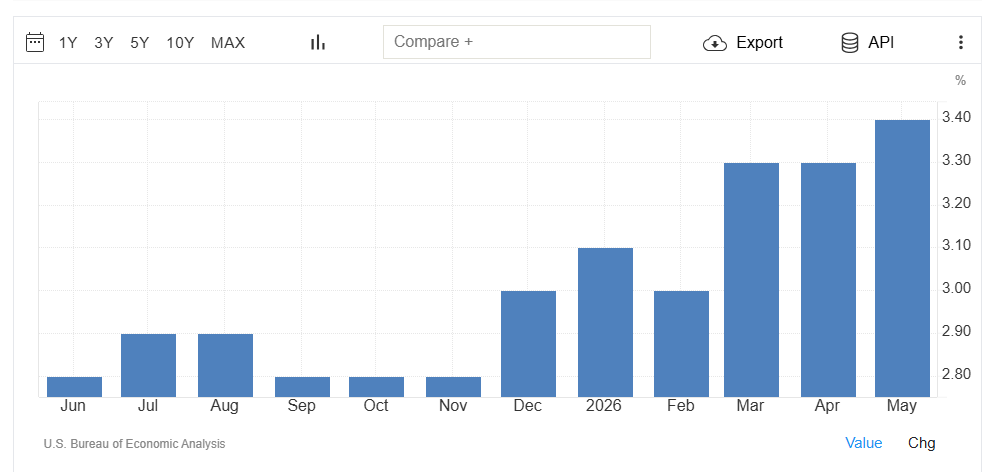
The May PCE Price Index came in at 4.1% year over year, matching expectations. For a gold market that had been selling on every piece of data that confirmed the Fed’s hawkish stance, an in-line print was enough to stop the bleeding. The number did not justify easing. But it did not give the hawks fresh ammunition either and after four weeks of selling, gold traders took what they could get.
The September hike probability dropping from 64% to 59% is not a dramatic shift. But for a metal that has been trading inversely to rate expectations all year, five points in the right direction was enough to trigger the first meaningful short-covering rally since the selling started. The move from the weekly low at $3,959.08 to Friday’s settle at $4,088.39 was $129 in a few sessions. That is the kind of snap-back that happens when positioning gets stretched on one side and the data stops confirming the trade.
India Bought the Dip but China Did Not Show Up
Gold traded at a premium in India for the first time in about six weeks. The price correction from January’s record above $5,600 down to the $3,959 level brought Indian buyers back into the market. Lower prices attract physical demand in India and that buying provides a floor during selloffs even when the macro picture is working against the metal.
China was the other side of the story. Demand remained subdued from the world’s largest gold consumer. When India is buying and China is not, the physical support is real but one-sided. A full recovery in physical demand requires both markets participating. Friday’s rally was driven by the dollar and rate expectations. The physical bid from India helped but it was not the catalyst.
Gold Price Forecast
Every new Gold analysis as it publishes, today's technical signal and key levels, live price — on one page.
See all Gold forecastsTD Securities noted that gold continues to trade inversely to both the dollar and oil prices. Lower crude supported gold this week by easing the inflation argument that has been powering the rate hike conversation. If oil turns back higher or the dollar recovers, that support goes with it.
The Weekly Picture Is Still Four Losses in a Row
Friday’s 1.53% gain does not change the structure. Four consecutive weekly losses and a 30% decline from the January high above $5,602.23 is not a pullback in a bull market. That is a repricing of the rate outlook. The Fed projected higher rates. Kashkari said he expects a hike this year. The dot plot showed nine of eighteen policymakers expecting tighter policy in 2026. Gold has been adjusting to that reality week by week and Friday’s bounce happened because the selling pace finally exceeded what the data justified.
The dollar remains the swing factor. It pulled back from recent highs but it is still near its strongest level in more than a year. Any resumption of dollar strength puts gold back under pressure immediately. The rate picture has not changed. Policy is still restrictive and the Fed has not signaled that the tightening cycle is over. Gold caught a bid Friday because the data stopped getting worse, not because it started getting better.
Daily Spot Gold (XAUUSD) Technical Analysis
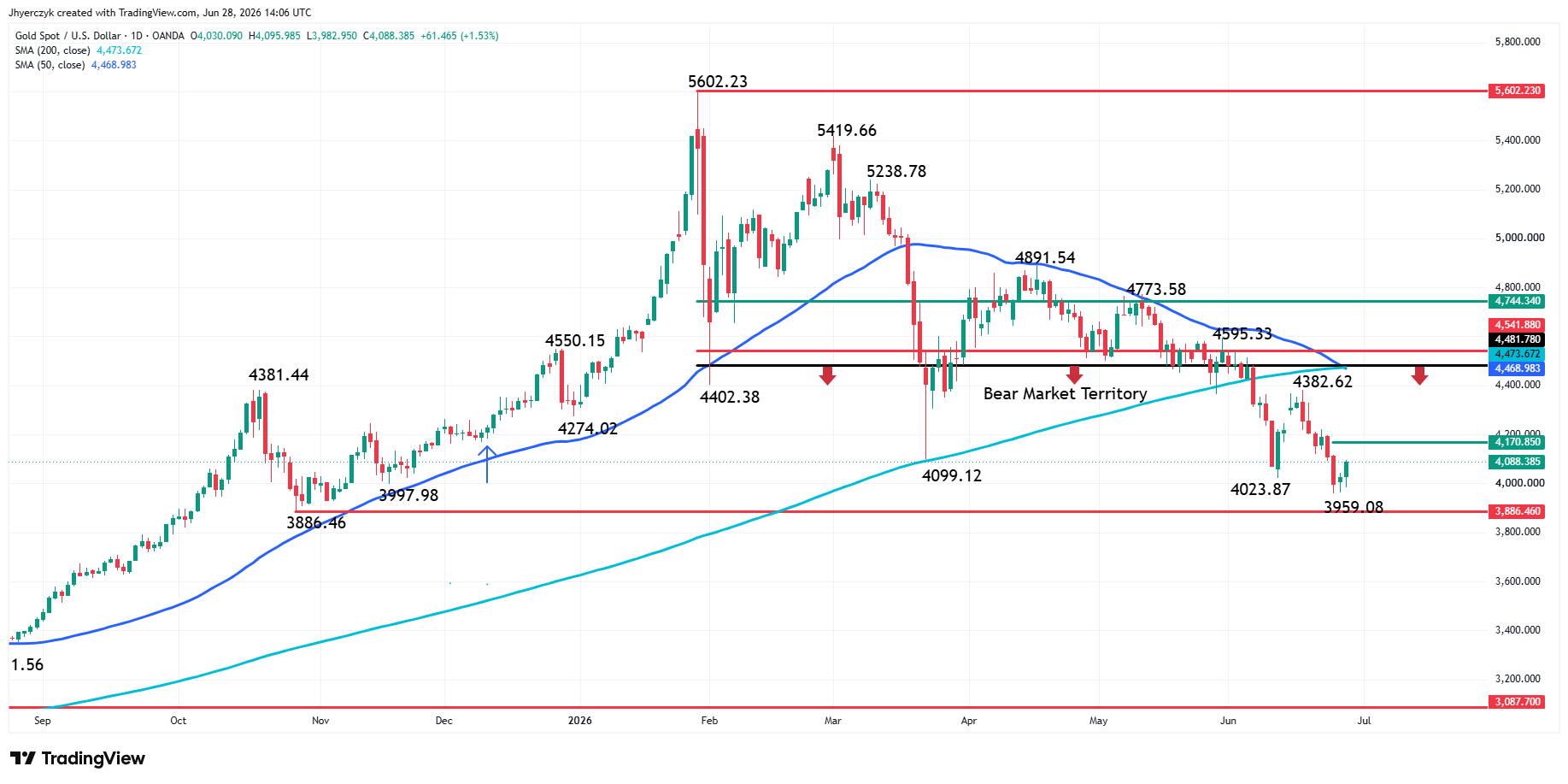
Spot gold ended the week in a downtrend. A trade through $3959.08 will reaffirm the trend, while a move through $4382.62 changes the trend to up. In between this bottom and top is the 50% level at $4170.85. This is potential resistance and a short-term pivot. I’m looking for selling pressure to resume on the first test. However, overtaking it will indicate there may be more short-covering coming.
The key area to watch on the upside is the cluster formed by the 50-day moving average at $4468.98 and the 200-day moving average at $4473.67. Currently, it’s resistance. In fact, the 50-day MA has crossed under the 200-day MA, which in some circles is called a Death Cross. A trade through both moving averages could set off a strong rally.
On the downside, the October 28 main bottom at $3886.46 appears to be a potential trigger point for an acceleration to the downside, or the start of another leg lower. The nearest support under this price level is $3087.70.
What to Watch
Friday’s rally started with the dollar and lived on the five-point drop in September hike odds. If the dollar resumes climbing next week or the next round of data pushes hike probability back above 64%, this bounce stalls at the 50% level at $4,170.85 and the sellers return. The technicals are already looking for selling pressure on the first test of that pivot.
India is buying the dip. China is not. That one-sided physical support can slow the decline but it cannot reverse a move driven by the Fed and the dollar. Gold needs the rate hike conversation to end before the trend changes.
Four weekly losses and a death cross on the moving averages say the market has not heard that message yet. The $3,886.46 level underneath is the trigger for acceleration if the bounce fails. The moving average cluster at $4,468.98 to $4,473.67 is where the trend conversation changes if the bounce holds. Everything between those two levels is a range trade driven by whatever the dollar and the Fed do next.
If you’d like to know more about how to trade gold, please visit our educational area.