
Gold Lost 4% Since the Fed Meeting and the Selling Is Accelerating
Spot Gold is trading $4,052.37, down $58.37 or 1.42% at 11:12 GMT Wednesday, hitting its lowest level in nearly two weeks. The metal has now dropped more than 4% since last week’s Fed meeting. The selling is not slowing down. It is picking up speed as the dollar pushes to a 13-month high and rate hike expectations keep climbing.
A week ago traders were pricing in one rate hike this year. As of Wednesday the market is pricing three. That repricing has happened in five sessions and gold has been on the wrong side of every one of them.

Three Hikes Changed Everything
The move from one expected hike to three in less than a week is the fastest repricing of Fed policy gold has faced this year. The committee held rates at 3.50% to 3.75% under Federal Reserve Chair Kevin Warsh on June 17 and the market has been recalculating ever since. Every session since that meeting has added to the selling and Wednesday’s 1.42% decline says the adjustment is not finished.
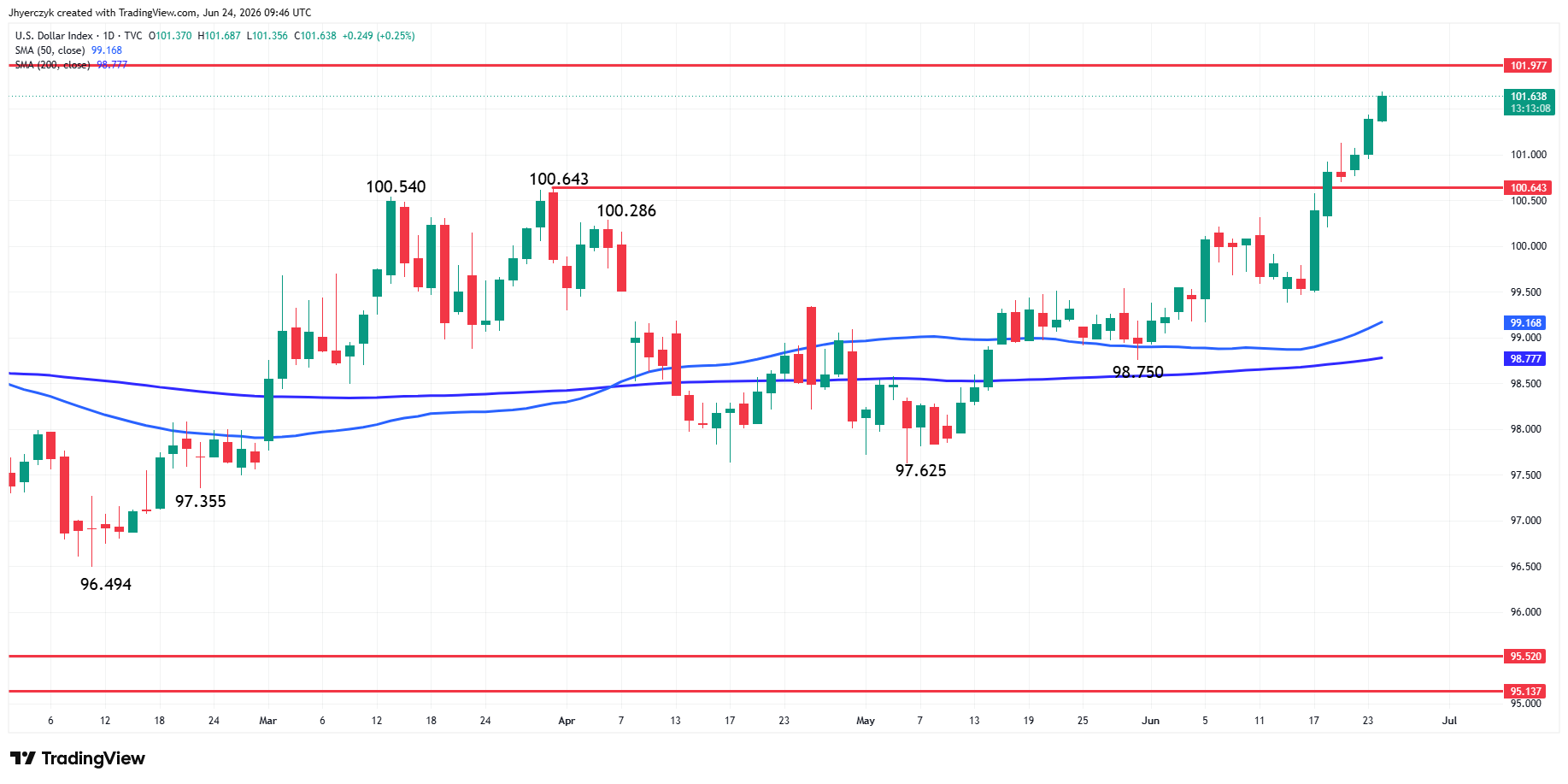
The dollar at a 13-month high is compounding the damage. The strong dollar and weak ETF demand are both working against gold. Holdings eased in May and the outflows have not reversed. That is two sources of selling pressure with no offset and the price action confirms it.
Central Banks Are Buying but It Is Not Enough
Central bank purchases continued at a steady pace through May and that has been the strongest structural support for gold over the past several years. The official sector is still accumulating and analysts expect that buying to continue at current price levels.
Standard Chartered noted that the relationship between gold and its traditional drivers, the dollar and real interest rates, is reasserting itself. The firm said structural factors including central bank buying and regional stock market dislocations around the world remain the primary medium-term support. But in the short term, the dollar and rate expectations are running the show and central bank purchases are not large enough to offset the institutional selling coming from the repricing.
Gold Price Forecast
Every new Gold analysis as it publishes, today's technical signal and key levels, live price — on one page.
See all Gold forecastsIn my opinion, the near-term risks will stay tilted to the downside as long as the rate hike probability keeps climbing. Central banks provide a floor but they do not set the direction when the macro picture is moving this fast against the metal.
Iran Headlines Are Not Reaching the Price
President Trump said Tuesday that Iran agreed to indefinite nuclear inspections. Tehran denied it immediately. The kind of diplomatic uncertainty that would normally produce a bid in gold is being completely overridden by the rate trade.
The market is not treating gold as a geopolitical asset right now. It is treating it as a rate asset and the rate picture is getting worse every session. Until the macro pressure eases, headlines from the Middle East are not going to change the direction of this trade.
The 50-Day Is About to Cross the 200-Day
The 50-day moving average at $4,499.94 is closing in on the 200-day at $4,470.14. If the short-term average crosses below the long-term average, the technical signal confirms what the price action has been saying since the Fed meeting. The downtrend is accelerating and the selling pressure could intensify once that crossover triggers.
Both averages are far above the current price. Gold is trading more than $400 below the 50-day. The gap between the price and the moving averages tells you how far this selloff has already gone and the crossover has not even happened yet.
Daily Spot Gold (XAUUSD) Technical Analysis
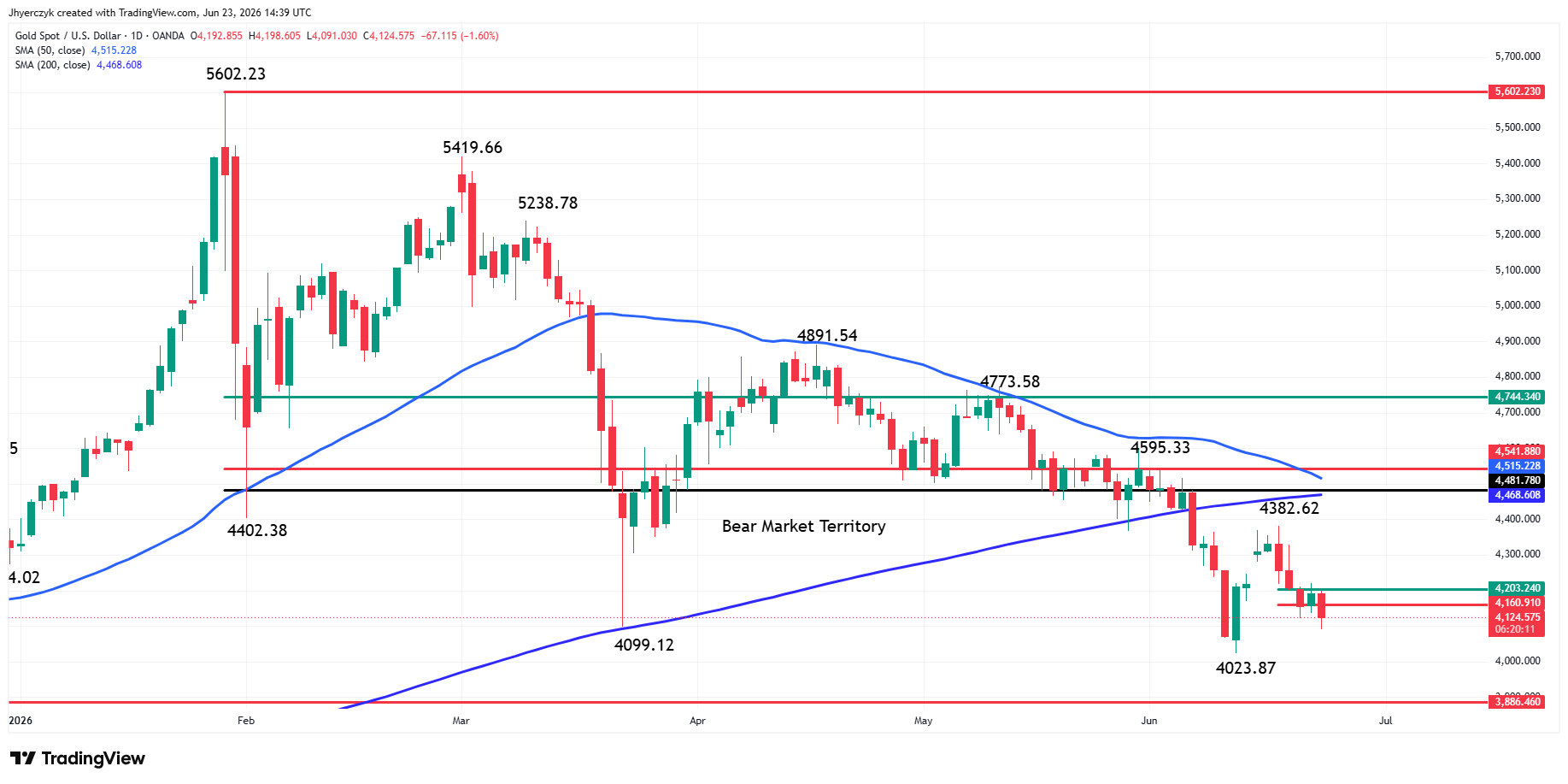
Spot gold is in a downtrend on the daily chart. A trade through the swing bottom at $4023.87 will reaffirm the downtrend. This will continue the course to main bottoms at $3997.98 and $3886.46.
The October 28 main bottom at $3886.46 is the last major low before the all-time high at $5602.23 so it is very significant to the long-term structure. If it fails, the selling pressure could get even more intense with $3311.56 to $3268.12 potential downside targets.
The 50-day MA at $4499.94 is rapidly approaching the 200-day MA at $4470.14. If the short-term indicator crosses to the weak side of the long-term indicator, the selling pressure could intensify. Watch for heightened volatility too.
What to Watch
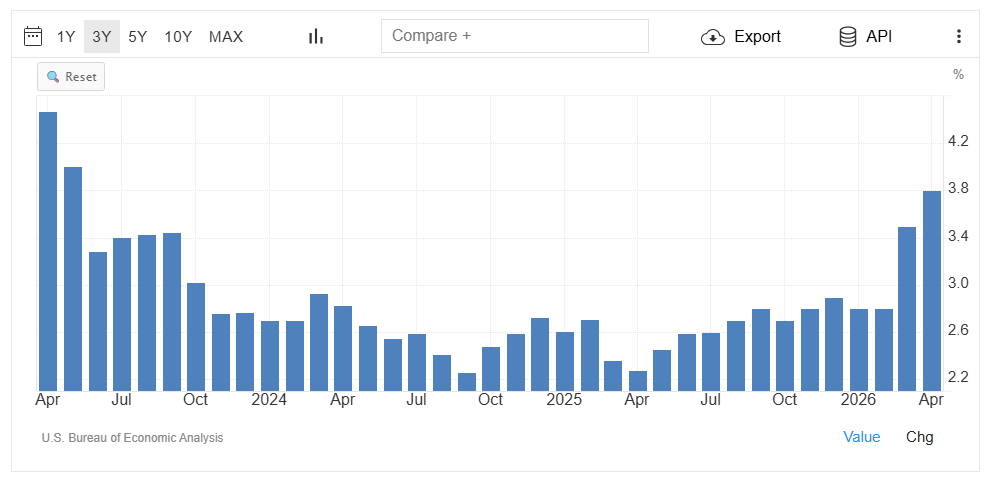
Thursday’s PCE report is the one number that can change the direction of this trade. Three hikes are priced in and a hot inflation print adds a fourth to the conversation. A hot number validates everything the committee signaled on June 17 and the fourth hike enters the conversation before the summer is over. A soft print is the only thing that gives gold a chance to stabilize above $4,023.87. Five sessions of selling in a row does not reverse on one data point, but it can pause long enough for buyers to test whether the bottom holds.
Gold is pressing toward the swing bottom at $4,023.87 and a break reaffirms the downtrend with the October main bottom at $3,886.46 as the next significant level. The moving average crossover is approaching overhead and once it triggers the technical picture confirms the fundamental one. Buyers need the PCE to come in soft enough to stall the repricing. Anything less and gold keeps heading lower.
If you’d like to know more about how to trade gold, please visit our educational area.