
Weak Payrolls Gave Gold Bulls Their Opening
Spot Gold (XAUUSD) closed at $4,175.70 for the week ending July 3, up $87.31 or +2.14%. The weekly high reached $4,195.51. Gold sold off early in the week before Thursday’s June payrolls data reversed the action and produced the first weekly gain in about a month.
Gold has been selling since the January highs with inflation fears and a hawkish Fed keeping the pressure on. The pullback lasted several weeks. Every time buyers tried to step in they got faded. Thursday’s jobs miss was the first real crack in the rate case, and the reaction was fast.

Weekly Spot Gold (XAUUSD) Technical Analysis
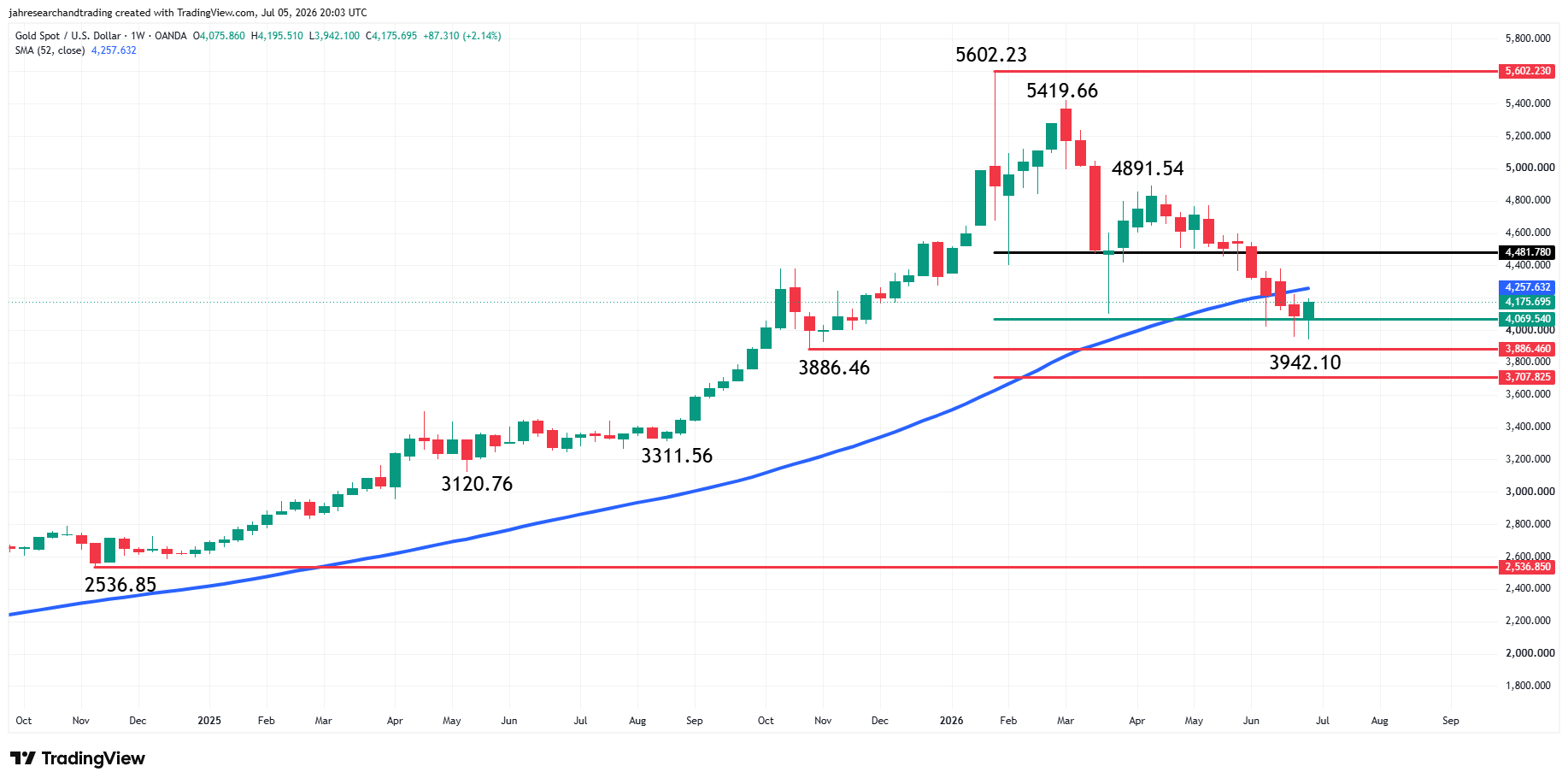
Spot Gold is in a downtrend according to the weekly swing chart and the 52-week moving average. However, the market has fallen into a retracement zone that appears to be attractive to traders.
Let’s look at the swing chart first. Last week’s low at $3942.10 stopped just short of the October main bottom at $3886.46. This was the last significant swing bottom before the run-up to the all-time high at $5602.23.
Taking out $3886.46 will reaffirm the downtrend, while a trade through $4891.54 changes the main trend to up.
The important thing about last week’s price action is that it formed a closing price reversal bottom. This chart pattern does not change the trend, but if confirmed, it could trigger the start of a two-to-three-week counter-trend rally.
The confirmation I’ll be watching for is the 52-week moving average at $4257.63 crossover. If this week’s follow-through crosses to the strong side of the 52-week moving average then I think that will trigger a strong enough signal that the counter-trend rally is being fueled by more than just short-covering.
Traders should also note that the buyers came in while the market was testing a 50% to 61.8% retracement zone at $4069.54 to $3707.82. This could mean that the buying was value-based rather than just random.
If the 52-week moving average crossover leads to an upside breakout then look for the rally to possibly extend into $4481.78. This is the 20% correction line, or the line that turned the bull market into a bear market.
Other potential upside targets are 50% levels at $4416.82, $4680.88 and $4772.17. Reactions to these levels will tell us if the rally is just a counter-trend move in a longer-term bear market or the start of something bigger.
Short-term traders should try to take advantage of the shift in momentum. Long-term investors may want to bite on a rally if they’re willing to bet on a sustained move to the strong side of the 52-week moving average.
Gold Price Forecast
Every new Gold analysis as it publishes, today's technical signal and key levels, live price — on one page.
See all Gold forecasts57,000 Jobs Killed the September Urgency
The economy added 57,000 jobs in June against expectations of 110,000 to 115,000. CME FedWatch had September hike odds near 65% before Thursday morning. After the print, roughly 53%. A 12-point drop in one session.
Gold had been grinding lower all week with no conviction behind the selling. Monday through Wednesday was positioning, not trading. That early drift loaded up the short side heading into the data, and when payrolls printed that far below consensus the covering came fast. Gold reversed hard and ran straight through Friday’s close.
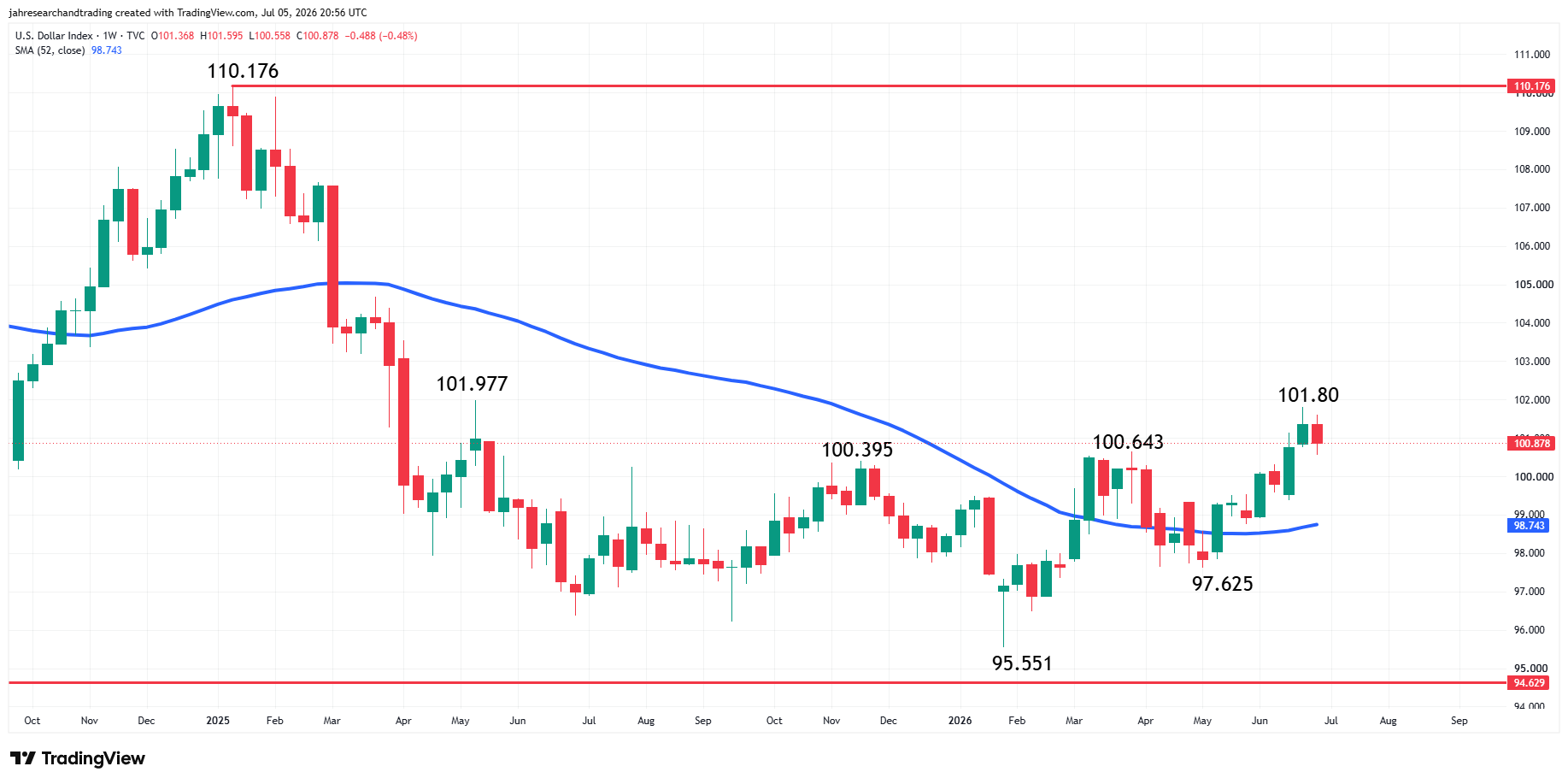
The dollar broke for its worst week since April on the same repricing. Gold caught the other side and both held the move into the weekend. That kind of follow-through across two full sessions tells you the repricing was real, not a headline reaction that fades by Monday.
Central banks have been buying reserves for months and that bid has not let up. The floor was already in place before Thursday. That constant central bank demand is the one thing that kept the bears from running this market into the ground all year. Once the rate pressure backed off, gold did not have to go find buyers. They were already there. The only thing missing was a catalyst, and the payrolls miss was more than enough.
Fed Minutes Are the Next Trigger
The June 16-17 FOMC minutes come out Wednesday, July 8. That release is the only thing this week that can move the rate conversation. The Fed held steady at that meeting but the dot plot still pointed to at least one more hike in 2026.
What matters is the tone of the discussion. Did committee members express doubt about the need for further tightening, or did everyone fall in line behind inflation? If there was any division at that meeting, the cracks in the rate case predated Thursday’s data. That gives the repricing more credibility and gold more room to run.
If the minutes still read hawkish with no dissent, the September hike odds stop falling and gold consolidates near current levels. Traders who bought the Thursday reversal will not panic out on one hawkish set of minutes, but they will not add either. The late July FOMC meeting becomes the next decision point, and the market does not want to sit idle that long without direction.
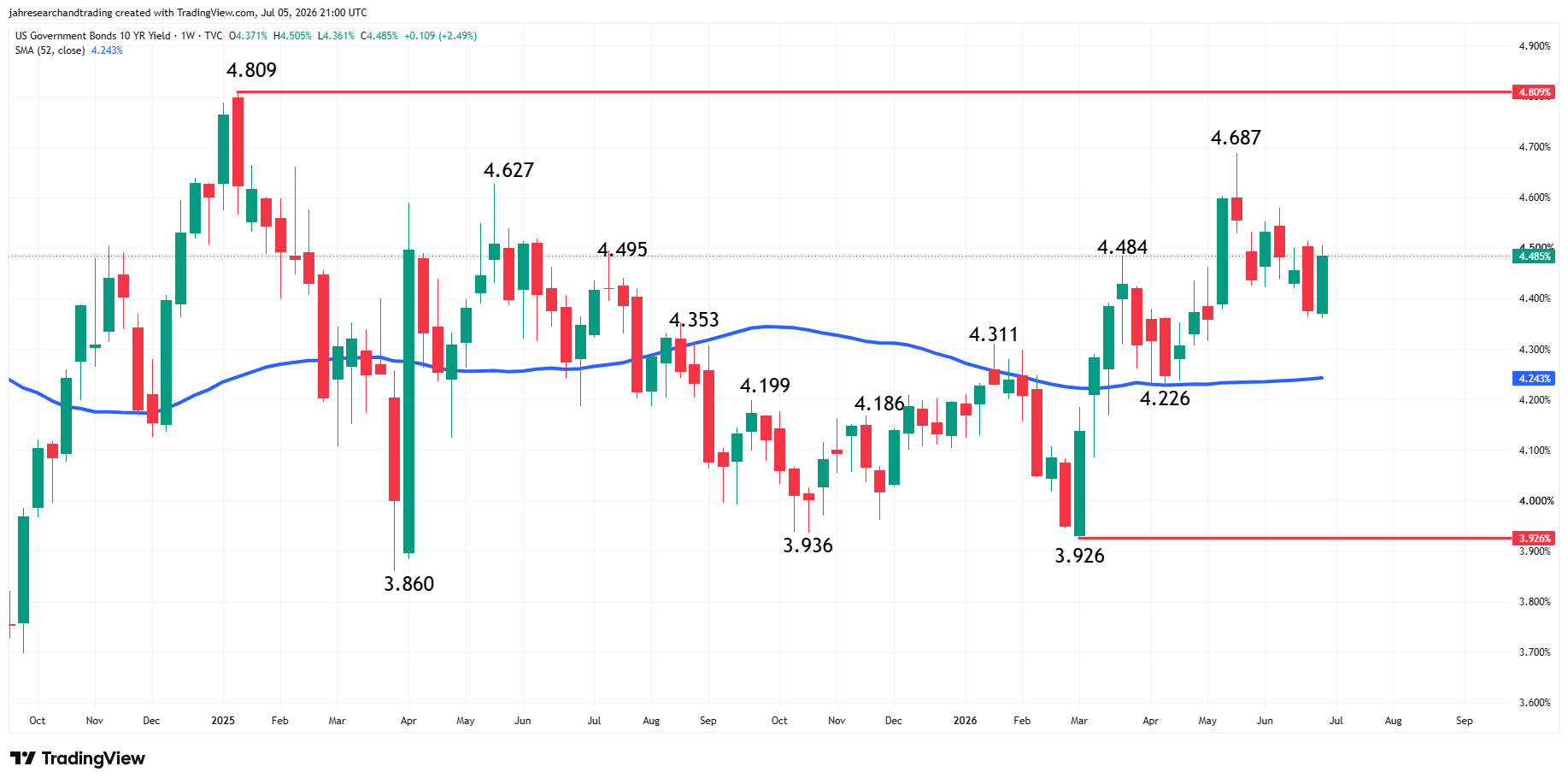
Bond yields faded after Thursday and gold followed. If that continues into Wednesday, the bid stays intact. If yields bounce first, gold traders find out fast whether last week’s rally was real buying or short-covering looking for an exit.
What to Watch
Thursday’s payrolls miss repriced the September rate trade and that repricing is unresolved going into this week.
Wednesday’s FOMC minutes either extend it or challenge it. If the committee was already questioning the pace of tightening at their June meeting, gold has room to keep moving. Central bank buying has not stopped and the rate case just weakened. Those two forces running together is the strongest setup gold has had since the selling started.
The weekly chart formed a closing price reversal bottom off a value zone. Confirmation depends on a push through the 52-week moving average this week. That level separates a short-covering bounce from a counter-trend rally with real room to run.
If you’d like to know more about how to trade gold, please visit our educational area.