
Treasury Buybacks and a Weak Dollar Push Gold Through the 200-Day
Spot gold broke out over the 200-day moving average on Friday as Treasury buybacks cracked the long end of the bond market, the dollar slipped to fresh lows, and rate-hike odds softened. Oil and Iran added risk that kept sellers on the sideline. The metal pushed back into territory it has not held since May.
Spot Gold (XAUUSD) closed Friday at $4,602.99, up $84.04, or 1.86%. The metal hit a session high of $4,632.15 and a low of $4,509.00, reaching its strongest level in more than three months.

The Bond Market Gave Gold Its Spark
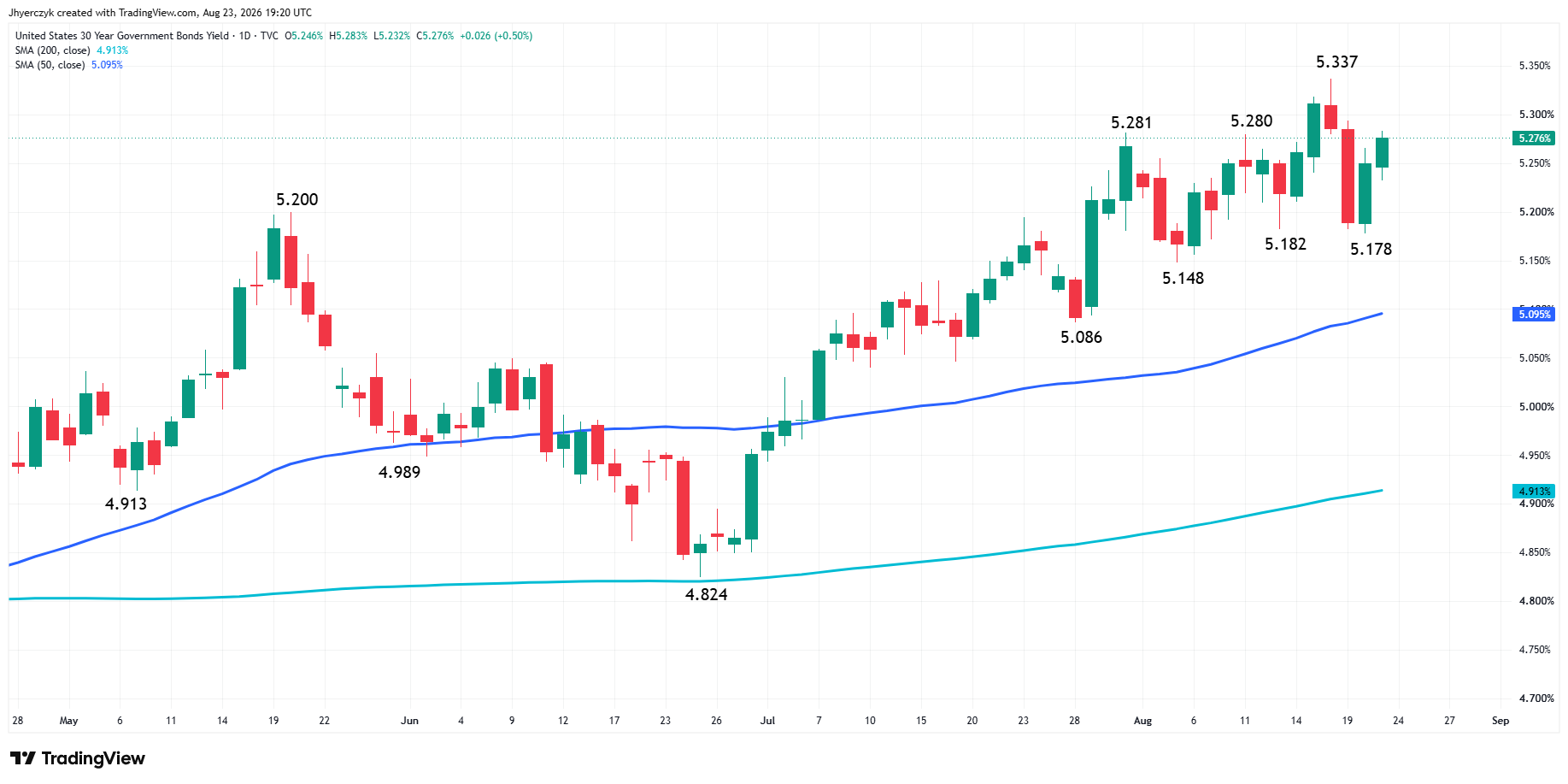
Washington put the long bond in play and gold ran with it. The U.S. Treasury Department announced it would at least double buybacks of government bonds with maturities of 10 to 30 years, with operations starting at a minimum of $4 billion each. Treasury Secretary Scott Bessent said the amounts could increase. The announcement came after long-dated yields had climbed to multi-year highs, and the cost of borrowing was becoming a political problem after U.S. national debt crossed $40 trillion for the first time.
Treasury got an immediate reaction. The long bond caught a bid, yields dropped, and the dollar sold off. That opened the door for gold.
The buyback did not fix the debt and the market knows it. Washington had to step into its own bond market after borrowing costs climbed to levels it could not ignore. That is not a sign of strength. The government can retire older bonds, but the deficits are not going anywhere and neither is the new supply that has to come to market. Gold buyers are not trading the operation. They are trading the admission behind it.
The dollar index remained near a three-month low Friday and could not find a bid. The market is looking at the dollar, the long bond, and the cost of funding the government, and on Friday all three lined up in gold’s favor.
Gold Price Forecast
Every new Gold analysis as it publishes, today's technical signal and key levels, live price — on one page.
See all Gold forecastsRate-Hike Odds Softened and Buyers Moved In
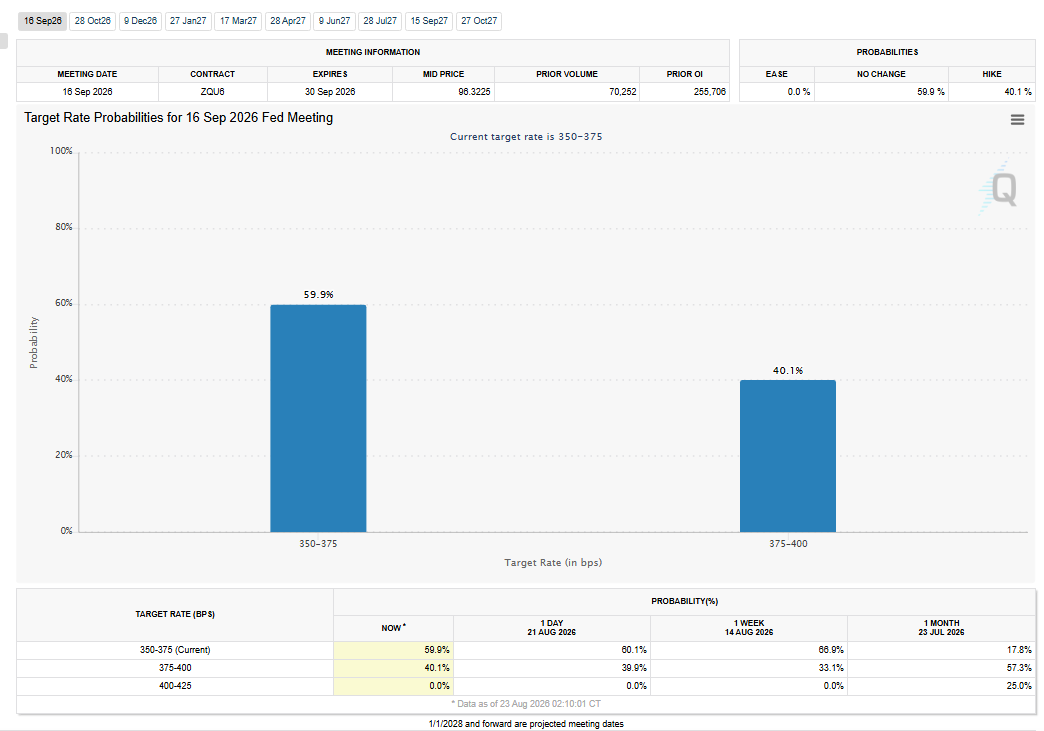
The Federal Reserve paused rate increases in July. Softer economic data then caused traders to reduce bets on another increase in September, and futures buyers moved into gold before the dust settled. The rate-hike narrative lost some of its grip on the market and nobody rushed to rebuild it on Friday.
Strong U.S. services data hit during the session and did nothing to reverse the rally. That was the tell. The bond market was already moving in gold’s favor, and one firm data print was not enough to change the direction. Buyers held the gains and did not give ground into the close. On a day when the services number could have handed sellers a reason to push back, they had nothing.
The risk is that rate expectations turn again. A hot inflation number, a firm dollar, or another push higher in long-dated yields will bring sellers back. Gold has rallied hard and it will need the macro trade to keep cooperating.
Oil and Iran Kept Another Layer of Risk Under the Market
The Middle East remains part of Friday’s story. The United States is preparing possible new sanctions against Iran, while concerns over oil shipping routes continue to support crude prices. That added a geopolitical bid that sellers could not shake.
Crude is the piece of this trade that can turn on gold, and it has not turned yet. Buyers are treating the buyback and the softer rate outlook as bigger than the oil risk, and Friday’s price action backed them up. The geopolitical bid from Iran is adding to the rally, not cutting into it. Oil was noise on Friday. It stays noise until it is loud enough to rebuild the rate trade.
Daily Spot Gold (XAUUSD) Technical Analysis
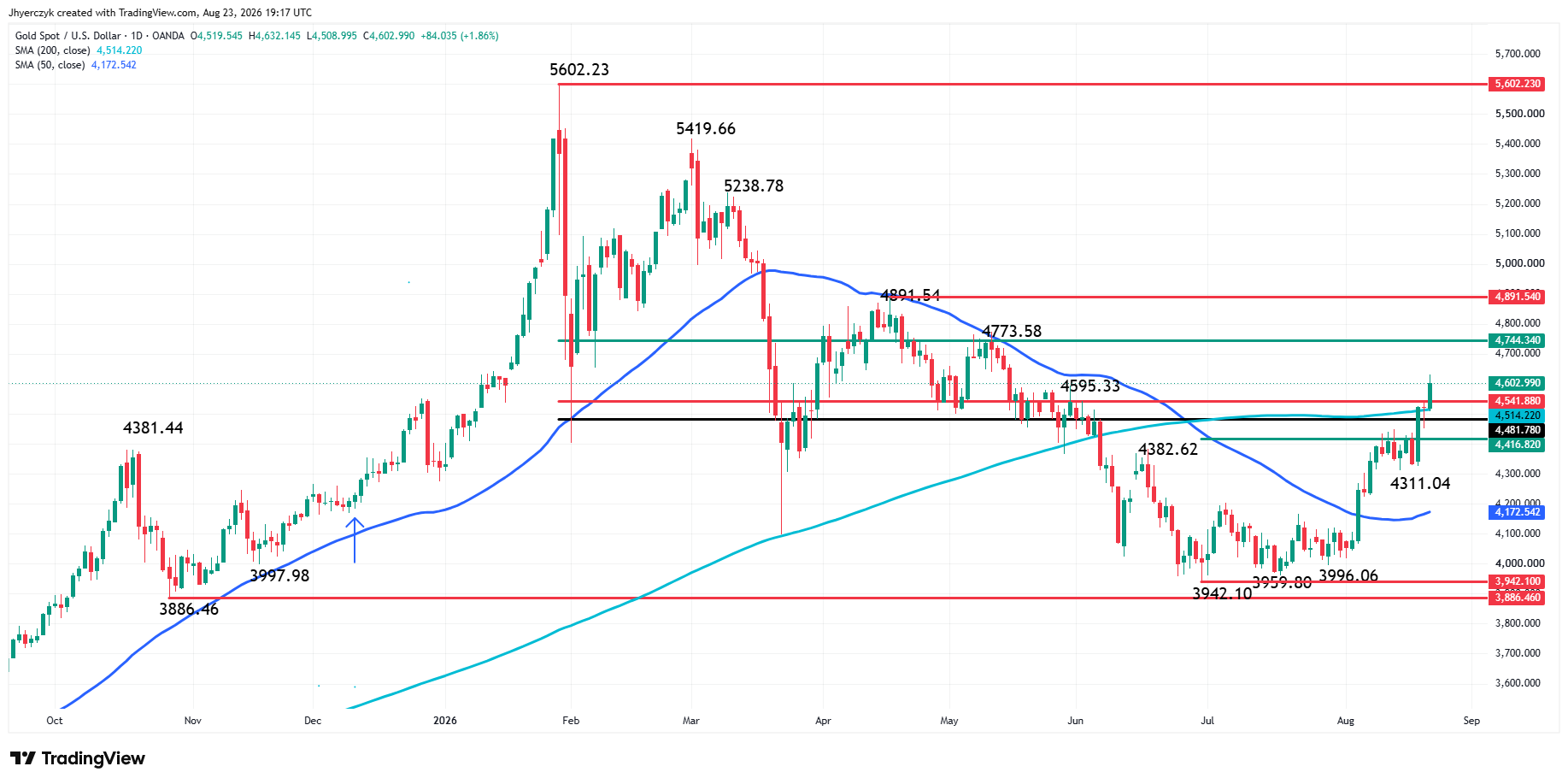
Spot gold settled higher on Friday after breaking out over the 200-day moving average at $4,514.22. This could develop into a long-term breakout if buyers can build a solid support base above the indicator.
The main range is formed by the October 28, 2025 main bottom at $3,886.46 and the January 29, 2026 main top at $5,602.23. The retracement zone formed by this range is $4,541.88 to $4,744.34. Spot gold spent most of April and May straddling this zone before collapsing to $3,941.20 on June 30.
On Friday, spot gold reentered the retracement zone. Trader reaction to this area should set the near-term direction. The rally could fail inside the zone, sustained buying could drive through $4,744.34, or two-sided trading could create a range-bound market.
What to Watch
Inflation data and Fed commentary are next. The rate trade has cooled off but it has not gone away, and crude oil is still out there pulling in the other direction. Buyers got everything they needed on Friday. The question heading into next session is whether the bond market keeps giving it to them.
The 200-day moving average breakout put gold back inside the retracement zone it straddled through April and May before collapsing in late June. That zone is familiar territory and the market has failed inside it before. Whether buyers can build a base above it or get rejected again determines if Friday’s breakout holds.
If you’d like to know more about how to trade gold, please visit our educational area.