


Japan’s interest rates are moving into another critical period as the Bank of Japan balances weak inflation data against rising long term price risks. The BOJ hiked its policy rate to 1% for the first time in 31 years in June. The central bank is expected to leave its rates unchanged at its July meeting but maintain the tightening bias. The big question will be whether inflation will return in the next few months enough to justify another hike. But price pressures may remain high and a rate rise later this year may be warranted due to a weak yen, rising import costs and robust global demand.
Bank of Japan Interest Rate Forecast: BOJ Eyes 1.25% Rate Hike
BOJ will likely leave its policy rate at 1% at its July 31 meeting. The Japan inflation rate increased to 1.7% while the core inflation reacched 1.6% in June. The inflation rate still did not reach the BOJ’s 2% target. This allows policymakers time to evaluate the economy following the June rate hike. It also reduces the risk of the sharp hike in borrowing rates.
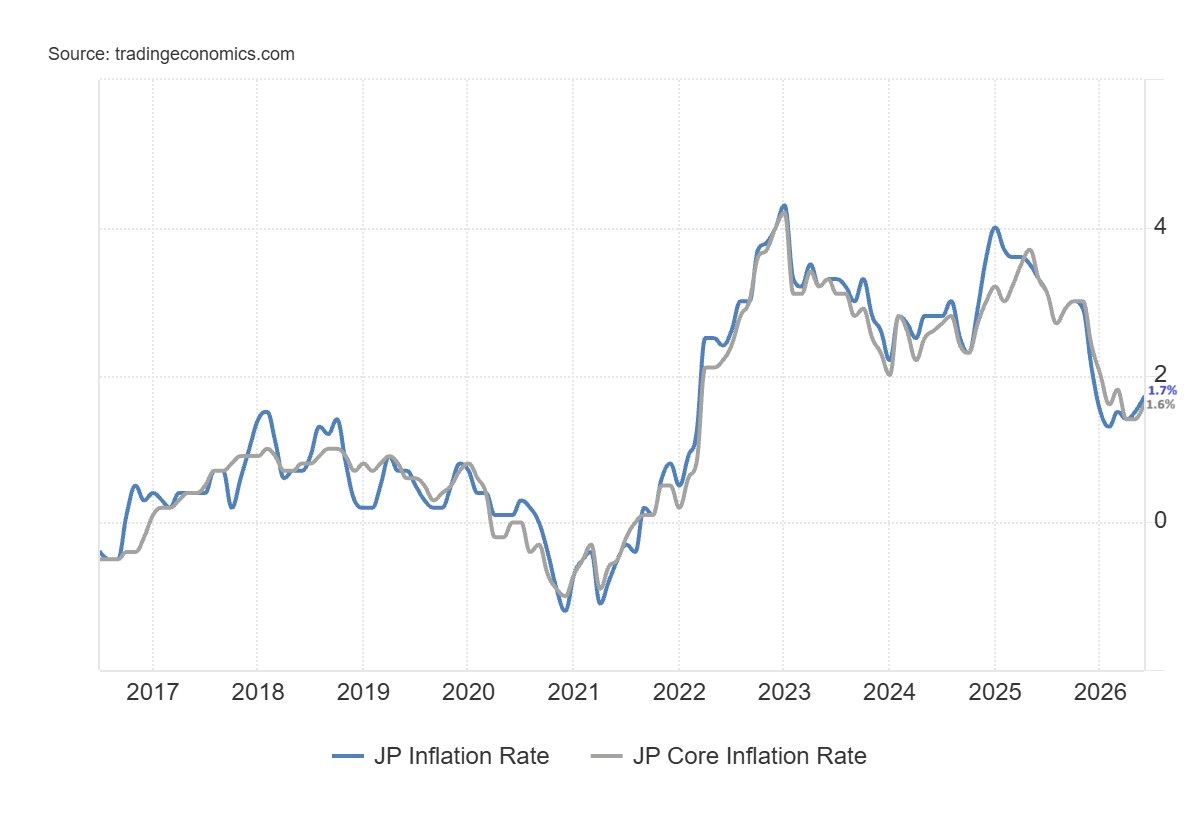
But this rate-hike cycle could be far from over. The BOJ still sees that there’s a risk that underlying inflation may rise above its 2% target. The producer prices have risen, and the weak yen continues to make imported goods more expensive. If companies pass on more of these, then there is potential for inflation to get back on track. This would strengthen the case for further interest rate hikes.
The escalating US-Iran tensions are fuelling the inflation risk as the WTI and Brent oil have risen above $90. The higher oil prices may further fuel the inflation risk in the economy, which could be visible in the next few months. The next significant window is likely to be between October and December, as BOJ may consider raising its policy rate to 1.25% as inflation follows its projections.
This possible increment will depend on the situation of consumer prices, wage growth and the yen. The BOJ may consider hiking the interest rates early if the inflation increases over 2%. But a lower rate of inflation would give the central bank more time to move slowly.
USD/JPY Price Forecast
Every new USD/JPY analysis as it publishes, today's technical signal and key levels, live price — on one page.
See all USD/JPY forecastsJapan Bond Yields Rise as BOJ Rate Hike Expectations Grow
The continuous rally in bond yields and yen weakness put pressure on Japan. The BOJ maintained very low interest rates for years and inflation started to return gradually. This resulted in highly negative real interest rates and led investors to prefer to maintain foreign assets that provided higher rates of return. The policy supported the economic activity but also pressured the yen in the long term.
The situation is complicated when Japanese yields increase and the yen continues to weaken. The chart below shows that the 2-year yields have broken the 1.5% after compressing in a bullish formation. This compression and breakout indicate further upside in the Treasury yields.
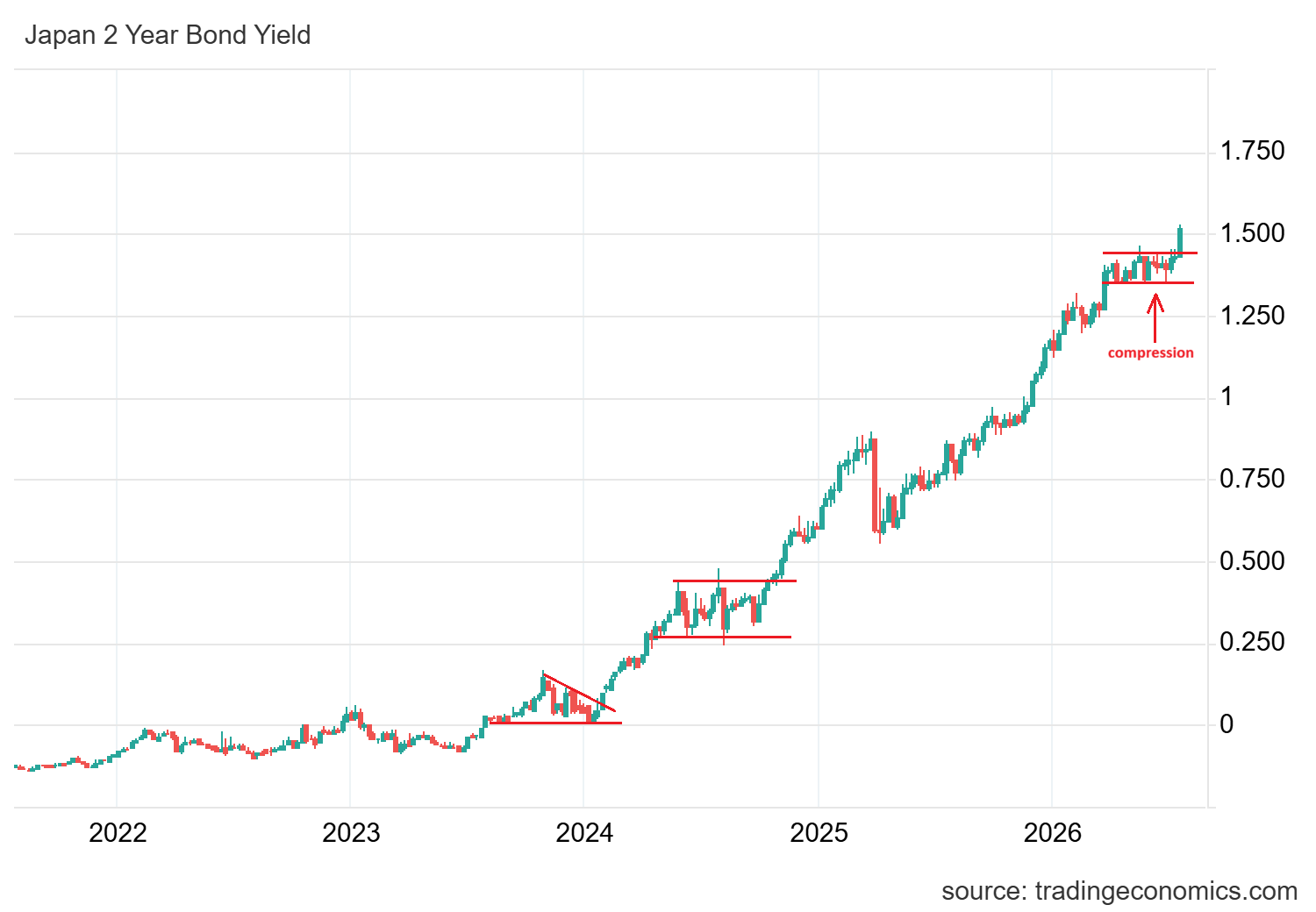
The higher bond yields make the currency stronger. But investors may remain cautious if the inflation continues to reduce the real returns on Japanese assets. This places the BOJ in a difficult situation. Rising yen too slowly may prolong the yen’s weakness. But raising too fast may cause greater pressure on an economy that has been used to borrowing cheaply.
But Japan still has substantial financial resources that can help curb this risk. The net international investment position of the country is approximately $3.5 trillion. It has foreign exchange reserves of about $1.3 trillion and the Government Pension Investment Fund has over $0.9 trillion in foreign assets. Large capital inflows to Japan could occur if there is a major shift back towards domestic assets. If the yen weakens out of control, this option could provide policymakers with a tool beyond the increase in interest rates.
USDJPY Forecast: BOJ Rate Hike Outlook Puts 165 in Focus
The interest rate differential between the U.S. and Japan will become important factor in the outlook of USDJPY. The chart below shows that Japan started to increase rates in March 2024, while the US started to decrease rates in September 2024. Despite the reduction in the interest rate gap in these economies, there is still a gap of 2.75%.
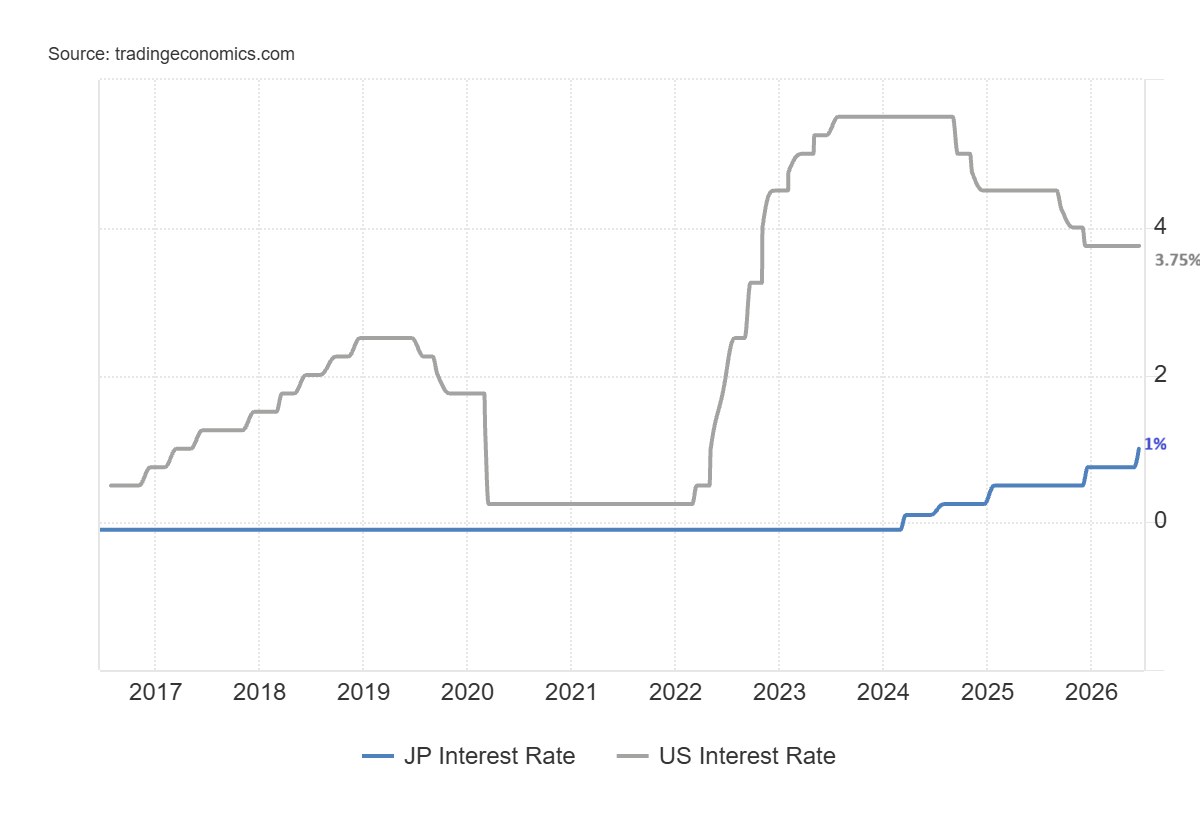
This helps the carry trade to remain attractive and can continue to push USDJPY higher. The yen could face a tough challenge to make a sustained recovery if the BOJ maintains its 1% policy for several additional months, while U.S. rates remain high.
But if the BOJ shows signs of shifting its stance towards 1.25%, the balance could shift fast. A higher rate would push the interest rate differential between holding dollars and the yen lower. This effect could be reinforced through capital repatriation. The yen could benefit from a minor shift in the balance of Japanese foreign asset holdings, which are large. This means that a more hawkish BOJ might be able to put downward pressure on USDJPY even before its rate hike.
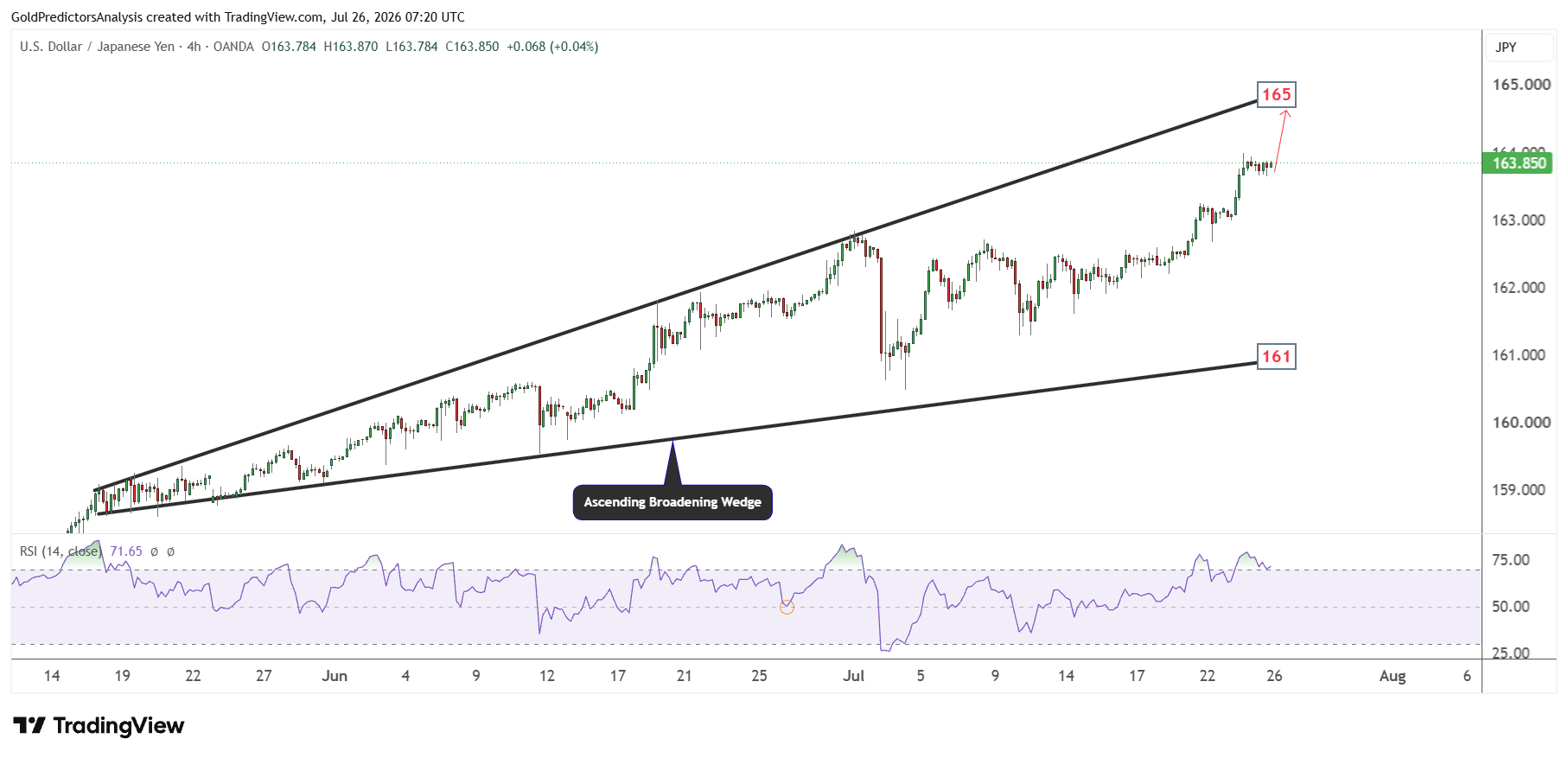
From a technical perspective, USDJPY remains strongly bullish as it forms constructive price action. The pair has been trading within an ascending broadening wedge pattern since May 2026. The short term price action shows price compression above the 160 level. This indicates a quick move in USDJPY towards the 165 level.
GBPJPY Forecast: BOJ Policy and Rate Gap Point to 222
GBPJPY is also sensitive to the spread between UK and Japanese interest rates. The UK’s higher rates have been supporting sterling against the yen as investors can earn a bigger payoff on pound-denominated investments. This rate differential should be able to sustain GBPJPY as long as the BOJ moves slowly.
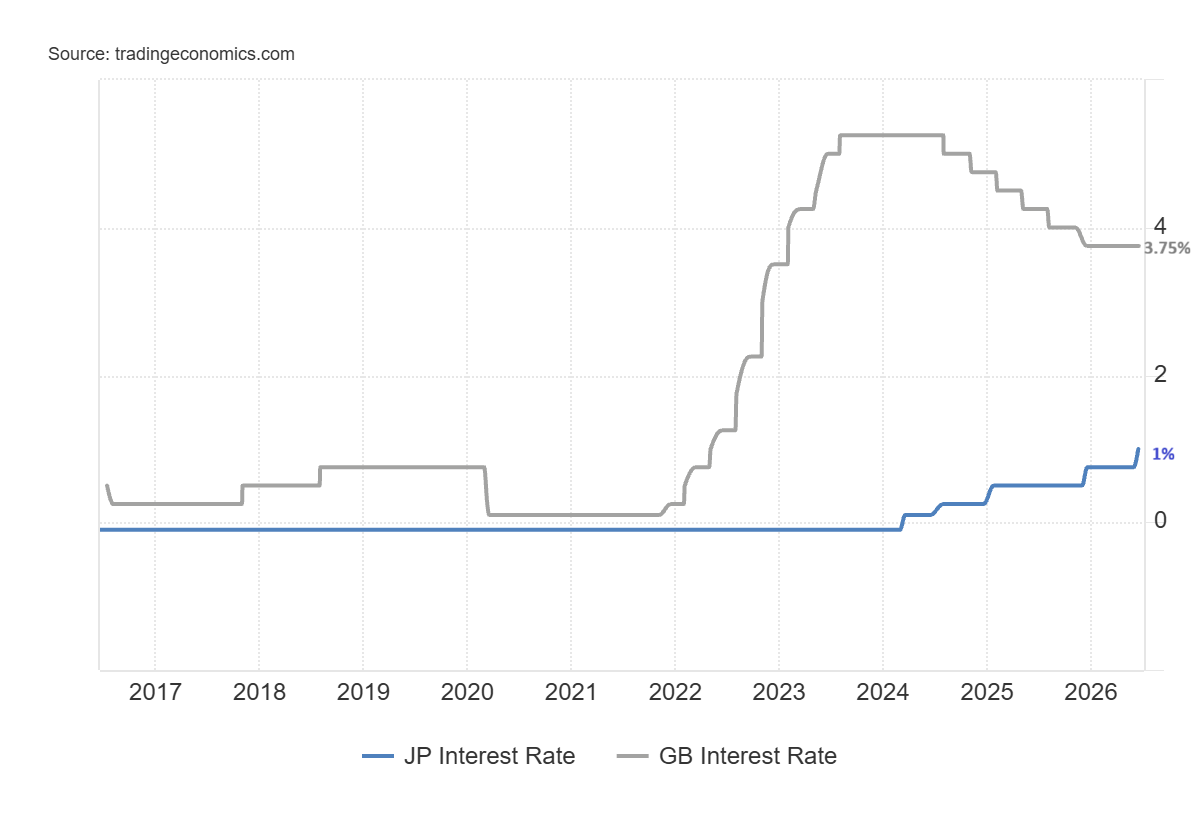
The biggest risk is the case of a more rapid BOJ tightening cycle. The central bank could move earlier on interest rates if Japan’s inflation rate surges above 2% and companies keep on raising prices. Higher yields from the Japanese economy would discourage yen-funded carry trades. That may lead to profit-taking action in GBPJPY if markets anticipate a hold in UK interest rates at the same time.
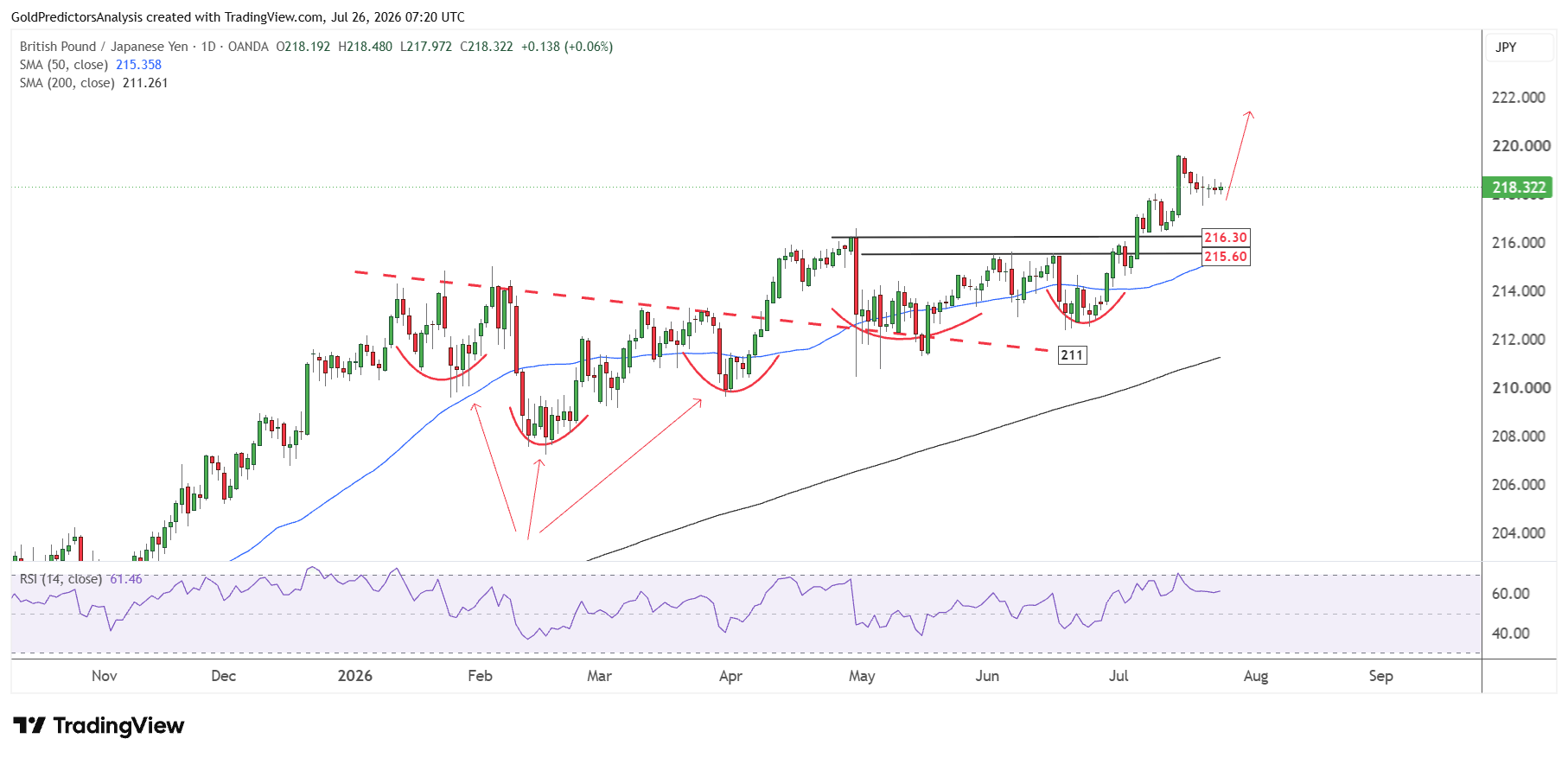
From a technical perspective, GBPJPY also shows constructive price action using the inverted head and shoulders pattern. These patterns formed in Q1 2026. After forming this constructive price action, the pair also posted similar actions in May and June. This triggered a breakout above the 216 level.
As long as the 216 level holds, the next move in GBPJPY will likely be higher. Moreover, the pair is consolidating above the 217 level in the short term and shows price compression. This compression indicates a quick move towards 222.
EURJPY Forecast: BOJ Rate Outlook Puts 190 in Focus
EURJPY is in a similar interest rate situation. The yen continues to be under pressure, compared to rates across many developed nations. Thus, a cautious BOJ will allow the interest rate differential to be relatively large and can continue to support EURJPY in the short term.
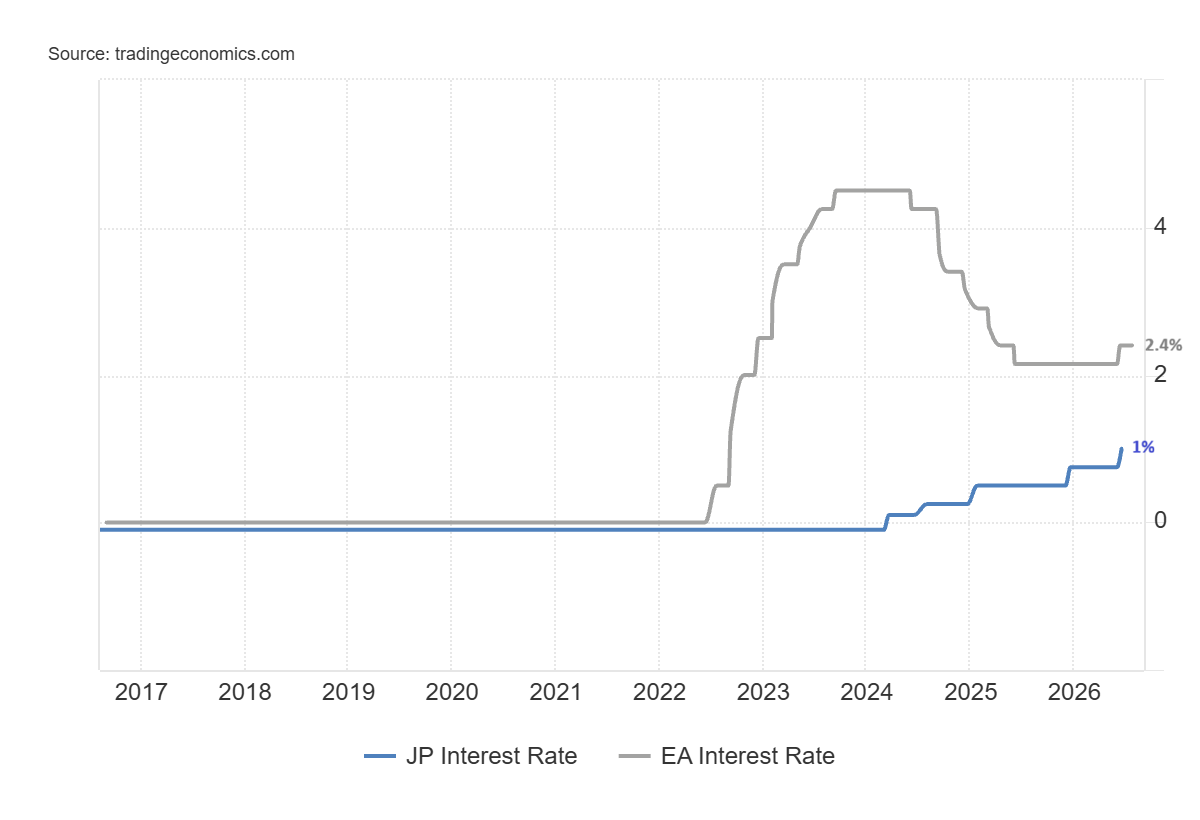
If markets begin to push back against the market pricing of higher Japanese rates, the yen will look better. The BOJ does not have to make multiple hikes at once to reverse the trend. A clear signal that rates will continue to climb may be sufficient to turn capital flows.
There are also fears that Japanese investors may cut back on foreign investment and repatriate capital, which could drive up demand for the yen significantly. This makes the BOJ’s inflation assessment and guidance on future interest rates the main drivers of EURJPY in the months ahead.
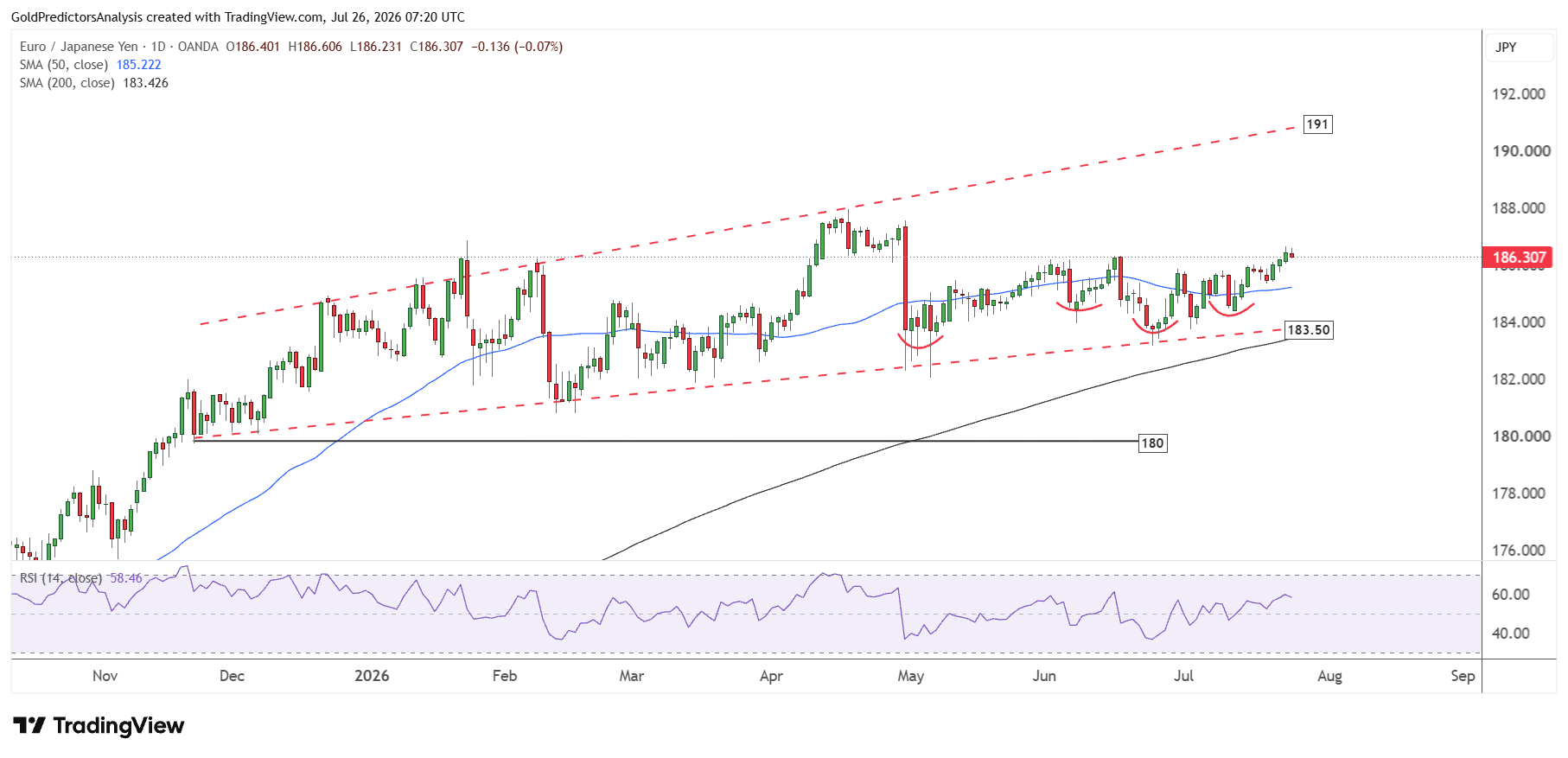
From a technical perspective, EURJPY also remains strongly bullish and showed constructive price action in May and June. The pair has been trading in an ascending channel pattern since November 2025.
As long as the support of the 200-day SMA at 183.50 holds, the next move in EURJPY will likely be towards the 190 level. The strength in US dollar is keeping pressure on the EUR, which keeps the rally in EURJPY limited due to weakness in the EUR. But the recent constructive price action indicates that the pair is still pointing higher above 187.
Final Words
The BOJ is expected to maintain the interest rate at the current level of 1% in the near term, but the tightening process may not be complete. Inflation is still below the 2% target, which gives policymakers room to move slowly. But higher oil prices, a weak yen and higher import prices may lead to higher inflation in the coming months. The BOJ is likely to raise its rates again to 1.25% later this year if price pressures intensify.
The interest rate outlook will continue to be a key factor for USDJPY, GBPJPY and EURJPY. These currency pairs are being buoyed by the yen’s continued weakness due to a wide rate gap. The prospect of more BOJ tightening could change this trend quickly. The technical picture is bullish on all three pairs for the time being and the next big move is subject to inflation and bond yields as well as the timing of the next BOJ policy rate hike.
Read more: Fed Rate Hike Risks Support US Dollar as EURUSD Eyes 1.12