


Nasdaq Took the Hardest Hit as Global Bonds and Oil Lined Up Against Growth
The Nasdaq opened September with sellers in control and the buyers who carried August nowhere in sight. The 10-year Treasury yield pushed near 4.79%. Japan’s 10-year crossed 3% for the first time since 1996. U.K. gilt yields hit financial crisis levels. German yields reached a 15-year high. Crude oil pushed near $90 WTI and above $94 Brent. The bond market is selling from Tokyo to London and the Nasdaq is absorbing the hit because the AI names that led last month have the most to lose when global borrowing costs rise together.
At 18:34 GMT, the Nasdaq Composite is trading at 26,077.675, down 293.214 points or 1.11%. The Nasdaq-100 is also lower with the largest technology and semiconductor names under pressure.
Daily Nasdaq Composite (IXIC) Technical Analysis
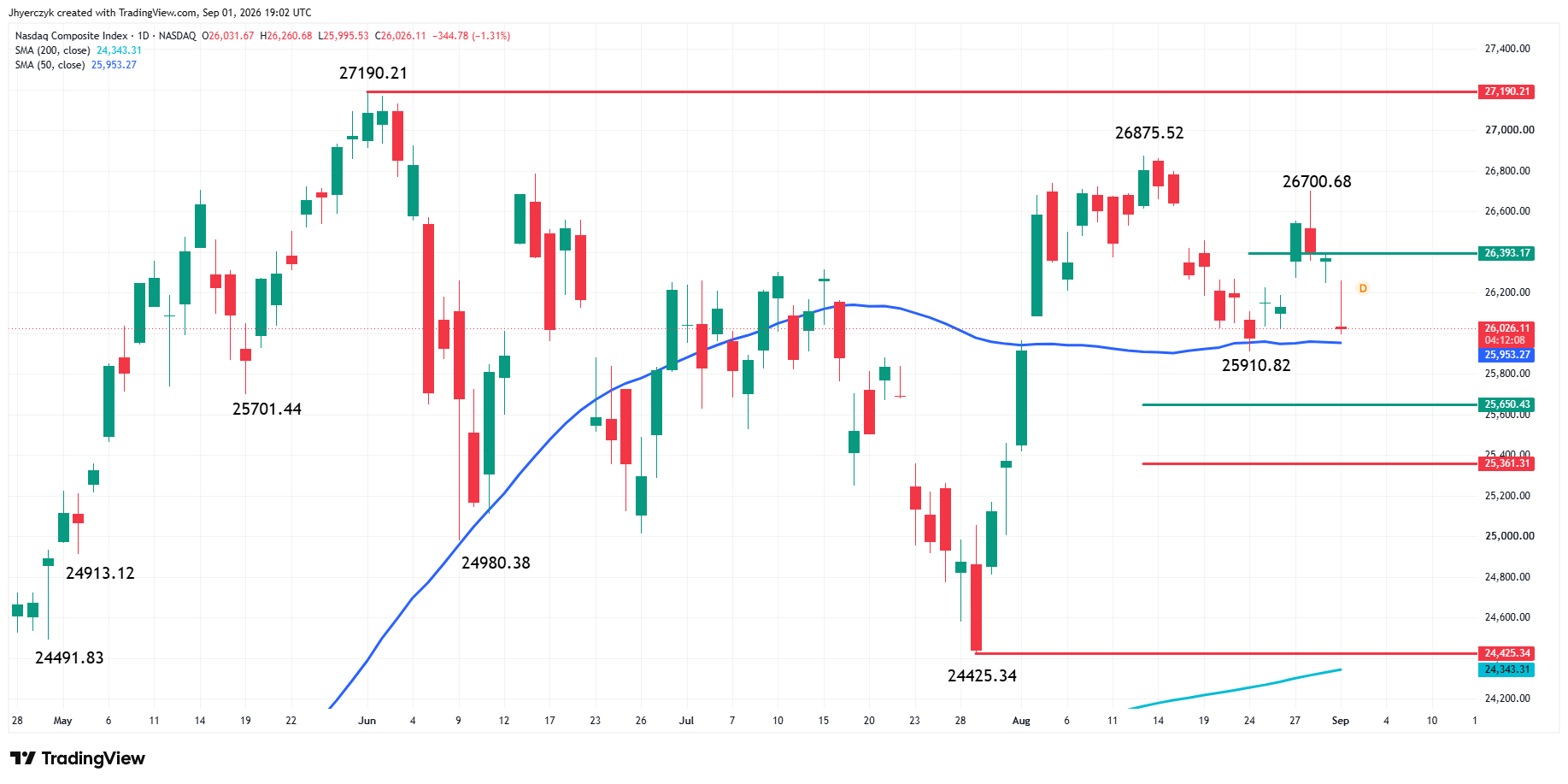
The Nasdaq Composite is trading sharply lower as we head into the last hour of trading on Tuesday. The market has been under pressure all session but traders are having trouble breaking through the 50-day moving average at 25954.48.
A trade through the 50-day MA could create the downside momentum needed to reaffirm the downtrend by breaking the swing bottom at 25910.82. This could trigger an acceleration into the intermediate retracement zone at 25650.43 to 25361.31.
The Bond Selloff Is Not Just a Warsh Story Anymore
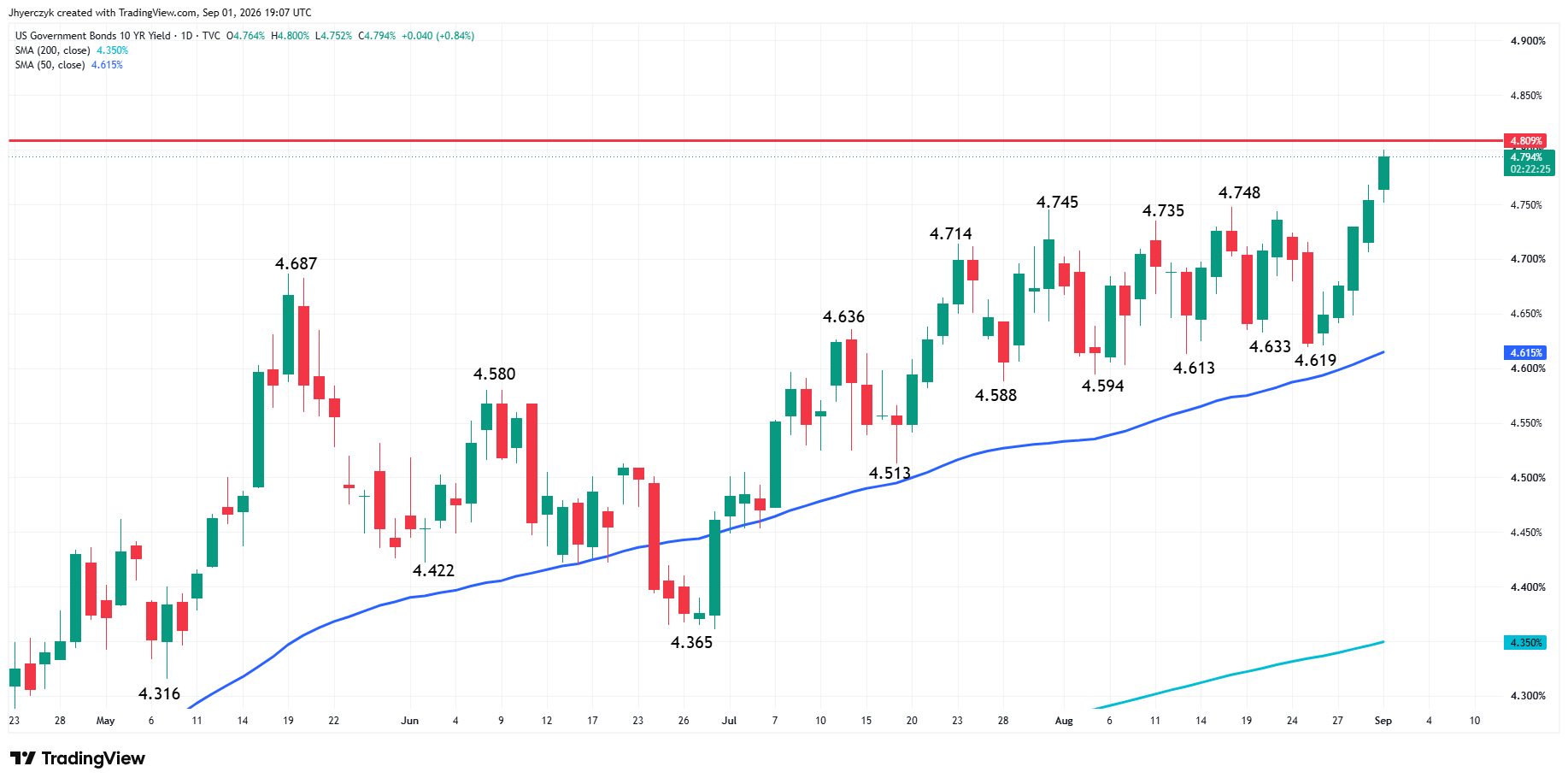
The U.S. 10-year climbed near 4.79%, a 20-month high. That number alone pressures growth stocks. Tuesday it was not alone. Japan’s 10-year government bond yield crossed 3% for the first time in three decades. U.K. 10-year gilt yields moved to levels not seen since the financial crisis. German yields pushed to a 15-year high.
The Nasdaq can handle high U.S. yields for a stretch if the rest of the world’s bond markets are stable. That is not what happened Tuesday. Government bonds are selling across every major market at the same time. The AI buildout runs on capital. Data centers, chips, networking equipment and power infrastructure all require large amounts of funding. Higher yields change how traders value the earnings those investments are supposed to deliver. The higher the bond yield, the less the market is willing to pay for growth that arrives years from now.
Tuesday’s selling did not come from weaker earnings news. It came from the bond market repricing the cost of capital in four countries at once.
Crude Oil Made the Inflation Argument Harder to Ignore
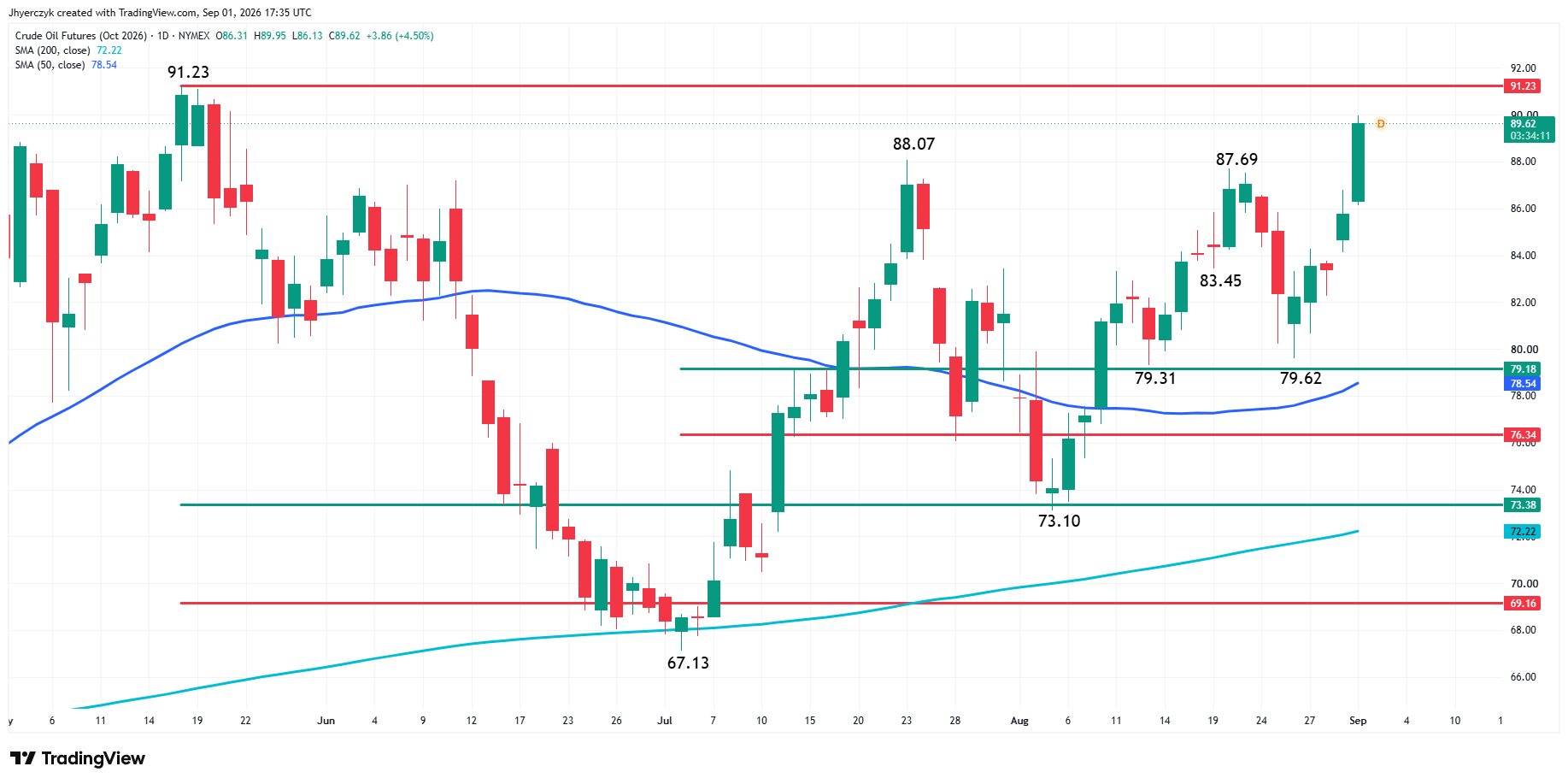
October WTI futures pushed near $90 Tuesday after the United States carried out new strikes against Iranian targets. November Brent moved above $94. The Strait of Hormuz remains disrupted and a tanker was struck by projectiles while moving through the shipping route. The oil market spent last week pulling war premium out of crude. Two sessions put it all back.
Crude near $90 WTI and Brent above $94 strengthens the inflation case already driving yields higher. The geopolitical headlines would normally give some investors a reason to treat the largest technology names as defensive growth. Tuesday the inflation and yield response was stronger. Oil, yields and the dollar all pointed against the Nasdaq at the same time.
The August Leaders Took the First Hit
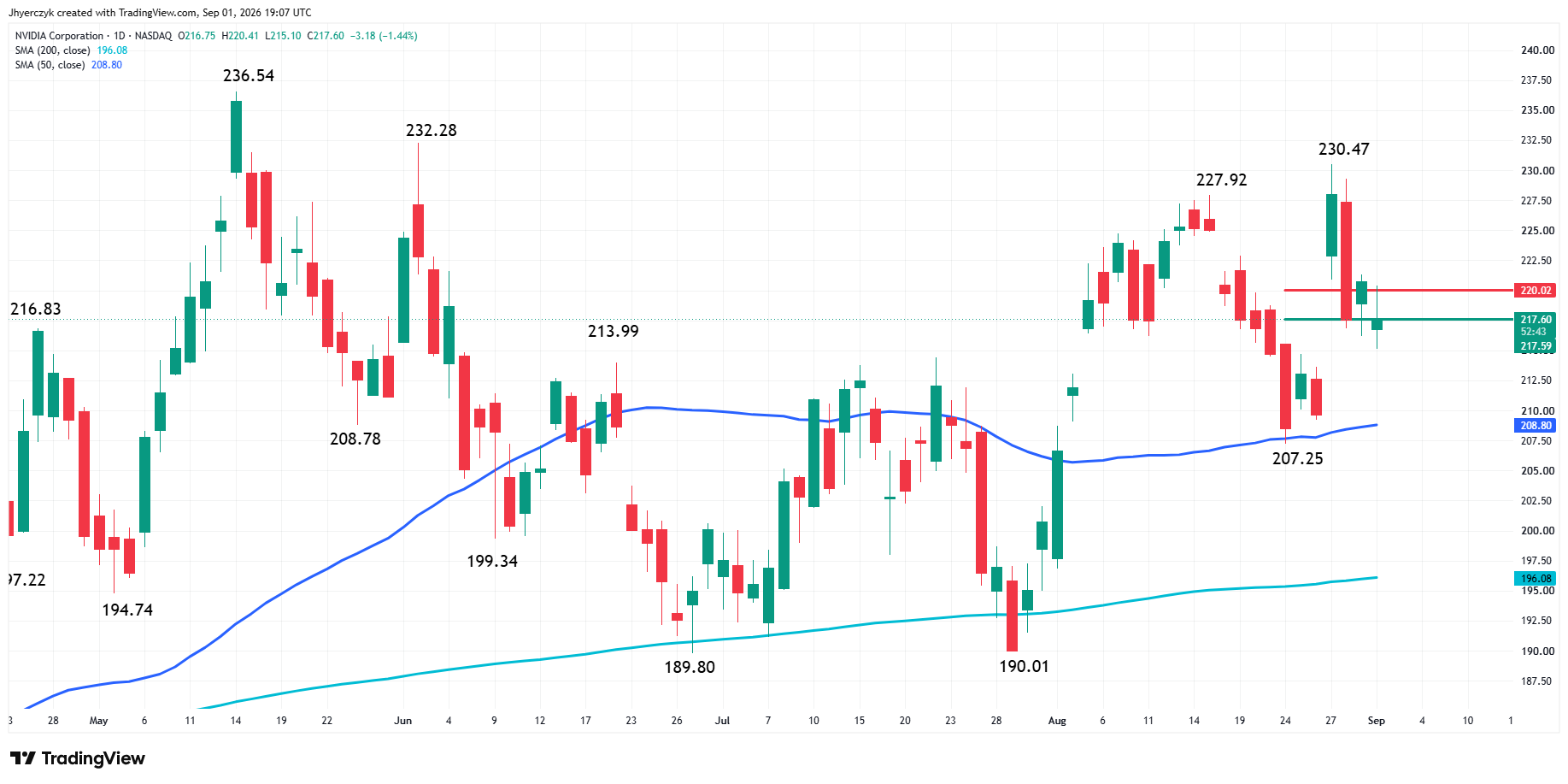
Nvidia, AMD and Micron were among the early losers as traders took money off the table in the chip group. The semiconductor names led August higher on AI spending, memory demand and expectations that cloud companies will keep investing in data centers. Those themes have not changed. The price traders are willing to pay for them has.
Microsoft and Alphabet also traded lower. Their cloud businesses and AI spending plans make them central to the Nasdaq-100 story. The Nasdaq Composite was down more than the Dow because the Dow can lean on industrial, energy and defensive names. The Nasdaq has more technology concentration. That helped it lead during August. Tuesday it meant there was nowhere to go when yields and oil both turned against growth.
The market received mixed economic signals Tuesday. Manufacturing growth slowed in August. Job openings increased modestly in July. Neither report gave buyers a reason to bet the Fed is stepping back from inflation.
What to Watch
ADP employment data arrives Wednesday. Friday’s August nonfarm payrolls report is the number that can move the rate picture. A firm payroll number with stronger wage growth keeps yields elevated and makes the Nasdaq’s job harder. A softer report would give technology buyers their first real opening. The Nasdaq does not need a major bond rally to stabilize. It needs the 10-year to stop making new highs and September rate odds to come down. Until then, crude and the long end of the curve are running the tape.
The Nasdaq Composite is pressing against its 50-day moving average at 25,954.48 with the swing bottom at 25,910.82 right below. Losing that level triggers an acceleration into the retracement zone at 25,650.43 to 25,361.31. The AI trade is still the market’s biggest source of leadership. Tuesday showed it is not a hedge against a global yield surge. The names that led August need the bond market to settle down before buyers come back.
More Information in our Economic Calendar.