


Sellers Showed Up at the 50-Day and the Rally Stalled
October natural gas futures could not hold Monday’s recovery. The contract pushed to $2.943 early Tuesday, ran into the 50-day moving average at $2.915, and turned lower. The heat is still there. LNG is still pulling. Production near 115 Bcf per day is still the reason every rally stalls before it gets anywhere.
At 15:46 GMT, October futures are trading at $2.886, down $0.049 or 1.67%.
The demand side keeps preventing a larger break. The supply side keeps capping every push above $2.90. Thursday’s storage report decides which one has the better argument this week.
Daily October Natural Gas Futures Technical Analysis
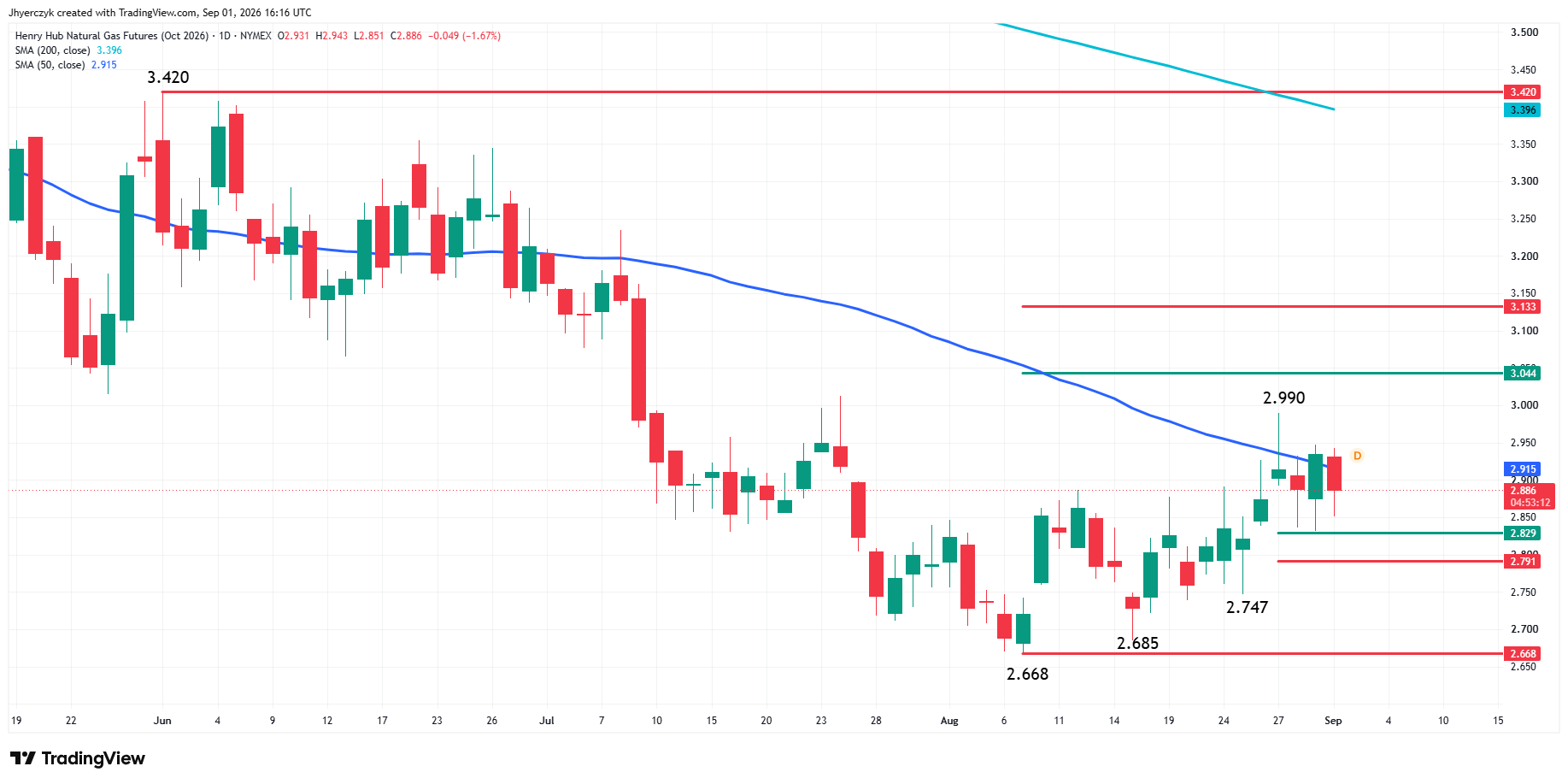
October Natural Gas futures are edging lower in mid-session trading Tuesday after being rejected by the 50-day moving average at $2.915 earlier in the session. Based on the price action over the past four sessions, the 50-day moving average appears to be the key indicator controlling the direction of the trade.
A sustained move over the 50-day moving average could launch a strong rally into last week’s high at $2.990. A move through that price could extend the surge into the intermediate retracement zone at $3.044 to $3.133. This is the last potential resistance before the 200-day moving average at $3.396.
A sustained move under the 50-day moving average would indicate sellers are still in control. This could lead to a retest of the short-term retracement zone at $2.829 to $2.791. This is the last potential support before the three main bottoms at $2.747, $2.685 and $2.668.
Despite Tuesday’s rejection at the 50-day moving average, the main trend remains up on the swing chart. That keeps buyers in buy-the-dip mode as long as the retracement zone holds.
Natural Gas Price Forecast
Every new Natural Gas analysis as it publishes, today's technical signal and key levels, live price — on one page.
See all Natural Gas forecastsThe Heat Has Not Left Yet
Forecasts still show near-record temperatures across the South, East and parts of the East Coast through the end of this week. Air conditioners are still running in the major population centers at a time of year when cooling demand normally starts dropping off. Power generators are still in the market for gas.
The Southern heat matters most because it reaches the same region where LNG plants are pulling the strongest volumes from the pipeline system. South Central power burns and Gulf Coast feedgas are drawing from the same supply at the same time.
Tropical Storm Edouard could bring cooler conditions into parts of the East later this week. That is the shift worth watching. Weather models can still take demand away faster than they add it this time of year. The heat has been the floor under October futures. One storm changes the math.
LNG Feedgas Is Strong but Already Priced
LNG feedgas climbed back toward four-month highs after Freeport returned from maintenance and Corpus Christi resumed planned operations. Golden Pass is also ramping up. Gulf Coast export plants are taking gas at the same time Texas power plants are burning it for cooling.
European storage levels remain well below normal for late August. Disruption to LNG flows through the Strait of Hormuz keeps international buyers focused on U.S. supply. European gas prices are elevated. U.S. cargoes are competitive and that demand is not disappearing anytime soon.
The feedgas story is real. Tuesday’s selling showed the market has already been trading it for several sessions. Strong export flows kept the 15 Bcf injection tight for the week ended August 21. The bulls need another tight number Thursday, not just the same feedgas data they have already been buying.
Production Hit 115 Bcf and Nobody Blinked
Lower-48 dry gas production reached 115 Bcf per day Sunday and held near that level Monday. Output is running at record levels. That is the number sitting on top of every rally attempt above $2.90.
Permian associated gas keeps rising alongside crude oil output. Haynesville production is also climbing. Rig counts rose again last week. Producers are not cutting back below $3.00. They are drilling into it.
The Hugh Brinson pipeline is now moving more Permian gas toward East Texas and Henry Hub. Gas that had been trapped near Waha has another route to the benchmark market. The production base already had volume. Now it has more routing to the pricing point that sets the futures contract.
The EIA expects storage to reach 3,985 Bcf at the end of October. That would be a record. A few tight weekly injections can shrink the surplus but the market still has enough gas in the system to absorb a weather-driven rally before it turns into anything larger.
Thursday’s Number Decides the Week
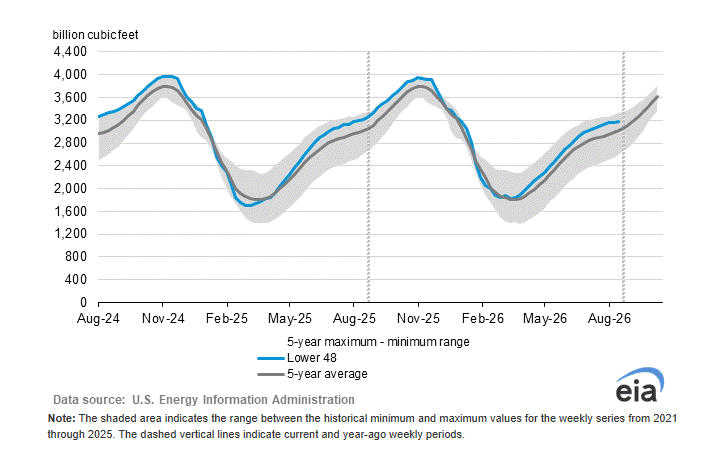
The last EIA report showed a 15 Bcf injection for the week ended August 21. That was well below the 33 Bcf five-year average and gave buyers a reason to defend the lows. The surplus to the five-year average has been shrinking.
Another small build below 20 Bcf would confirm that heat and LNG exports are still cutting into the refill season. That keeps buyers interested on pullbacks toward the retracement zone.
A number above 25 Bcf changes the tone. Traders would treat Tuesday’s rejection at the 50-day as confirmation that the market has already priced in the hot weather and strong feedgas. Storage is still 5.5% above the five-year average. The EIA’s October forecast says it could get even more comfortable for sellers.
What to Watch
Thursday’s storage report is the test. The heat is holding through the end of the week but Tropical Storm Edouard could cool the East and cut into power burns. LNG feedgas is near four-month highs but the market has been trading that story for days. Production hit 115 Bcf per day and rig counts are still climbing. The demand side needs a tight injection to keep the argument going. One soft number and sellers have the floor.
The 50-day moving average at $2.915 rejected the rally Tuesday and that level is controlling the trade. A push through $2.990 is the breakout. The retracement zone at $2.829 to $2.791 is where buyers showed up on Monday’s dip. The main trend is still up on the swing chart but the market has not been able to get above the 50-day in four sessions. That tells you where the fight is.
More Information in our Economic Calendar.