
Chips Hit Records While the Fed Got Ignored
The Nasdaq Composite closed higher on Thursday. The Nasdaq-100 also climbed. The Philadelphia Semiconductor Index jumped to a record high then posted a record close on Thursday.
The Fed committee held rates, turned hawkish, and got one day of selling before the buy side took it all back.
Daily Nasdaq Composite Index (IXIC) Technical Analysis
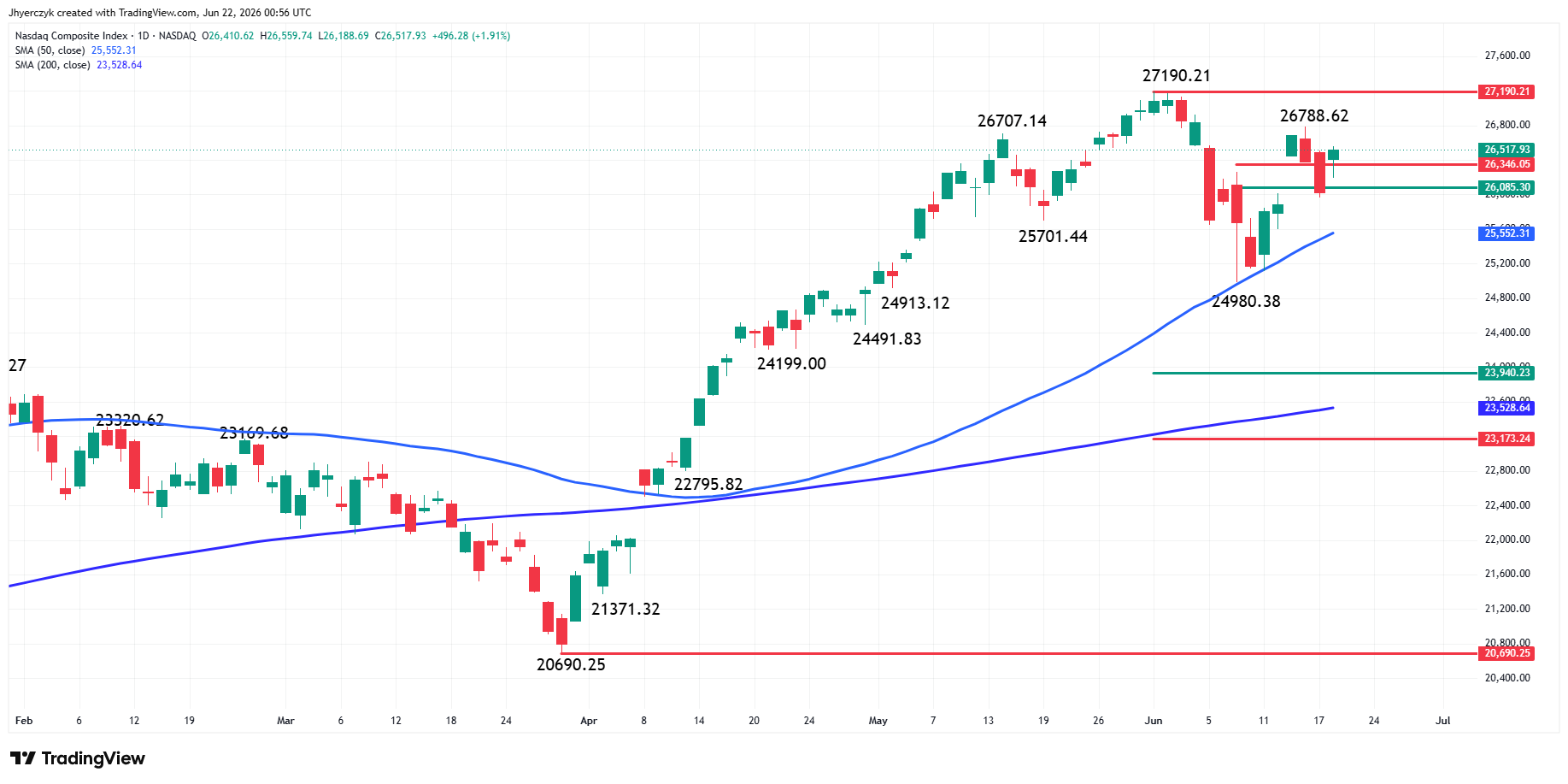
Thursday’s close put the Nasdaq Composite Index back on the strong side of a key short-term retracement zone at 26085.30 to 26346.05. If there is a follow-through move on Monday that is strong enough to take out the 26788.62 secondary lower-top, then buyers may take another shot at the record high at 27190.21.
Crossing to the weakside of the short-term 50% level at 26085.30 will be a sign of weakness and renewed selling pressure. If this generates enough downside momentum then look for a test of the 50-day MA at 25552.31. We could see a technical bounce on the first test of this indicator, but if it fails then the swing bottom at 24980.38 will become the next objective.
Essentially, look for strength over 26346.05 and weakness under 26085.30.
Daily Philadelphia Semiconductor Index (SOX) Technical Analysis
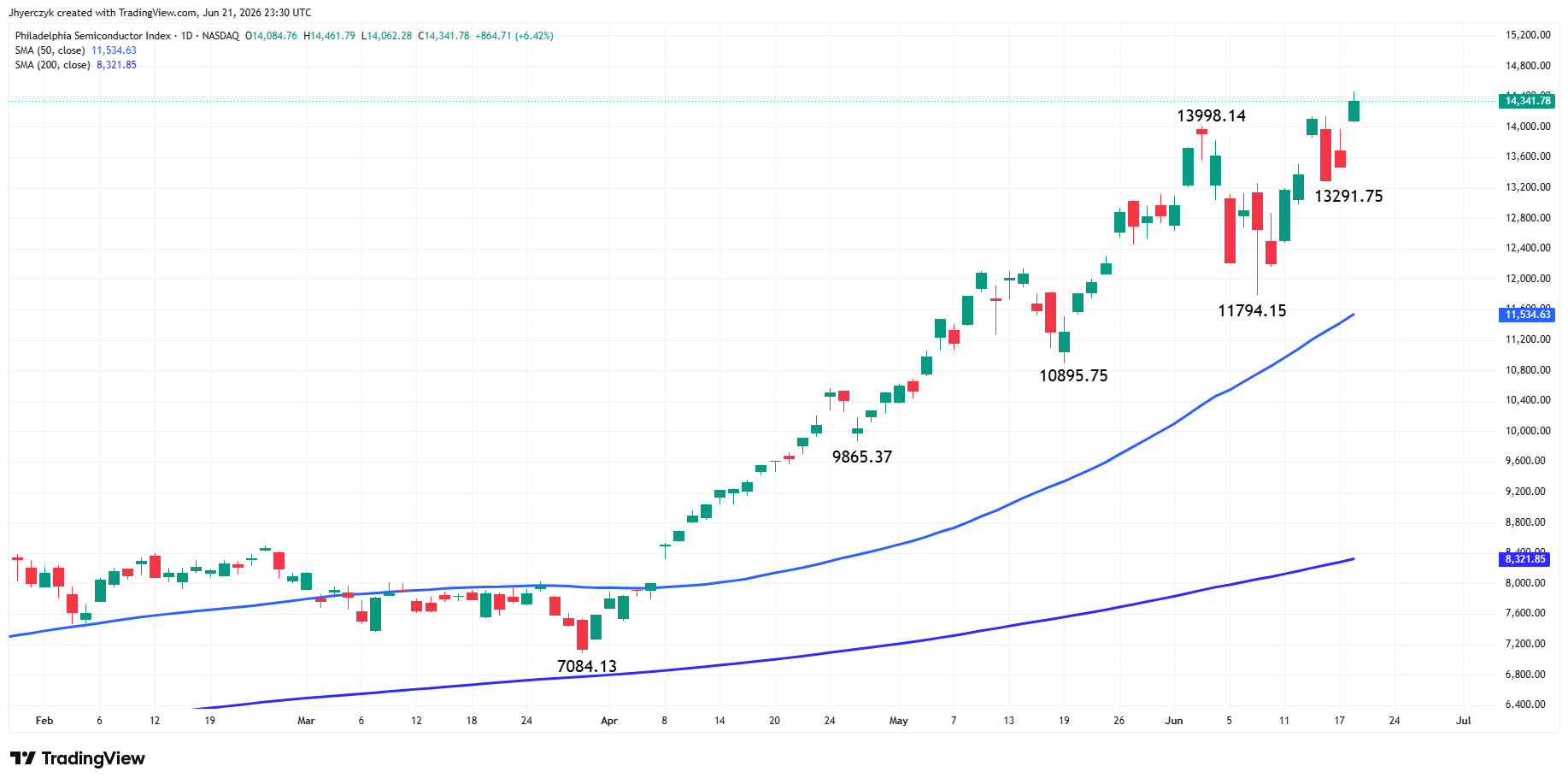
The Philadelphia Semiconductor Index finished at a record close on Thursday, the same day it posted a record high at 14461.79. The main swing chart indicates the market is in an uptrend. The main trend will change to down if sellers take out the swing bottom at 11794.15. This could trigger further weakness into the 50-day moving average at 11524.63.
Dow Jones Price Forecast
Every new Dow Jones analysis as it publishes, today's technical signal and key levels, live price — on one page.
See all Dow Jones forecastsLook for a technical bounce on the first test of the 50-day MA. If it fails to hold then look for further weakness.
The minor trend indicator is what I am focusing on more closely. In my opinion, the minor swing bottom at 13291.75 is likely the trigger point for an acceleration to the downside.
Sellers Had Wednesday Afternoon and Nothing Else
The June 17 selloff looked right at the time. The committee delivered a hawkish hold and growth stocks dropped into the close as it felt like the start of a broader reassessment. The next day, the money went straight back into the large-cap tech names that have carried the market all year and it did not come back out.
The SOX did not just recover from the dip. It ran to all-time highs 48 hours after the committee put rate hikes back on the table. Sellers had every opportunity to press Wednesday’s weakness, but they were run over on Thursday’s opening. By Thursday’s close, the semiconductor index was at records and the Fed meeting was already old news. That is not normal behavior after a hawkish hold. Usually the buy side takes a few sessions to get comfortable before stepping back in. This time there was no gap between the selloff and the reversal.
The Thursday session finished strong and the way I see it that told the whole story of the week. The market looked at the Fed’s message, decided it did not change the trade, and went right back to buying the names that have worked since January. By the time Thursday’s record print hit the SOX, the June 17 selloff was a footnote.
SOX at Records in a Hawkish Week
A record high and record close in the semiconductor index during a week when the committee went hawkish is the cleanest read on where institutional money is going. The buy side is not confused about what it wants to own. It wants the companies building AI infrastructure and it is willing to pay record prices for them in a week when the Fed was trying to cool things down.
Chip manufacturing reports and new production partnership announcements dropped during the week and the timing worked for the bulls. Fresh confirmation that semiconductor spending has not slowed down hit a market that had already decided the hawkish hold was not a reason to sell. The spending news reinforced the bid and the SOX ran with it through Thursday’s close.
Every piece of evidence last week pointed the same direction. The selloff was shallow, the reversal was fast, the leadership came from semis, and the buying carried through to a record close. The committee’s hawkish message ran into a market that has found something it cares about more than rates. Whether that lasts depends on what the next round of earnings shows, but last week’s price action was not ambiguous.
What to Watch
The Fed already fired and the market bought the dip. Semis went to records two days later. That fight is done. The next one is earnings season and the SOX at all-time highs says the buy side expects the AI spending to show up in revenue. The companies writing the checks have to prove Thursday’s record close was justified. If the numbers disappoint at these valuations, the sellers who could not get traction last week are going to come back a lot harder.
The Nasdaq Composite closed on the strong side of the retracement zone and a push through the secondary lower-top opens a run at the record high. The SOX is already there with the uptrend intact. The minor swing bottom is the level to watch on any retreat and as long as it holds, the bulls own the next move and the hawkish hold is just a footnote from last Wednesday.
More Information in our Economic Calendar.