Warsh Killed Thursday’s Nvidia Rally in One Speech
Nvidia’s earnings cleared every estimate Thursday. Friday it gave the rally back. Warsh reopened the rate question and September hike odds nearly doubled. That was the session.
Chip stocks cracked first. Software earnings and three megacap names caught the rest of the index. Volatility fell on the day. Nobody was reaching for protection.
The Nasdaq posted a reversal top near the highs and pulled back to the midpoint of its short-term range.
The Nasdaq Composite lost 138.93 points, or 0.52%, closing at 26,402.42.
Daily Nasdaq Composite Index (IXIC) Technical Analysis
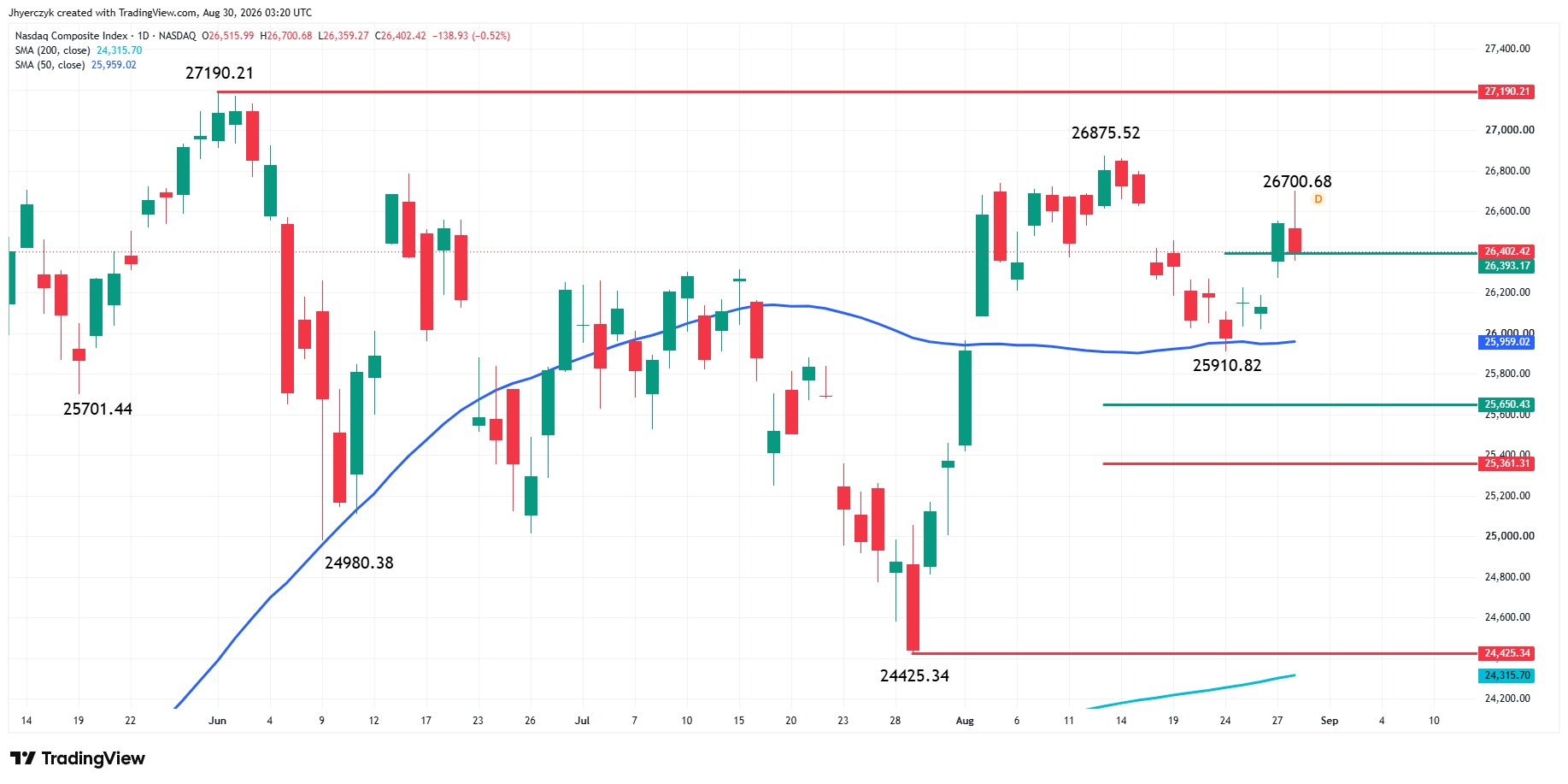
The Nasdaq Composite Index finished lower on Friday after posting a potentially bearish closing price reversal top at 26,700.68. A follow-through to the downside could lead to a two-to-three day correction.
The main trend is up and so is the minor trend, but momentum could shift to the downside if the closing price reversal top is confirmed.
The short-term range is 26,875.52 to 25,910.82. On Friday, the index tested its 50% level at 26,393.17. Trader reaction to this level could determine the near-term direction.
A sustained move above 26,393.17 could indicate the presence of buyers. If it is strong enough to overtake 26,700.68, the reversal top will be negated and traders will likely set their eyes on the August 13 main top at 26,875.52.
A sustained move under 26,393.17 could signal the presence of sellers. This could trigger a hard break into the 50-day moving average at 25,959.02. If this fails, the index could extend its losses to the intermediate retracement zone at 25,650.43 to 25,361.31.
September Odds Nearly Doubled and the 2-Year Hit 4.35%
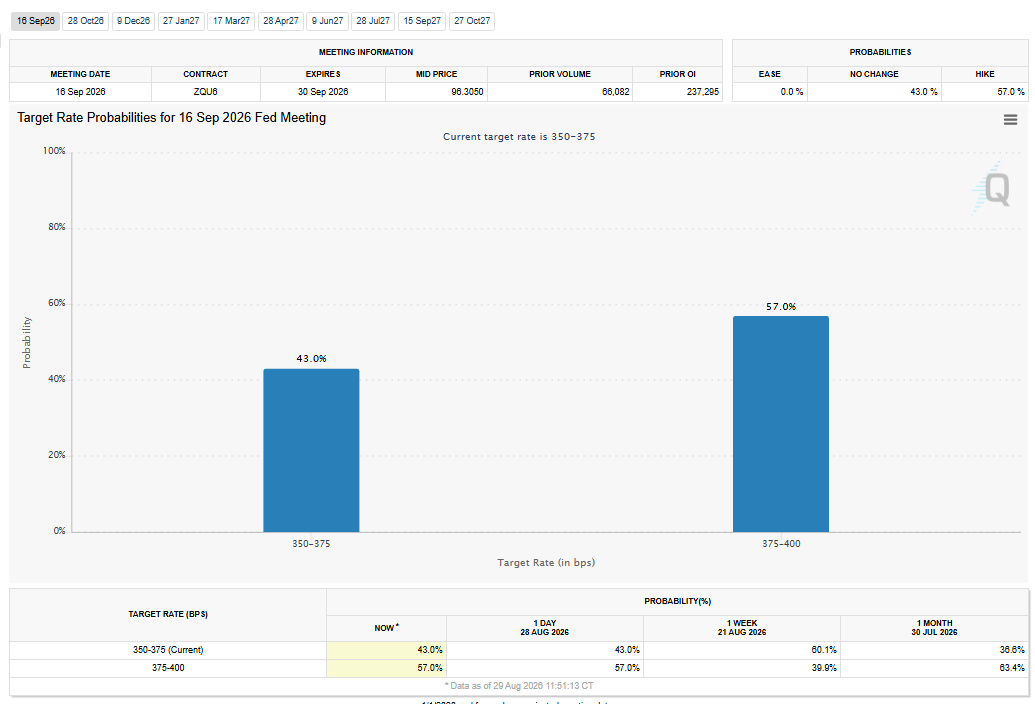
Warsh said the Fed still has work to do unless policymakers see convincing progress toward the 2% target. He added that financial conditions do not look restrictive. That was the line that moved the market. Fed funds futures repriced within the hour. September hike odds jumped to about 58%, up from roughly 35% before the speech. The 2-year yield hit 4.35%.
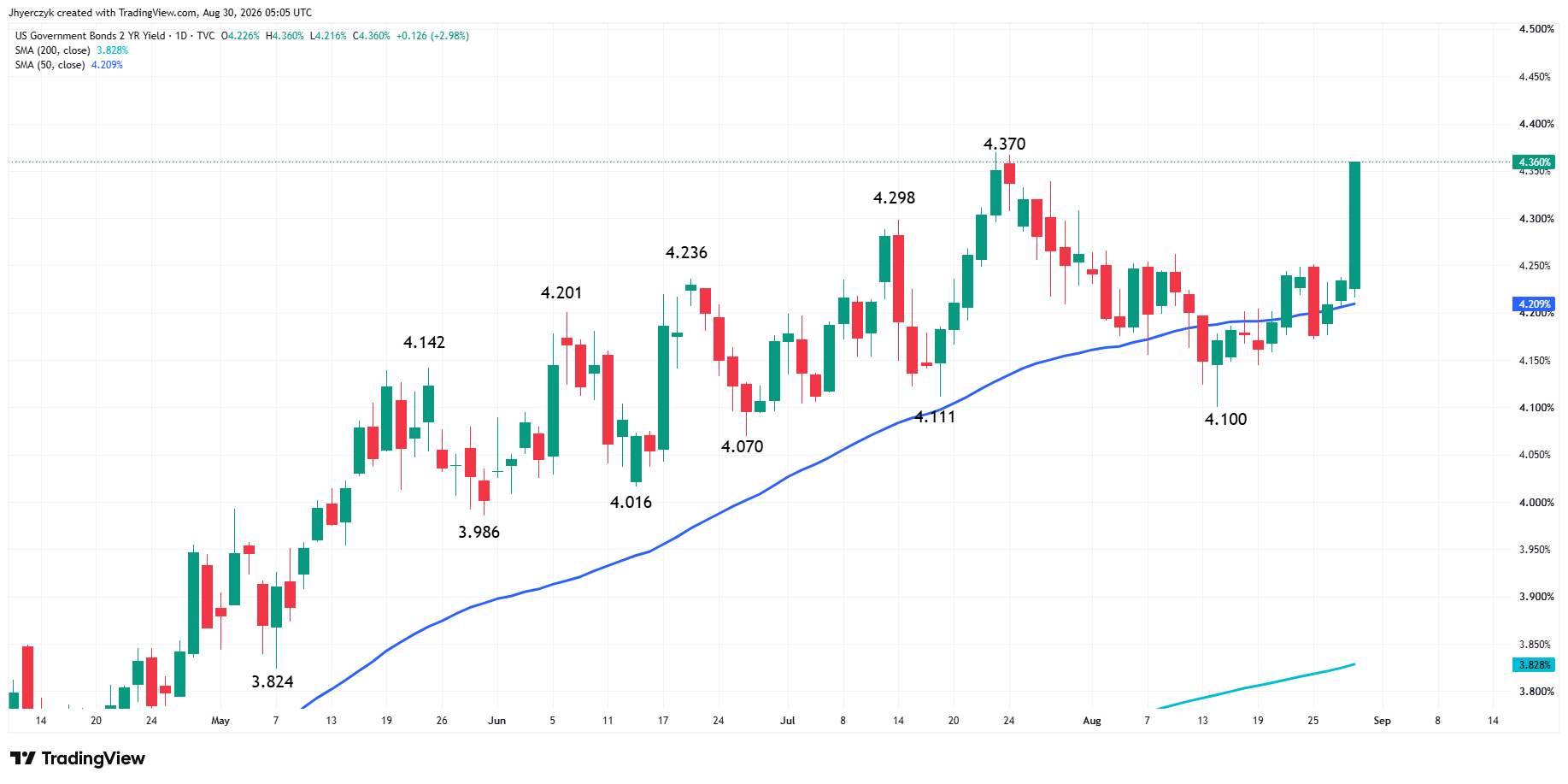
The Nasdaq had just run Thursday on Nvidia’s forward outlook. Warsh took that apart in one afternoon. Nobody was talking about AI earnings after the 2-year started moving. The conflict heading into next week is not complicated. The earnings are there. Warsh is saying rates are going higher. Friday told you which one the market respects more right now.
Nvidia Fell 4.6% and Marvell Made the Chip Group Worse
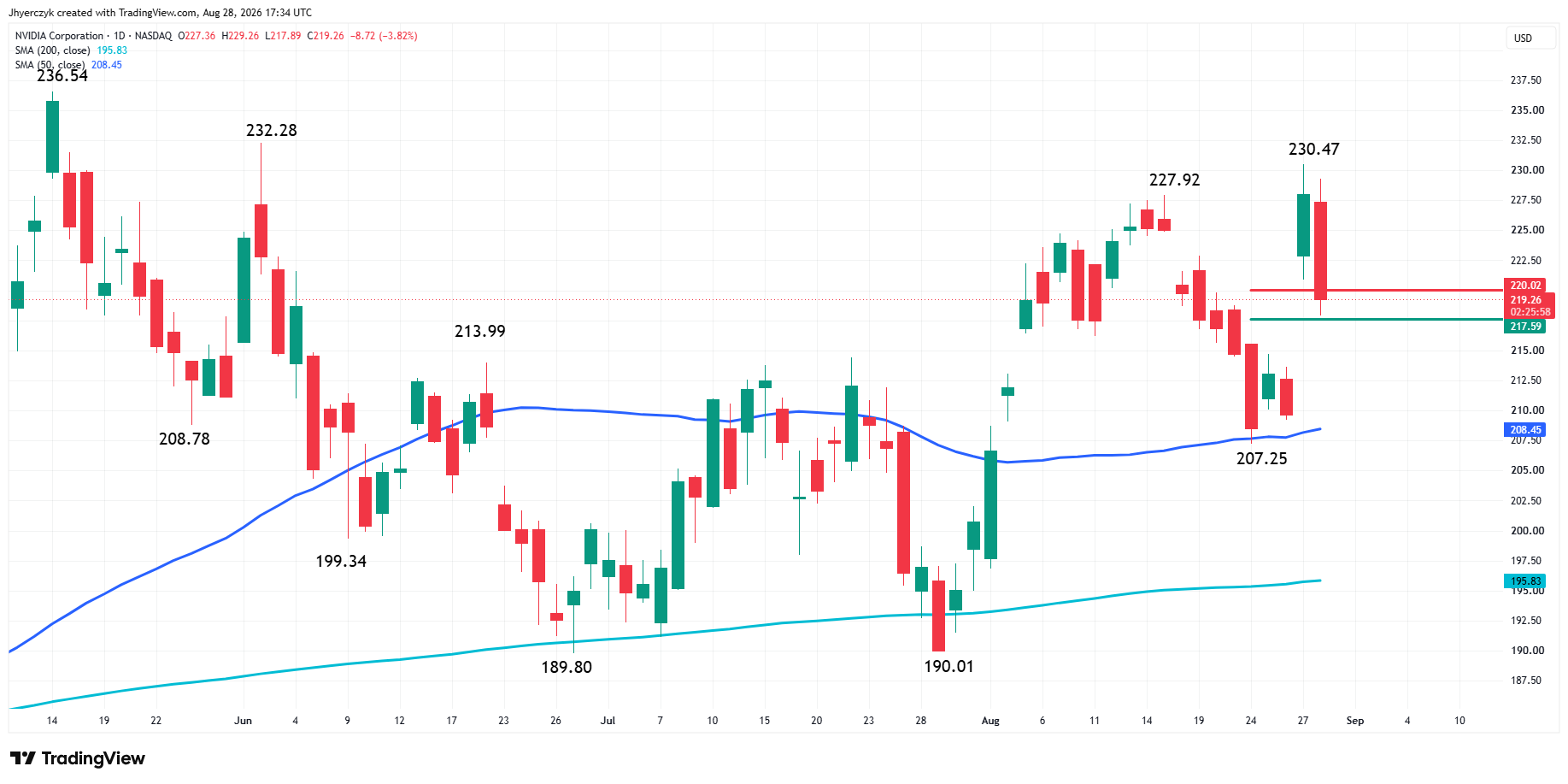
Nvidia fell 4.6% Friday after jumping nearly 9% Thursday on a forward outlook that cleared Wall Street. The numbers did not change between sessions. Buyers simply would not chase the stock at Thursday’s price once Warsh reopened the rate trade.
That was the tell. Nvidia delivered the catalyst Thursday. It could not hold the bid twenty-four hours later.
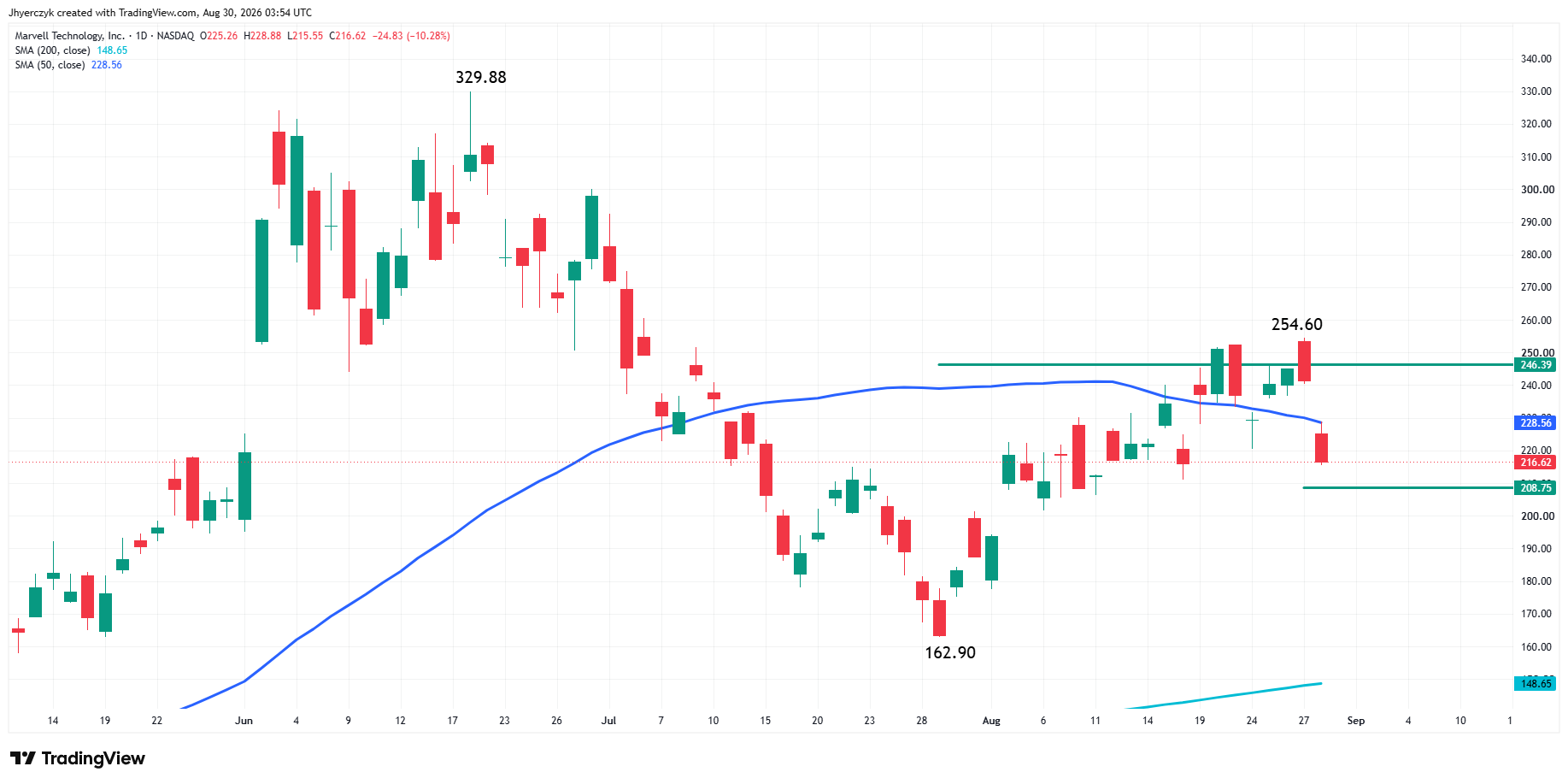
Marvell made it worse. The stock dropped 10.3% after its outlook raised questions about the timing of AI chip revenue tied to Google. The margin miss was narrow. A 10% drop on a small guidance disappointment. That tells you where expectations are sitting in the semiconductor group right now.
Software Earnings Proved the AI Revenue Story on Friday
Software caught a bid while the chip group was rolling over. Workday posted adjusted earnings of $2.75 per share on revenue of $2.65 billion. Both numbers beat. The company raised the lower end of its full-year subscription outlook and said AI drove new contract value.
Elastic ran more than 17% after beating quarterly estimates and raising full-year guidance. Adjusted earnings came in at 70 cents per share on $478 million in revenue.
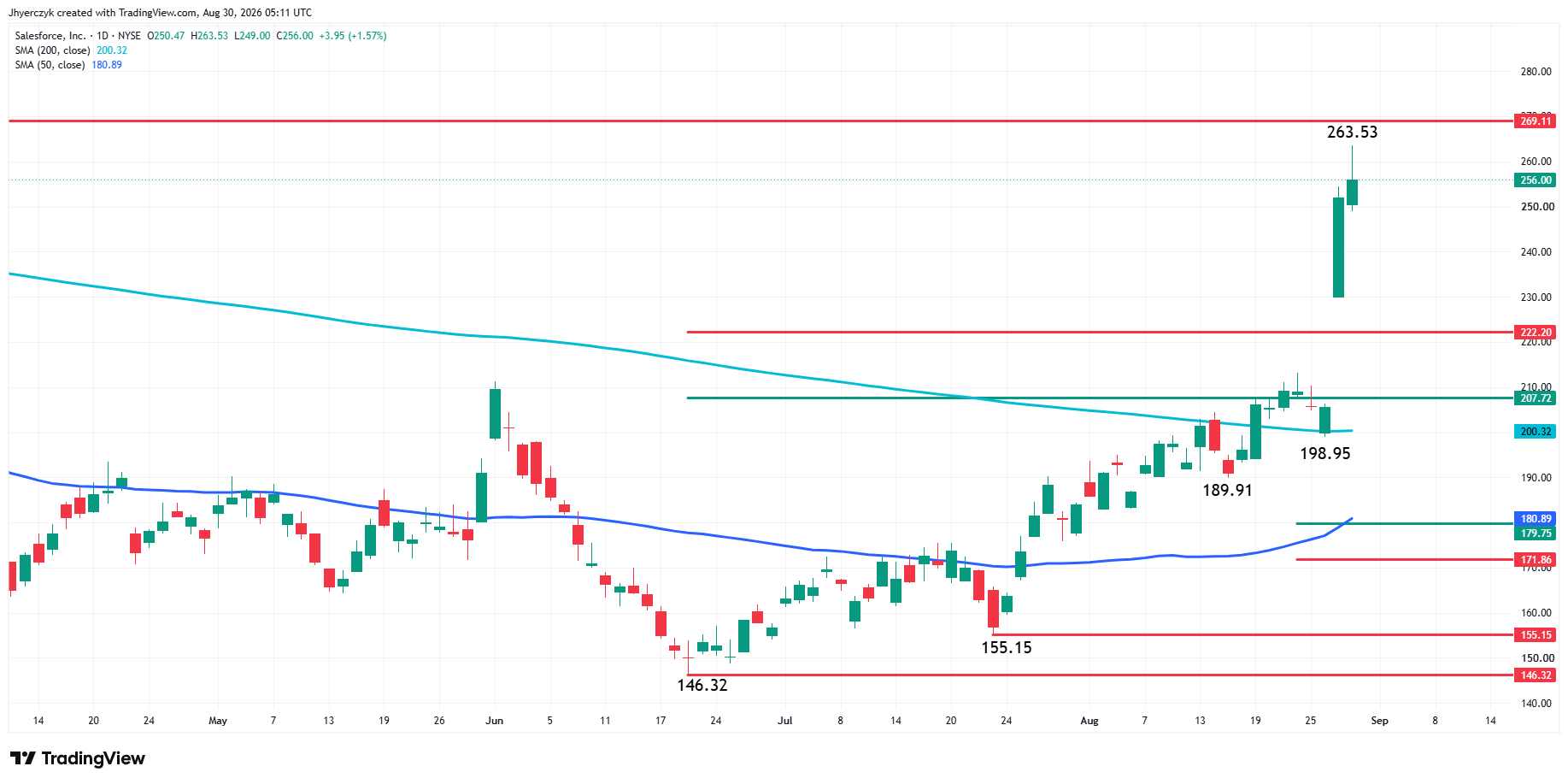
Salesforce extended Thursday’s move on raised guidance and a gain on strategic investments, including its Anthropic stake. ServiceNow added to the run after its finance chief said AI revenue remained on track for $1.5 billion full-year.
Buyers were paying for proof Friday. The software names that showed AI revenue got rewarded. The bid was real. It was also narrow. Buyers were picking stocks, not buying a sector.
Amazon, Alphabet and Apple Absorbed the Selling
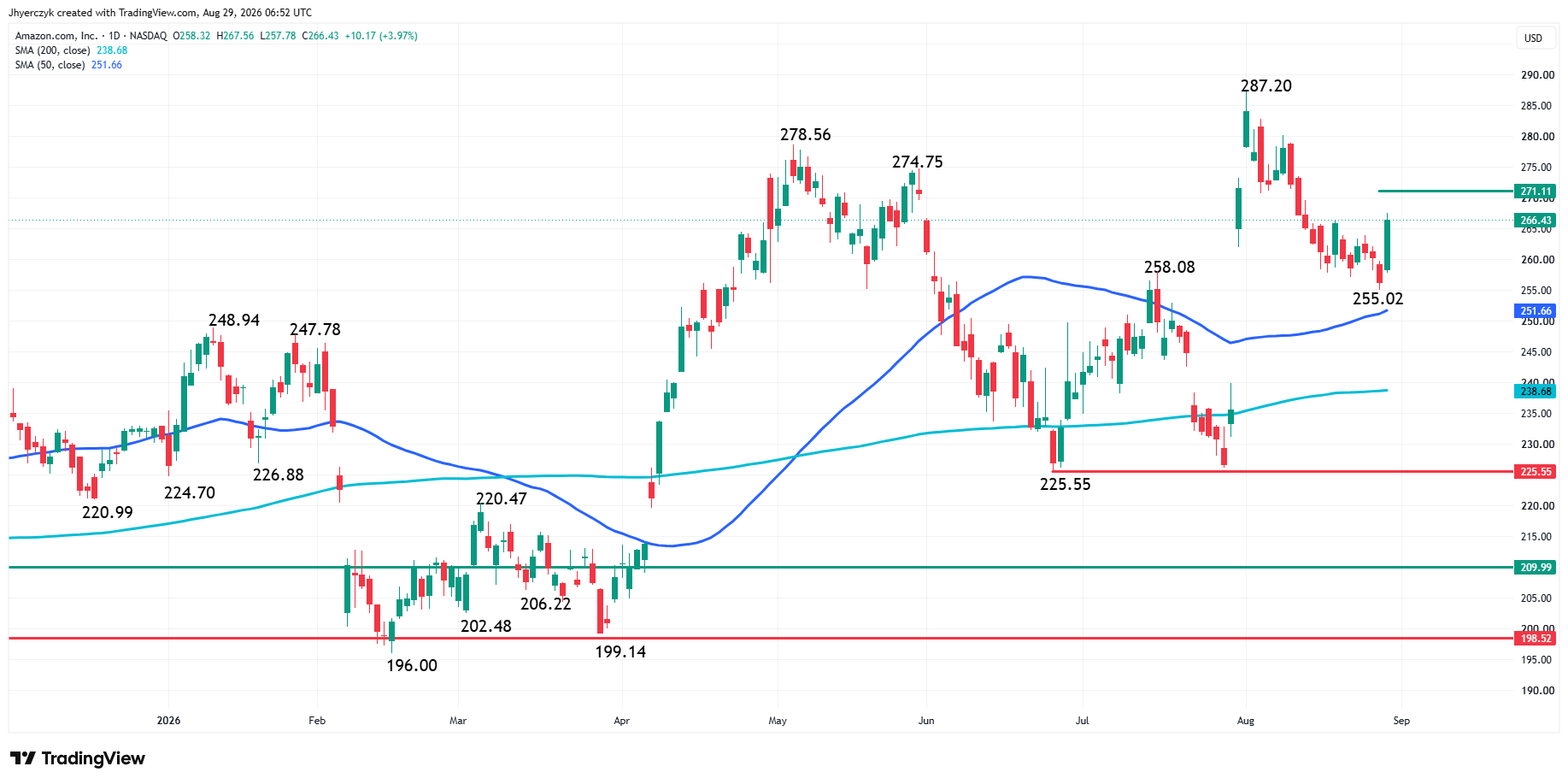
Amazon gained about 4% after Evercore ISI raised its price target to $355 from $315. The firm cited survey evidence that Alexa AI tools are driving purchases inside Amazon’s retail business. Not cloud revenue. Consumer spending tied to AI. Buyers showed up for that.
Alphabet rose 1.7%. Apple added 1.6%. Three megacap names and the software earnings winners carried the index Friday. Everything else was going the other direction. Semiconductors, crypto-linked stocks and smaller technology names were all lower. Take those megacap bids out and Friday looks a lot worse.
What to Watch
The September 16 meeting is the only date on the calendar that matters now. Warsh took hike odds from 35% to 58% in one afternoon and the 2-year jumped to 4.35%. Every employment and inflation print between now and that meeting either builds on Friday’s repricing or walks it back.
The software earnings were strong enough to hold the index together Friday, but Workday and Elastic cannot carry the Nasdaq if the rate trade keeps building.
The real question is Nvidia. The stock delivered the best earnings catalyst the chip group has had in weeks and could not hold the bid for a full session. If the name that beat every estimate cannot stabilize, the rest of the semiconductor group is not going to hold either. Marvell losing 10% on a small guidance miss showed that. When the margin for error is that thin, higher rates do not need to hit the whole market. They just need to hit the stocks where buyers are already stretched.
The index posted a potentially bearish closing price reversal top and is sitting right on the midpoint of its short-term range. That is the line. A failure there opens a move toward the 50-day moving average. If follow-through selling confirms the reversal, this correction could run two to three sessions before finding a floor.
More Information in our Economic Calendar.