



Oil Jumps as Hormuz Risk Returns
Crude prices leapt sharply on April 13 after the US – Iran talks broke down flat, sending a shiver down the spines of traders who’d been banking on a smooth resolution to the crisis. With that option now looking increasingly unlikely, the supply chain is starting to look a lot tighter. WTI blasted above $104 with gains of near 8% – that’s a serious move – while Brent ticked upwards towards $102, a clear sign that traders are now factoring in a very real risk premium to energy prices.
The US move to send a naval blockade to Iranian ports has only added to the jitters. The Strait of Hormuz handles a whoping 20% of the world’s seaborne oil – any prolonged disruption there could be a nightmare scenario.
The problem is, there’s still not much moving through the Strait at the moment. Tanker traffic is down, insurance costs are on the rise and logistics are getting increasingly knotty. And on top of all that, analysts are warning that sustained disruption could easily push prices up to a jaw-dropping $110 -120.
Yet, just as quickly, a shift in the diplomatic winds or a slowdown in demand could send oil prices crashing back down. So traders, not surprisingly, are glued to their screens for the latest in real-time geopolitical signals.
Natural Gas Struggles To Find A Footing Amid Energy Market Chaos
Despite all the turmoil in the energy markets, natural gas is still going nowhere. Prices are stuck near multi-month lows, weighed down by forecasters calling for mild US weather, which will drive down the demand for heating, and production levels that are still strong and steady – we’re talking over 108 Bcf per day.
And even though LNG exports are still flying high, domestic supply is still outpacing consumption – which means there’s no real upward momentum to be found in the gas markets. Unlike oil, though, natural gas markets aren’t directly affected by the Middle East tensions – the price action is largely driven by a few US-specific fundamentals.
The near-term outlook, though, is pretty soft, with little to suggest that gas prices will do much of anything until the seasonal demand and export flows come back into play.
Natural Gas Price Forecast
Every new Natural Gas analysis as it publishes, today's technical signal and key levels, live price — on one page.
See all Natural Gas forecastsNatural Gas Struggles To Find A Footing Amid Energy Market Chaos
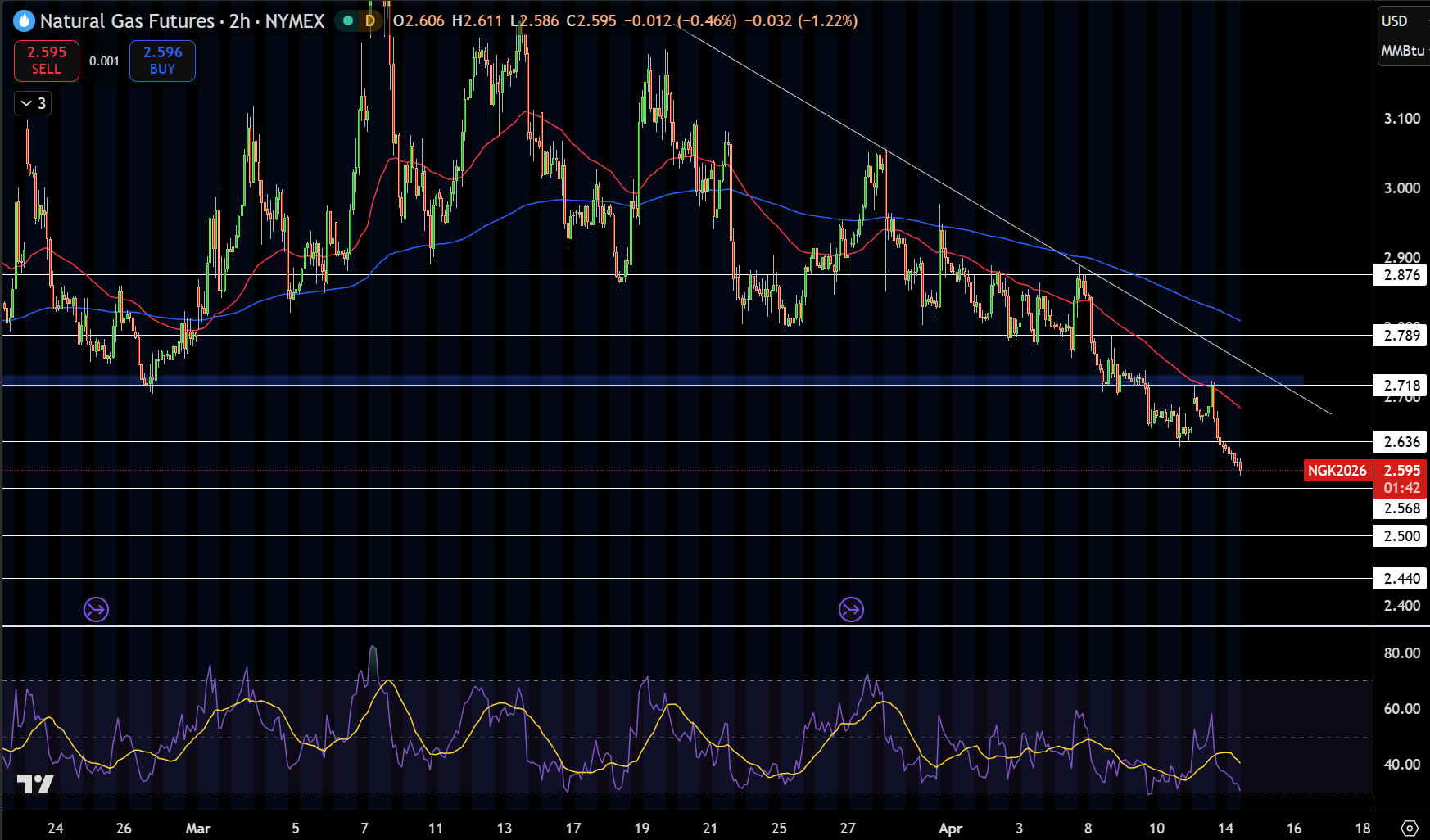
Despite all the turmoil in the energy markets, natural gas is still going nowhere. Prices are stuck near multi-month lows, weighed down by forecasters calling for mild US weather, which will drive down the demand for heating, and production levels that are still strong and steady – we’re talking over 108 Bcf per day.
And even though LNG exports are still flying high, domestic supply is still outpacing consumption – which means there’s no real upward momentum to be found in the gas markets. Unlike oil, though, natural gas markets aren’t directly affected by the Middle East tensions – the price action is largely driven by a few US-specific fundamentals.
The near-term outlook, though, is pretty soft, with little to suggest that gas prices will do much of anything until the seasonal demand and export flows come back into play.
WTI Crude Oil Technical Outlook: Pressure Below $100 Persists
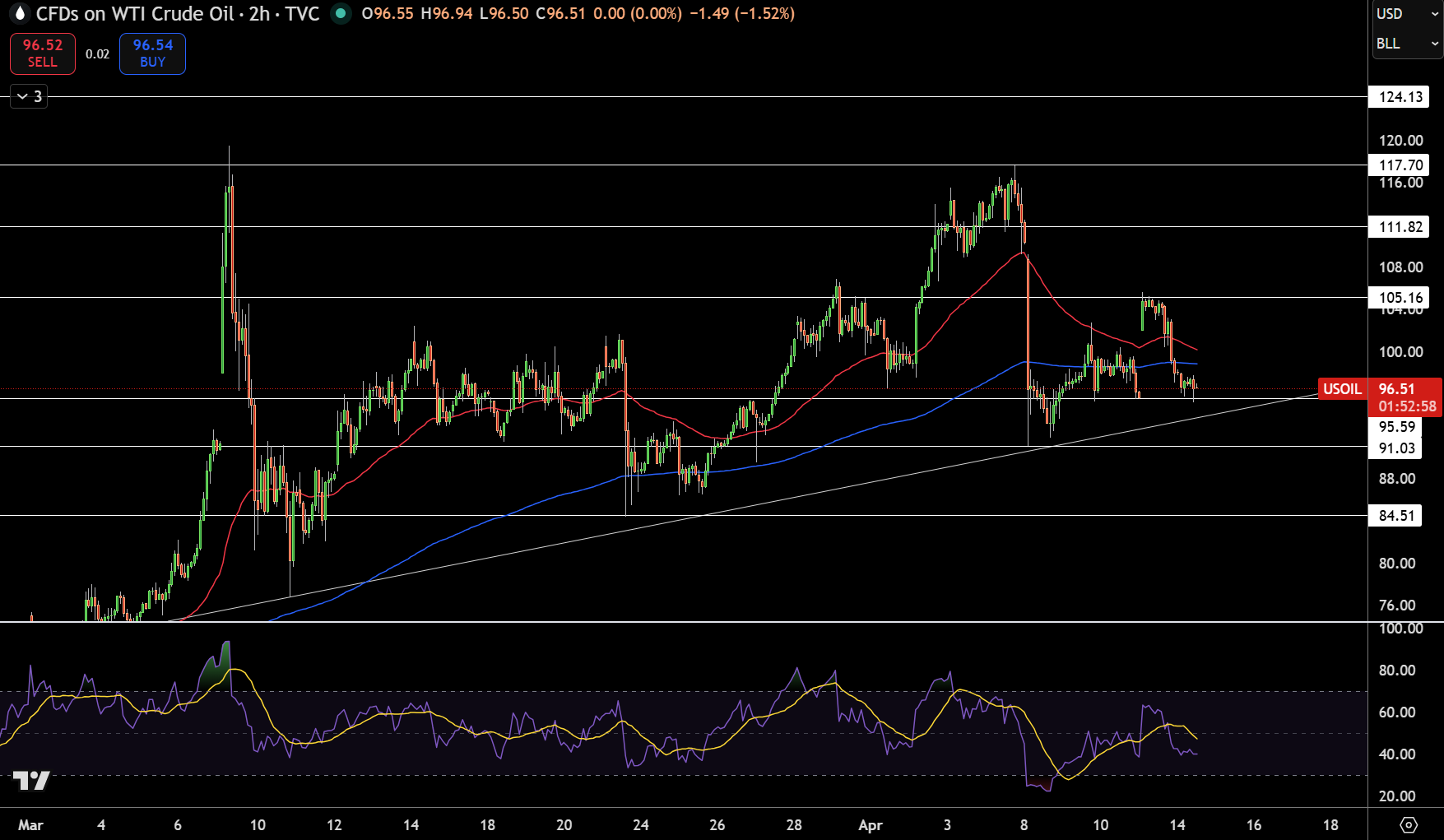
WTI crude is hovering around $96.50, looking like it’s struggling to break free from the weight of failing to hold onto the $100 psychological level. That failure has led to a bit of a pullback, with the price slipping below that 50-period EMA, and now the 200-period moving average down at $100 has itself become a bit of a roadblock – the dynamic resistance that’s proving tricky to overcome.
And then there’s the big picture: the price broke short-term higher lows, is currently testing out that ascending trendline around $95.50, and if that fails – which is looking possible – $91.00 could come into focus. You’re going to need to see a recovery back above $100 to even think about restoring any kind of bullish vibe to this.
Brent Crude Technical Analysis: Range Breakdown Signals Weakness
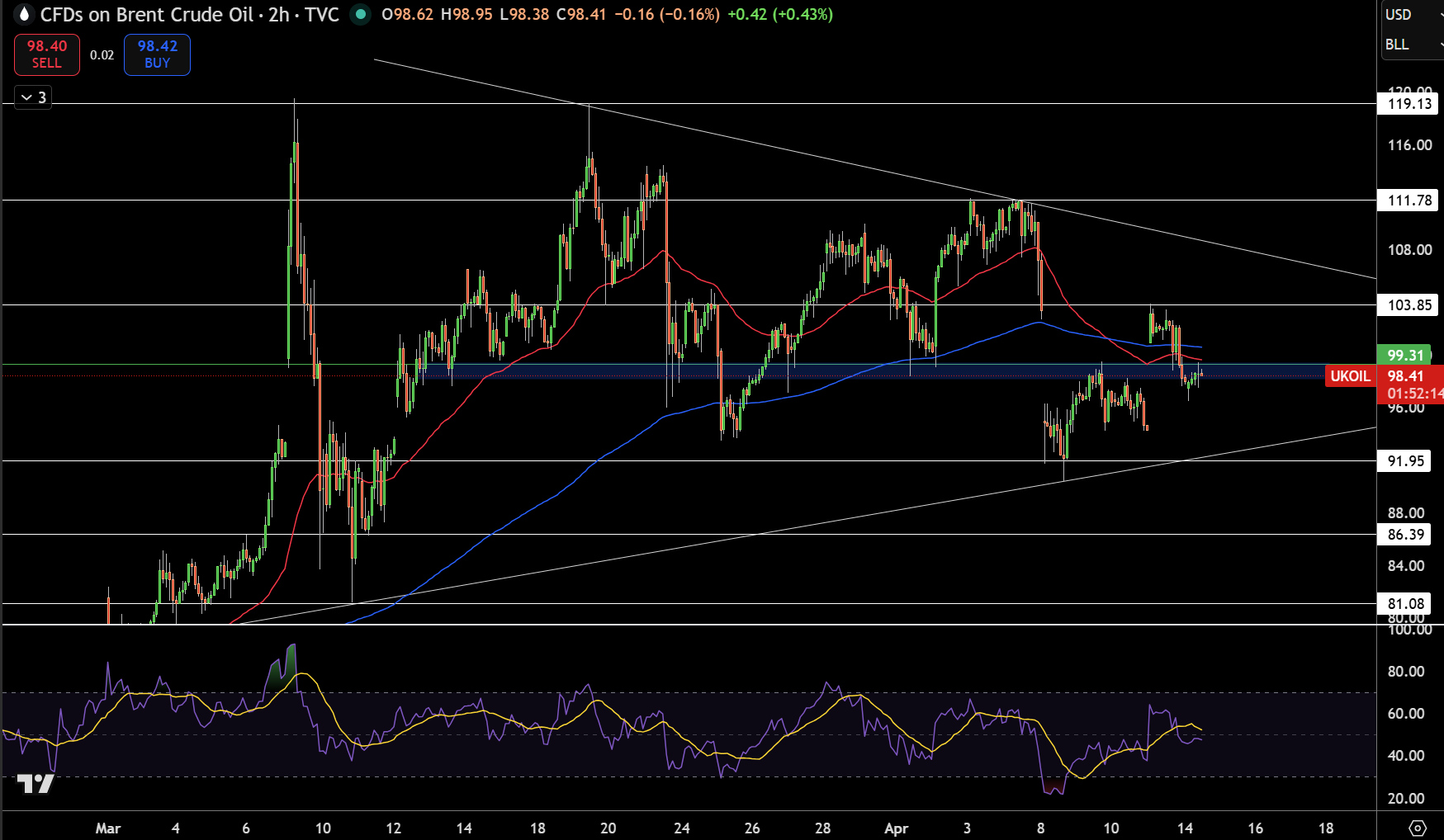
Brent crude is stuck around $98.40, just unable to get a grip on that $99.30 support-turned-resistance zone for the life of it. And if that wasn’t enough, both the 50 & 200 EMAs are sitting right on top of each other, telling a story of a loss of any kind of momentum that was being gained. And then there’s that descending trendline that’s been putting in an appearance ever since the recent highs and just won’t go away.
And to top it all off, RSI’s sitting down around that 45 mark – not exactly a picture of confidence up there. And so long as we can’t get above $100, the bias is still on the downside.
You start to see get a bit lower – below $96.00 and that could open the door to a visit from $91.95, while only getting above $103.80 would even start to convince you the sentiment is turning around.