



Oil Surges After Blockade Announcement Sets Off Supply Shock Fears
WTI crude shot up towards $104-$105, jumping by nearly 8-9% in one day after US-Iran talks fell apart and the threat of a naval blockade on Iranian ports was made public. This has sent oil prices soaring as the Strait of Hormuz, a critical choke point, now looks like a more serious concern – it’s the route for about 20% of the world’s seaborne oil.
Even though Saudi Arabia can offer alternative routes to some extent – and tanker traffic is still moving albeit at a reduced pace – supply risks are still pretty high.
The price of Brent crude also jumped towards $102-$103, showing a broad resurgence of the kind of geopolitical premium we thought was going away after the ceasefire optimism. Analysts now reckon if things carry on this way, oil prices could potentially pop to $110-$120 but it’s hard to predict what’s going to happen next – the market is still super volatile. It’s going to take a diplomatic breakthrough or a slowdown in demand to turn this around.
Natural Gas Stays Under Pressure As Energy Markets Tumble
Despite all the oil price turbulence, natural gas prices aren’t budging. They’re stuck near multi-month lows in the $2.65-$2.70 area because the weather has been unseasonably mild and US production is still chugging along at record levels – above 109 Bcf/day to be exact. Storage is full enough to keep prices from rising.
Unlike oil, the natural gas market isn’t getting too caught up in what’s happening in the Middle East – it’s pretty much driven by supply and demand in the domestic market. And unless the weather flips or we see a surge in LNG exports – not too likely at this point – the short term outlook for gas prices is pretty unexciting.
Natural Gas is still Struggling Despite Rebounding a Bit
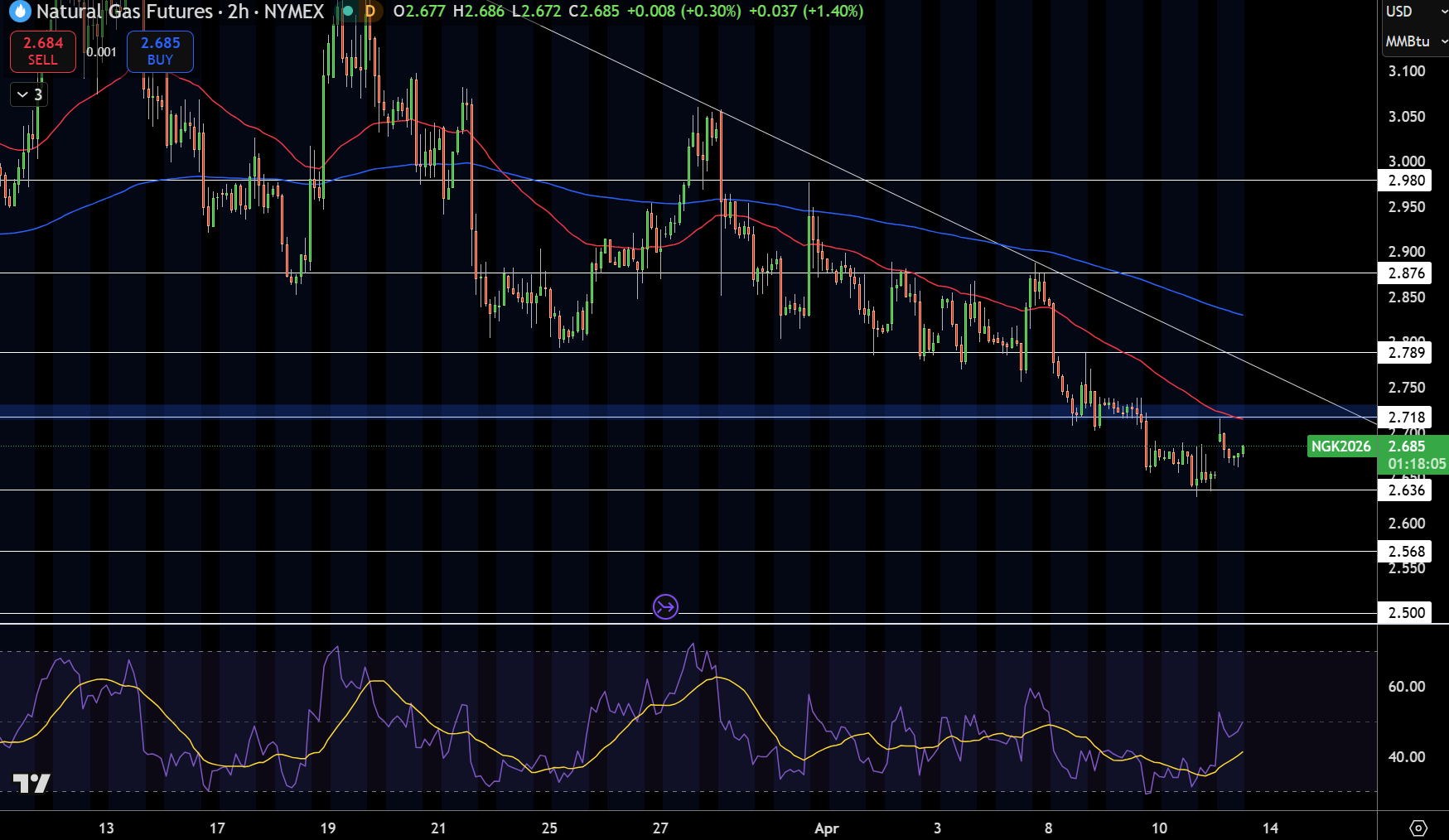
Natural Gas still has a bit of a problem, it just cant seem to get over the $2.75-$2.80 level which has been the resistance zone for a while. The descending trendline is still capping the upside and the price action just shows lower highs and some pretty weak looking candles. Both the 50-day and 200-day EMAs are trending downwards which is just telling us the bearish trend is still intact.
The RSI meanwhile is kind of poked its head up towards the 40-45 zone but not really getting into the oversold region. The immediate support area is $2.63 and if it breaks that then you could see further falls coming. Only if it can finally break through $2.80 will we start to see things change in its favor.
Natural Gas Price Forecast
Every new Natural Gas analysis as it publishes, today's technical signal and key levels, live price — on one page.
See all Natural Gas forecastsTrade idea: If you think its goin to go lower, look to sell below $2.63 and target $2.56, stop loss set above $2.75.
WTI Crude Oil Sticks Above $100 Mark
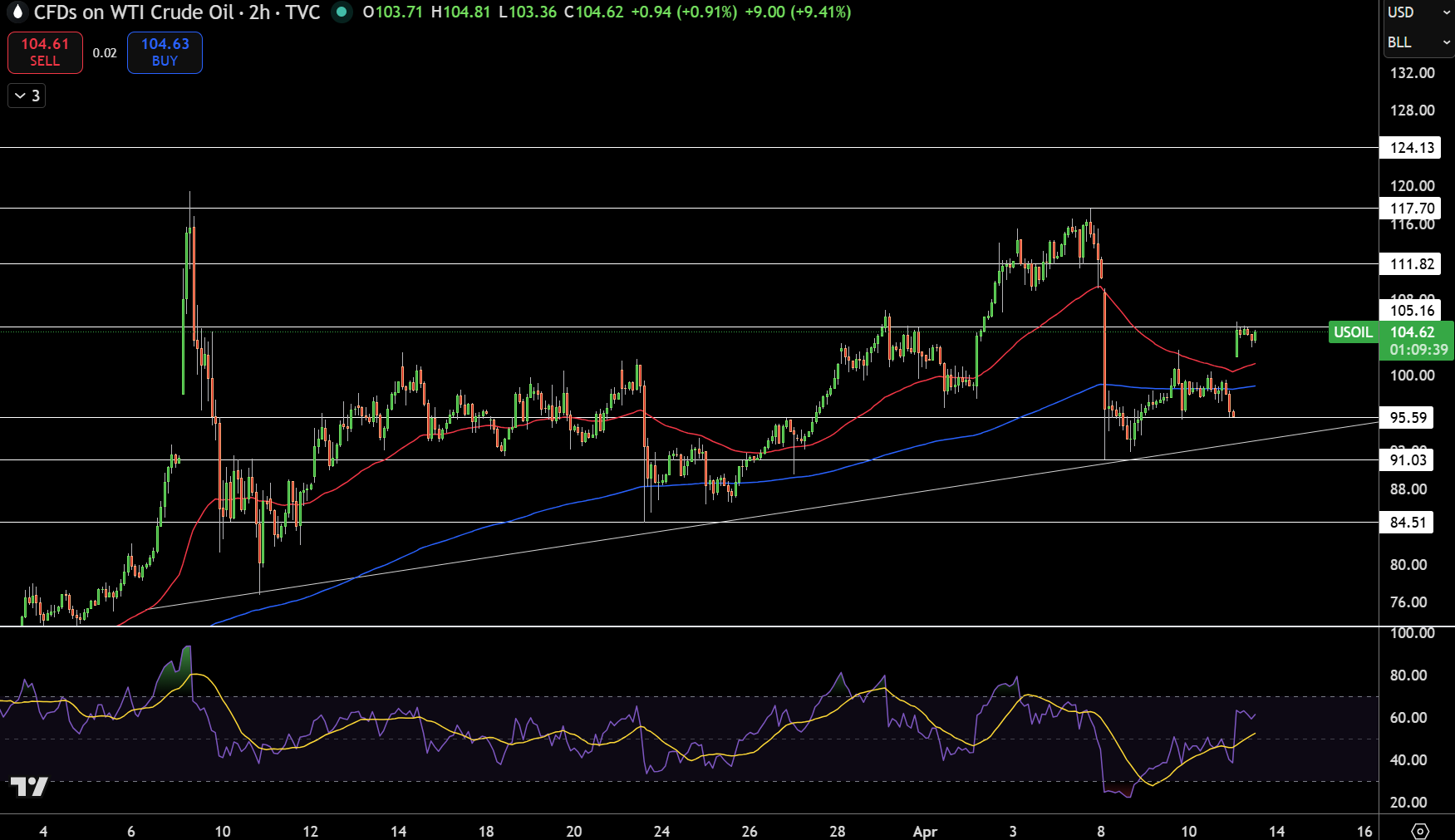
WTI is currently trading around $104 after doing a bit of a U-turn off the $95–$96 area where buyers pounced on an ascending trendline. The price just came up with a strong looking bullish engulfing candle, suggesting people are getting back in after that big sell off. The 50-day EMA is sitting at around $101 which the price is currently holding above – thats a good sign – while the 200-day EMA has come in at $95 and is still looking like a pretty solid floor.
The RSI has picked up a bit towards the 55-60 zone, not yet overbought and still moving upwards, so things look like they are on the up. A little short term range is starting to form between $100 and $105, and nice to see the higher lows still intact.
Trade idea: If you think its goin to go higher, look to buy above $105 and go for $111, stop loss set below $100.
Brent Crude is Still Tugging at $103 Barrier
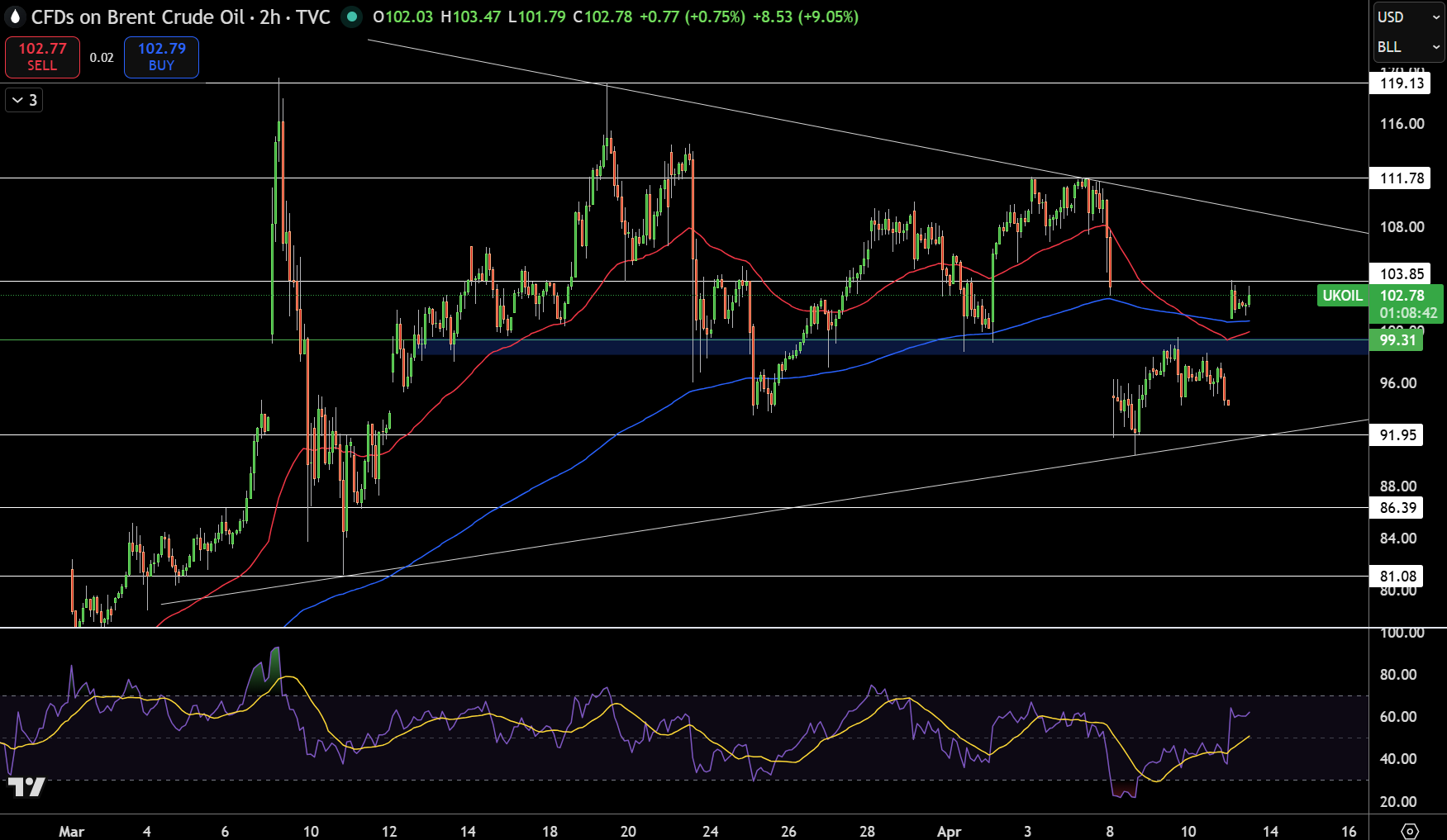
Brent is just hovering near the $102–$103 zone after getting back above the $99 level which is where the buyers used to be last time around. It also broke out of a pretty stubborn descending trendline which was giving it a bit of a tough time, so that was a good sign. Now we see smaller bodied candles showing up near resistance which is just showing us a bit of indecision.
The 50-day EMA is just sort of flailing around $101 and the 200-day EMA still holding pretty firm at $96. The RSI meanwhile is just kinda hovering around the 55 zone which is just about neutral/bullish – so what does it mean ? A break through $104 and it looks likely to push on towards $108.
Trade idea: If you think its goin to go higher, look to buy above $104 and go for $108, stop loss set below $99.