Japan’s stock market moved higher after the US and Iran signalled progress toward a ceasefire. The Nikkei 225 surged higher after forming strong support and consolidating within the key zone to look for further upside. Oil prices corrected from the resistance zone while gold (XAU) and silver (XAG) prices rebounded higher. The easing of geopolitical tensions resulted in reduction of market uncertainty. Japanese stocks gained momentum that pushed the Nikkei 225 into the decision zone.

Ceasefire Optimism Lifts Nikkei as Semiconductor Strength Offsets Energy Risks
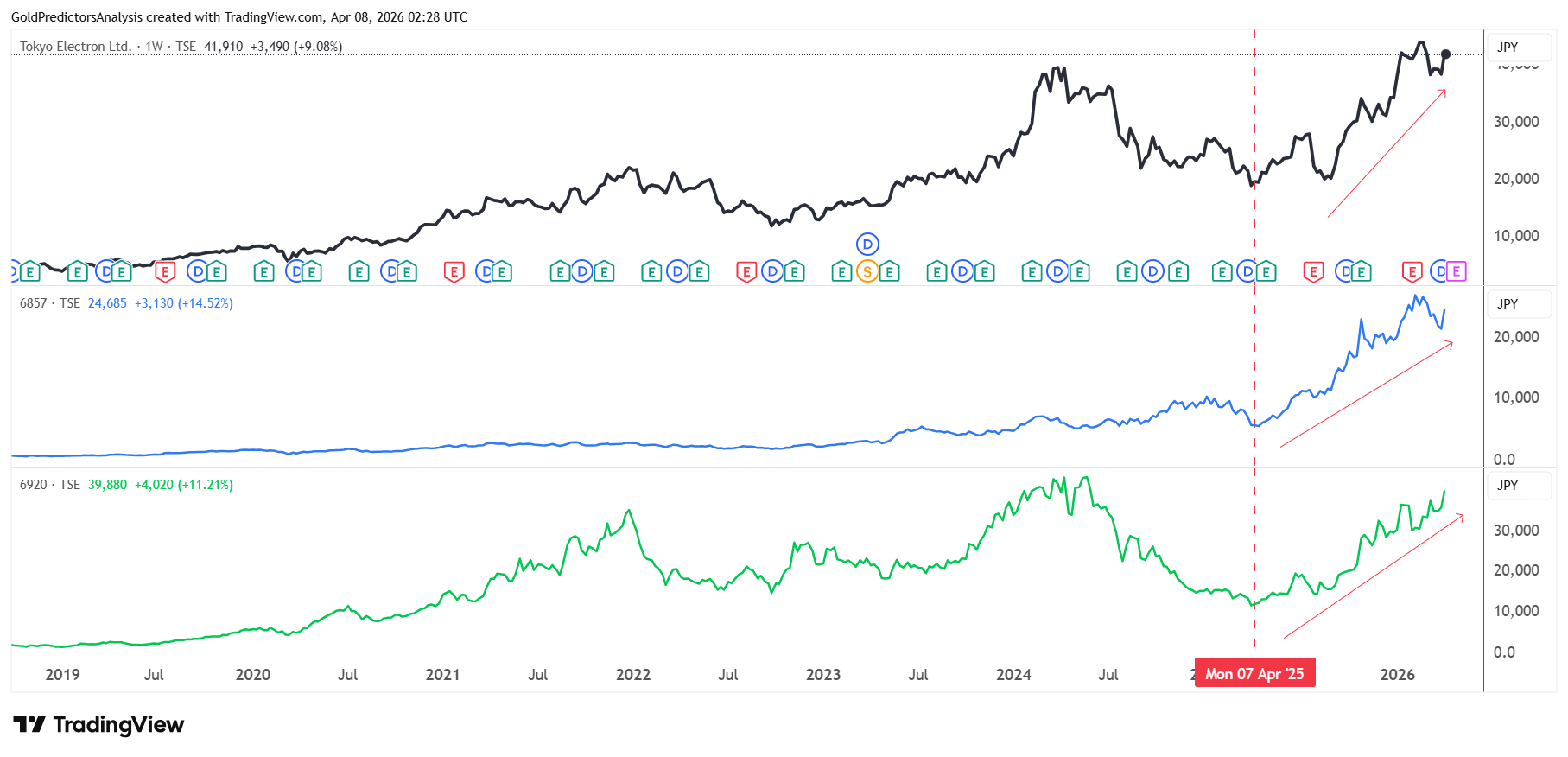
The semiconductor stocks have been the driving force behind the strong performance in 2025. The chart below shows that Tokyo Electron, Advantest Corp and Lasertech Corp show strong gains in 2025 and form positive price action in 2026. These gains suggest that as investor optimism rises, the demand for investing in growth areas and technologies will increase. A high level of trading activity across all segments of the exchange indicates that confidence among domestic investors remains strong in the near term.
Despite these positive signs, the macroeconomic pressures continue to build. Despite the easing of geopolitical tensions, the surge of oil prices has disrupted the global supply chain which may take time to recover. The Strait of Hormuz has been closed for over four weeks. This has major implications for Japan because Japan’s economy relies heavily on imported energy. The current Japanese administration, led by Sanae Takaichi, is actively pursuing diplomacy through Masoud Pezeshkian. In addition, Japan is exploring alternatives to its current energy supply chain.
If global tensions rise further after the 2-week ceasefire, higher energy costs could negatively impact profit margins, which can limit discretionary spending by consumers. This environment creates a very challenging environment for Japanese equity markets.
However, Japanese stocks show resilience in the short term and look for further upside.
Nikkei Price Forecast
Every new Nikkei analysis as it publishes, today's technical signal and key levels, live price — on one page.
See all Nikkei forecastsNikkei 225 Technical Outlook: Recovery Builds as Index Tests Breakout Zone
From a technical perspective, the Nikkei 225 has broken the ascending channel pattern following the US-Iran war in March 2025. The breakout of the ascending channel pattern has broken the bullish trend that was initiated in April 2025.
However, the index dropped to the 50,000 level and initiated a strong rebound. The strong support at 50,000 is seen by 200-day SMA.
The chart below shows that the index is now testing the ascending channel pattern after the US-Iran ceasefire news at the 55,000 to 56,000 level. Now, the index is currently at the same level where the breakdown in Nikkei 225 started. A break above this zone will trigger significant rally in the index.
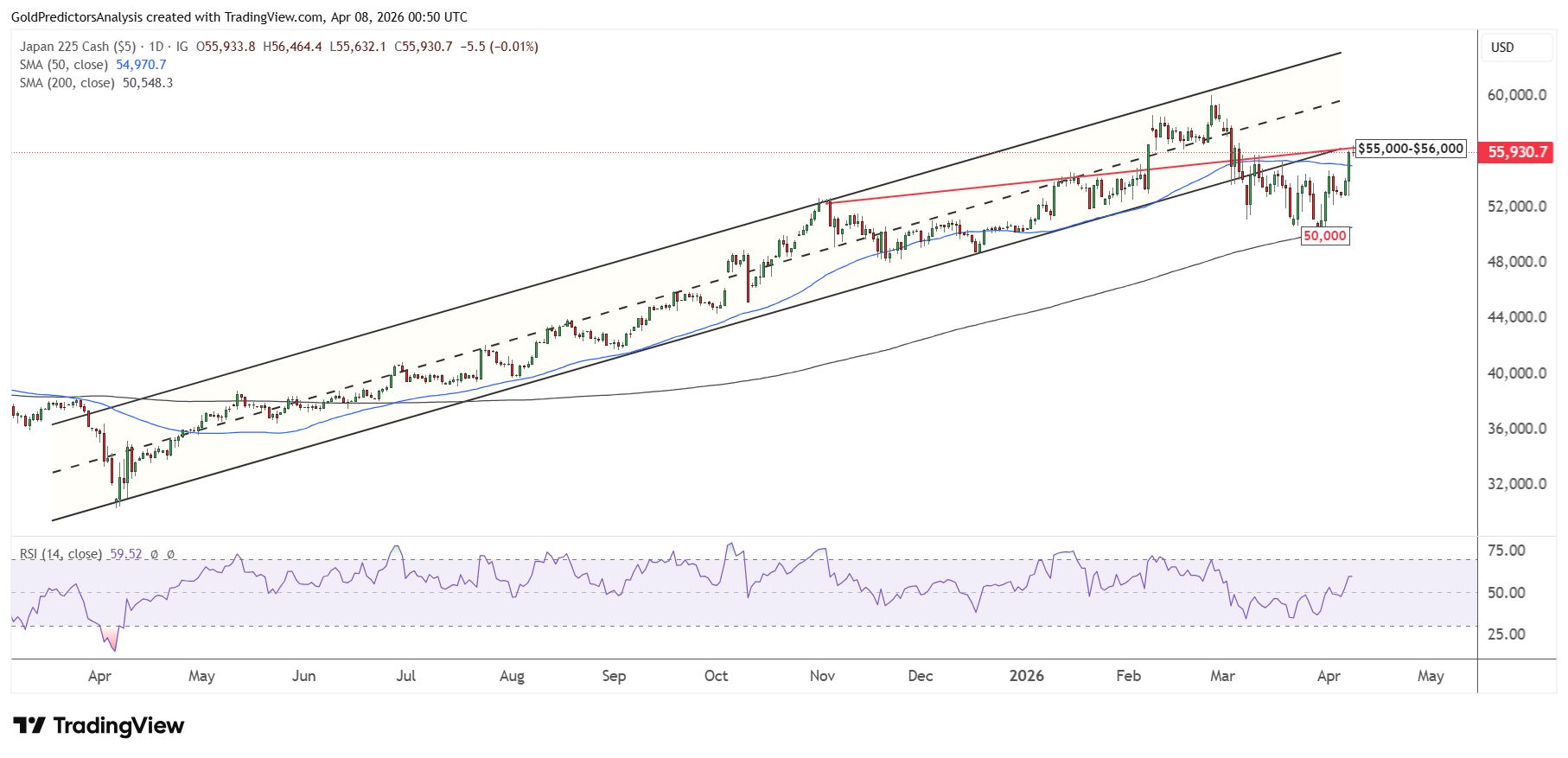
As long as the index remains above 50,000, it can attempt to rally towards 60,000 in the short term. However break of 50,000 will likely push the index lower towards the 46,000 area.
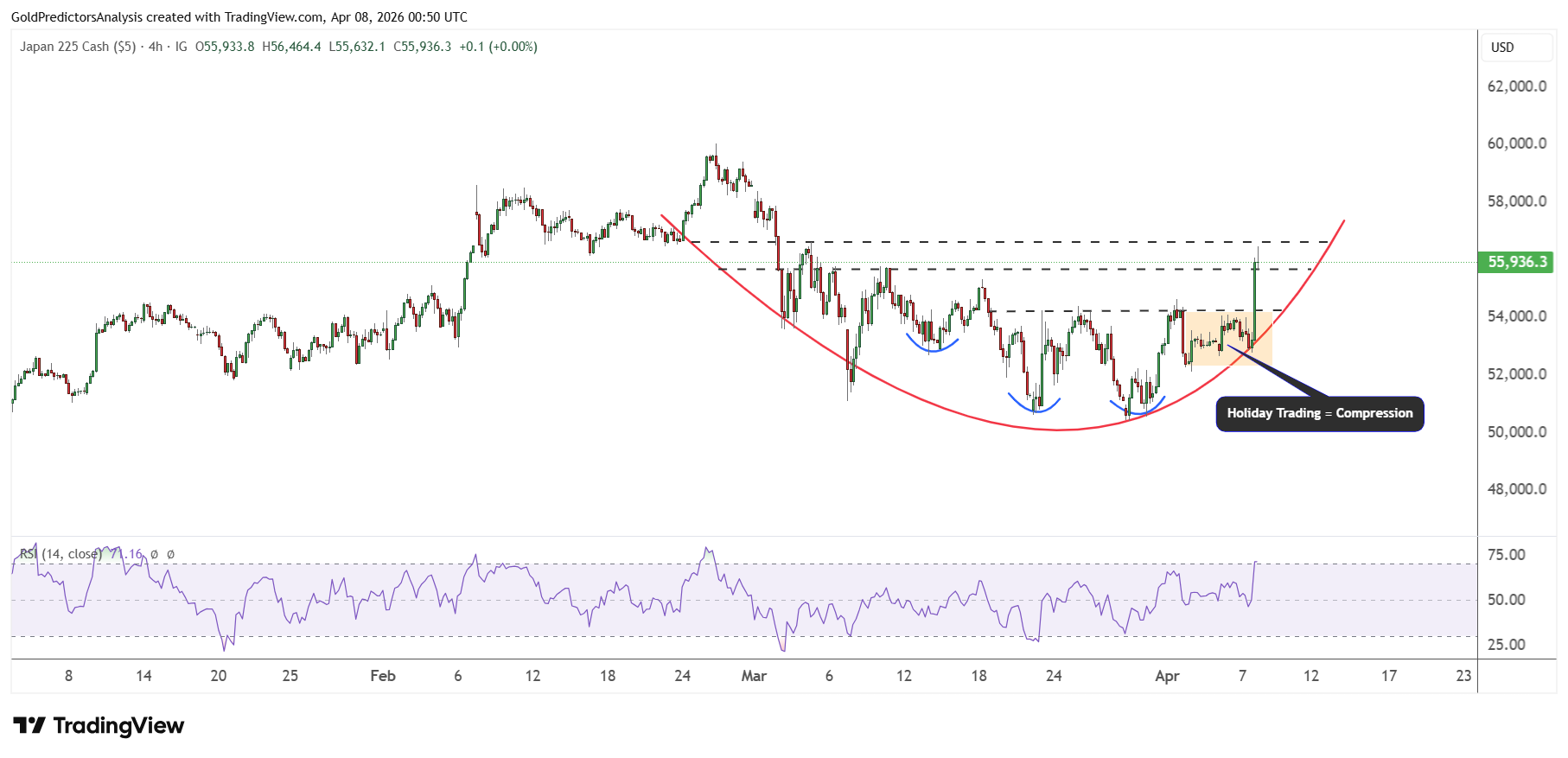
The 4-hour chart also shows a bullish price structure with the rounding cup pattern as discussed in the previous article. The immediate resistance is 56,600, and a break higher is likely. A break above 56,600 will indicate a move to 60,000. The emergence of price compression before the price surge is a positive development in the index.
Bottom Line
The Nikkei 225 is recovering from support as tensions are declining and risk assets are favoured. The strong recovery from major support suggests that buyers are still active in the market. The strength of semiconductors is still a positive driver and underpins the positive outlook. Nonetheless, there is uncertainty in the background due to energy risks and disruptions in supply. The index is currently trading at an important decision area of 55,000 to 56,000. An extended upward movement from this decision area can prolong rally to 60,000.