


Stretched prices and specs are making headlines again, but is there a structural risk? Just take a look at the Oman/Dubai spread. When you try to pay attention at how risk is priced, there are two key things to bear in mind: Structural pricing and mean reversion.
A View on Structural pricing
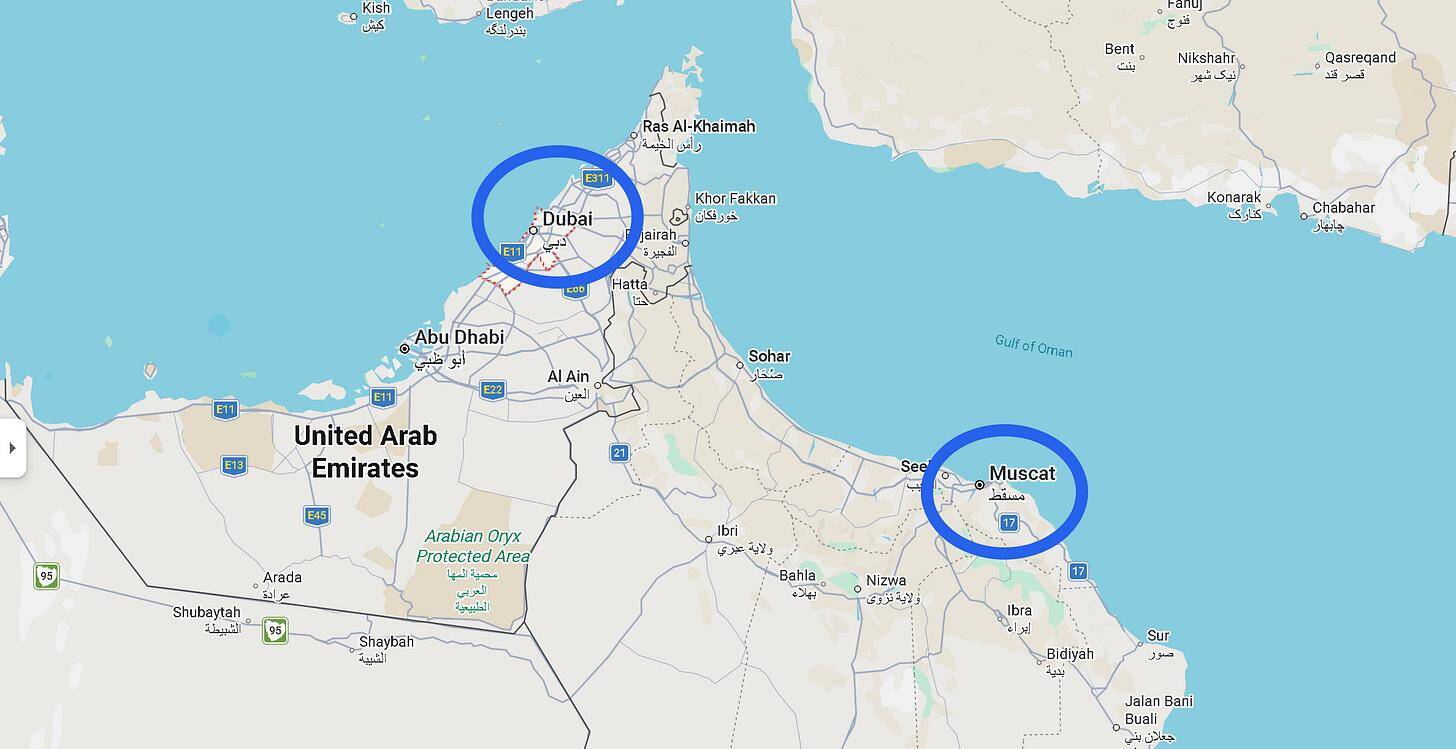
The Dubai–Oman spread matters because it isolates geographic risk within the Middle East crude complex. Dubai crude represents barrels loaded inside the Persian Gulf that must transit the Strait of Hormuz; Oman loads outside the Strait and avoids that choke point.
In normal conditions, the spread trades in a relatively tight range, driven by refinery demand and quality differences. But in periods of credible disruption risk, the relationship can dislocate sharply. Oman strengthens as refiners pay up for logistical security, while Dubai weakens as buyers discount transit exposure. A sustained widening signals that the market is pricing physical vulnerability, not just headlines.
Conversely, if the spread barely moves during geopolitical escalation, it suggests traders believe flows will continue uninterrupted. In short, the Dubai–Oman spread is not just a relative value trade. This is how it looks at the moment.
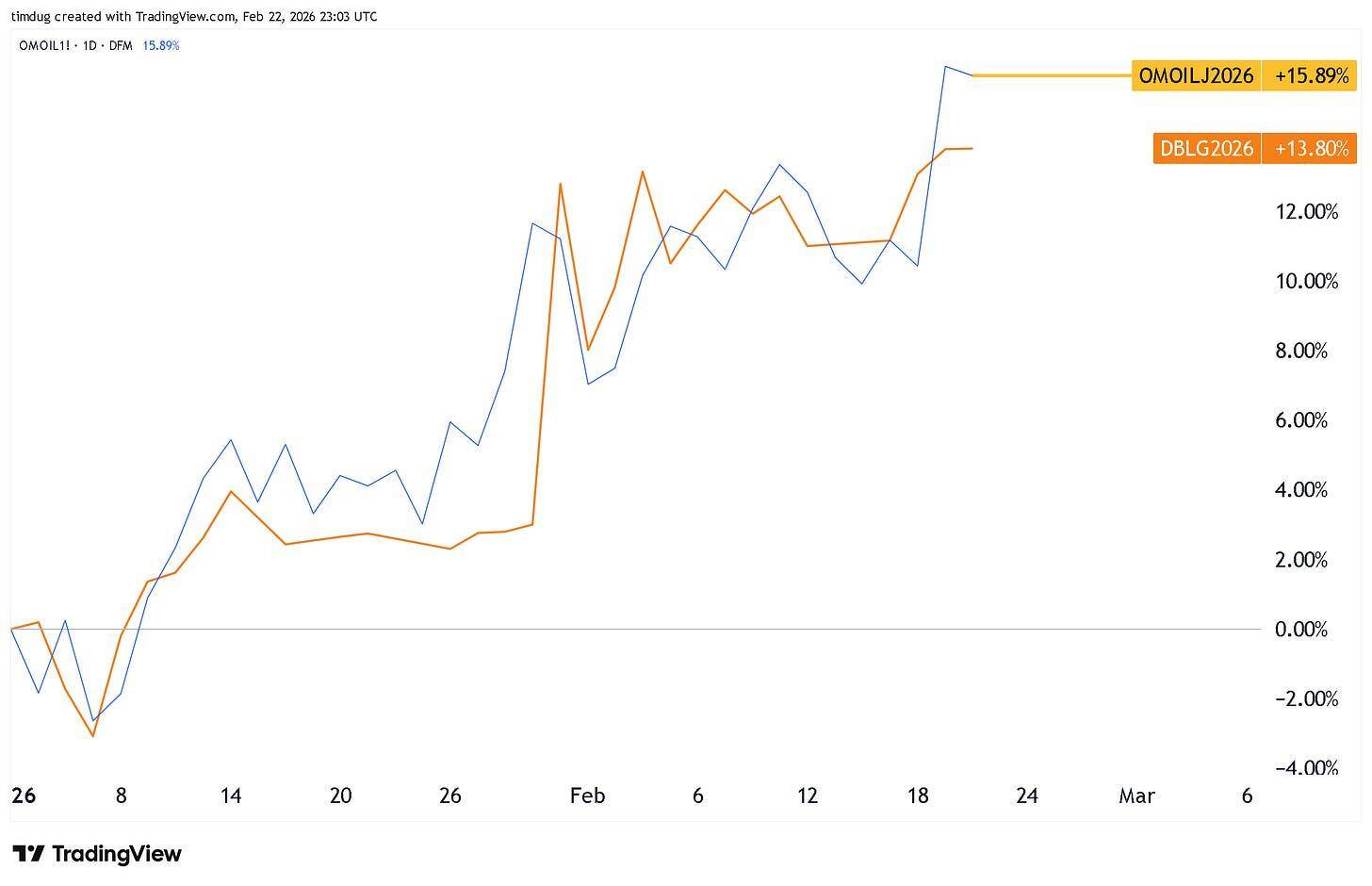
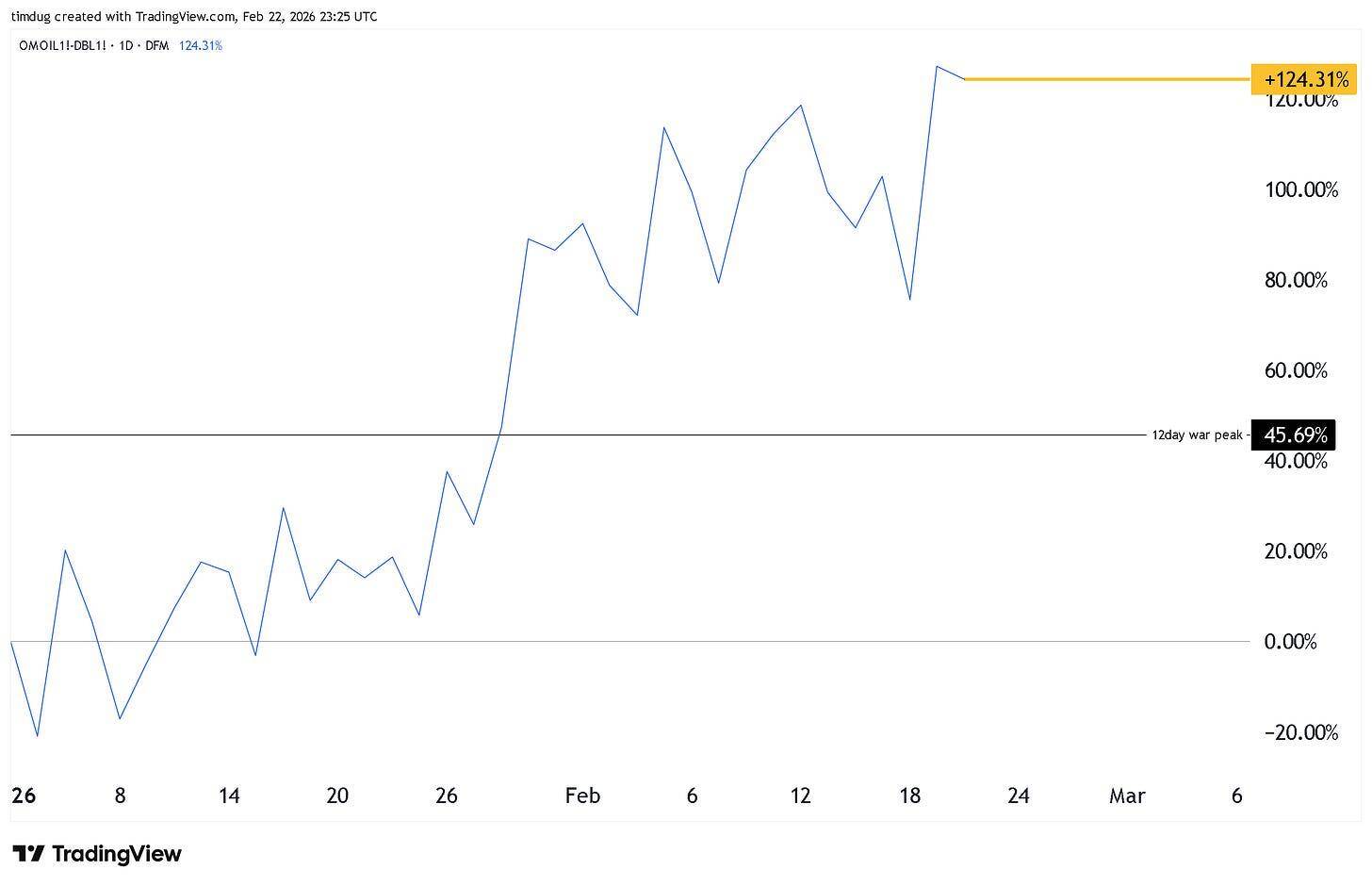
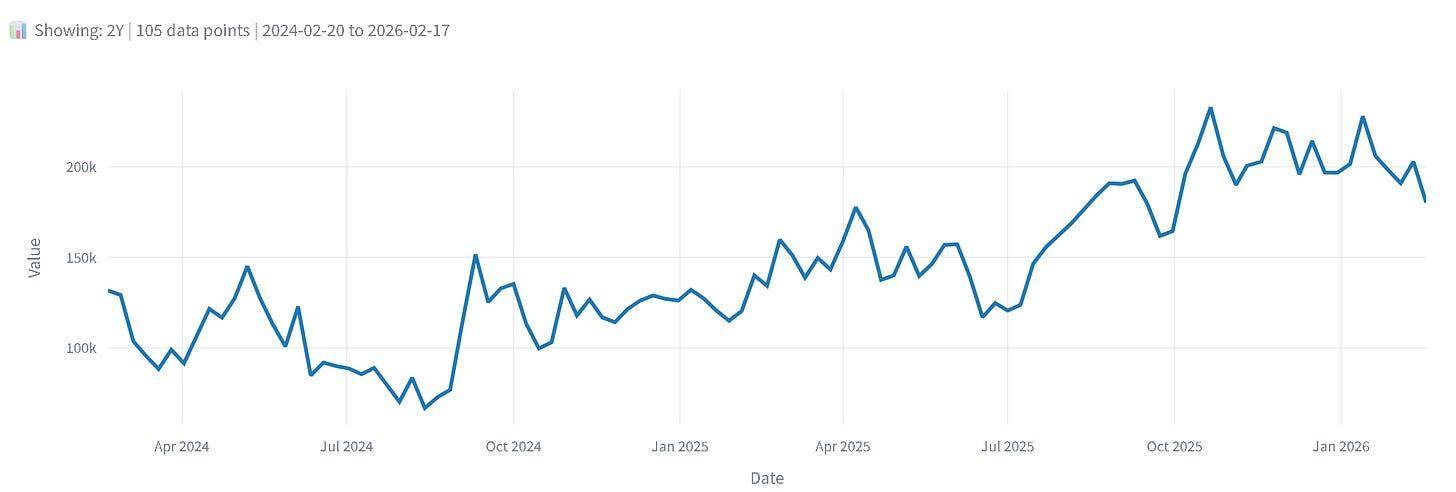
We see that for the YTD, the spread has kicked recently, with Oman trading 3%/ 300 basis points over. However, the spread of the two OMOL-DBL has increased 124% YTD.
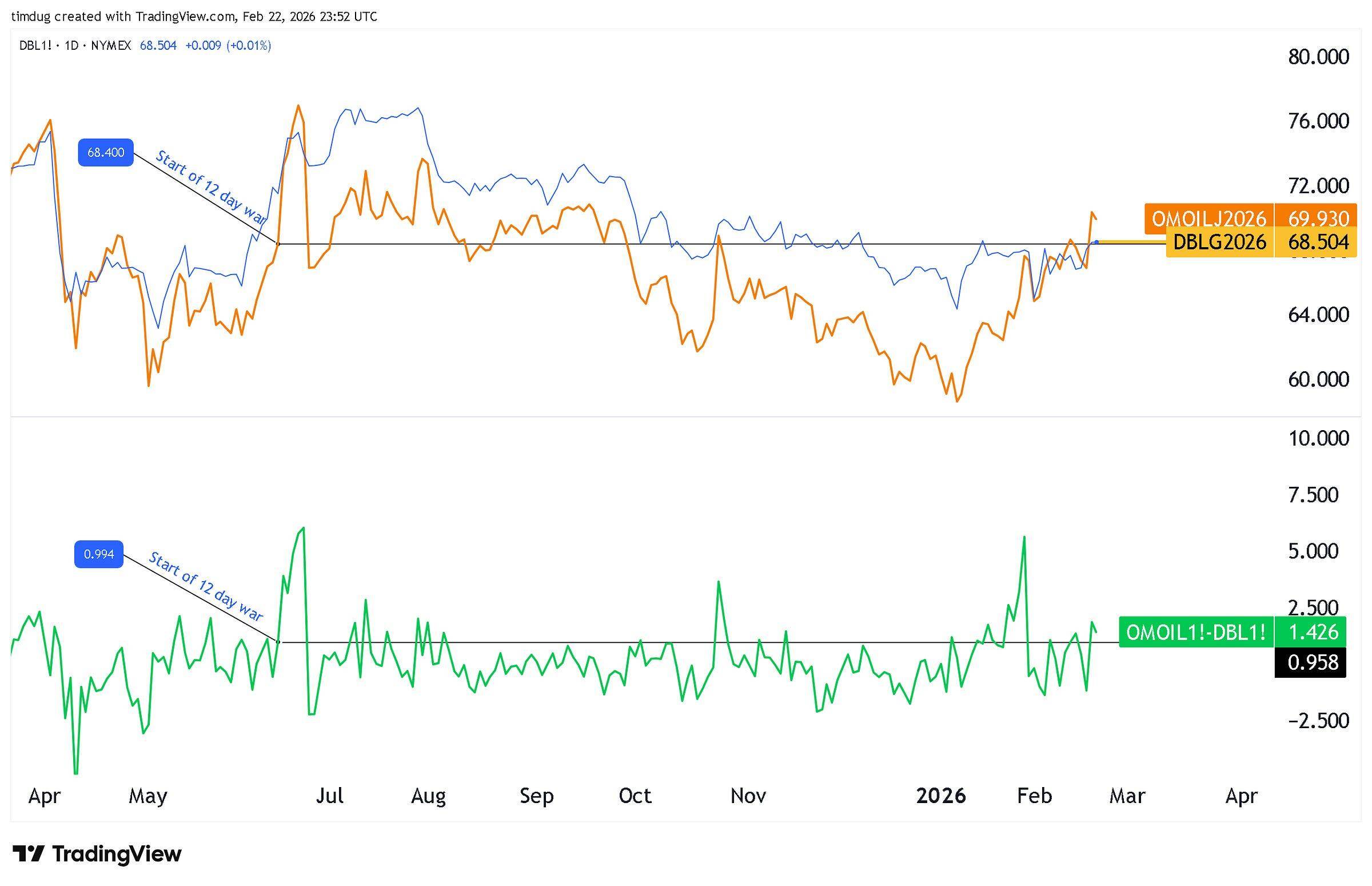
Fortunately, we have a recent risk reference from The 12-day war which priced in on the 12th June 2025. In the chart below, on the top graph you see the two products trade, then below in green, the spread. It is obvious that while not going wild, there is structural pricing starting to occur, ie. Oman going bid over Dubai.
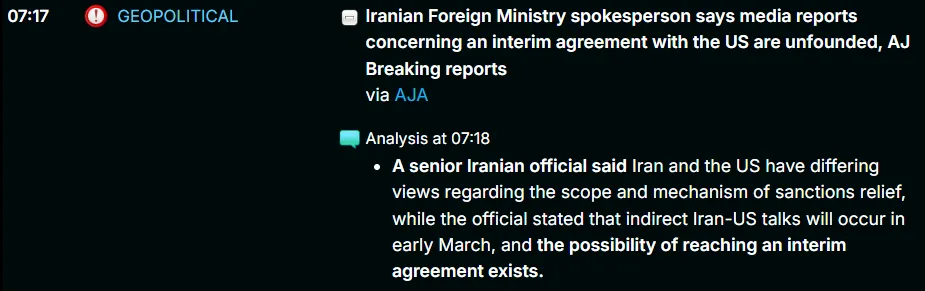
What is telling that we have STRUCTURAL pricing risk here, is that we are trading OVER the 12 day war inflection pricing on the spread as of last Thursday, 19th Feb.
This is the early warning sign that the market is firmly priced for disruption risk.
This then segways nicely into talking about mean reversion. Should this situation NOT turn hot Or, more likely, go hot, then dissipate, we would see an aggressive pullback in front month prices. Here is what the 12 day war- (approximately 13th June-approx 25th June) looked like. Up $11.68, then pulled back $14.40. We went up over 6 days. It took us 1 day to mean revert. So if you are riding the bull- know when to get off.
Brent Oil Price Forecast
Every new Brent Oil analysis as it publishes, today's technical signal and key levels, live price — on one page.
See all Brent Oil forecasts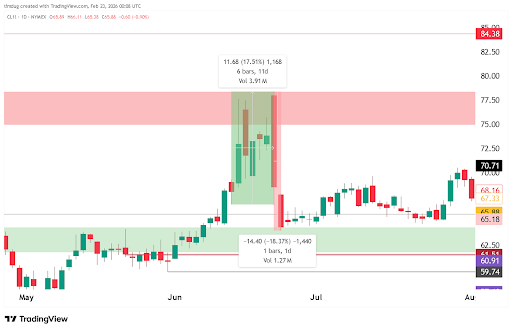
There Can Be Only One
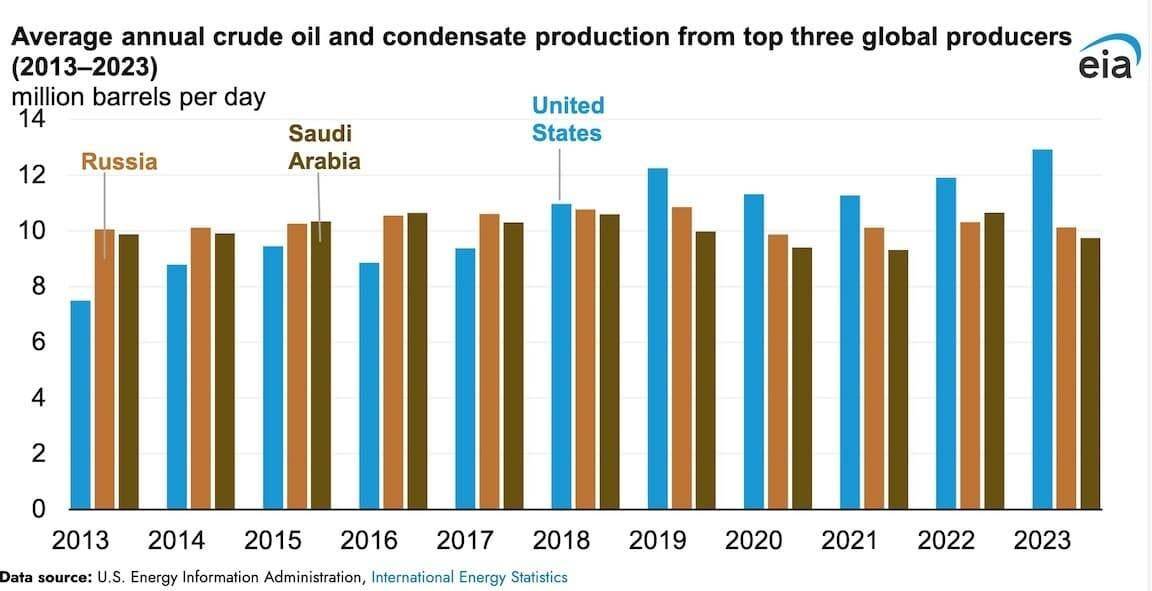
In the latest reports from the EIA, we can see that the US is taking the field in maintaining oil production against its peers of Saudi and Russia.
China: What May Come
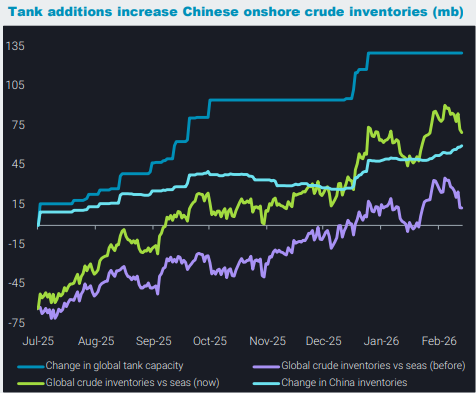
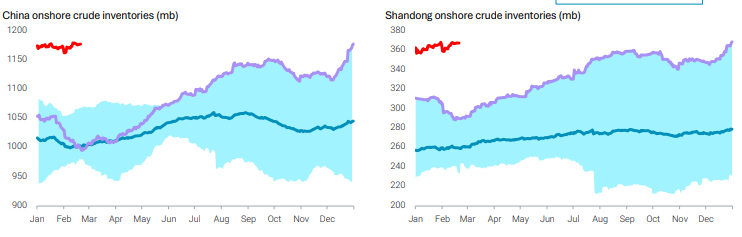
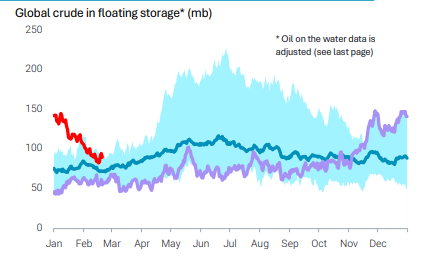
As flagged many times over the last 12 months, China not only continues to load crude into storage, but are expanding storage capacity. Do they see major conflict ahead where they are going to need this?

Commitment Of Traders Report
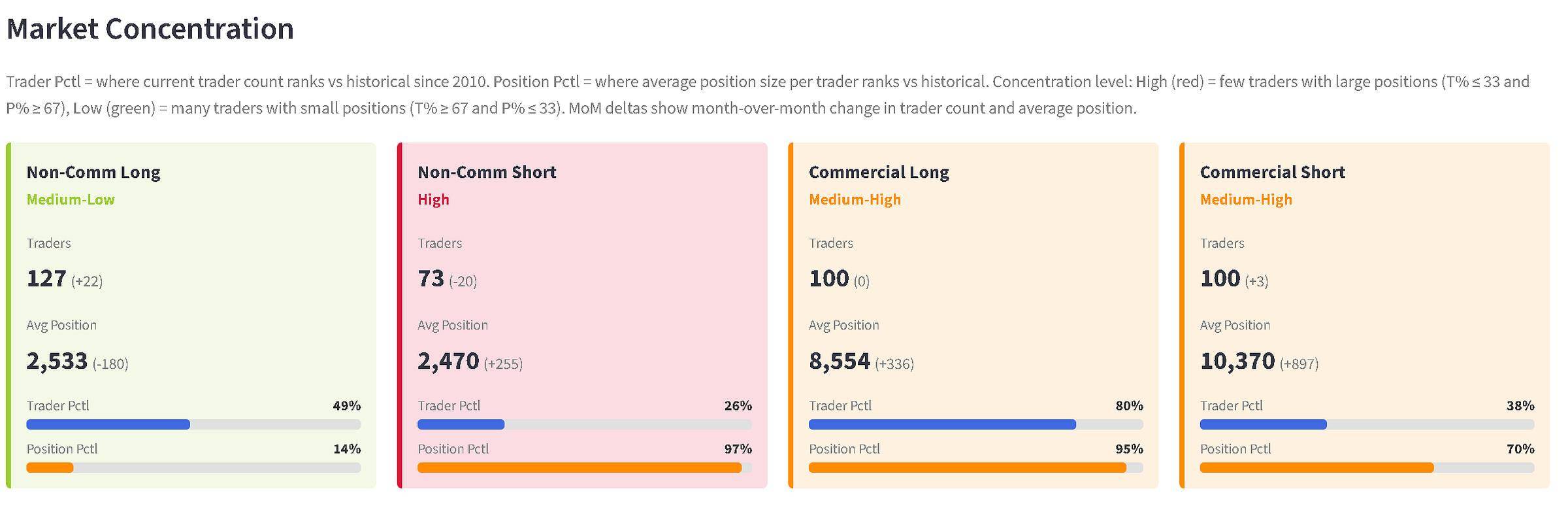
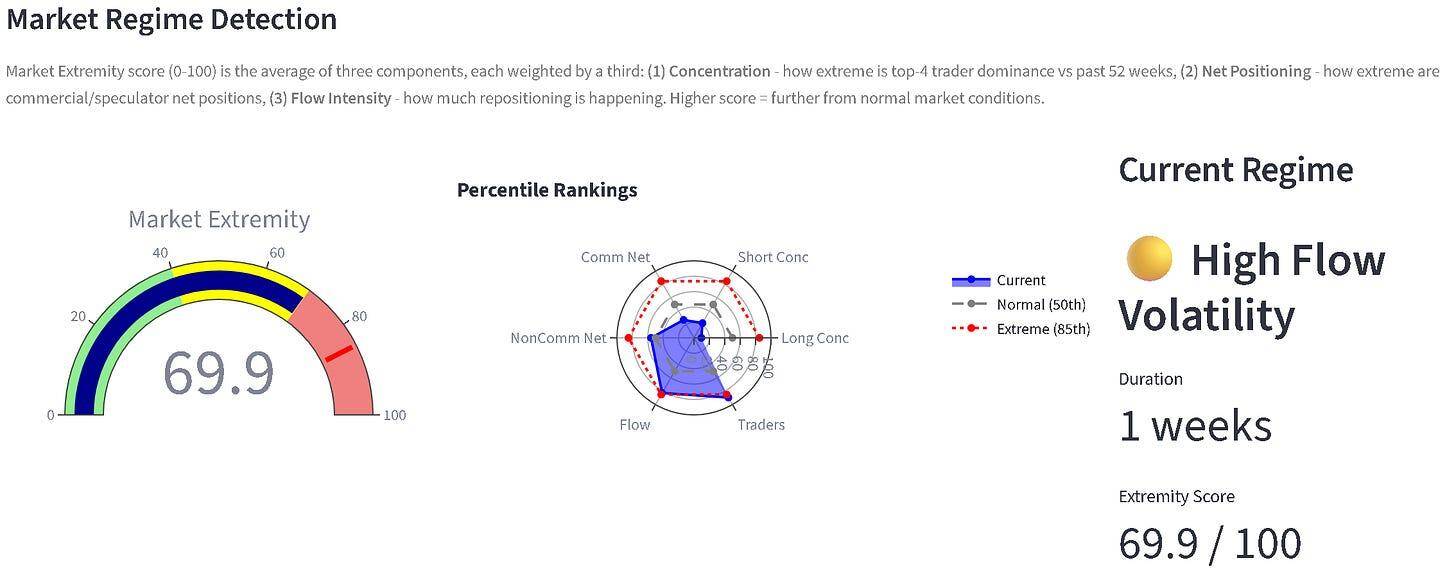
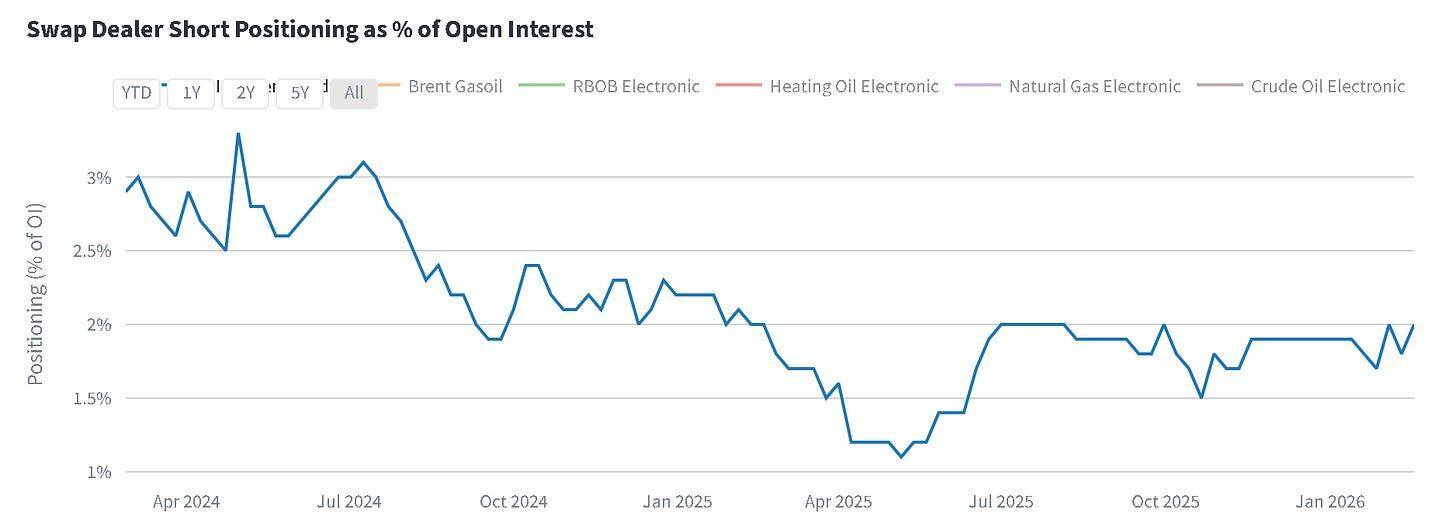
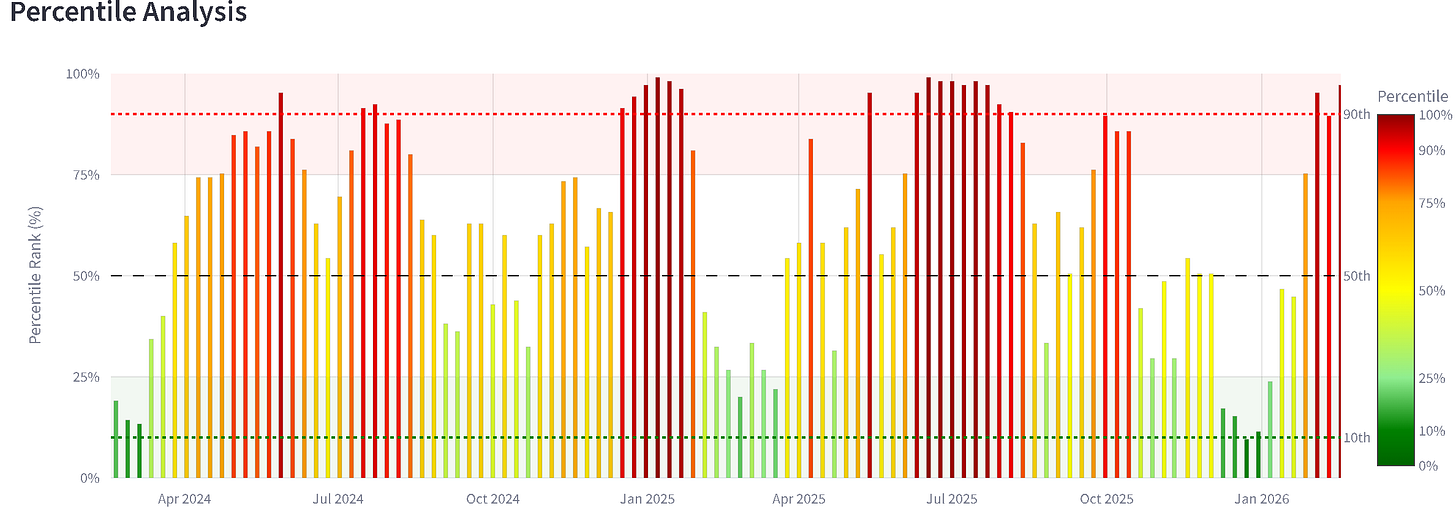
In summary, Spec shorts added 11,964 last week. This week, they reached for that sick bag and puked double that. It never fails to amaze me that these guys fail to calculate the adverse risk properly and pile into trading a notional 22,626,000 barrels short in the face of this level of upside risk. I get it- they want to get on the fade trade. That’s fine, we all do it, but those who survive don’t do it naked. These positions did not report equal weight hedging into longs by the Specs. In simple, the TACO trade did not transpire for the spec shorts. This then lead to another upside short squeeze.
- Open interest +16,955 Total 2,087,293 +0.82%
- Commercials Long +8,430 Total 855,378 +1.00%
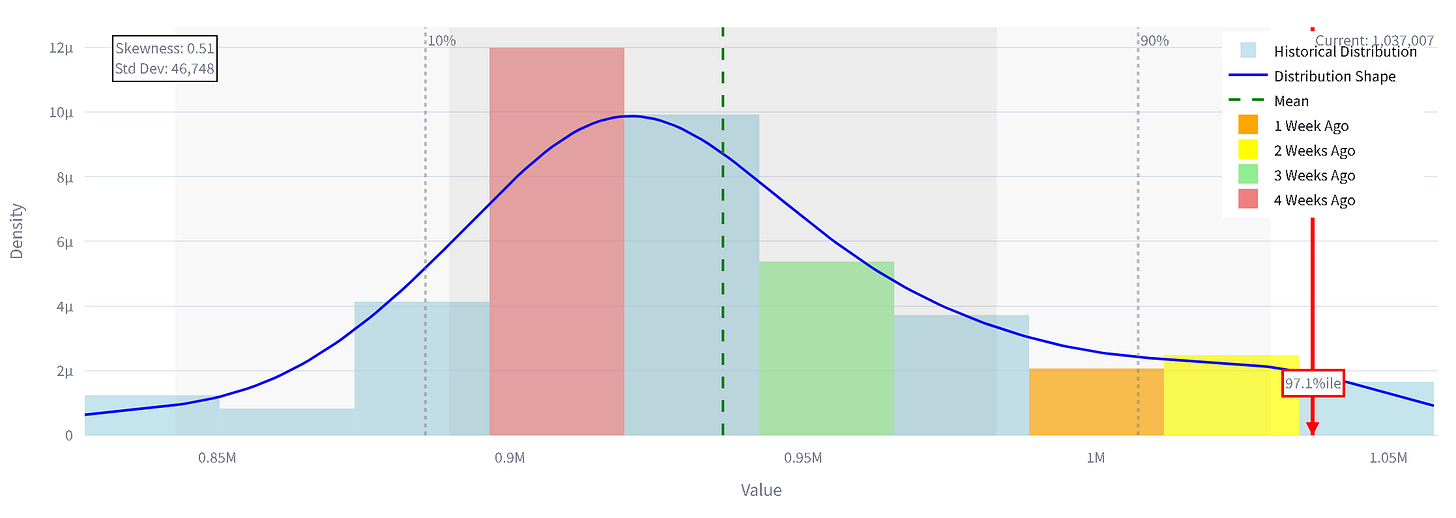
- Commercial Short +34,193 Total 1,037,007. +3.41%
- Non Comm Long +903 Total 321,645 +0.28%
- Non Comm Short -22,626 Total 180,302 −11.15% 🤮
What’s The Next Move?
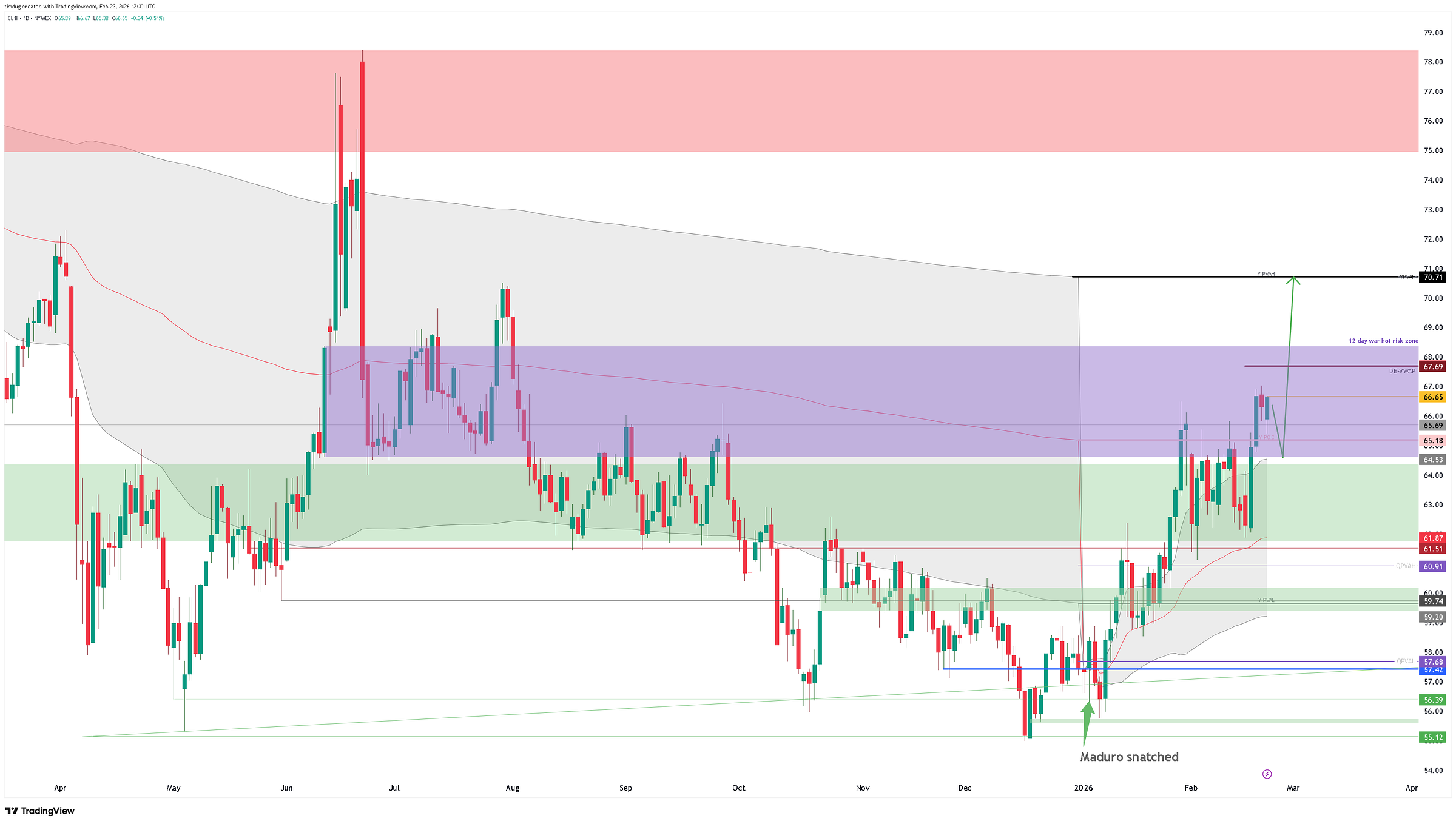
The 12-day war really does provide a nice recent context for pricing structural risk on the front month. As mentioned above, we would get more sensitive signals from the Oman/Dubai spread.
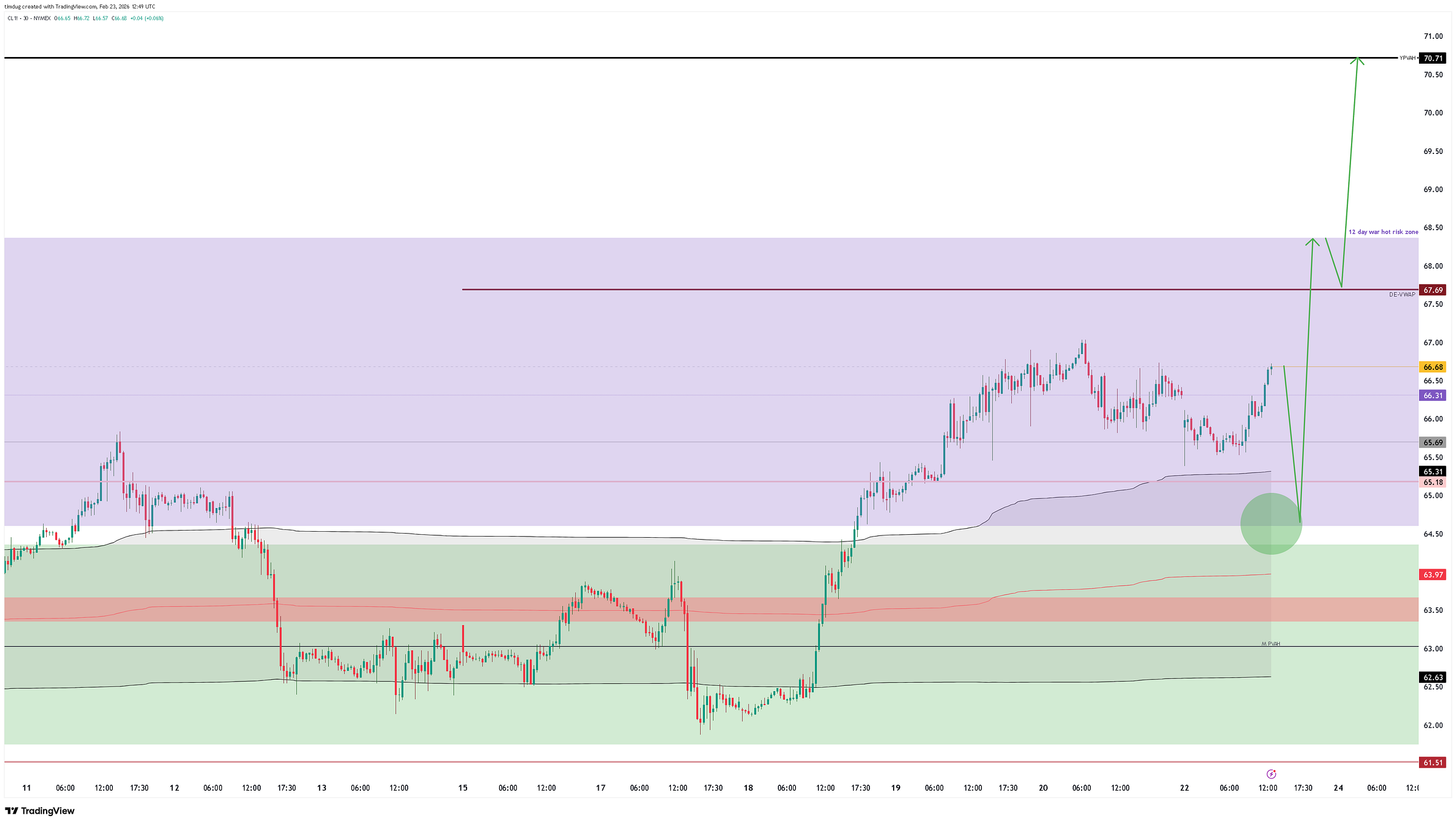
Let’s talk prices. WE HAVE NOT had anything near the pullback to the QPVAH $60.91/$61 level that I have been looking for for 2 weeks. We are disciplined however in the deployment of dry powder. We can not deploy 100% positioning at these extreme levels, where the market could as easily pull back $5 than move up another $5. We are 75% allocated on this position.
Please do go back 3 weeks and read ‘There will be inflation’ report where I outline the sensitivity price has to risk-no risk.
With that said, the market awaits the next negotiation meeting this Thursday in Geneva. Should we pullback before then, this would mean a temporary mispricing and offer up temporary value. A dip to day-trade perhaps.
In conclusion:
The market is no longer trading just headlines. The Oman–Dubai spread shows real concern around transit risk, and WTI’s 5.7% weekly gain was amplified by a forced unwind in speculative shorts rather than fresh structural buying. At the same time, commercial hedging at extreme levels suggests producers are comfortable selling strength. With negotiations in Geneva approaching, the setup is binary: escalation extends the risk premium, but de-escalation could trigger a sharp mean reversion. The spread will tell us first.