
The Strait Is Open but the Weekend Proved It Can Close Again
August WTI crude oil is trading near $70.00 and September Brent is around $72 heading into a holiday-shortened week. Both contracts are sitting on their 52-week moving averages after falling sharply from the peaks driven by Middle East supply disruptions earlier this year. More tankers are moving through the Strait of Hormuz and barrels are being added back into global supply chains. Prices reflect that. What they may not be reflecting is how quickly that progress reversed over the weekend when fresh strikes hit.
This week puts inventory data, the payrolls report, and ongoing geopolitical risk into a compressed holiday schedule. Markets close early Thursday and stay shut Friday. The events that matter most all land before the desks go dark.

Weekly August WTI Crude Oil Futures Technical Analysis
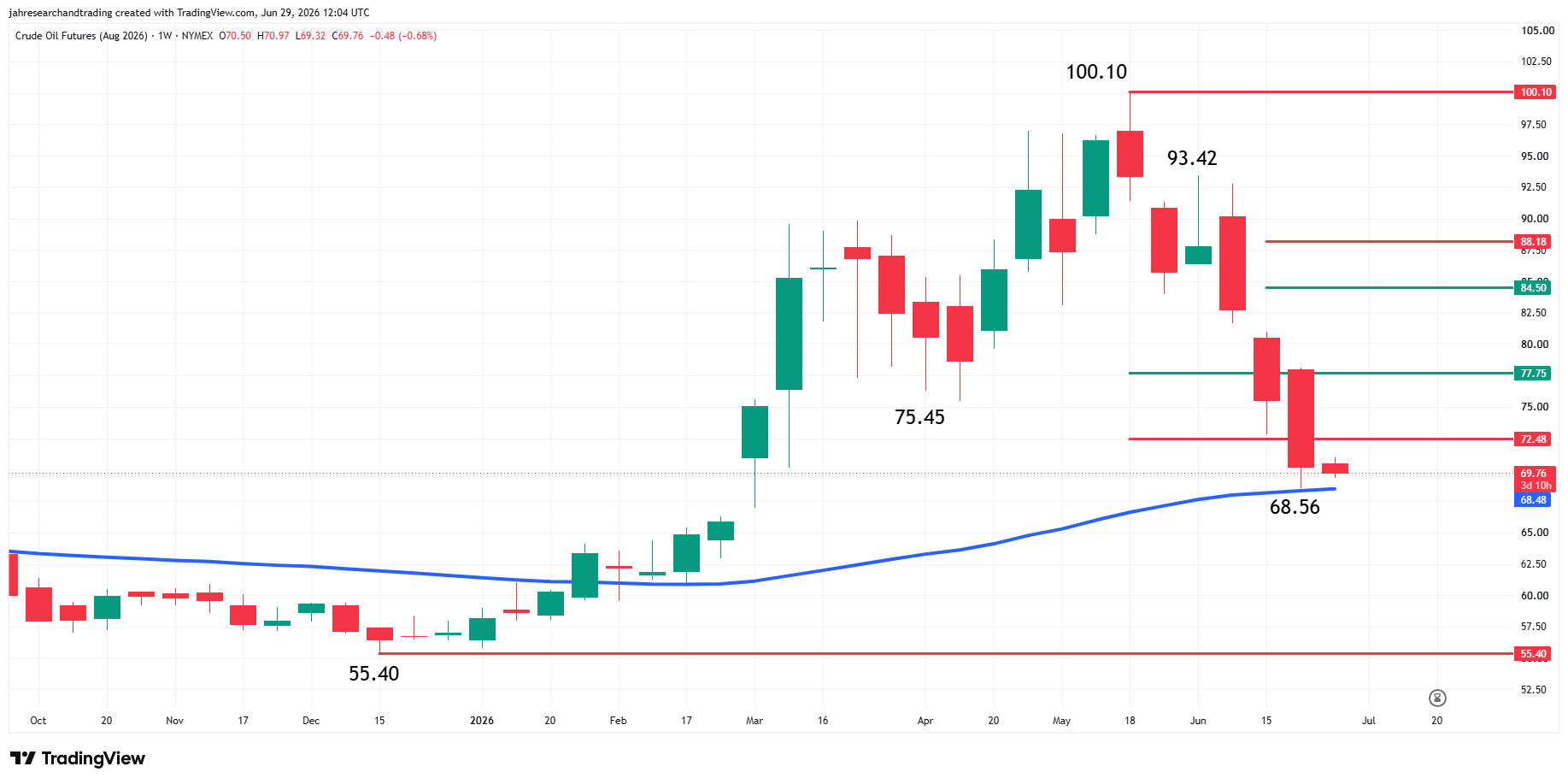
For August WTI crude oil futures, the main trend is down according to the weekly swing chart. A trade through $68.56 will reaffirm the downtrend with the next swing bottom at $55.40. A trade through $100.10 will change the main trend to up. However, due to the prolonged move down in terms of price and time, traders should keep an eye out for a closing price reversal bottom.
The key indicator to watch is the 52-week moving average at $68.48. Trader reaction to this indicator is likely to set the tone this week.
A sustained move over the 52-week moving average will indicate that buyers have come in to defend it against a complete breakdown in prices. Overcoming the Fibonacci level at $72.48 will indicate the short-covering is getting stronger. The first real challenge for counter-trend bulls will be the 50% level at $77.75.
A sustained move under the 52-week MA will signal the presence of sellers. Traders are going to either slowly press the market toward the 52-week low at $55.40, or there is going to be an acceleration to the downside. This is the level that started the rally to $100.10.
Brent Oil Price Forecast
Every new Brent Oil analysis as it publishes, today's technical signal and key levels, live price — on one page.
See all Brent Oil forecastsWeekly September Brent Crude Oil Futures Technical Analysis
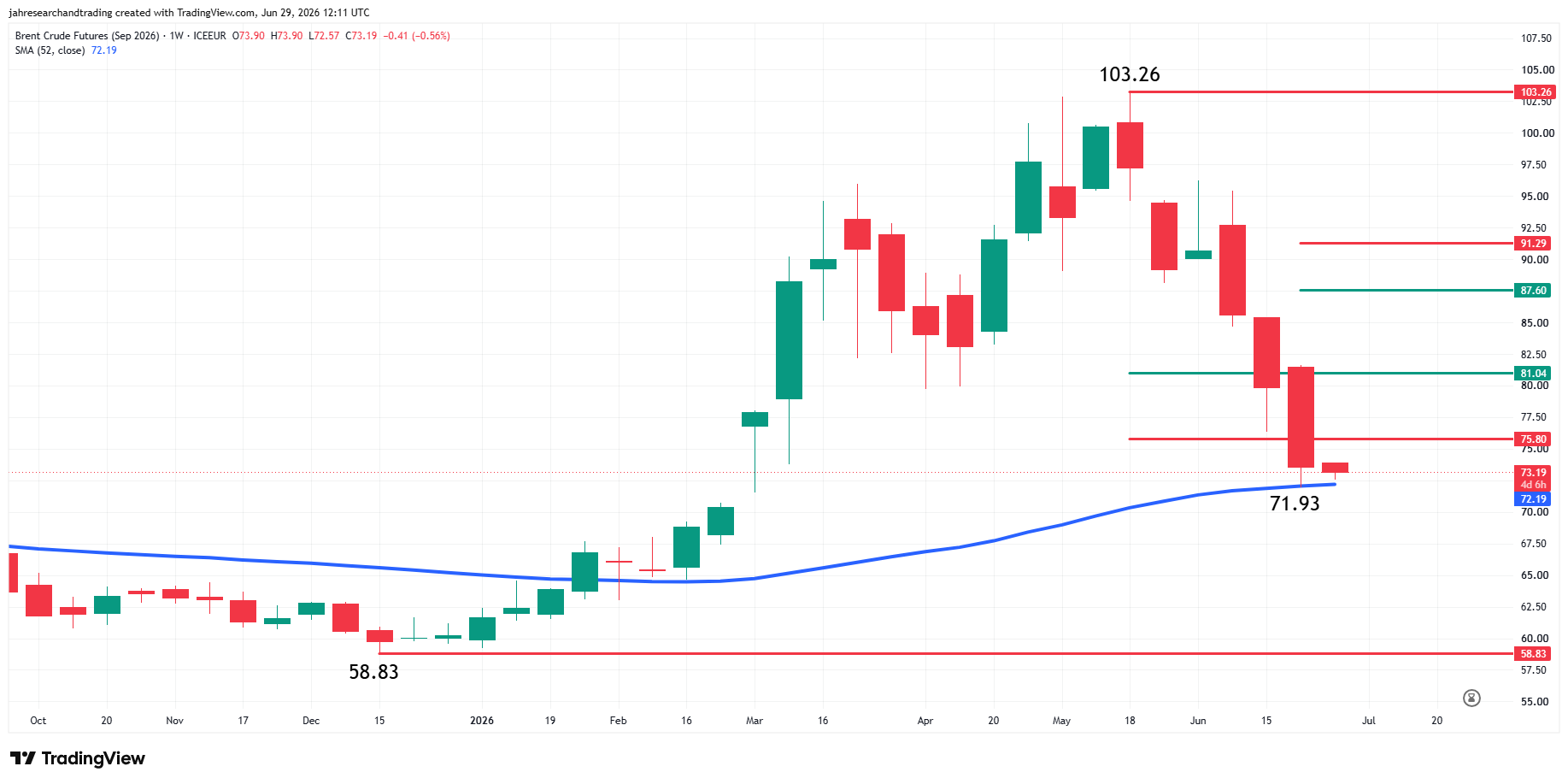
September Brent crude oil futures are also in a downtrend according to the weekly swing chart. Breaking $71.93 will reaffirm the downtrend. A sustained move under this level target the nearest main bottom at $58.83.
I think more weight should be given to the 52-week moving average at $72.19, however. This indicator has held as support since the week-ending January 30, which the market first overcame it after a prolonged downtrend.
This week, trader reaction to the 52-week moving average will set the tone. If buyers come in, we could see a test of the long-term 61.8% level at $75.80. Overcoming this level will indicate the short-covering is getting stronger. If it creates enough upside momentum, the rally could extend into the long-term 50% level at $81.04. This is the next major pivot on the charts.
The Strait Determines Whether Supply Keeps Flowing or Tightens Again
Tanker traffic through the Strait of Hormuz has been increasing as earlier agreements to pause hostilities allowed shipping to resume. Loadings from key export terminals are putting barrels back into the global supply chain and that is the primary reason crude fell from the peaks. The market spent months pricing in disruption and spent weeks taking it out as the ships started moving.
The weekend changed the tone. Fresh military action between the U.S. and Iran put the shipping lanes back into the risk calculation. The talks have not collapsed but the ceasefire framework that allowed the tanker traffic to resume is under pressure. If shipping continues to normalize without new incidents, the downward pressure on prices stays. If the situation deteriorates and vessels start rerouting, the supply that just came back goes away and prices reprice fast.
Every headline out of the region this week moves crude. The market is sitting right on the 52-week moving averages for both WTI and Brent and those are the levels where the directional decision gets made.
API and EIA Reports Tell the Market Whether the Barrels Actually Arrived
API and EIA inventory data land early in the week. Commercial crude stocks have been drawing consistently for weeks. The question now is whether those draws continue with more tankers clearing the Strait or whether the returning Middle East supply shows up as a smaller draw or a build.
A build this week would be the first confirmation that the barrels coming back through the Strait are actually reaching the physical market. Large draws continuing despite the improved shipping flows would tell a different story and one the bears do not want to hear while both contracts are sitting on their 52-week moving averages.
Thursday’s Payrolls Report Is the Demand Side Variable
The June nonfarm payrolls report arrives Thursday morning in a holiday-shortened session. Strong hiring and solid wage growth would point to an economy still consuming fuel at a healthy pace. That supports crude from the demand side regardless of what the supply picture is doing.
A weak number raises questions about whether fuel consumption holds up through the rest of the summer. Slower growth means fewer miles driven, less industrial activity, and reduced jet fuel demand. Crude does not need a recession to sell on a soft jobs print. It just needs the demand growth assumption to weaken.
The report interacts with whatever the inventory data said earlier in the week. Strong draws followed by strong payrolls would be the most bullish combination for crude heading into the long weekend. A build followed by a miss on payrolls would be the worst.
OPEC+ Production Increases Are Coming Into Focus
Recent decisions by OPEC+ members to gradually raise production targets are adding to the supply side of the equation. Many countries faced constraints from the regional disruptions but as those ease, actual output starts moving toward the higher targets. Any signs this week that production is increasing faster than expected would add supply into a market that is already absorbing returning Middle East barrels.
The summer driving season is providing a modest offset. Gasoline demand typically rises through July as U.S. travel picks up. That seasonal tailwind shows up in refinery runs and product demand. It is real but it is not large enough on its own to overcome a supply increase from both returning Strait flows and rising OPEC+ output.
What to Watch
The 52-week moving averages on both contracts are the decision point this week. WTI at $68.48 and Brent at $72.19. Every driver this week either supports those levels or breaks them.
Strait of Hormuz headlines determine whether the supply that came back stays or goes. API and EIA inventory data early in the week tells the market whether the physical barrels are actually reaching storage or being consumed. Thursday’s payrolls report adds the demand side.
All of it compressed into a holiday week where the desks thin out Thursday afternoon and do not come back until Monday. The 52-week moving averages have held so far. Whether they hold through this week depends on which side of the geopolitical and economic picture gets confirmed first.
If you’d like to know more about how to trade crude oil, please visit our educational area.