


The oil prices are heavily under upward pressure as the world energy market responds to one of the largest supply shocks in decades. The Strait of Hormuz dispute has curtailed one of the major channels that transports about a fifth of the world’s oil production, causing an immediate shortage and driving the price up. The question now is when normal shipping will resume, and to what heights prices can be pushed before then.

Supply Shock from Strait of Hormuz Drives Oil Prices Higher
Oil prices may remain at a higher level until shipping through the Strait of Hormuz returns to “normal”. When there is some level of traffic on the Strait of Hormuz (i.e., when oil starts flowing), oil prices will likely peak. The easing of these tensions depends on the ability of US and Iran to talk and find an agreement.
The most recent rally was purely driven by a supply run, with no regard for demand. The rally was based entirely upon the fact that there are very few ships moving, and therefore less crude oil is being delivered. A supply run occurs when a shortage of physical product creates upward pressure on the market’s price regardless of what consumers want to do.
The situation is serious because both Iran and the United States control the Strait of Hormuz. If either country restricts who passes through the Strait of Hormuz, then global oil shipments will be slowed. On top of that, the United States has issued a formal naval blockade against Iran since it failed to come to terms on a deal during the recent negotiations. Ship tracking data indicates that oil shipments from the Persian Gulf region are currently below normal.
WTI Crude Oil – Price Action Signals Further Upside
From a technical perspective, WTI oil (CL) remains below $120 and shows strong volatility. The failure to reach a ceasefire has opened WTI crude oil with a big gap higher on Monday. But the price again drops below $100 and shows strong volatility as the geopolitical news develops.
Brent Oil Price Forecast
Every new Brent Oil analysis as it publishes, today's technical signal and key levels, live price — on one page.
See all Brent Oil forecastsHowever, the price structure remains strongly bullish. As long as traffic through the Strait of Hormuz opens, oil prices will likely continue higher.
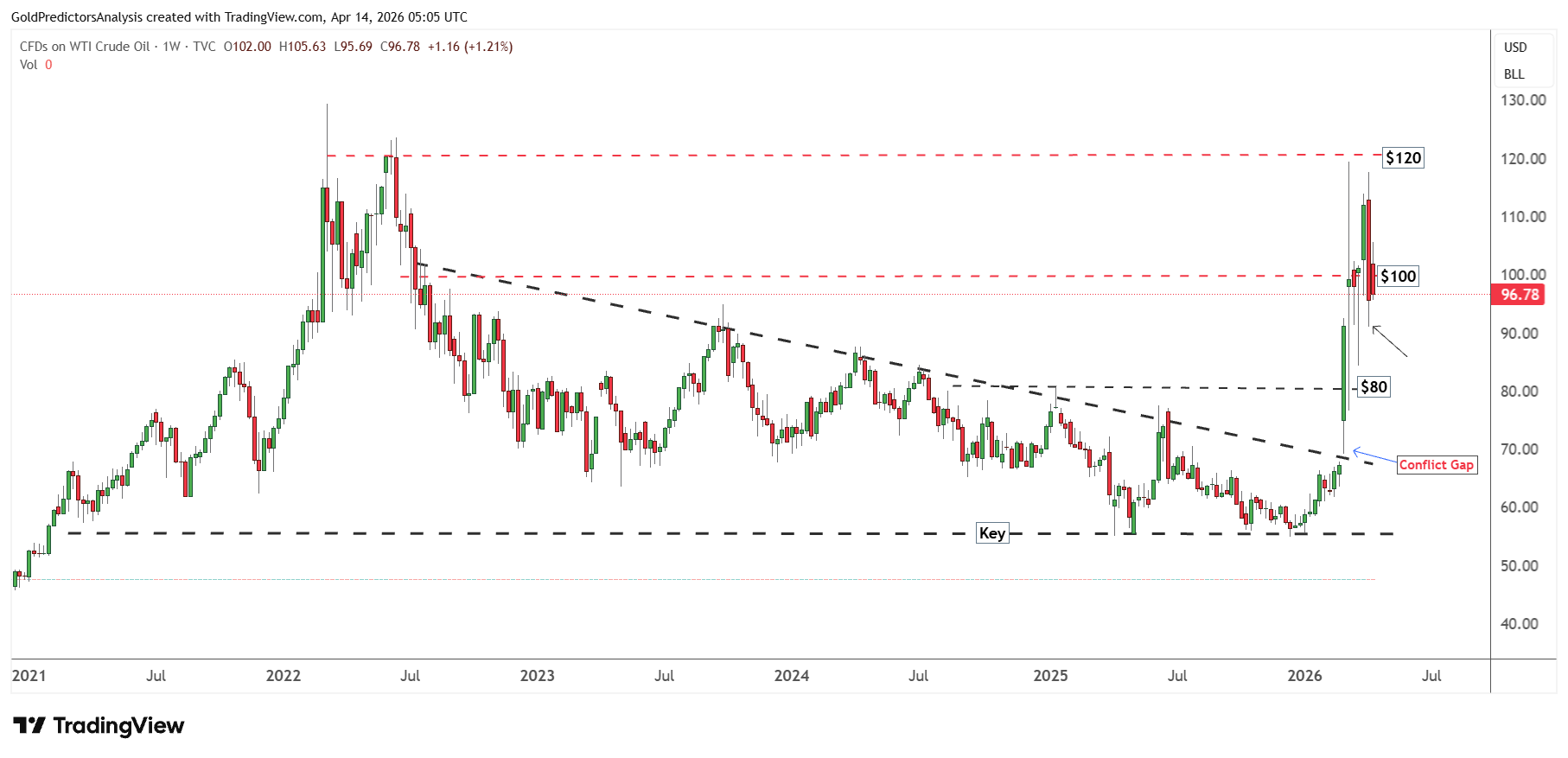
Due to large price swings in the oil market, strong support remains around the $80 to $90 level. A break above $120 will indicate a quick move to $150.
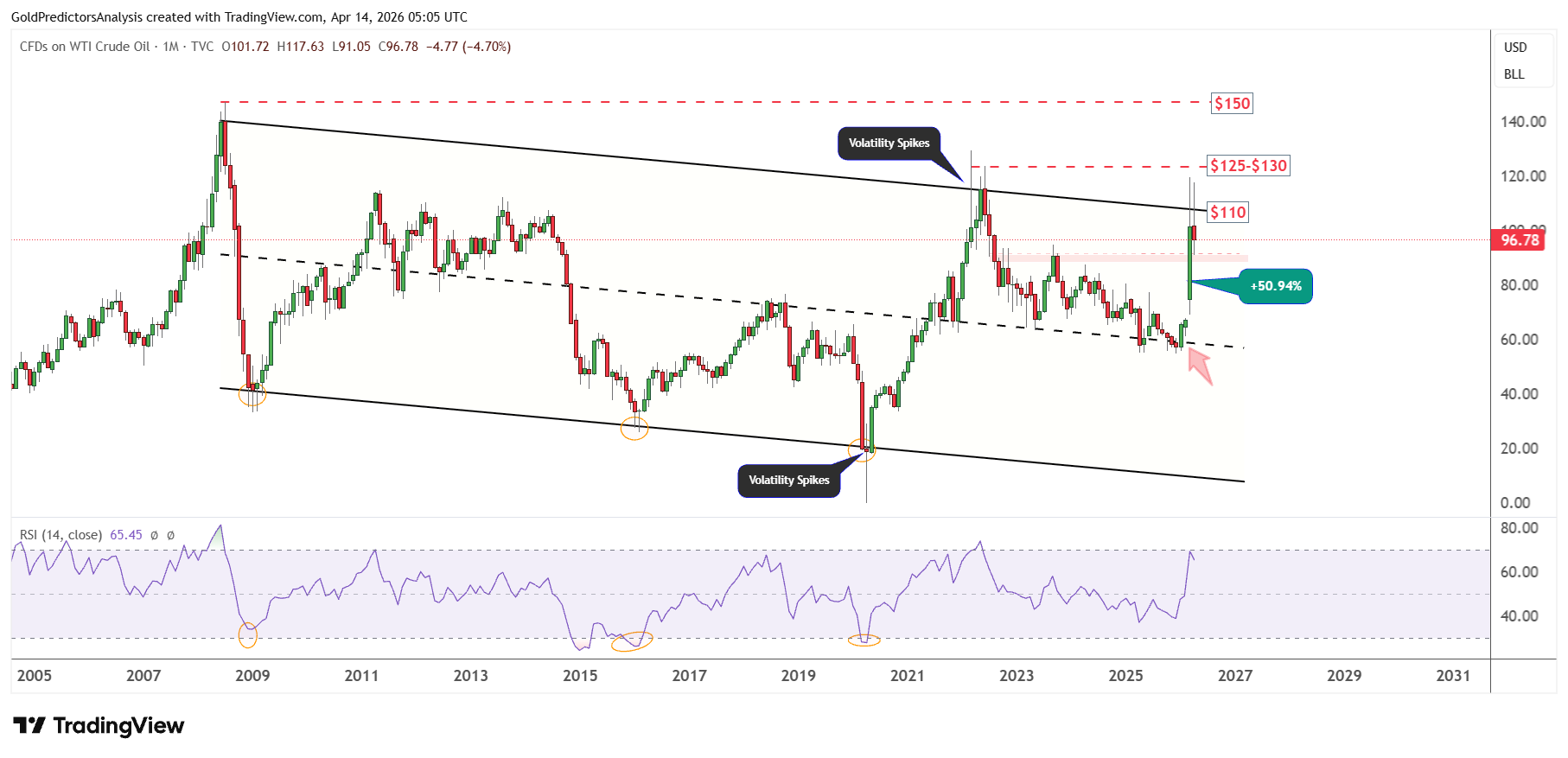
This strong bullish structure is also observed on the monthly chart. The chart shows that a break above $125 to $130 will open the door for a quick surge to $150, which is the July 2008 highs.
Overall, the strong consolidation below $120 is due to strong technical resistance in the oil market, which is seen in the descending channel pattern. Once this descending channel pattern resolves, the prices will likely move faster. Despite this strong resistance, the monthly gain for March 2026 was 50.94%.
Brent Crude Oil – Price Structure Remains Bullish
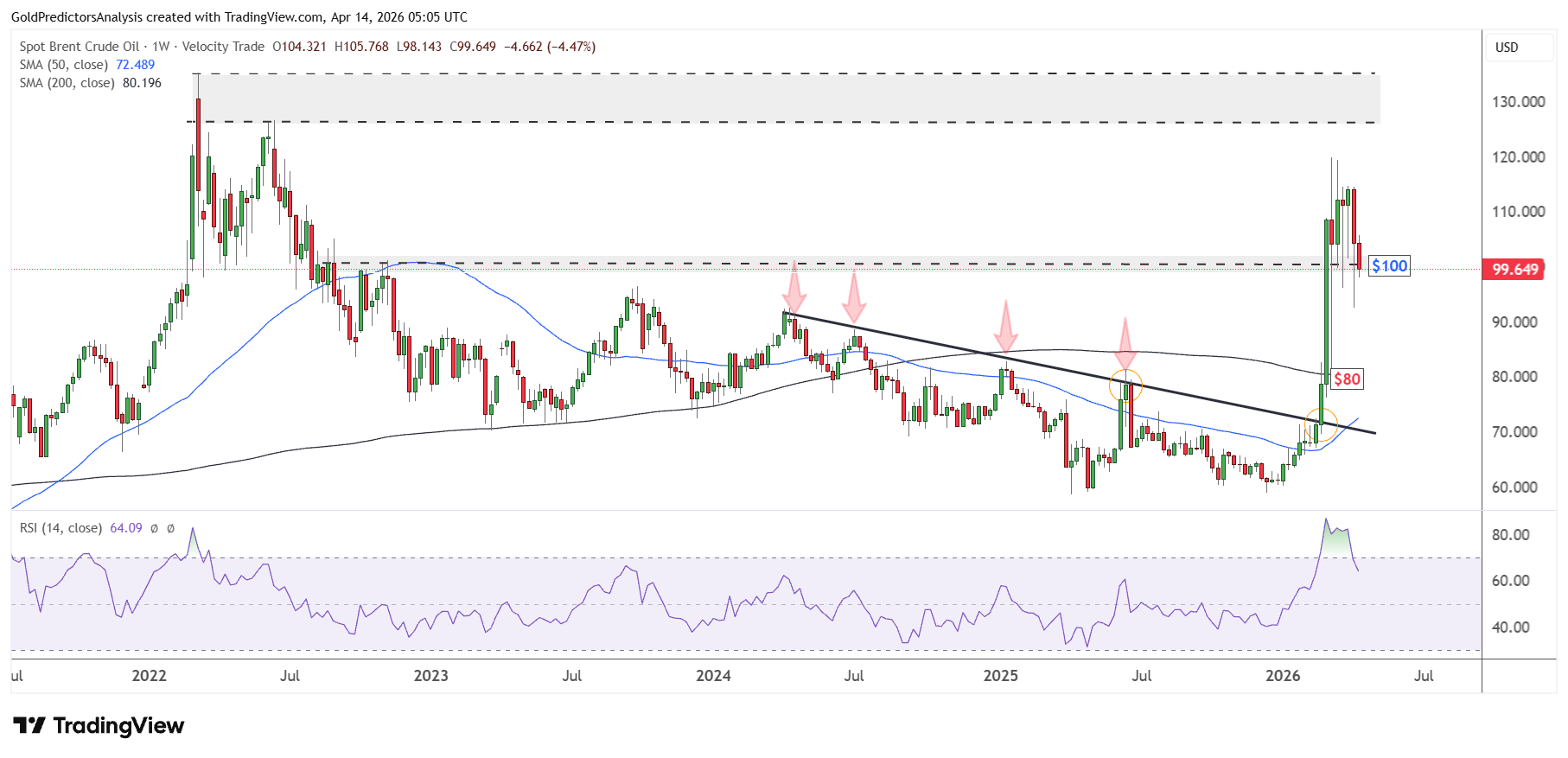
Brent crude oil (BCO) also shows a strong bullish price structure after the breakout from the descending broadening wedge pattern. The price hit the $120 level in March 2026. After hitting this level, the price corrected back towards the previous resistance of the descending broadening wedge pattern at $90.
The price is now consolidating above this support level. The Brent crude oil price has additional support at $81. Any drop towards this level will be considered a strong buying opportunity. On the other hand, the RSI shows consolidation around the mid-level, which indicates the next direction in Brent crude oil remains uncertain.
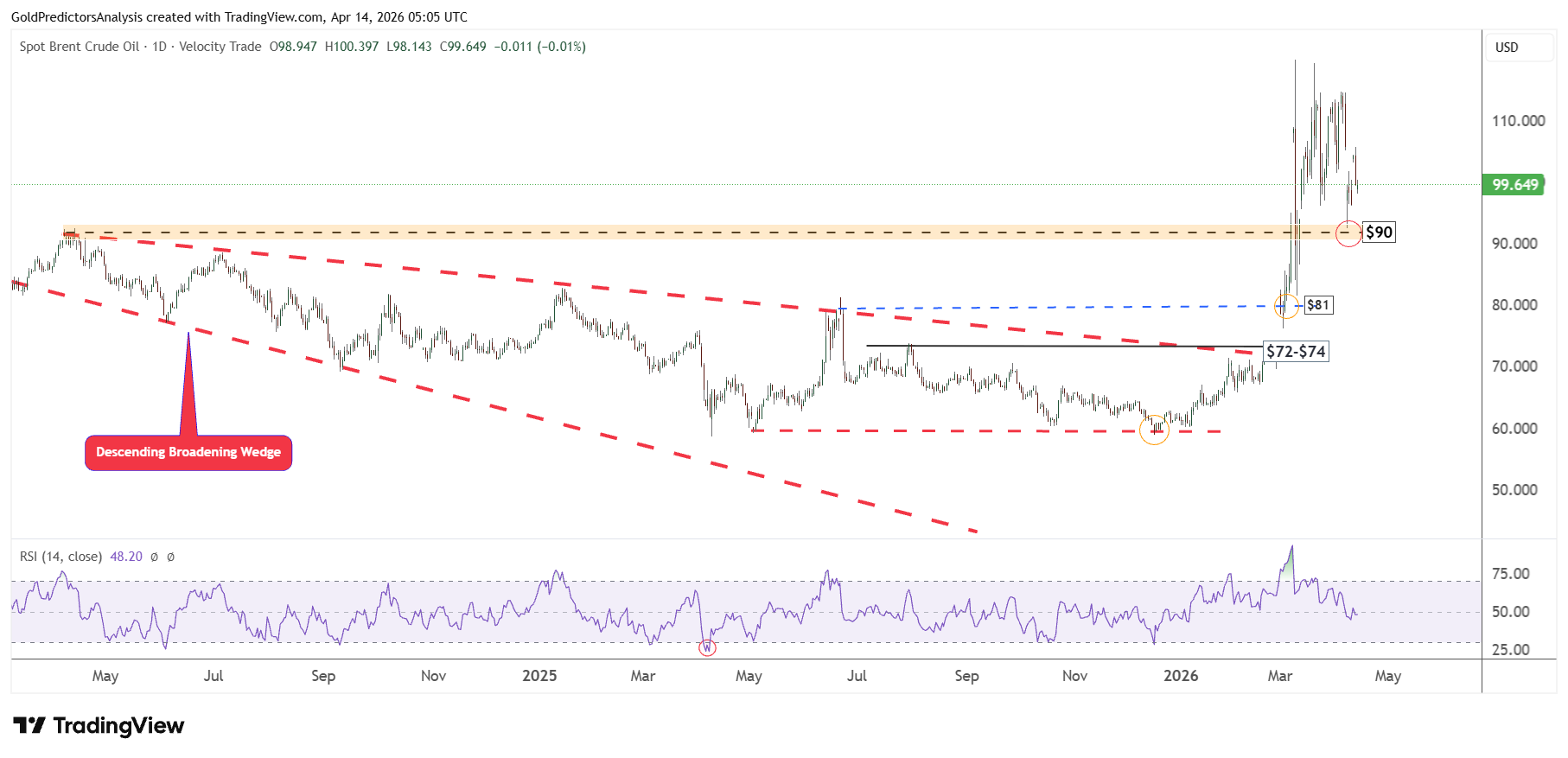
Another chart for Brent crude oil shows that the price is consolidating above $100, but weekly candle shows sharp shadows when the price drops below $100. These sharp shadows on weekly candles above $100 indicates buying pressure rather than weakness. Any correction in the oil market will be considered a buying opportunity.
Bottom Line
The one factor that continues to drive oil prices is the disruption of supply. Prices will likely remain high and volatile as long as shipping via the Strait of Hormuz remains restricted. Any recovery of ship traffic may be the climax, but until then, the upside risk will be high. The technical structure in both WTI and Brent also validates the bullish structure. A correction in oil prices will likely offer a buying opportunity. Overall, the market is still in bullish stage and the stability of supply will determine next significant move.
If you’d like to know more about how to trade crude oil, please visit our educational area.


