Bearish Breakdown Deepens
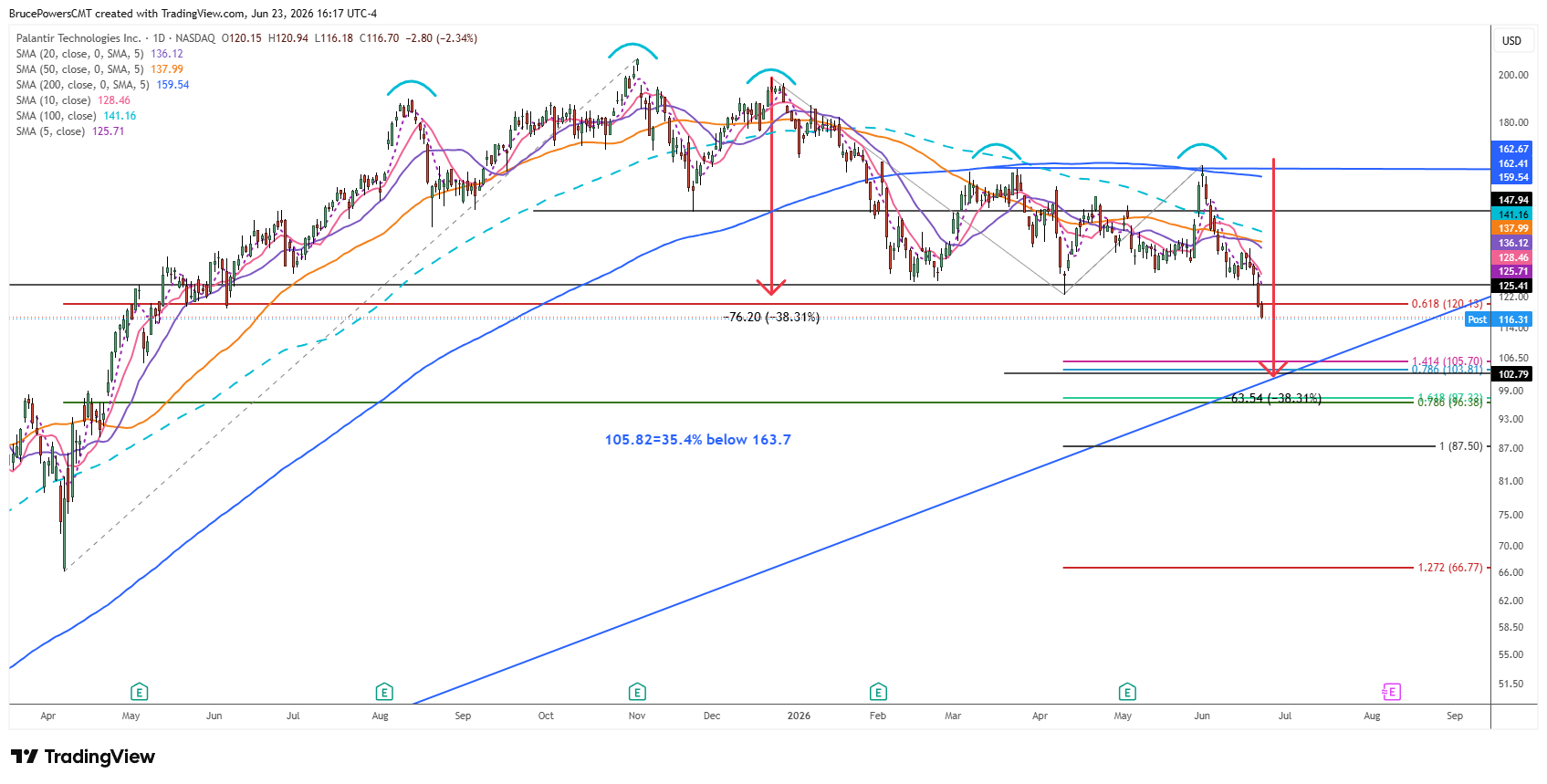
Shares of Palantir Technologies Inc. (PLTR) triggered a continuation of the bearish correction of Monday with a drop below the prior low of $122.68. Momentum accelerated at that point, as shown by the wide range and weak close near the lows of the day for both Monday and Tuesday. The breakdown was confirmed by Monday’s closing price of $119.50, which was obviously below the prior trend low.

Failed Reclaim of Resistance
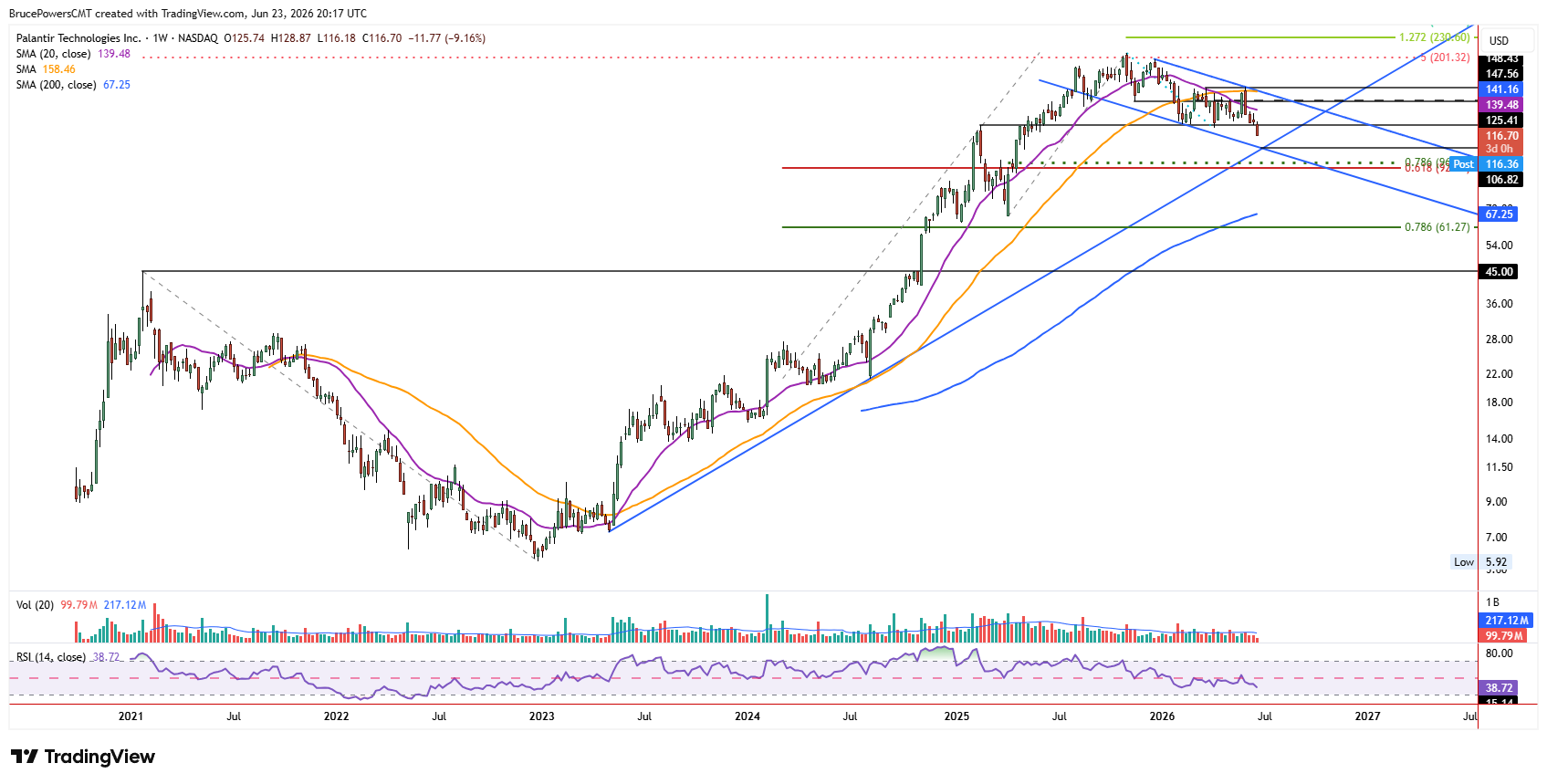
PLTR reversed lower following a third attempt to reclaim the 200-day moving average several weeks ago. Instead, another swing high was established at $163.70, as sellers took back control and drove price lower. That resistance zone was also validated by the 50-week moving average at $159.14.
Lower Targets in View
The stock had been consolidating in a relatively wide range just below resistance near the 200-day moving average for several months. A bearish continuation of the correction puts lower price zones in sight, with a long-term uptrend line splicing through each. The first target zone is roughly $105.70 to $102.79, consisting of a 141.4% Fibonacci extension and measured move target, respectively. There is also a 78.6% Fibonacci projection for a falling ABCD pattern rounding out the range at $103.81.
Next Support Zone
If that price zone fails to hold, the next confluence zone is approximately $97.33 to $96.38. That range includes prior resistance from March and April last year, the 78.6% Fibonacci retracement of the prior advance and the 161.8% Fibonacci extension. One major difference between the two lower targets is that the lower zone would likely require a break of the uptrend line. That gives the uptrend line added significance as a potential support area.
Resistance on Any Bounce
Given the strong potential for lower targets to be reached, signs of strength before they are hit are likely to attract renewed selling. Key resistance begins near the prior range low of $122.68 and goes up to approximately $128.75. The 10-day moving average at $128.46 currently may also act as resistance.
If you’d like to know more about technical analysis and how traders use it, please visit our educational area.