
Warsh and Payrolls Land Back to Back in Silver’s Worst Week Since January
Spot Silver settled last week at $59.19, down $5.69 or 8.77%. Early Monday the market is trading at $58.58, down $0.61 or 1.02%. Three major support levels broke in the same week. The 52-week moving average, the swing bottom, and the halfway point of the all-time high all gave way in five sessions. The selling was not a gradual grind lower. It was a liquidation driven by Warsh’s hawkish first meeting and the rate repricing that followed.
Two events land back to back in a holiday week. Warsh speaks at the ECB Forum on Wednesday in his first public appearance as Fed Chair. The June payrolls reportarrives Thursday morning instead of the usual Friday with the desks already thinning out for the long weekend. By Thursday afternoon the institutional order flow is gone and does not come back until Monday. The speech sets the lens and the data either confirms it or breaks it less than 24 hours later.

Weekly Spot Silver (XAGUSD) Technical Analysis
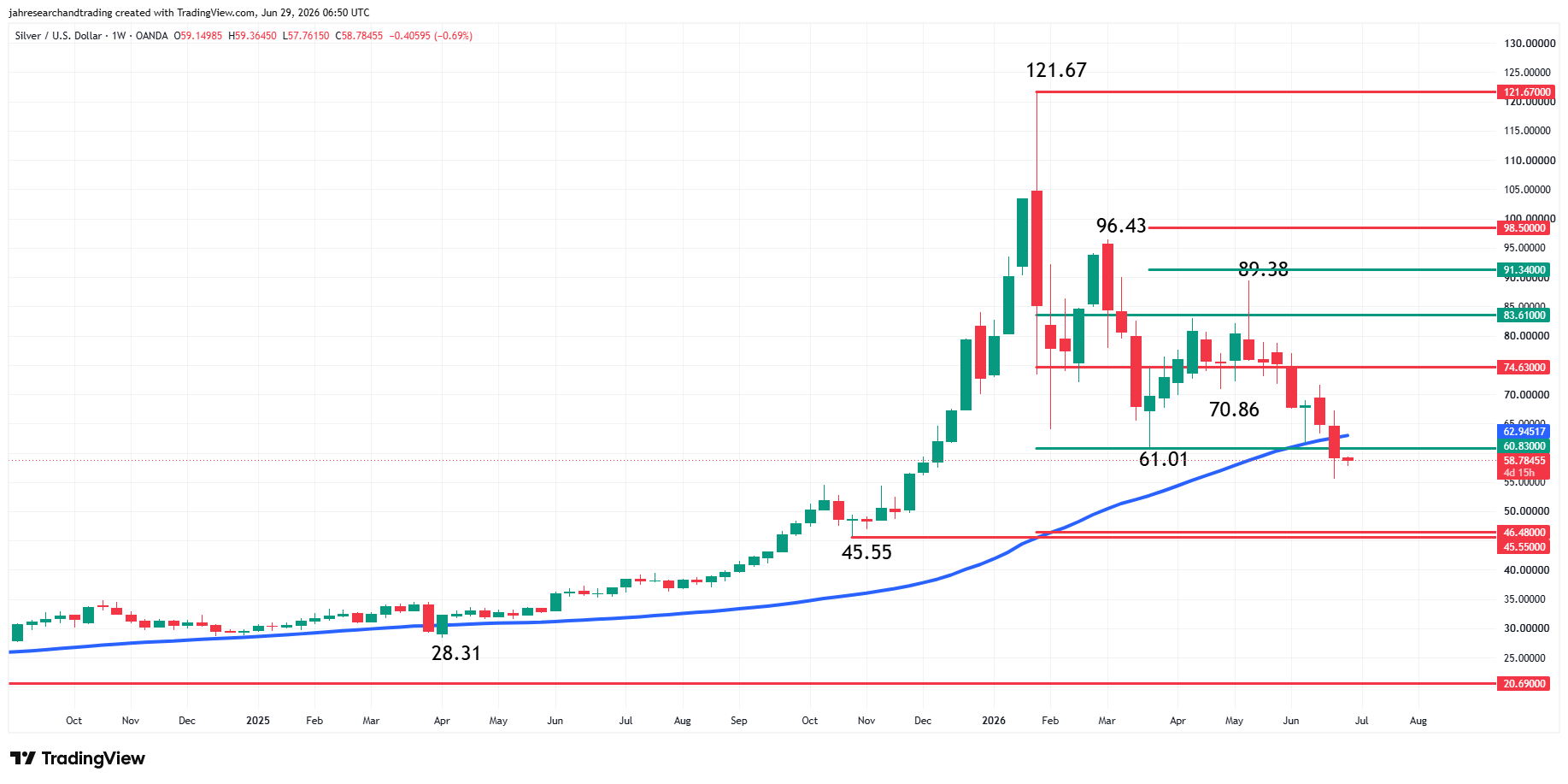
Spot Silver reaffirmed its downtrend last week by taking out the 52-week moving average at $62.94, the swing bottom at $61.01 and 50% of the all-time high at $60.83. The move to $55.60 opens the door to a continued price slide with a long-term Fibonacci target at $46.48 and the October 2025 main bottom at $45.55 the next major downside targets.
Overcoming $60.83 or 50% of the all-time high will be the first sign of a recovery, but buyers will have to regain the 52-week moving average and re-establish a supportive base in order to attract some serious buyers.
I think that long-term investors have given up on trying to control the short-term trend and are now focusing on finding value.
Warsh Speaks Wednesday and the Market Is Still Learning His Voice
Warsh kept rates unchanged at his first meeting but the tone did the damage. The emphasis on bringing inflation to the 2% target after years of missing it, the refusal to submit his own rate projections, and the shift toward less forward guidance all pointed toward a Fed Chair who is not going to ease until the data forces his hand. He launched task forces to review communications, the balance sheet, data, productivity, and the inflation framework. Markets raised the odds of a rate hike later in 2026 on the back of that press conference and silver sold off 8.77% in the same week.
Silver Price Forecast
Every new Silver analysis as it publishes, today's technical signal and key levels, live price — on one page.
See all Silver forecastsWednesday’s ECB Forum speech is his first public appearance since taking the chair. The tone matters more than any single sentence because traders are already positioned for hawkish. If he reinforces June’s message, the positioning that crushed silver last week stays in place heading into Thursday’s data. If he stresses data dependence, highlights the task forces, or sounds more measured than he did in June, the market starts adjusting before the payrolls number even arrives. The bar for a bullish silver reaction is higher because of his existing stance. Wednesday tells the market whether that bar stays where it is or moves.
Hot Payrolls and the Selling Extends
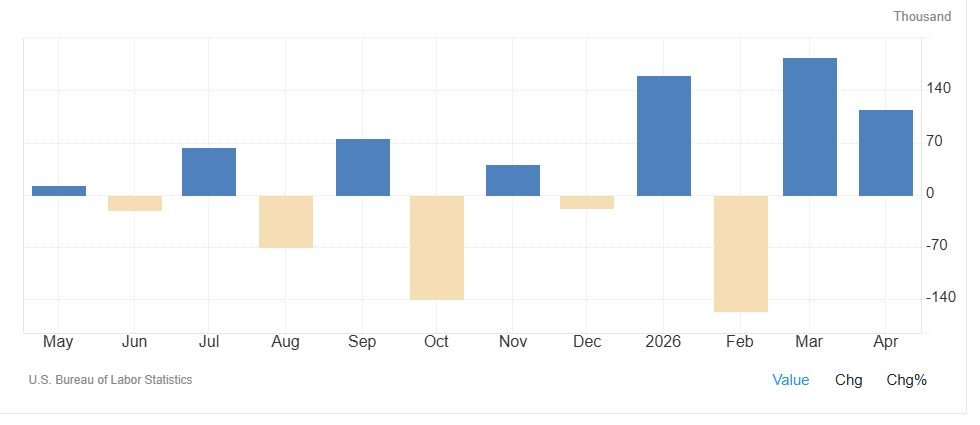
Consensus expects approximately 114,000 new jobs in June, down from 172,000 in May. Wednesday’s speech determines how Thursday’s number gets read. A number significantly above 114,000 after a hawkish Warsh appearance reinforces everything the market has been trading on. Strong hiring in an economy where inflation is still running above target gives the committee no reason to back off. Rate hike bets climb, the dollar firms, yields rise.
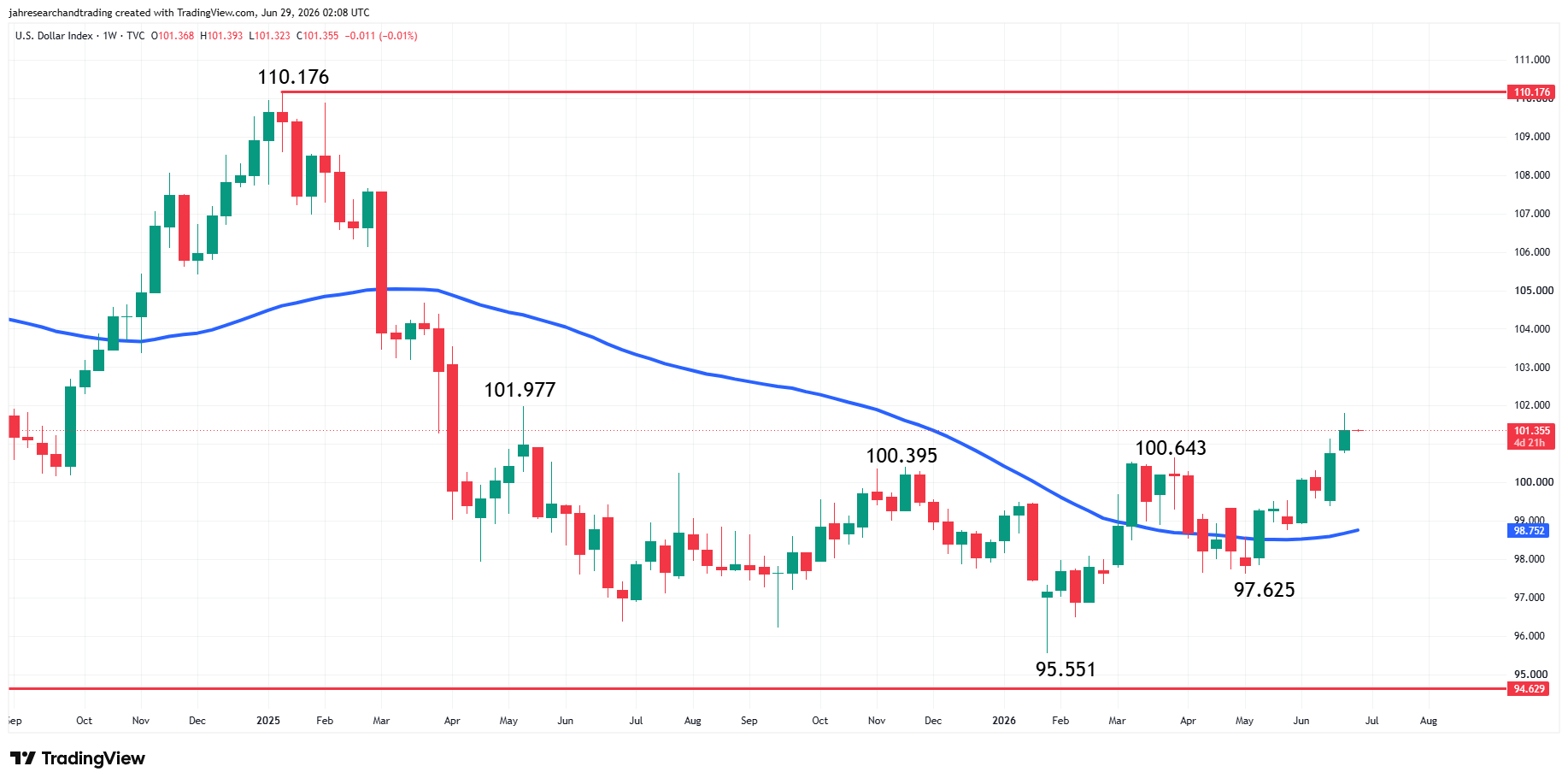
Silver faces selling from both sides of that trade at once. The dollar strengthening makes the metal more expensive for every buyer outside the United States. Rising yields increase the return on bonds and cash relative to a metal that pays nothing. In a market that already broke every major support level last week, another round of hawkish confirmation from the data pushes the selling into the downside targets the technicals identified.
The holiday book makes it worse. Thin liquidity Thursday afternoon means the selling accelerates faster than it would in a normal session. A hot print landing in a thin market with a confirmed downtrend is the most dangerous combination for anyone holding a long position into the weekend.
Soft Payrolls and the Bulls Get Their First Opening
A number well below 114,000 and the hawkish case Warsh built in June starts losing its foundation. The dollar weakens on that and silver has been trading inversely to the dollar all month. The 8.77% weekly loss happened because rate expectations moved against the metal. A miss on payrolls moves them back.
A measured Warsh on Wednesday followed by a soft print Thursday is the combination that gives the bulls the cleanest setup. The market reads it as the data and the Fed Chair moving in the same direction. Even without a dovish pivot, a more patient tone ahead of a weak number pulls hike probabilities lower fast.
The thin holiday book and the short positioning are sitting on the same side of this trade. If the data goes against the bears Thursday morning, the exit gets crowded fast heading into a three-day weekend.
In-Line Print and Wednesday’s Tone Takes Over
A number near 114,000 does not give the market a direction. It gives it Wednesday’s speech as the only signal to trade on. If Warsh was hawkish at the ECB Forum, silver stays heavy. If he sounded patient, silver holds. The data confirms nothing and the positioning stays where Warsh left it.
The holiday book turns a directionless session into a choppy one. Size the position for the liquidity, not the thesis. Monday is when the real market comes back and whatever Thursday produced in a thin book gets retested with a full order flow.
What to Watch
Warsh speaks Wednesday. Payrolls land Thursday. The speech tells the market how to read the number. A hawkish Warsh followed by a strong print and the selling extends. A measured Warsh followed by a miss and the bulls get their first opening in a month. Both events inside 24 hours in a holiday week where the book is already thinning.
The trend is down. Every major support level is overhead. The payrolls number has to be weak enough to actually move rate hike probabilities, not just meet consensus. Thursday morning is going to be fast. Whether it holds through the weekend or reverses Monday is the trade nobody can answer before the number hits.
More Information in our Economic Calendar.