
Tech Bounced Early Monday and the Ceasefire Is Holding the Bid
S&P 500 futures are up 0.9% before Monday’s opening bell. Nasdaq-100 futures climbed 1.2%. Dow futures gained about 240 points or 0.5%.
The buying is concentrated in the same semiconductor names that got crushed last week. Arm Holdings gained nearly 2% in premarket, Marvell added about 1.6%, and Intel traded more than 1% higher. After the Nasdaq Composite dropped 4.6% last week and names like Nvidia and Alphabet lost more than 8% each, Monday’s premarket looks like the first attempt to find a floor.
The U.S. and Iran agreed over the weekend to pause military operations and allow commercial traffic through the Strait of Hormuz. That helped the tone but the ceasefire is already under pressure. Trump said the U.S. carried out additional strikes on Iranian military targets after alleged violations. Oil moved higher on the uncertainty with Brent up about 0.7% to $72.47 and WTI gaining roughly 1.2% near $70.06.

Daily September E-mini S&P 500 Index Futures Technical Analysis
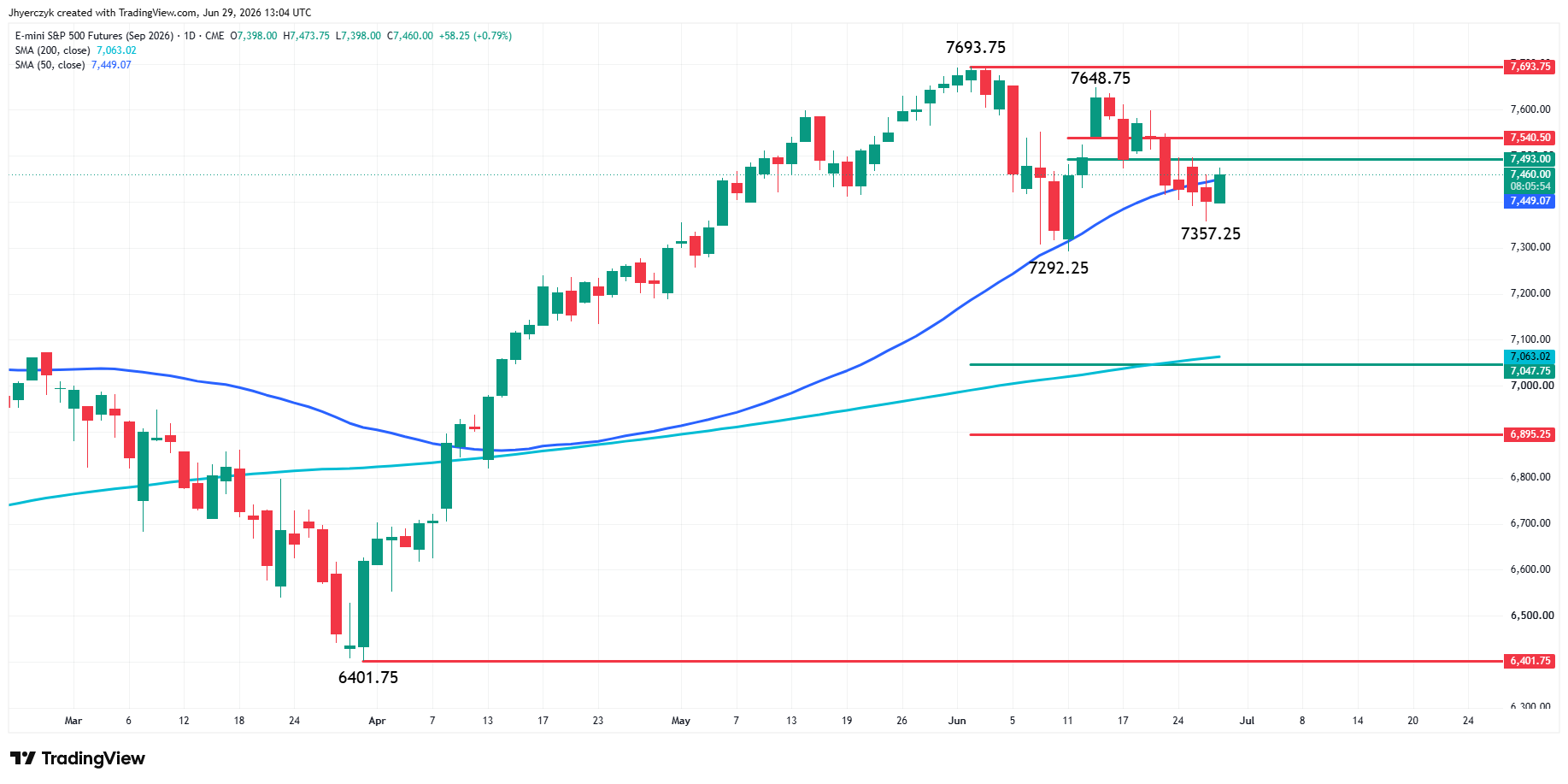
September E-mini S&P 500 Index futures are edging higher shortly before the cash market opening on Monday.
The main trend is down according to the daily swing chart. A trade through 7292.25 will reaffirm the downtrend. The main trend will change to up on a trade through 7648.75.
The minor trend is also down. Today’s price action turned 7357.25 into a new minor bottom.
Traders are also straddling the 50-day moving average at 7449.19. Trader reaction to this indicator will set the tone. A sustained move above it will indicate the presence of buyers. This could drive the index into the retracement zone at 7493.00 to 7540.50. Trader reaction to this area will determine the short-term direction.
Look for renewed selling pressure if 7357.25 fails as support. This could lead to a quick test of the main bottom at 7292.25. This price is a potential trigger point for an acceleration into the 200-day moving average at 7063.04 and the long-term retracement zone at 7047.75 to 6895.25.
To summarize, look for early session strength over the 50-day MA at 7449.19. If the move gains traction then look for a surge into 7493.00 to 7540.50. If the 50-day MA fails to hold then look for a retest of the minor bottom at 7357.25. Losses could extend into 7292.25 if the minor bottom fails.
S&P 500 Price Forecast
Every new S&P 500 analysis as it publishes, today's technical signal and key levels, live price — on one page.
See all S&P 500 forecastsComcast Is Splitting Up and the Market Loves It
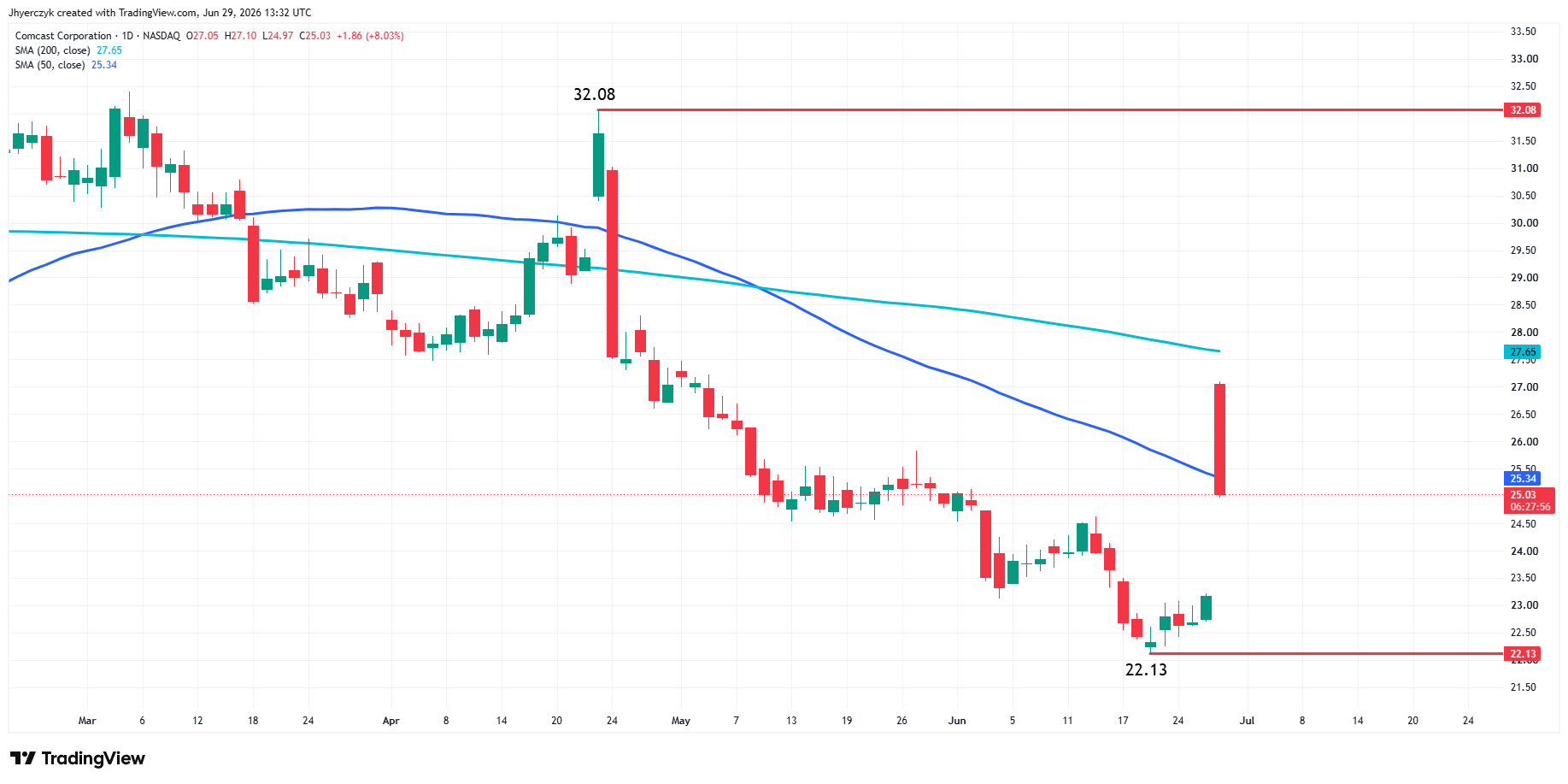
Comcast surged more than 20% premarket after announcing plans to spin off NBCUniversal and Sky into a separate publicly traded company. The transaction is expected to close in about a year. Mike Cavanagh will run the new media company. Michael Angelakis takes over the remaining telecom business. A 20% move on a spinoff announcement tells you the market has been waiting for this separation and believes both pieces are worth more apart than together.
Charter Communications jumped nearly 20% on a Bloomberg report that the company held exclusive discussions with SpaceX about developing a consumer mobile phone service. Charter would route some of SpaceX’s mobile traffic through its existing broadband network. That is a new revenue stream for Charter and a distribution channel for SpaceX’s satellite communications. The market priced the partnership before the details were even confirmed.
Rocket Lab Buys Iridium and the Space Sector Keeps Consolidating
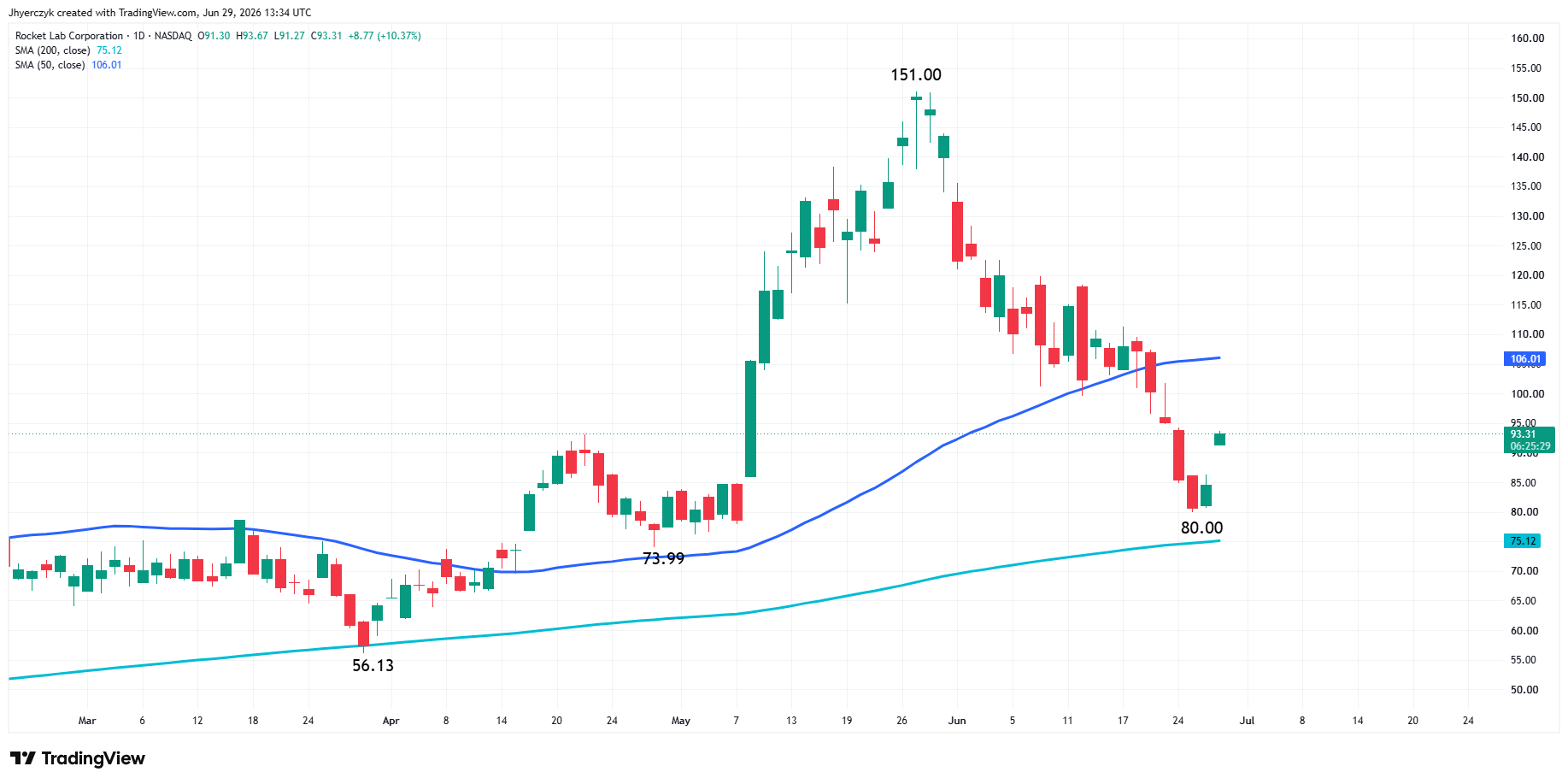
Rocket Lab gained more than 10% and Iridium Communications surged over 20% after Rocket Lab announced plans to acquire Iridium. The deal combines Rocket Lab’s satellite launch capabilities with Iridium’s global satellite communications network. The space industry is consolidating fast. SpaceX IPO’d weeks ago and is already joining the Nasdaq-100 on July 7. Now Rocket Lab is buying its way into satellite communications. The money flowing into space is not slowing down.
SpaceX itself ticked up about 2% premarket on the Nasdaq-100 addition news. Index funds that track the Nasdaq-100 have to buy shares before July 7 and that forced demand supports the price regardless of what the broader tech tape is doing.
Alphabet traded modestly higher ahead of its addition to the Dow Jones Industrial Average, replacing Verizon. Verizon slipped after warning of $700 million to $800 million in second-quarter losses tied to accounting changes on assets held for sale.
Stocks in the News
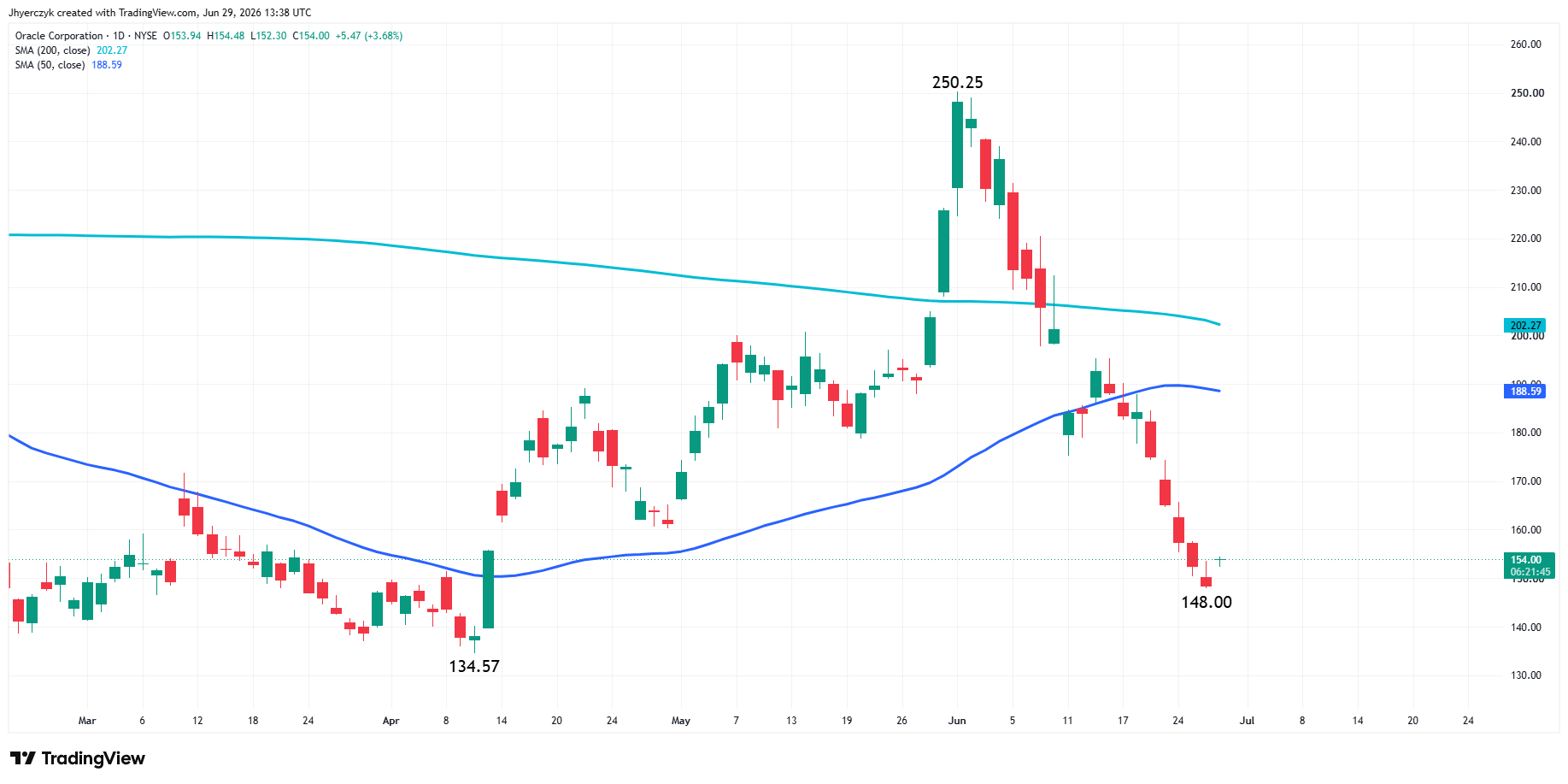
Oracle rebounded about 3% premarket after its worst weekly decline since 2001. The stock fell 19% last week on concerns about rising debt and whether AI investments would generate enough returns. Monday’s bounce is a dead cat or the start of a recovery and the next earnings report will tell you which.
TeraWulf gained after Citigroup initiated coverage with a Buy rating. The analyst argument is that reliable power for AI data centers is becoming a bottleneck and TeraWulf is positioned to address it.
Martin Marietta Materials fell nearly 3% after announcing a $13.5 billion cash deal to acquire Lhoist North America. The market’s first reaction to a $13.5 billion acquisition paid in cash is almost always to sell the buyer.
Last Week’s Damage Was Real but Concentrated
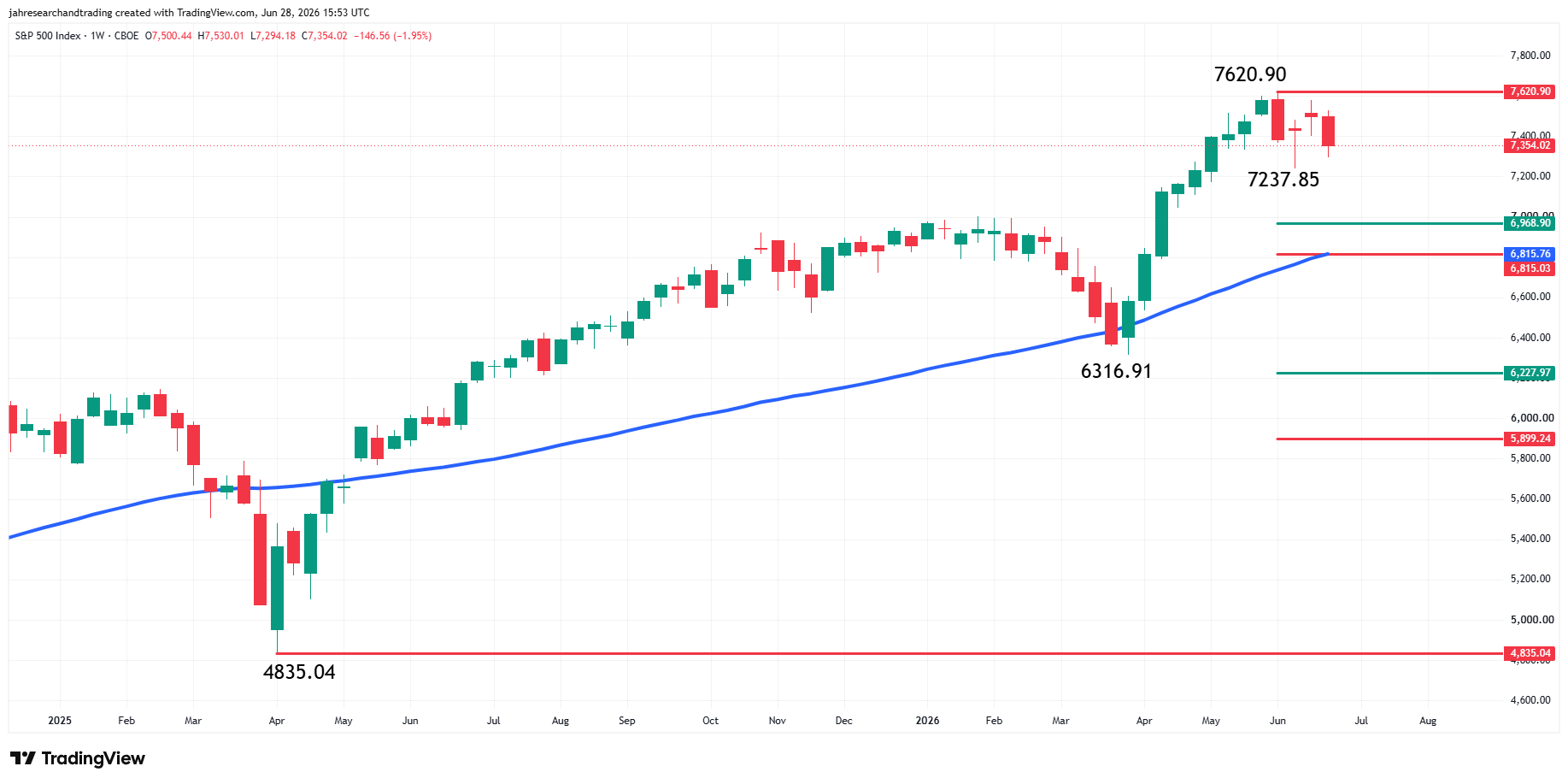
The S&P 500 fell nearly 2% last week. The Nasdaq Composite dropped about 4.6%. Nvidia and Alphabet each lost more than 8%. Meta, Apple, and Amazon all fell more than 4%. SpaceX declined roughly 17% after its post-IPO surge ran out of momentum.
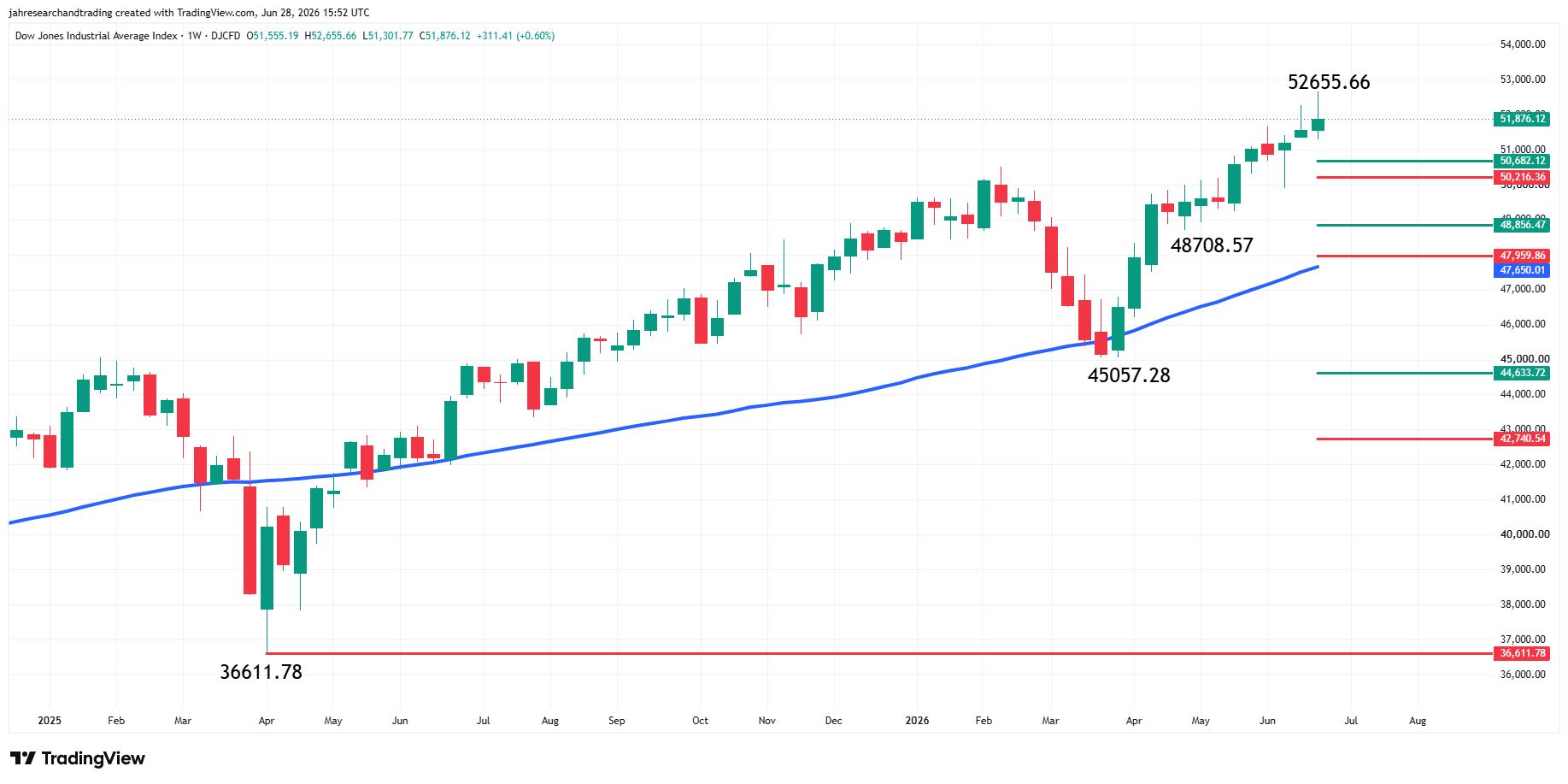
The Dow gained 0.6% on the same week because its tech exposure is lighter. Merck rose 13% and Johnson & Johnson climbed 11.5%, carrying the index while the Nasdaq was liquidating. The rotation into healthcare was the trade of the week and Monday’s premarket is telling you whether that rotation continues or whether the money comes back to tech.
What to Watch
The 50-day moving average on the September E-mini S&P 500 at 7449.19 is Monday’s decision point. Futures are pressing into it from below on the tech bounce and the ceasefire headline. If buyers can hold above it through the session, the retracement zone overhead is the next test. If it fails, the minor bottom and the main bottom are sitting below and both are trigger points for acceleration.
The ceasefire between the U.S. and Iran is holding but Trump’s follow-up strikes after alleged violations tell you it is fragile. Oil rising on the uncertainty Monday morning is the market’s way of saying it does not fully trust the pause.
Tech is bouncing after a brutal week and the names leading the premarket are chips, space, and media spinoffs. Whether the bounce becomes something more depends on whether buyers show up after the open or whether Monday’s premarket gains fade the way last week’s attempted rallies did.
Comcast, Charter, and Rocket Lab gave the market fresh catalysts that have nothing to do with rates or the Fed. That is the kind of company-specific news flow that can carry the broader tape when the macro is not cooperating.
More Information in our Economic Calendar.