Big Tech Selloff Pulls the S&P Lower
A handful of mega-cap tech names are doing all the damage Monday while chips, industrials, and energy equipment stocks absorb the money coming out. The Dow is green and the Nasdaq is taking the hit.
At 15:42 GMT, the S&P 500 is trading 7,485.11, down 15.47 or 0.21%. The Nasdaq Composite is at 26,277.093, down 240.838 or 0.91%. The Dow Jones Industrial Average is at 51,747.02, up 182.32 or 0.35%.

Daily S&P 500 Index (SPX) Technical Analysis
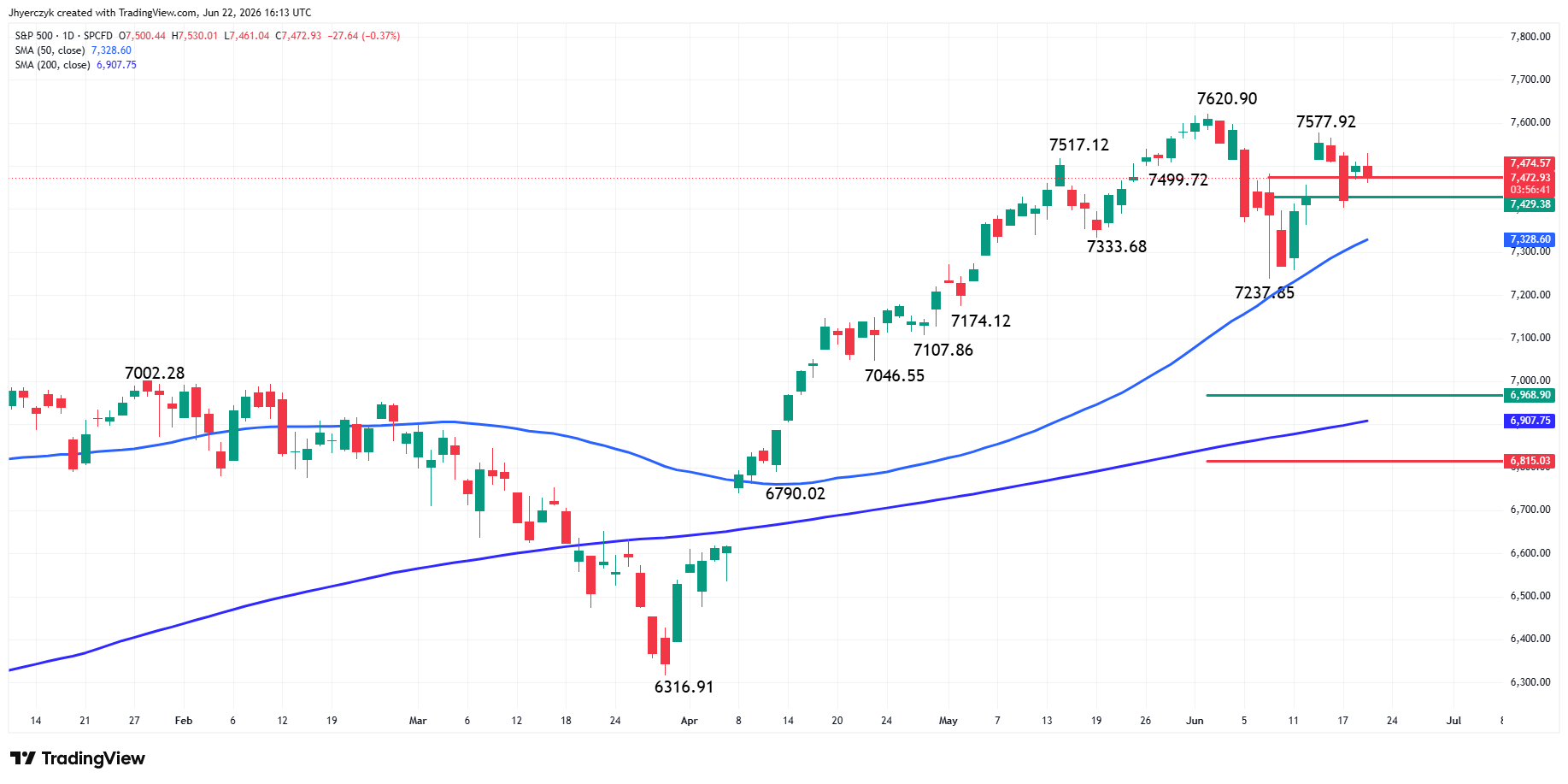
The benchmark S&P 500 Index is putting in a mixed performance early Monday. Traders are focusing on the key retracement zone that is controlling its near-term direction.
The main range is 7620.90 to 7237.85. The index is currently testing its retracement zone at 7429.38 to 7474.57. In my opinion, trader reaction to this zone will determine the next major move in the market.
Earlier this month, liquidation selling plunged the market from 7620.90 to 7237.85. But the rally back to 7577.92 gave the bulls hope for a rally to a new all-time high. Instead, a potentially bearish secondary lower top formed at 7577.92, suggesting that short-sellers were trying to block the move to the new high.
That move shifted the focus to the retracement zone at 7429.38 to 7474.57. A sustained move over 7474.57 will indicate the presence of buyers and a sustained move under 7429.38 will indicate that the selling pressure is getting stronger.
If buyers win the battle at 7474.57 then look for the rally to extend into 7577.92. A breakout over this minor top could trigger a surge into 7620.90 and beyond.
If sellers take over and drive the market under 7429.38 then look for the selling to possibly extend into the 50-day moving average at 7328.60. We could see a technical bounce on the first test of the 50-day MA.
If the 50-day fails, the selling could extend into the swing bottom at 7237.85. This main bottom is a potential trigger point for an acceleration into the long-term retracement zone at 6968.90 to 6815.00. Inside this zone is the 200-day moving average at 6907.71.
So it all comes down to trader reaction to 7474.57 to 7429.38. Hold above it and we could see a new high shortly, fall below it and the 50-day MA and main bottom at 7237.85 hits the radar.
Dow Jones Price Forecast
Every new Dow Jones analysis as it publishes, today's technical signal and key levels, live price — on one page.
See all Dow Jones forecastsMega-Caps Are the Whole Problem
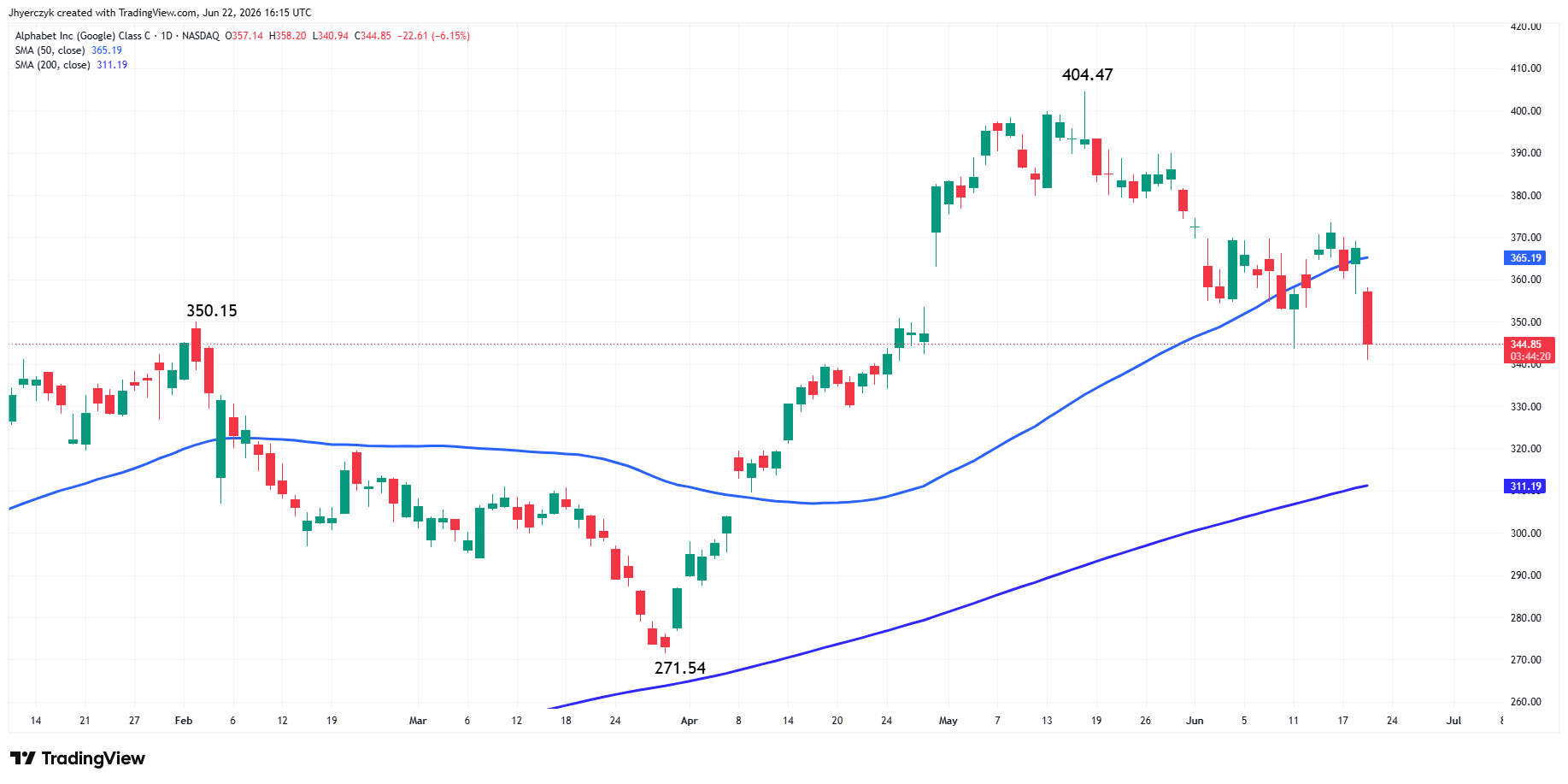
The Nasdaq is down nearly a full percent and the selling is not broad. Alphabet dropped 6%, Amazon is off 4%, and Meta lost 2%. When those three go together the index has nowhere to hide. SpaceX is extending its losing streak to a third straight session.
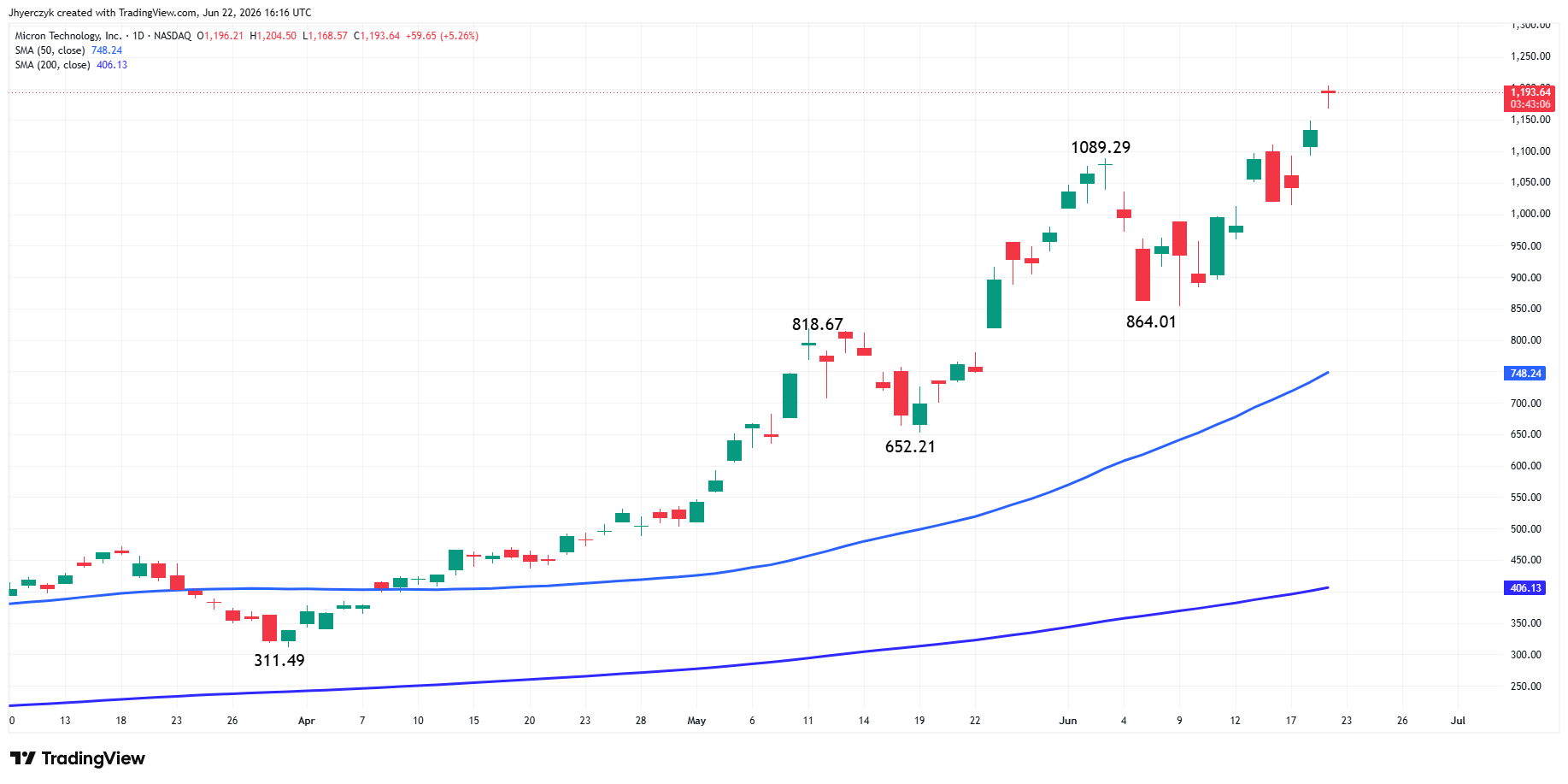
Traders are buying the chips. Micron is up more than 3% ahead of Wednesday’s earnings. Intel and AMD are up. The money leaving mega-cap tech is not leaving equities. It is rotating straight into semis and the industrial names that benefit from AI infrastructure spending. The Dow’s gain confirms it. This is a redistribution, not a retreat.
Iran Framework Knocked Crude Lower
The U.S. and Iran agreed to a 60-day framework aimed at a broader deal and Washington authorized Iranian oil sales for the same period. Brent dropped more than 3% toward $77 and WTI fell more than 2% near $74. The move was fast and one-directional once both headlines hit. Mediators reported the agreement and crude started falling before traders had time to read the details. The 60-day authorization on Iranian oil sales landed on top of the framework announcement and any remaining bid in crude evaporated.
Cheaper crude ahead of Thursday’s PCE report is convenient but it is not the trade. Falling oil helps the inflation picture at the margins and equity traders noticed. But one afternoon of lower energy prices does not undo what the Fed said last week. The committee held rates, went hawkish, and nine officials pointed toward a hike before year-end.
Thursday’s Personal Consumption Expenditures Price Index print is what the committee actually sets policy on and that number is going to carry more weight than anything crude does between now and then. If the PCE comes in hot, last week’s hawkish hold gets validated regardless of where oil is trading. If it comes in soft, the buy side gets a reason to push back into the names that sold off Monday without worrying about the Fed adding pressure.
Chevron Locked In 20 Years of AI Demand
Chevron agreed to supply natural gas to Microsoft’s Project Kilby data center in West Texas under a 20-year arrangement. The facility is expected to consume 2.7 gigawatts of electricity. GE Vernova is providing gas turbine generation and Caterpillar is supplying additional equipment. Power delivery is not expected until 2028 but the deal puts a hard number on what the AI buildout actually costs in energy and Chevron just locked in two decades of that demand.
What to Watch
Thursday’s PCE report is the next catalyst and the market is going to trade off it hard after last week’s hawkish hold. A hot number keeps the pressure on growth stocks and gives the sellers in mega-cap tech another reason to stay short. A soft print gives the buy side ammunition to keep the rotation running without worrying about the Fed tightening the screws further. Crude dropping on the Iran framework helps the inflation picture but the PCE is what the committee trades policy on, not one day of oil.
The S&P is sitting inside the retracement zone and the reaction to it determines the next move. Holding above the upper boundary keeps the path to the record high open. Losing the lower boundary puts the 50-day on the radar and the main bottom below that becomes the trigger for a faster decline. The mega-cap selling is not dragging the broad market down yet but the retracement zone has to hold for the bulls to stay in control.
More Information in our Economic Calendar.