Long-Bond Selling Is Starting to Matter More Than the AI Bid
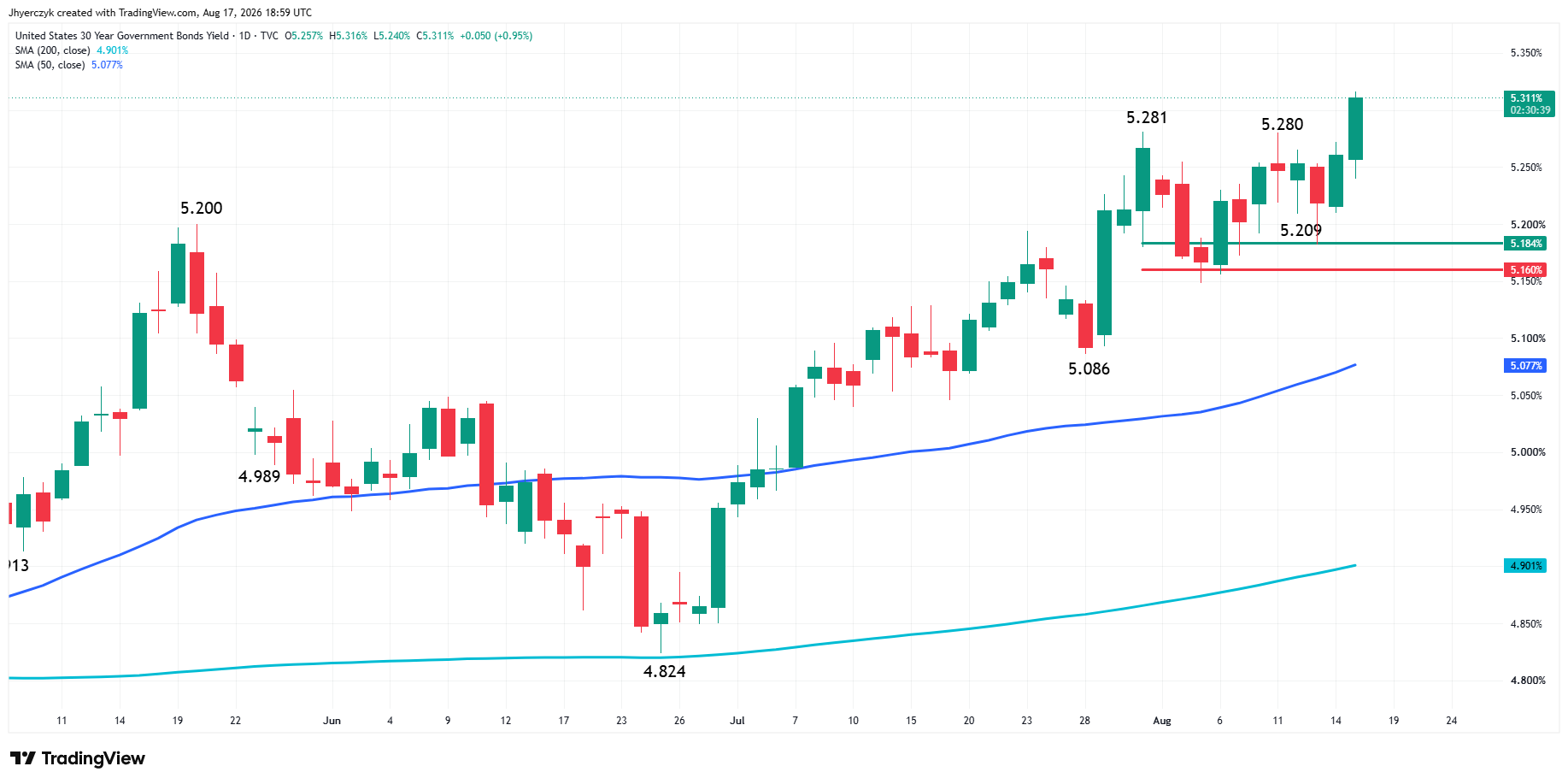
The 30-year Treasury yield pushed above 5.28% Monday, its highest level since 2007. That is the number weighing on stocks after a record-setting week. Chip stocks are higher on Anthropic revenue and a memory shortage but the broader market is slipping because the long end of the bond market is repricing what it costs to borrow for 30 years.
The front end of the curve tells a different story. The two-year yield is down about 12 basis points this month after weaker payrolls, contained CPI, flat PPI and falling retail sales cut into September hike odds. The 30-year is up more than 13 basis points over the same stretch. That split is the trade Monday. The S&P hit a record two sessions ago and is already threatening to close on the weak side of a key pivot.
The Dow Jones Industrial Average was down 0.4% Monday afternoon. The S&P 500 Index fell 0.1%. The Nasdaq Composite slipped below flat after trading higher earlier in the session.

Daily S&P 500 Index (SPX) Technical Analysis
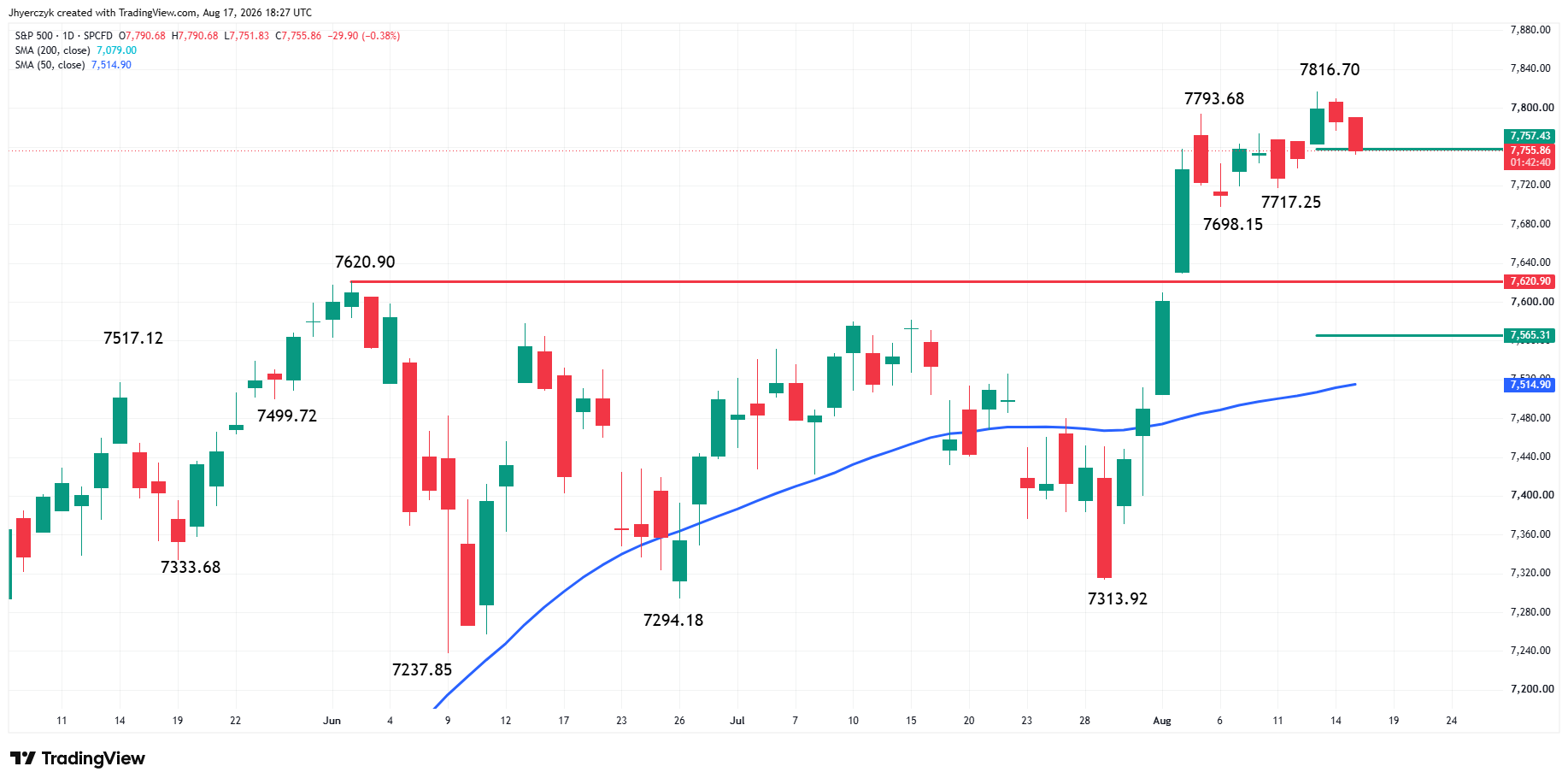
The S&P 500 Index is down late in the session on Monday. The main trend is up. In fact, just two sessions ago, the benchmark hit a record high at 7816.70. However, today’s sell-off has taken out two days of lows and is threatening to close on the weak side of a minor pivot at 7757.43.
So while the new record high may be saying “bull market”, the daily price action suggests the market may be getting ready to roll over to the downside.
A close under the pivot at 7757.43 will indicate renewed selling pressure. This could lead to tests of the two most recent minor bottoms at 7717.25 and 7698.15. Taking out both of these levels will shift momentum to the downside. This could extend the sell-off even further with the former main top at 7620.90 the first target, followed by a short-term 50% level at 7565.31 and the 50-day moving average at 7514.93.
On the upside, a trade through 7816.70 will signal a resumption of the uptrend.
Dow Jones Price Forecast
Every new Dow Jones analysis as it publishes, today's technical signal and key levels, live price — on one page.
See all Dow Jones forecastsThe Bond Market Is Pricing Deficits and Debt Supply, Not the Fed
The Treasury sold $25 billion of new 30-year bonds last week at a 5.216% yield, the highest financing cost for that auction since 2001. The 10-year auction a day earlier produced the highest cost since 2007. Buyers want more compensation before locking money up for decades and the Fed’s September decision is not driving the move.
The government still needs to borrow heavily. Inflation remains above the 2% target. Corporate borrowing for AI data centers, power infrastructure and chips is adding to the supply of long-dated debt at the same time Treasury issuance is running hot. The curve is steepening because the bond market does not believe that lower short-term rate pressure fixes the fiscal problem.
Citadel Securities told clients Monday that long-term yields remain elevated because the market believes policymakers take the easier route when difficult choices arrive. The firm noted that more than 55% of core goods prices are still rising. July’s data reduced the urgency for a hike. It did not give the Fed an all-clear.
Chip Stocks Have the Revenue but the Bid Is Getting Narrower
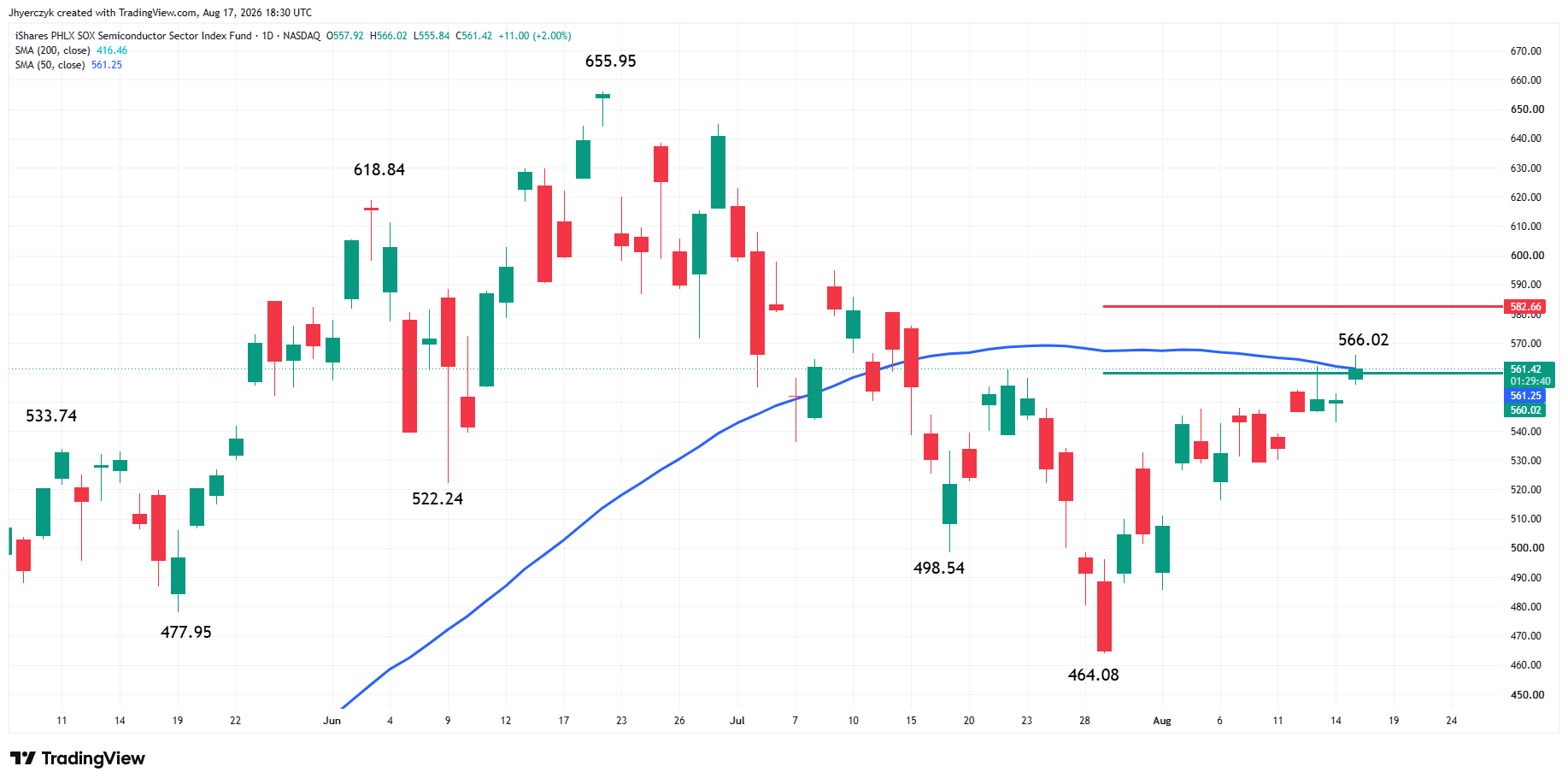
The iShares Semiconductor ETF gained more than 2.4% Monday. Nvidia, Broadcom and Micron were all higher. Micron was the standout, rising more than 5% and moving back above $1,000 for the first time since July.
The iShares Semiconductor Index ETF looked promising early in the session, rallying to $566.02 early in the day. Late in the day, however, it is still higher, trading at $561.25.
The main trend is up according to the swing chart. The main range is $655.95 to $464.08. Earlier today, the rally stopped after it hit 50% of this range at $560.02 and the 50-day moving average at $561.24. Although it traded through both potential resistance points, it could not hold onto those gains. In other words, new buyers didn’t chase it. The price action suggests traders sold the rally.
Anthropic’s preliminary second-quarter revenue came in at $11.5 billion, according to Bloomberg, about 14 times the year-earlier figure. That gave chip buyers a reason to come back after Friday’s selling in Broadcom and Applied Materials. The AI buildout is still running and the spending cycle has not lost the market’s confidence. The question is who collects the revenue and who funds the bill.
Brent Near $89 Can Undo the Rate Relief Stocks Are Trading On
Brent crude traded near $89 per barrel Monday with tensions in the Strait of Hormuz still elevated. Higher crude works through the economy fast. It raises fuel costs for consumers, airlines, truckers and manufacturers, and it can show up in the next round of inflation data before the Fed meets in September.
The market rallied on contained July inflation. Crude staying elevated threatens to make August look different. The combination of a weaker consumer and higher fuel prices at the same time raises the risk of slower growth without solving the inflation problem.
What to Watch
The bond market is the story of the day, not chips. Long yields at 19-year highs are putting a ceiling on broad buying after the S&P record. The AI bid is real but it is narrowing to the names with the strongest revenue evidence. Micron back above $1,000 and Anthropic’s revenue tell the market the spending cycle is intact. That is not enough to carry the Dow and S&P when the 30-year is pricing deficits, heavy issuance and inflation that has not gone away.
The S&P hit a record two sessions ago and is already fading. The pivot below the market is where Monday’s close matters most. If long yields keep climbing, the AI bid gets lonelier. If yields ease, the broader market has room to follow technology higher. The 30-year is making that call right now and it is not making it in the bulls’ favor.
More Information in our Economic Calendar.