
Tech’s Early Bid Lasted Until the 10-Year Woke Up
Technology tried to lead the first trading day of October and it didn’t last. Treasury yields started climbing again, Micron rolled over after a report most chip buyers would have signed off on, and the Nasdaq Composite Index slipped back under its short-term retracement zone. The S&P 500 Index and Dow Jones Industrial Average were already in the red.
Wednesday’s soft PCE report knocked October hike odds lower. It did nothing for long-term borrowing costs, and the long end of the curve is the one stocks are answering to today.
At 15:10 GMT, the Nasdaq Composite Index is trading at 26,746.55, down 114.51 points or -0.43%. The S&P 500 Index is at 7,619.31, down 32.23 points or -0.42%. The Dow Jones Industrial Average is trading at 50,574.36, down 331.69 points or -0.65%.

Daily Nasdaq Composite Index (IXIC) Technical Analysis
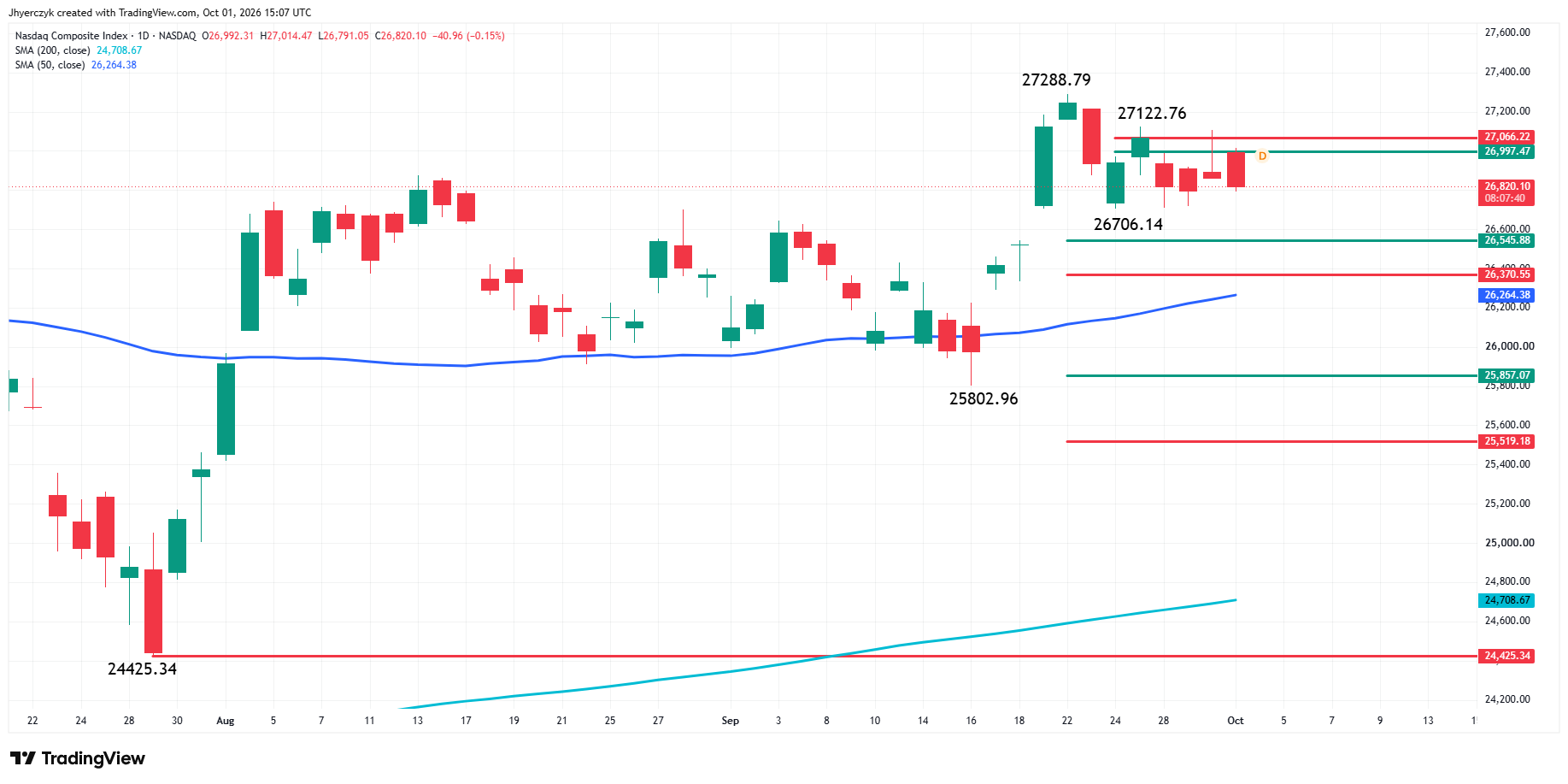
The Nasdaq Composite Index is edging lower Thursday, shortly before the mid-session. The main trend is up, however, sellers are holding the index below the 26,997.47 to 27,066.22 short-term retracement zone.
A sustained move over 27,066.22 would signal the presence of buyers. A trade through 27,122.76 would show the buying is getting stronger, with the main top at 27,288.79 the next upside target. Taking out that level would reaffirm the uptrend.
A sustained move under 26,997.47 would be a sign of weakness and could put the minor bottom at 26,706.14 in play. If that level fails, the minor trend will change to down and could lead to a test of another short-term retracement zone at 26,545.88 to 26,370.55. The 50-day moving average at 26,265.45 is underneath that zone.
A sustained move under the 50-day moving average would point to stronger selling pressure, however, the main trend will not turn down unless 25,802.96 fails.
Dow Jones Price Forecast
Every new Dow Jones analysis as it publishes, today's technical signal and key levels, live price — on one page.
See all Dow Jones forecastsMicron’s Beat Turned Into a Profit-Taking Sale
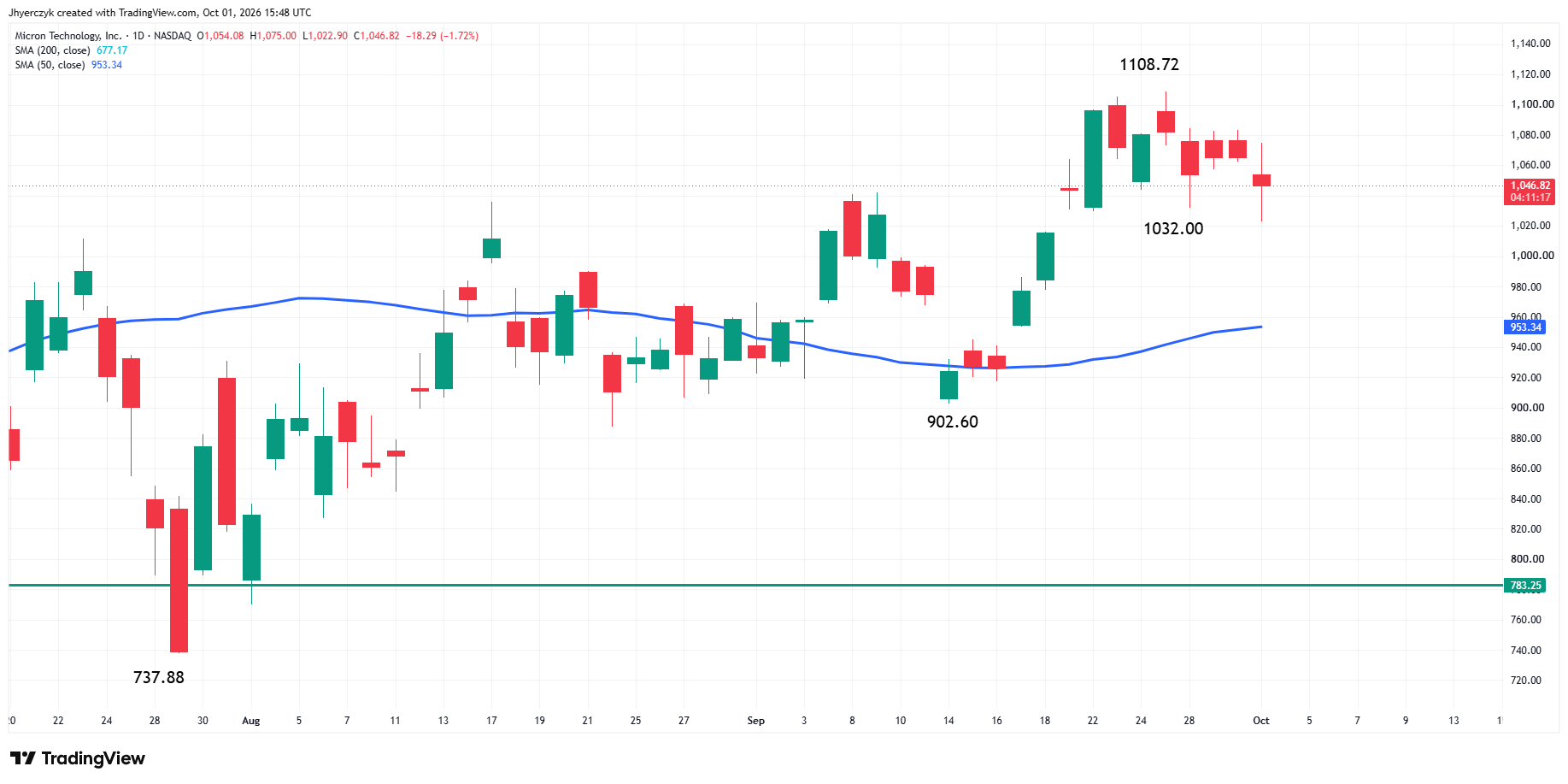
Micron is down about 3% Thursday on a report that should have been a layup. Revenue quadrupled from a year earlier, memory demand is still tight and the outlook cleared Wall Street. The chip group was bid before the opening on it. Once the cash session got going, sellers went after the stock anyway.
I’d call that profit-taking, not a verdict on the quarter. Micron is up more than 200% this year, and when a stock has run like that, a great report is a place to sell it.
The margin side is where it gets uncomfortable. Micron is pulling in 87% profit margins and planning to raise worker pay, with the stock already priced for an exceptional run in margins. The pay raise stays a Micron problem though. AI data centers are still pulling on memory and NAND supply is still tight for the whole group.
Citi called it a positive read-through for Sandisk, pointing to a 42% rise in Micron’s NAND revenue and NAND prices up about 30% on tight supply. Nobody is arguing with the data-center demand. The hard part is carrying that story while long-term yields keep climbing.
Energy Rode Crude Higher While Financials Got Hit
Technology was slightly positive early and the bid never spread. Financials, materials, real estate and consumer discretionary are among the weaker groups. Energy is up with crude.
September’s split is right back in place. AI infrastructure, software and data centers got the money last month and everything else had to deal with rates and oil. October’s first session isn’t changing that.
The Nasdaq still has the better long-term chart. What it doesn’t have is buyers willing to take offers through resistance with bonds this hostile.
The 10-Year Hit an April 2002 High and Stocks Blinked
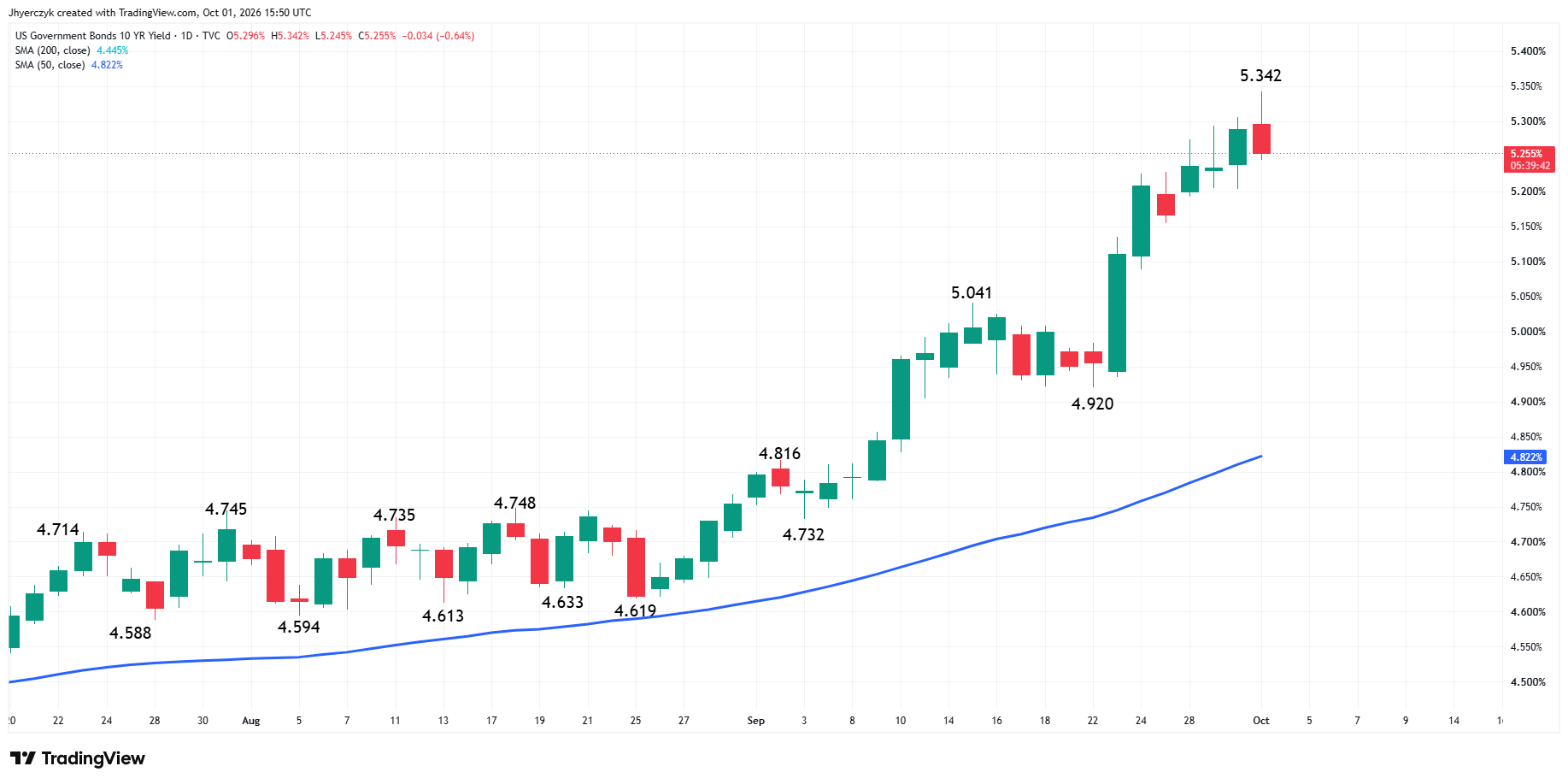
The 10-Year U.S. Treasury yield touched 5.342% Thursday, the highest since April 2002. The 30-Year sat near 5.663%, back at levels from more than two decades ago.
One earnings report doesn’t fix that for technology. And it’s not only growth valuations taking the hit. Financials, real estate, industrials and the smaller companies are all wearing the yield move, and none of them have AI revenue to hide behind.
The S&P 500 Index opened October higher right through the yield move, then rolled over with everything else. The Dow is getting hit the hardest because the rate pressure has spread well past the growth names.
Bond traders looked straight past the October meeting once PCE cut the hike odds. Oil, deficits, Treasury supply and the yield it takes to hold long-dated debt are what they’re pricing. Until that trade turns, every stock rally starts with a lid on it.
ISM Prices and Jobless Claims Gave Bonds Nothing
November WTI crude oil futures are back over $91 a barrel with traders waiting on President Trump’s next move in the Iran conflict. Soft PCE or not, oil is still feeding the inflation trade.
September ISM manufacturing didn’t help. The headline index held at 54.5, so the factory sector is still expanding, but the prices component is what jumped off the page. It ran up 6.8 points to 77.9. Employment rose to 52.7. Bond buyers needed something soft after the yield breakout and got the opposite.
Labor didn’t give them anything either. Initial jobless claims came in at 197,000 for the week ended September 26, under the 200,000 estimate, and Challenger job-cut announcements fell 39% from August and 20% from a year ago. Hiring isn’t cracking anywhere near fast enough to pull the long end down.
What to Watch
Friday’s Non-Farm Payrolls report is the next broad-market test, though the 10-Year is running Thursday’s session. Micron’s numbers haven’t brought chip buyers back with yields where they are, and the names that led September are still getting sold.
At 15:10 GMT the Nasdaq Composite Index is sitting under 26,997.47 to 27,066.22, and trader reaction to that zone sets the tone into the close. The index is trading just above the minor bottom at 26,706.14, and that’s the level keeping the minor trend up.
More Information in our Economic Calendar.