The first day of October is showing a similar pattern, as markets worry about rising energy costs and elevated borrowing rates, challenging investors, while strong technology earnings provide reasons to remain somewhat optimistic. Developments on Thursday suggest that the interaction between oil, government bonds, and currencies remains central to the outlook, even as some individual companies have demonstrated an ability to grow through this environment.

Mounting Pressure on Government Bonds
The most consequential development at the moment is the pressure on government bonds.
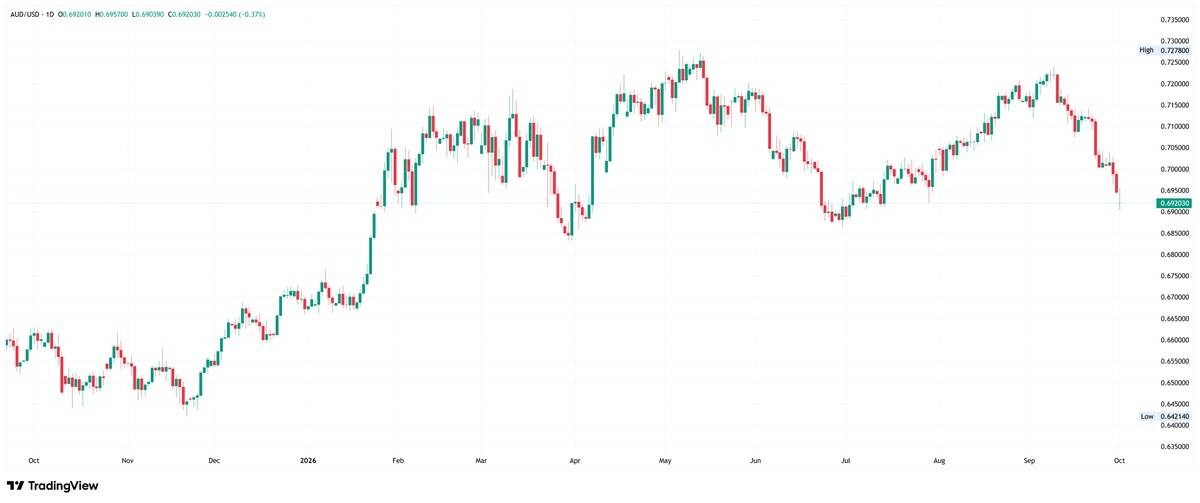
The 10-year U.S. Treasury yield briefly reached 5.34%, its highest level since 2002, before retreating a bit. This represents more than just a technical level. Treasury yields are influencing mortgage rates, corporate financing, and the returns investors require from other assets. As those yields have risen substantially, we start to pay attention to the financial conditions facing households, and it does make the U.S. dollar more attractive as interest rates are higher than in many other places.
Energy, of course, remains a significant contributor to that pressure. Higher fuel prices increase transportation and production costs, potentially feeding into consumer inflation. However, the transmission is neither immediate nor uniform across the market. Businesses can, and many have, absorbed some of these additional costs through narrower margins, but sooner or later, something has to give.
An energy shock can simultaneously raise inflation risk and weaken growth, complicating the decisions coming out of the Federal Reserve. The FedWatch tool has recently suggested that the October 25-basis-point rate hike is perhaps off the table and might be moved to December.
AUD/USD Price Forecast
Every new AUD/USD analysis as it publishes, today's technical signal and key levels, live price — on one page.
See all AUD/USD forecastsChinese Fuel Export Curbs Rattle Markets
China is slowing or stopping fuel exports.
Thursday brought another concern for fuel markets, as Chinese refiners suspended October exports to destinations outside the country. This could put some pressure on other Asian economies, as well as the European Union, although it is a smaller effect on Europe. Whether export permissions resume after the holiday remains uncertain, but this is a major problem.
Recovering crude shipments do not necessarily resolve an energy shortage. Crude oil has to be transported, refined, and delivered as usable products, so disruption at any stage can leave gasoline, diesel, and aviation fuel scarce even when more crude becomes available. Reporting on physical oil markets also indicates that improving Middle Eastern flows have not eliminated tight supply conditions.
For the forex market, implications depend on relative exposure. Energy importers can face deteriorating trade balances as their import bills rise, while exporters benefit from stronger revenues. Yet, those relationships can be overwhelmed by interest-rate expectations, domestic economic conditions, or demand for liquidity in the case of the U.S. dollar. Higher oil, therefore, does not automatically translate into stronger commodity currencies or weakening importing currencies during every session.
Sovereign Debt Risk in Europe
European investors face a separate source of uncertainty: sovereign debt risk. France’s borrowing premium over Germany widened sharply, reflecting inflation concerns alongside fiscal and political uncertainty. ECB policymakers have emphasized that central banks’ intervention tools are intended to protect price stability rather than defend bond-spread levels, so that might be something worth watching.
US Labor Market Shows Continued Resilience
The United States released its unemployment claims figures. They offer little evidence of accelerating layoffs. The Labor Department reported 197,000 initial claims, down 1,000 from the previous week’s revised level. Continuing claims declined to 1.7 million.
These figures suggest a picture of employment stability, although low layoffs should not be confused with vigorous hiring. This resilience creates a challenge for investors hoping weaker economic activity will quickly bring relief from higher interest rates. If demand and employment remain steady while energy inflation persists, policymakers will have less reason to ease rates.
Nevertheless, weekly claims are only one indicator. Broader employment, wage, and inflation reports will determine whether that interpretation holds. Friday’s session, of course, brings the nonfarm payroll announcement, and that could be a hot release.