


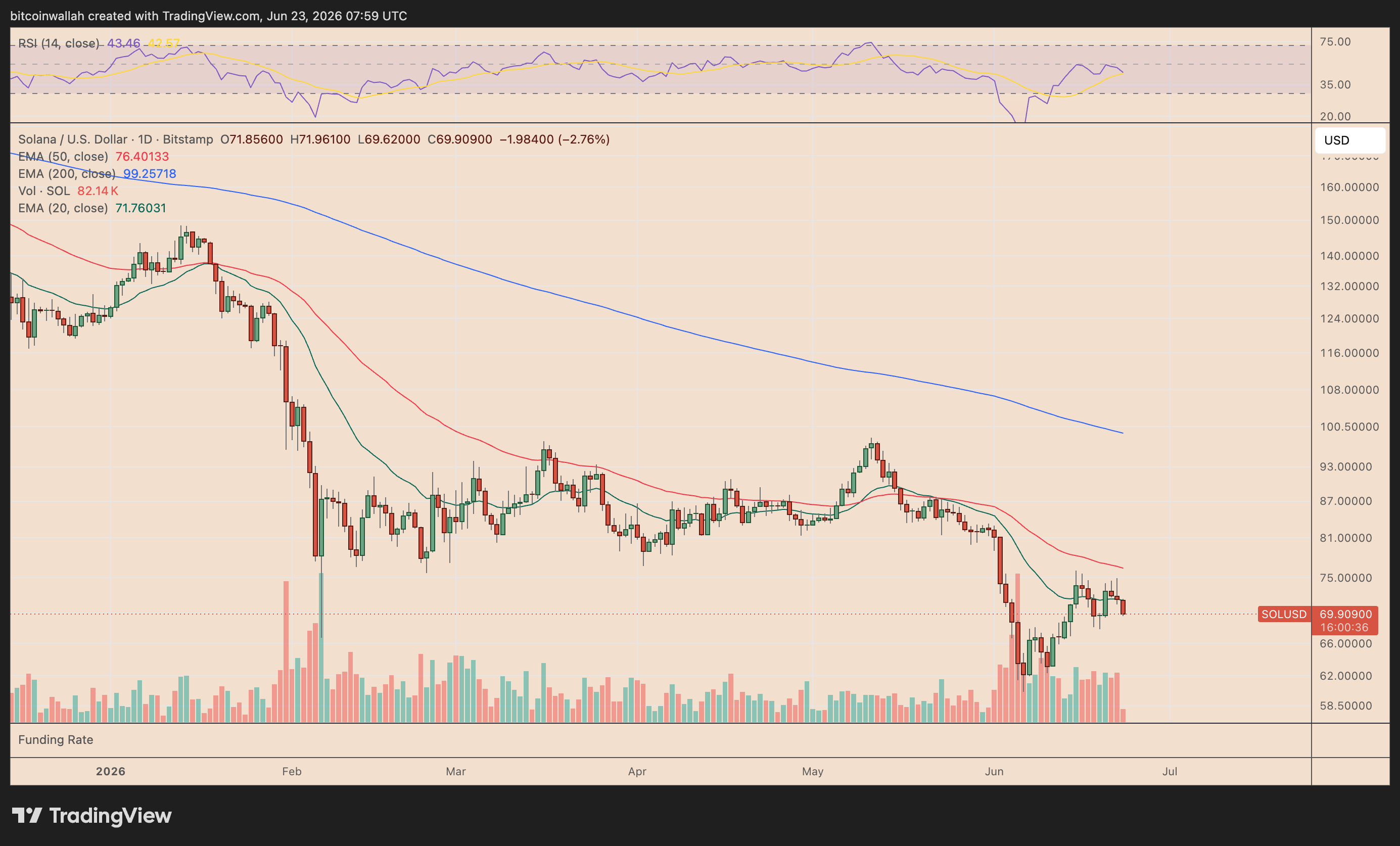
Solana (SOL) dropped by over 2.5% on Tuesday, hitting $70 while extending its correction from the local high of around $76. Now, several technical setups suggest a further correction in the coming days.

SOL Double Top Puts $60 Back In Play
Solana is showing a clear double-top pattern on the four-hour chart, a bearish setup that forms when price fails twice to break above the same resistance zone.
The first top formed near $75 on June 15, after SOL bounced strongly from its June low near $60. The second top appeared near the same $74–$75 area a few days later, but buyers again failed to push the price above resistance.
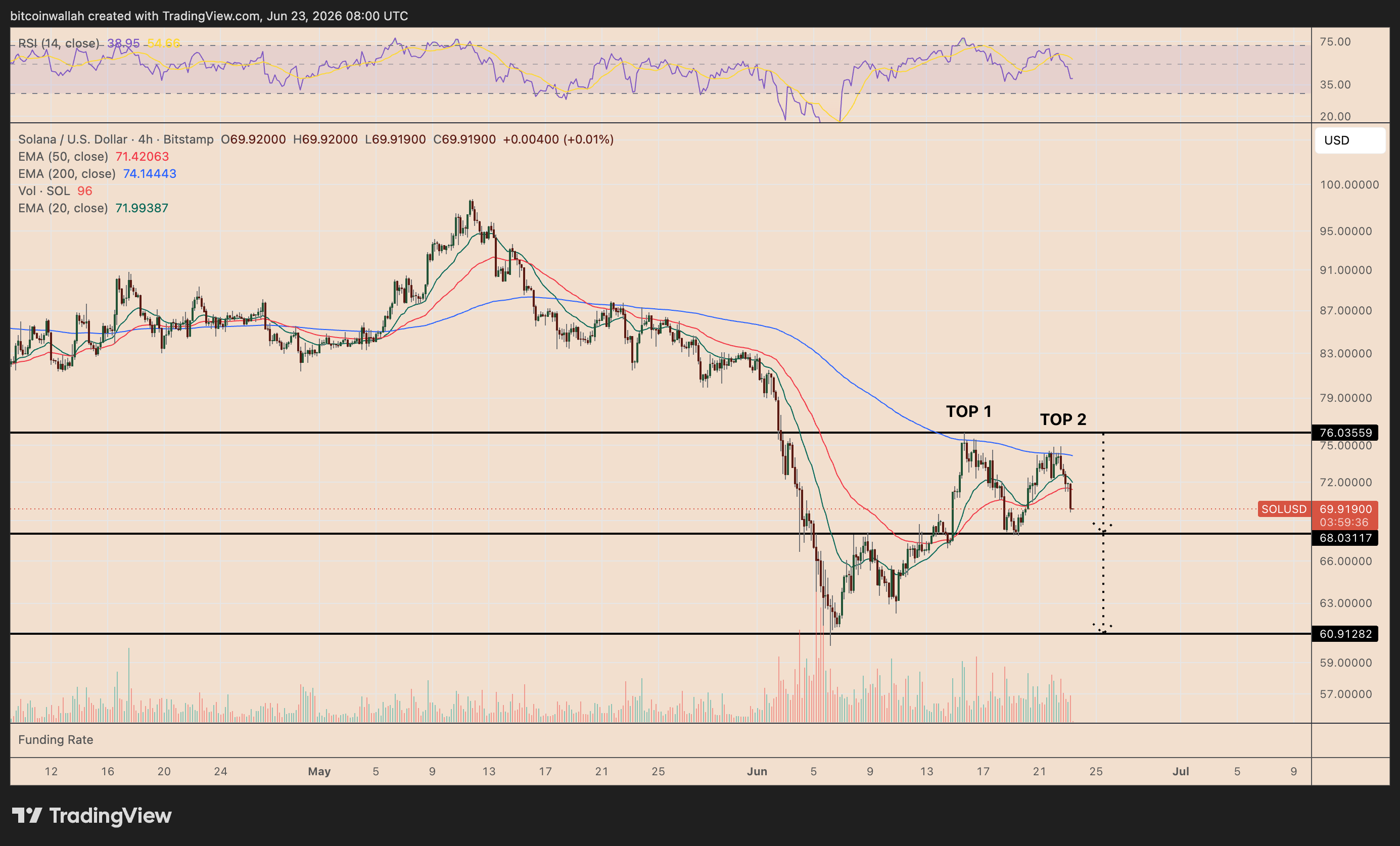
A double top usually signals that buyers are losing control. In SOL’s case, the key neckline sits near $68. A decisive four-hour close below that level would confirm the pattern and open the door to a deeper decline.
The measured target sits near $60–$61, based on the distance between the $75 resistance area and the $68 neckline. That zone also matches a major support level from the previous selloff, making it the next obvious downside target.
Momentum also looks weak. SOL is trading below its 20-period and 50-period exponential moving averages, while the 200-period EMA near $74 is acting as overhead resistance.
The relative strength index, or RSI, is near 39, showing fading buyer strength without yet being deeply oversold.
Solana Price Forecast
Every new Solana analysis as it publishes, today's technical signal and key levels, live price — on one page.
See all Solana forecastsBear Flag Breakdown Points To Same Target
The bearish case becomes stronger because SOL is also breaking down from a bear flag.
A bear flag forms when the price rebounds inside a rising channel after a sharp decline. It often acts as a pause before the previous downtrend continues.
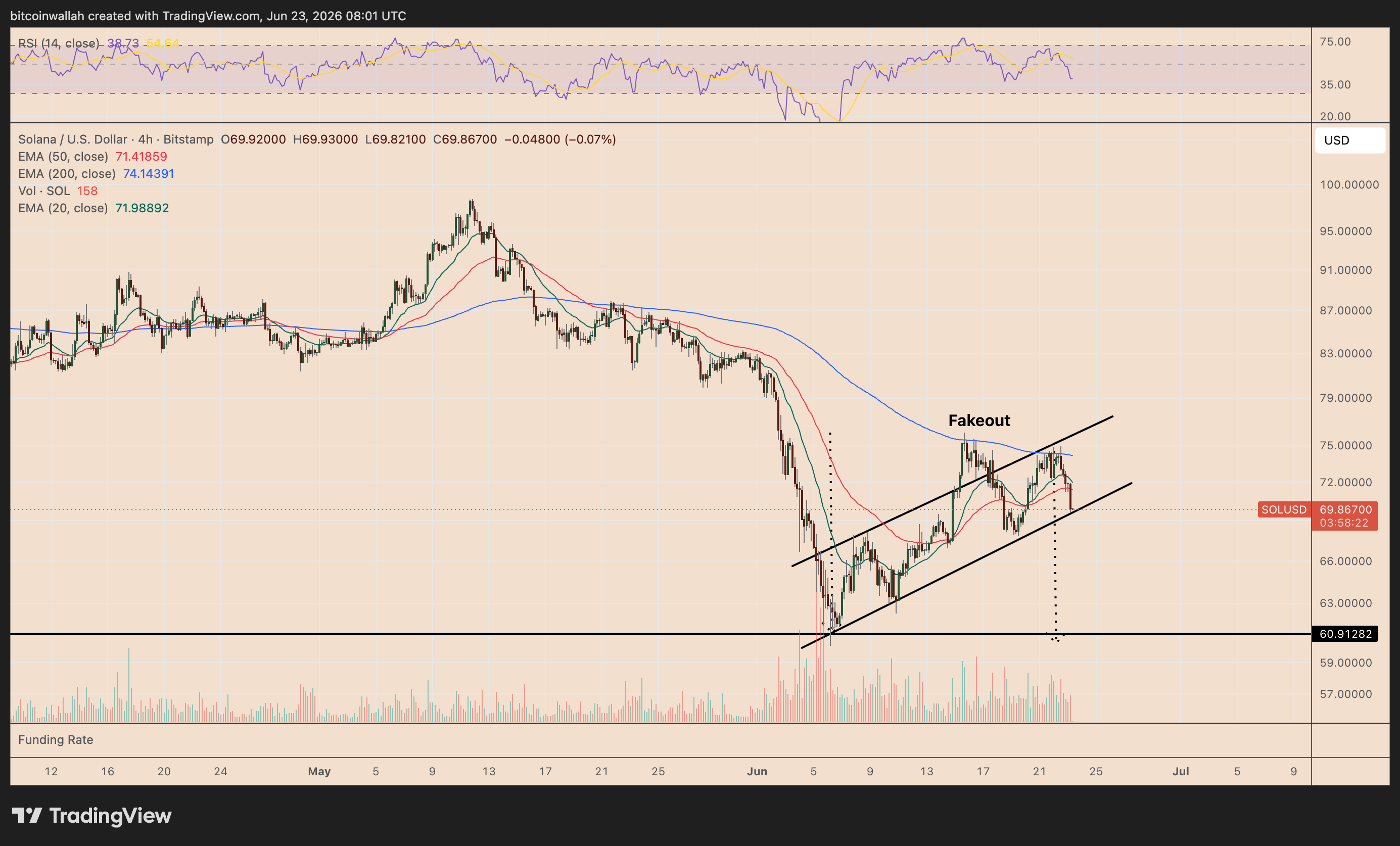
SOL’s flag started after its steep drop from the $86–$87 area to nearly $60 in early June. The token then recovered inside an upward-sloping channel, but that bounce now appears to be losing steam.
SOL has slipped toward the lower boundary of the flag near $70–$71. A confirmed breakdown below that trendline would suggest the earlier selloff is resuming.
The bear flag’s measured target also lands near $60.70, nearly the same level projected by the double-top setup. When two separate bearish patterns point to the same downside zone, traders usually treat that level as more important.
A move back above $74–$76 would weaken the bearish setup. Until then, SOL’s chart structure favors a retest of the $60 support zone.
Meanwhile, tech stocks have come under pressure after a sharp SpaceX-led selloff, while concerns about heavy AI spending have hit major US megacaps.
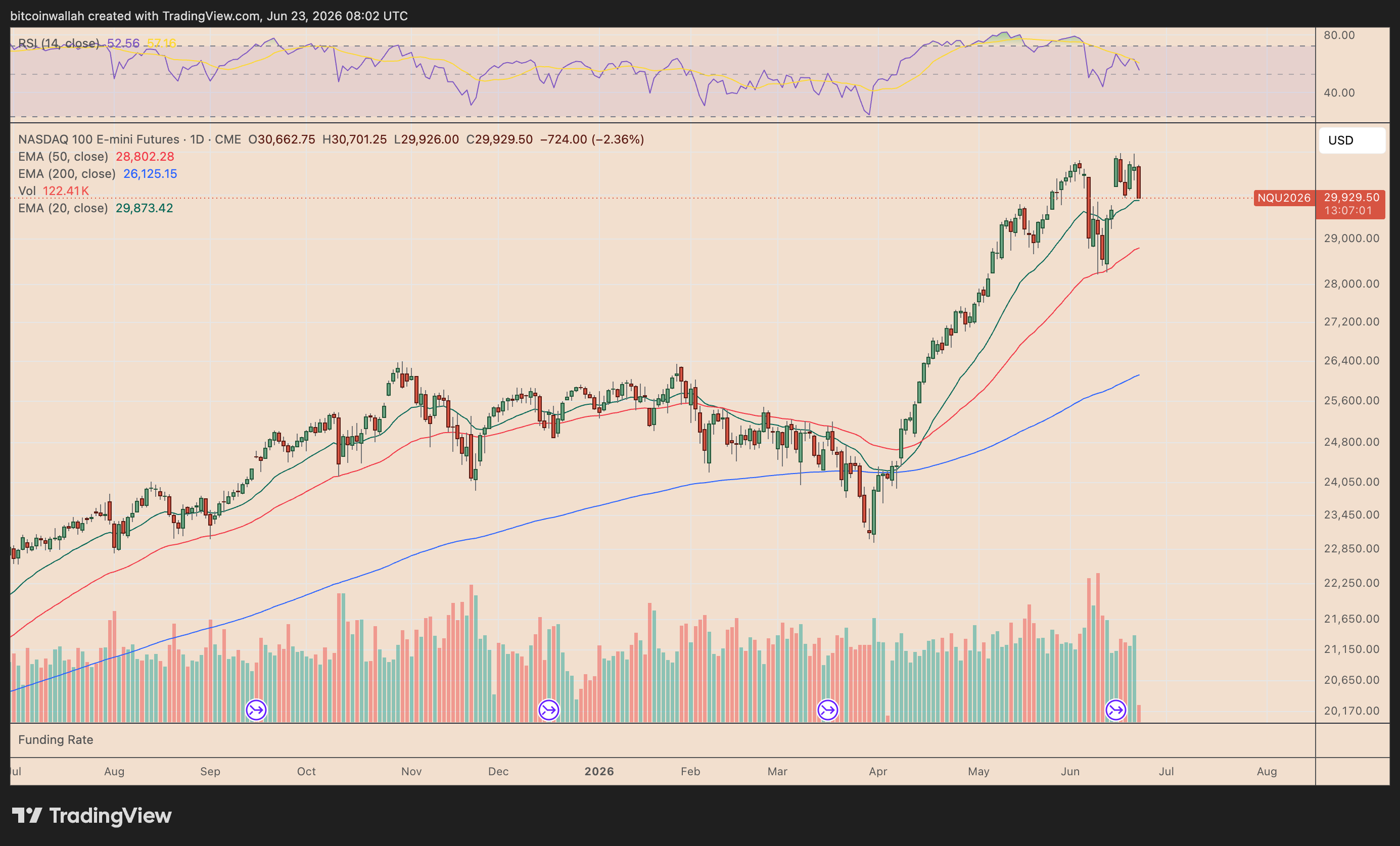
At the same time, yen carry trade risks are back in focus as USD/JPY trades near multi-decade highs. A sudden yen rebound could force traders to cut leveraged risk positions, pressuring high-beta assets like Solana.


