
Gold is a safe-haven asset. Investors often buy it when markets face stress. Yet despite ongoing global conflicts, rising national debt levels, and elevated energy prices, gold prices (XAUUSD) have been falling lately. Yesterday, the price of spot gold traded on COMEX dropped by 1.1% and closed at $4,140 per ounce, a two-month low. In fact, the yellow metal has lost over 25% of its value since hitting a record high of $5,627 on 29 January, and it remains down some 5% year-to-date (y-t-d).
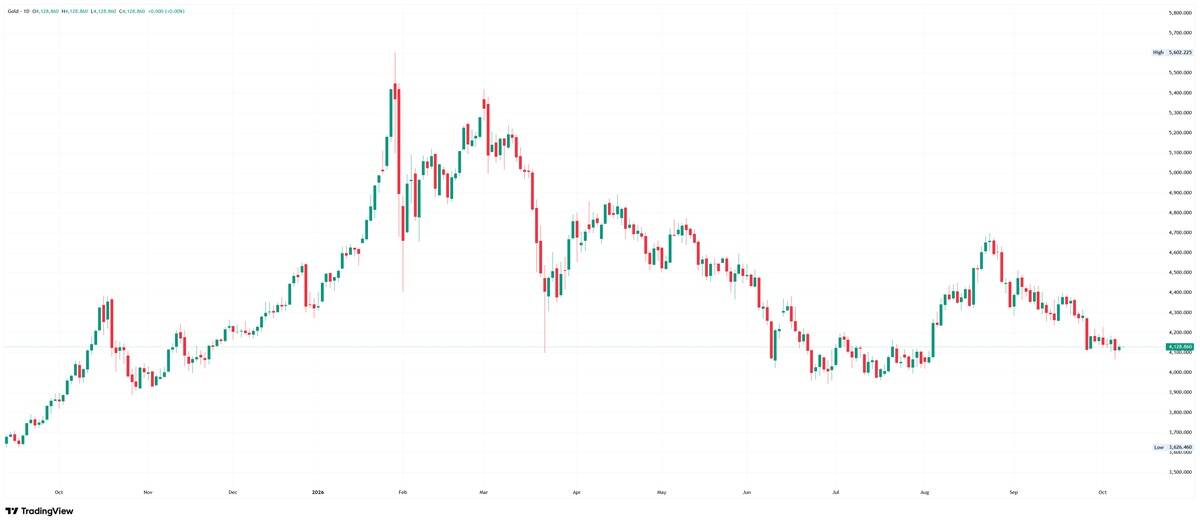
What is most striking, however, is that gold has lagged other safe-haven assets such as the U.S. dollar (USD), the Japanese yen (JPY), and the Swiss franc (CHF). In this article, Elev8 broker explains the market forces pushing gold down and examines whether the price can recover to $5,000.

Safe-Haven Assets
Financial markets define ‘safe-haven assets’ as investments that protect wealth from inflation and global chaos. These assets typically include precious metals like gold, silver (XAGUSD), and platinum (XPTUSD) and strong currencies like the USD, JPY, and CHF. When looking at safe-haven assets’ performance in 2026, we see that investors clearly preferred the greenback over other assets. Gold is down roughly 5% y-t-d. Other metals have fallen even further. Silver lost 14% of its value, and platinum fell by almost 20%. Why so?
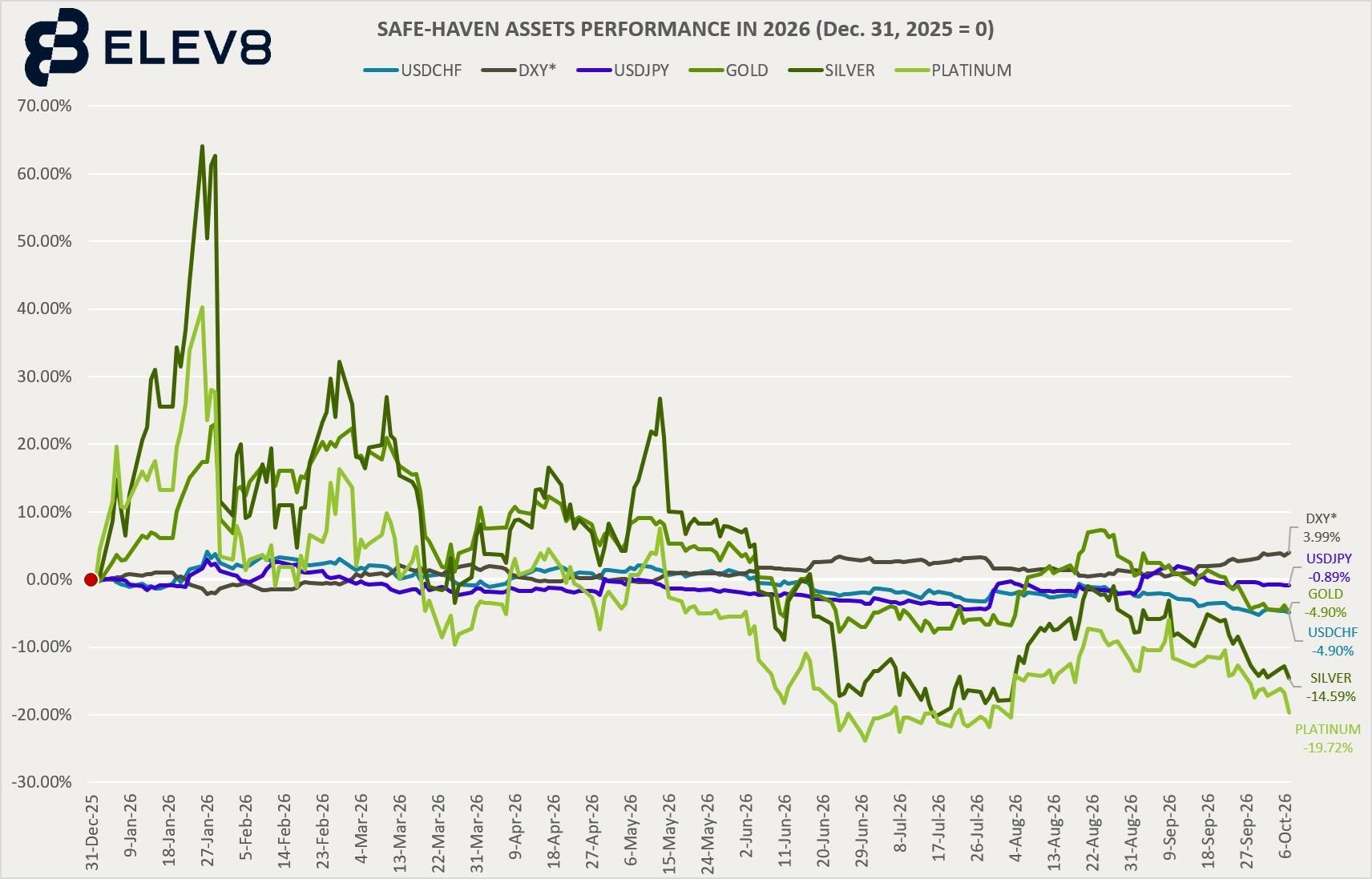
A very strong U.S. dollar and high Treasury bond yields have driven these declines in precious metals. The dollar index recently reached a 17-month high, making metals more expensive for foreign buyers. Meanwhile, Treasury yields hit their highest levels since 2002, increasing the opportunity cost of holding non-yielding metals.
Furthermore, the Federal Reserve (Fed) raised interest rates in September to a range of 3.75–4.00%. Higher rates normally slow the economy and, as a result, hurt platinum and silver particularly hard, because both metals rely heavily on industrial use and lack the strong investment status of gold. Platinum faces extra pressure because more than half of its demand used to come from autocatalysts. However, the shift toward electric vehicles clouds the longer-term autocatalyst demand. Meanwhile, new solar panel recycling methods increase the global silver supply, which may exhibit a structural downward pressure on XAGUSD, especially after it rallied almost 150% in 2025.
Outlook for Gold
We forecast that gold will move above $5,000 per ounce in 2027. Even while near-term headwinds remain (particularly tighter monetary policy in the U.S. and elsewhere), steady buying by exchange-traded funds (ETFs) and growing sovereign demand on the part of global central banks provide long-term support for bullion. In addition, European political tension and instability in international government bond markets will continue to push institutional and retail buyers toward safety.
Gold Price Forecast
Every new Gold analysis as it publishes, today's technical signal and key levels, live price — on one page.
See all Gold forecastsThree additional factors could drive gold back above the $5,500 level. A shift in the Fed’s policy would matter most. Officials, including New York Fed President John Williams, have signalled no rush for another hike. Indeed, markets now price only a 22% chance of an October increase, down from about 70% a week earlier. San Francisco Fed President Mary Daly has said that if tariff, oil, and other shocks prove temporary, further hikes may not be needed. A pause in rate hikes will weaken the dollar and lower real yields, thus reducing the cost of holding gold.
Second, the normalisation of the geopolitical situation in the Persian Gulf and Eastern Europe will stabilise energy markets and lower crude oil prices. A move in WTI below its 200-day moving average near the $83 level could lower inflation expectations and Treasury yields, weakening the U.S. dollar and benefiting gold.
Finally, Asian market infrastructure may also expand the buyer base. Hong Kong plans a central clearing system, a renminbi gold futures contract, and more than 2,000 metric tons of storage capacity. Singapore is starting central bank vaulting services, with commercial capacity already above 2,000 metric tons. Indeed, physical buying has already responded to lower prices. Perth Mint gold sales nearly doubled in September to 47,300 ounces, the highest in seven months, up 97.6% from August and 29.3% from a year earlier.
Conclusion
Gold has underperformed other safe havens this year because of a strong dollar, high yields, and tighter monetary policy on the part of the Fed. Silver and platinum fell more sharply for the same reasons, plus weaker industrial demand. However, we believe that fundamental demand drivers remain intact. Political tension, public debt concerns, and potential shifts in central bank monetary policy provide strong support for a long-term recovery.
We still see a path back above $5,000 and towards $5,500 in 2027 if the Fed signals that rate rises are near an end, if oil prices ease, and if ETF and physical buying continue. Those shifts would need to arrive in sequence. Until they do, gold is likely to remain sensitive to yields and the dollar.
Disclaimer: This article does not contain or constitute investment advice or recommendations and does not consider your investment objectives, financial situation, or needs. Any actions taken based on this content are at your sole discretion and risk—Elev8 does not accept any liability for any resulting losses or consequences.