Dollar Posts Biggest Weekly Drop Since January as Safe-Haven Trade Collapses
The U.S. Dollar Index closed Friday at 98.697. Down 0.10% on the day and 1.3% for the week. That’s the biggest weekly loss since January and here’s what makes it interesting. Yields were edging higher and oil was still elevated. The dollar should have held up in that environment. It didn’t. That tells you this wasn’t about rates or inflation. This was positioning. The safe-haven trade that built up during the worst of the conflict is coming apart.
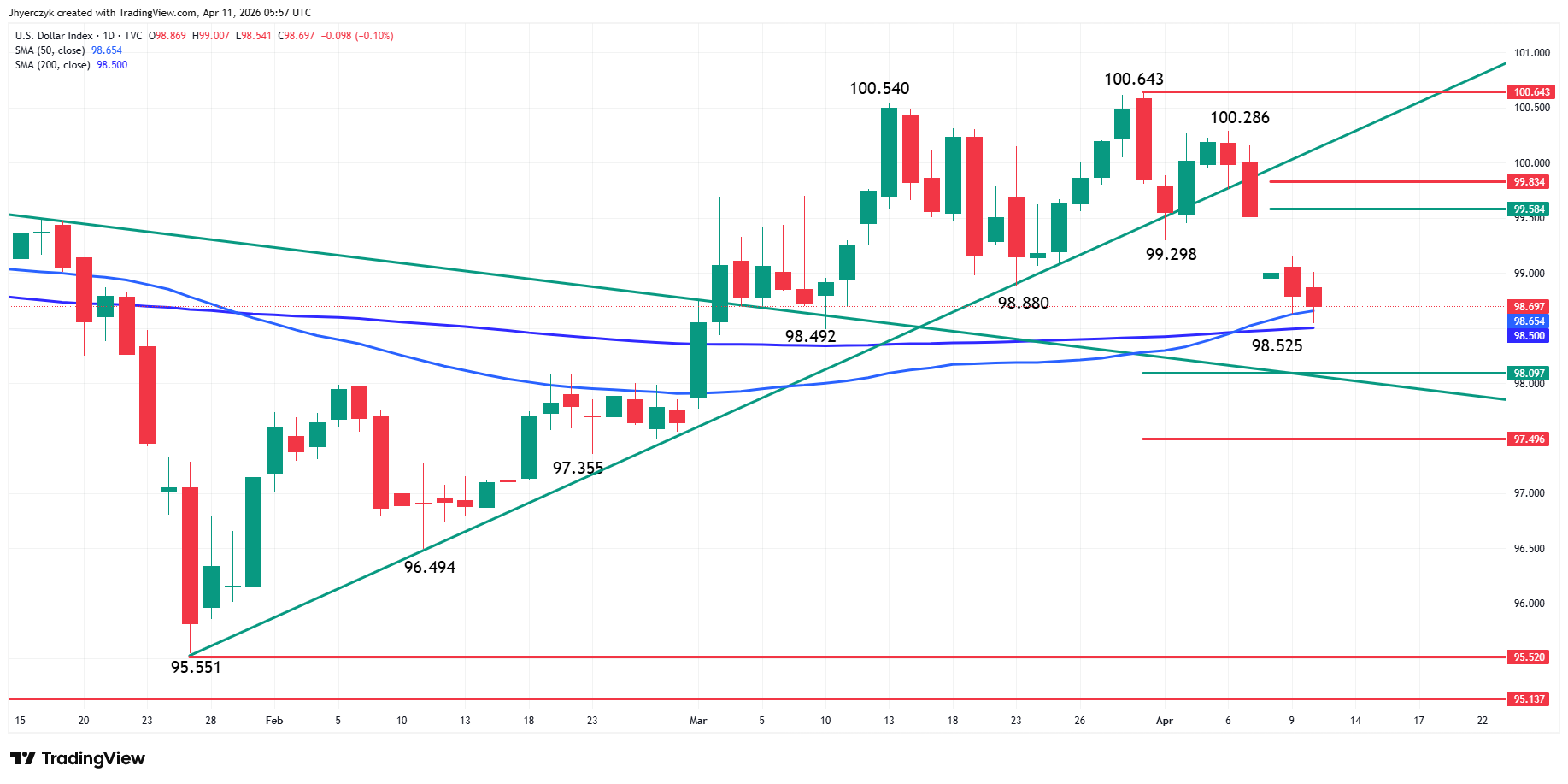
Technically, the DXY trend is now down after crossing to the weak side of a long-term trend line and taking out swing bottoms at 99.298 and 98.880.
Support is currently being provided by the 50-day moving average at 98.654 and the 200-day moving average at 98.500. Crossing to the bearish side of these indicators will put the market in a weak position, but sellers could run into headwinds at the 98.097 to 97.496 retracement zone. In other words, counter-trend buyers could re-emerge.
The War Bid Is Coming Out
When the conflict between the U.S., Israel and Iran was at its peak, the dollar caught strong bids. Oil was spiking, stocks were struggling and inflation fears were running hot. The dollar was one of the few places to hide and money poured in. The ceasefire changed that calculation. Traders who built up defensive dollar positions started unwinding them and the selling accelerated through the week. The tail risk that justified the safe-haven premium has faded and the dollar is giving back what it gained on fear.
CPI Gives the Fed No Reason to Act
I looked at the March CPI number and the first thing I did was strip out energy. The headline came in at 0.9% month over month and 3.3% year over year and it looks alarming until you see that energy prices alone jumped 10.9%. That’s the war showing up in one line item. It isn’t broad inflation and the Federal Reserve knows the difference. Core CPI was up just 0.2% on the month and 2.6% on the year, both slightly below expectations. That’s the number that matters and it isn’t telling the Fed to do anything.
February PCE backed that up. Up 0.4% month over month and 2.8% year over year. Still above the 2% target but not moving in the wrong direction fast enough to force action. The Fed stays patient. Patient Fed means no rate hikes on the horizon and no rate hikes means no support for the dollar through the yield channel. That’s the mechanism that’s working against the U.S. Dollar Index right now.
Broad Dollar Selling Across the Major Pairs
The 10-year U.S. Treasury yield pushed up to 4.321% and the U.S. Dollar Index still went down. That’s the tell right there. Rising yields normally pull the dollar higher. When that relationship breaks down it means positioning is running the show, not fundamentals.
EUR/USD Price Forecast
Every new EUR/USD analysis as it publishes, today's technical signal and key levels, live price — on one page.
See all EUR/USD forecasts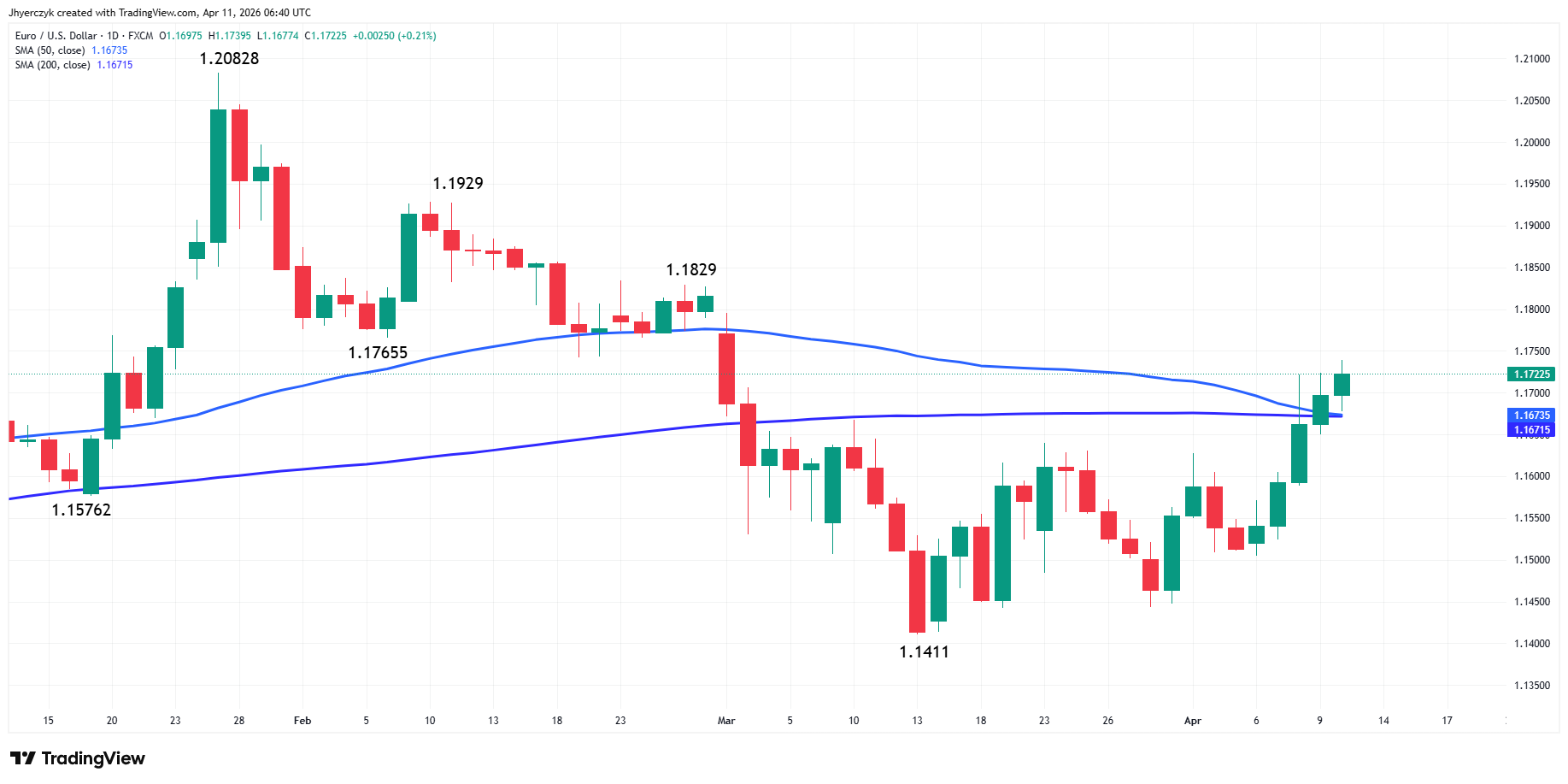
The March CPI number broke above its 200-day moving average and pushed to $1.1740. Sterling jumped 1.98% to $1.3479. The yen held near 159.20 per dollar. I wasn’t watching one currency move against the dollar. I was watching the dollar get sold across the entire FX market at the same time.
Energy Risk Hasn’t Gone Away
WTI crude settled at $96.57 and Brent at $95.20. The Strait of Hormuz is still running well below normal traffic levels. That uncertainty isn’t going anywhere and it gives the dollar a floor. The moment U.S.-Iran talks break down, the fear trade comes back and the dollar catches a bid just as fast as it lost one this week. That’s the risk anyone short the dollar needs to keep in mind.
Outlook
Fear is easing, core inflation isn’t pushing the Federal Reserve toward action and foreign currencies are pulling in inflows. That’s the three-part case against the dollar right now. The direction stays lower as long as the ceasefire holds and the CPI trend cooperates. One bad headline out of the Middle East flips this trade fast. Until that happens the positioning is clearly against the dollar and I’m not fighting it.
More Information in our Economic Calendar.