Stocks Post Best Week in Months Despite Shaky Finish
The S&P 500 Index (SPX) settled at 6816.90 on Friday, down 7.71 points or 0.11%, but nobody is talking about Friday. They’re talking about the week. The S&P 500 gained 3.6%, the Nasdaq (IXIC) jumped 4.7% and the Dow (DJI) added 3%. That’s the strongest weekly performance for all three indexes in months and it happened with a war still running in the background. That tells you something about where investor sentiment is right now.
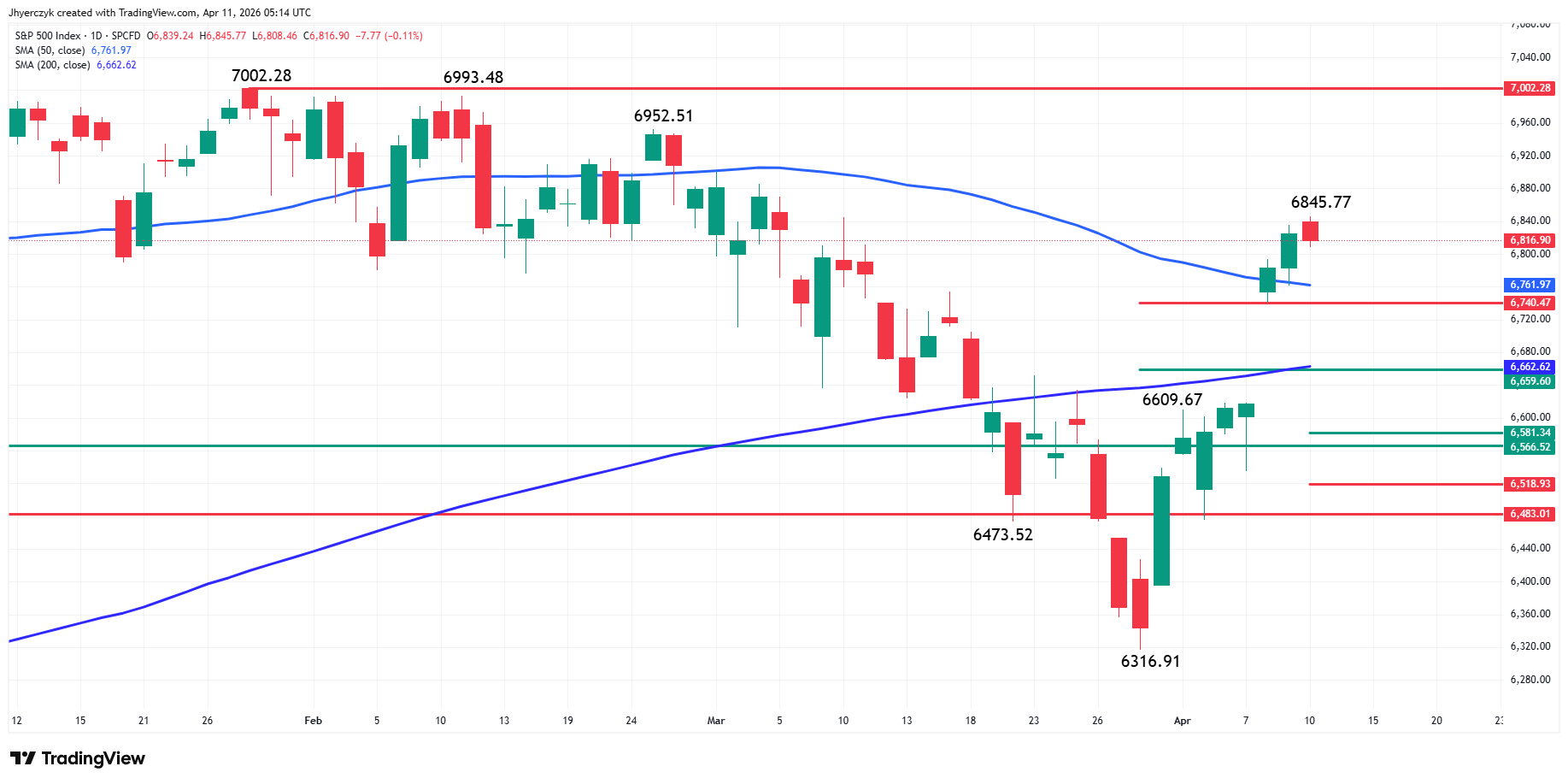
Technically, the SPX main trend turned up according to the daily swing chart and the major moving averages. However, Friday’s potentially bearish closing price reversal top suggests momentum may be getting ready to shift to the downside. So we’ll be watching on Monday for a confirmation of the sharp pattern and a potential shift in momentum to the downside.
If confirmed, we could see a 2 to 3 day correction back to 6591.34 to 6518.93 so we are taking this chart pattern seriously. A trade through 6845.77 will negate the chart pattern and signal a resumption of the uptrend.
Nasdaq Holds Up as Chips Lead
The Dow took the bigger hit on Friday while the Nasdaq squeezed out a small gain on the back of strength in Nvidia and Broadcom. Semiconductors held the index up at the end of the week and that’s consistent with the rotation we’ve been seeing. When chips are running, the Nasdaq has a floor under it. The broader weekly trend was clearly positive across all three indexes despite the uneven Friday finish.
Ceasefire Holding but the Strait Is Still the Problem
The temporary ceasefire between the U.S. and Iran gave investors enough confidence to take on risk this week but the rhetoric from both sides kept tension in the background. The Strait of Hormuz is still the central issue. Oil prices swung around all week before settling lower on Friday but the threat of supply disruption hasn’t gone away. Every time the market starts to feel comfortable, a new headline out of the region reminds traders that this situation is still fragile.
Inflation Data Complicates the Fed Picture
The consumer inflation report matched expectations at the headline level but energy prices surged more than 10% because of the conflict. Strip out energy and inflation looked more controlled, which gave investors some breathing room. The problem is consumer expectations. Surveys are showing people expect inflation to move higher over the next year and that’s the kind of data the Federal Reserve watches closely. If consumers start pricing in higher inflation it becomes self-fulfilling and that puts the Fed in a tough spot. Cutting rates into rising inflation expectations isn’t something they’re willing to do. Keeping rates elevated while consumer confidence weakens isn’t a great option either. The Fed is stuck and the market knows it.
What’s Next
Oil prices and geopolitical developments are still running this market. The ceasefire bought a week of cautious optimism. Whether it buys another week depends entirely on what happens with the Strait of Hormuz and whether Trump’s warning to Iran produces any results. Watch the energy complex at the open Monday. That’s where the tone gets set.
S&P 500 Price Forecast
Every new S&P 500 analysis as it publishes, today's technical signal and key levels, live price — on one page.
See all S&P 500 forecastsMore Information in our Economic Calendar.