XRP (XRP) traded modestly lower on Wednesday, slipping to about $1.52 after touching an intraday high of $1.54, as traders reacted to reports that Israeli strikes killed senior Iranian leaders, including Ali Larijani.
The move coincided with renewed oil-market stress: Middle East tensions kept crude above $100 a barrel, while Brent had risen more than 40% since the Iran war began on Feb. 28.
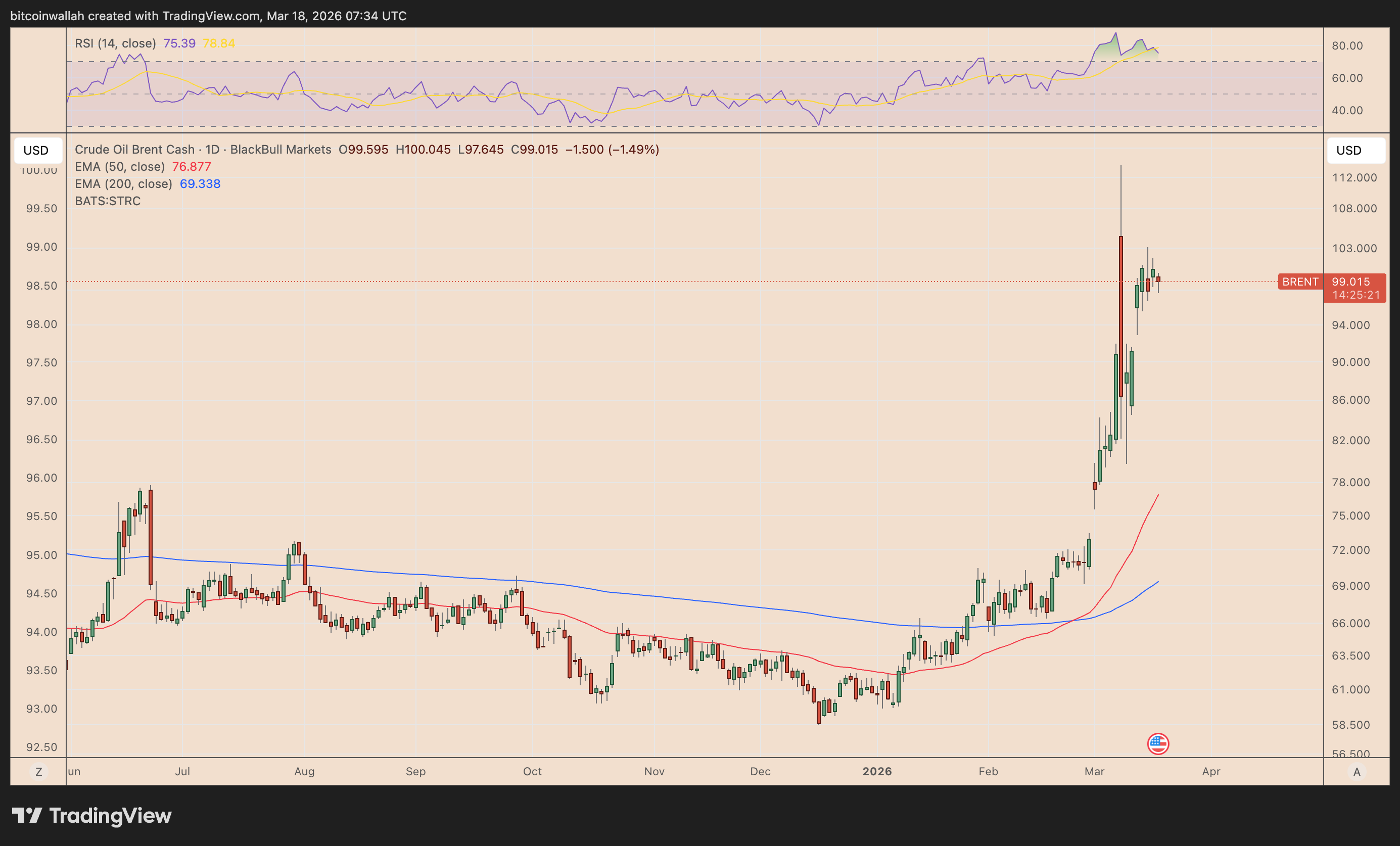
That backdrop has reinforced inflation and tighter policy fears, pressuring risk assets, including crypto, even as XRP’s limited downside suggests cautious de-risking rather than panic selling.
XRP ETF Inflows Resume After a Week
Spot XRP ETFs have recorded fresh net inflows after nearly a week of muted or negative activity, signaling a tentative return of institutional demand.
Daily inflows rose to about $4.6 million, while total net assets held steady above $1 billion, according to SoSoValue data. The rebound comes as XRP price stabilizes near $1.50, suggesting dip-buying interest from larger players.
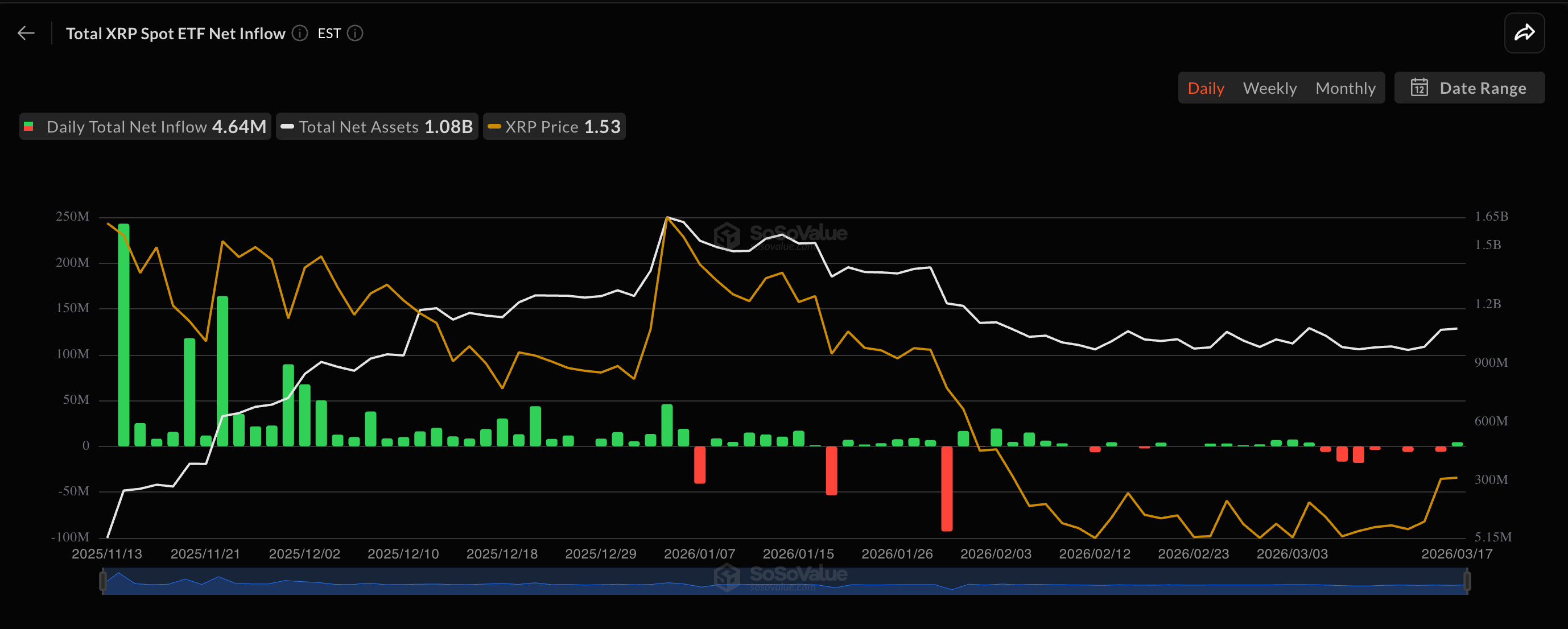
XRP inflows remain modest relative to earlier peaks, but a return to positive territory could help rebuild upside momentum if sustained in the coming sessions.
SEC Signals Softer Stance on Token Classification: Bullish For XRP?
The US Securities and Exchange Commission’s March 17 guidance clarifies how federal securities laws apply to crypto, introducing a framework that distinguishes between tokens and the transactions surrounding them.
Ripple Price Forecast
Every new Ripple analysis as it publishes, today's technical signal and key levels, live price — on one page.
See all Ripple forecastsAfter more than a decade of uncertainty, this interpretation will provide market participants with a clear understanding of how the SEC treats crypto assets under federal securities laws.
This is what regulatory agencies are supposed to do: draw clear lines in clear terms. https://t.co/wij5cA7N2i
— Paul Atkins (@SECPaulSAtkins) March 17, 2026
The agency said many crypto assets may not be securities by default, even if certain offerings qualify as investment contracts, and noted that such classifications can evolve.
It wasn’t an XRP-specific announcement, but the interpretation is relevant to Ripple-linked narratives, reinforcing the view that tokens can trade as non-securities despite past enforcement actions.
The update also reflects a broader shift toward regulatory clarity, which could support sentiment around future crypto ETF approvals.
Chair Paul Atkins says any future SEC crypto framework would draw heavily from Congress’s CLARITY Act, even as the bill’s path has recently become more uncertain in the Senate.
Stablecoin Inflows Signal Fresh Liquidity Tailwind for XRP
A sharp surge in stablecoin inflows is adding a bullish undercurrent to crypto markets, with Tether deposits on Binance hitting $2.2 billion, the largest single-day inflow since November 2025, data from CryptoQuant shows.
The spike points to rising “dry powder” on the sidelines, typically deployed during breakout phases.
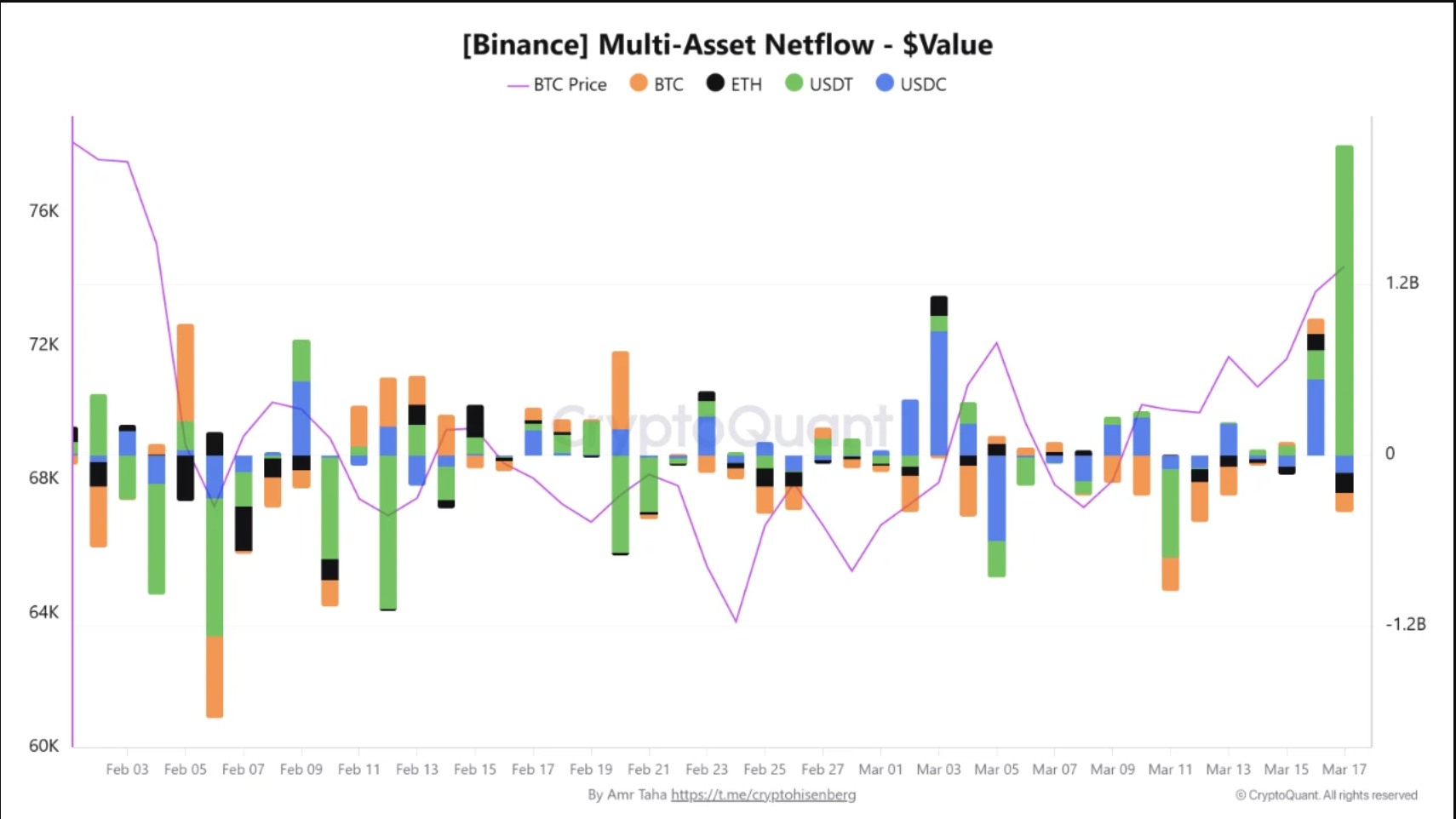
For XRP, which is already showing resilience amid macro stress, the influx of liquidity could help absorb sell pressure and support further upside, especially if broader market momentum holds and capital rotation into large-cap altcoins accelerates.
XRP Technical Analysis: 30% Dip Risks Emerge
XRP is flashing a potential double-top setup near the $1.66–$1.68 resistance zone, with two consecutive upper wicks signaling strong seller rejection at the same level.
This area aligns with prior breakdown resistance, reinforcing it as a supply zone. Price is currently hovering around $1.51, below the neckline near $1.33.
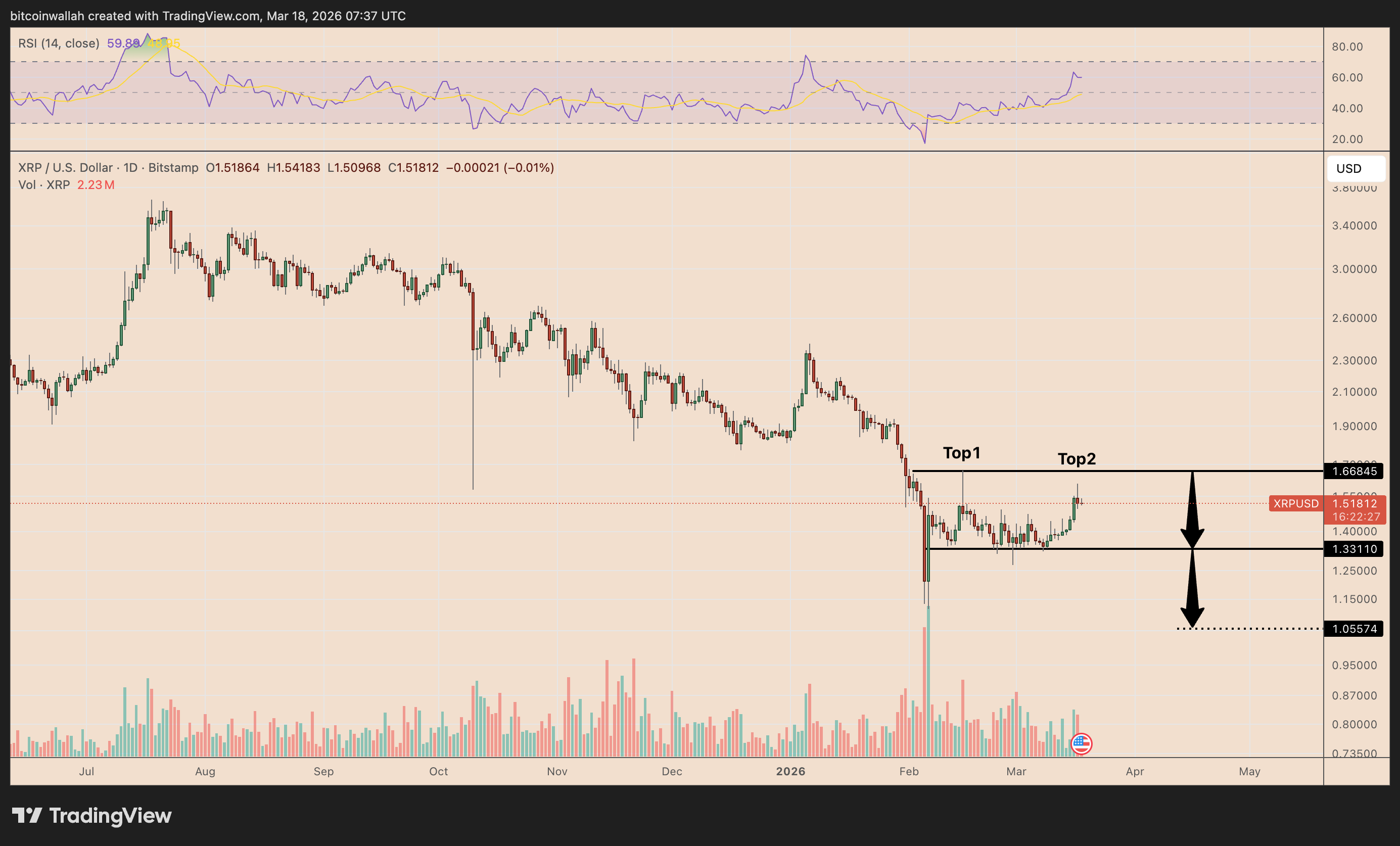
A confirmed rejection here increases the probability of a breakdown toward $1.05, the measured move target derived from the pattern’s height.