
As the EUR/USD tests the 1.1850–1.2000 resistance zone, all eyes are on today’s ECB meeting. Traders are looking for clarity in a situation defined by cooling eurozone inflation and a surge in Euro strength.
Read our previous article Can Lagarde Push the EUR/USD Higher? (Part 1) to get insights into the eurozone inflation and growth dynamics.

The EUR/USD Dynamics: Geopolitics, Fed Uncertainty, and the Path to 1.20
The Dollar’s Turbulent January
After having gained around 13.50% in 2025, the EUR/USD currency pair surged to a more-than four-year high late in January (up around 4.34% in about a week), hitting levels not seen since April 2021. This rally was primarily driven by a broad-based selloff in the dollar as investors became increasingly concerned about the erosion of institutional norms in the United States.
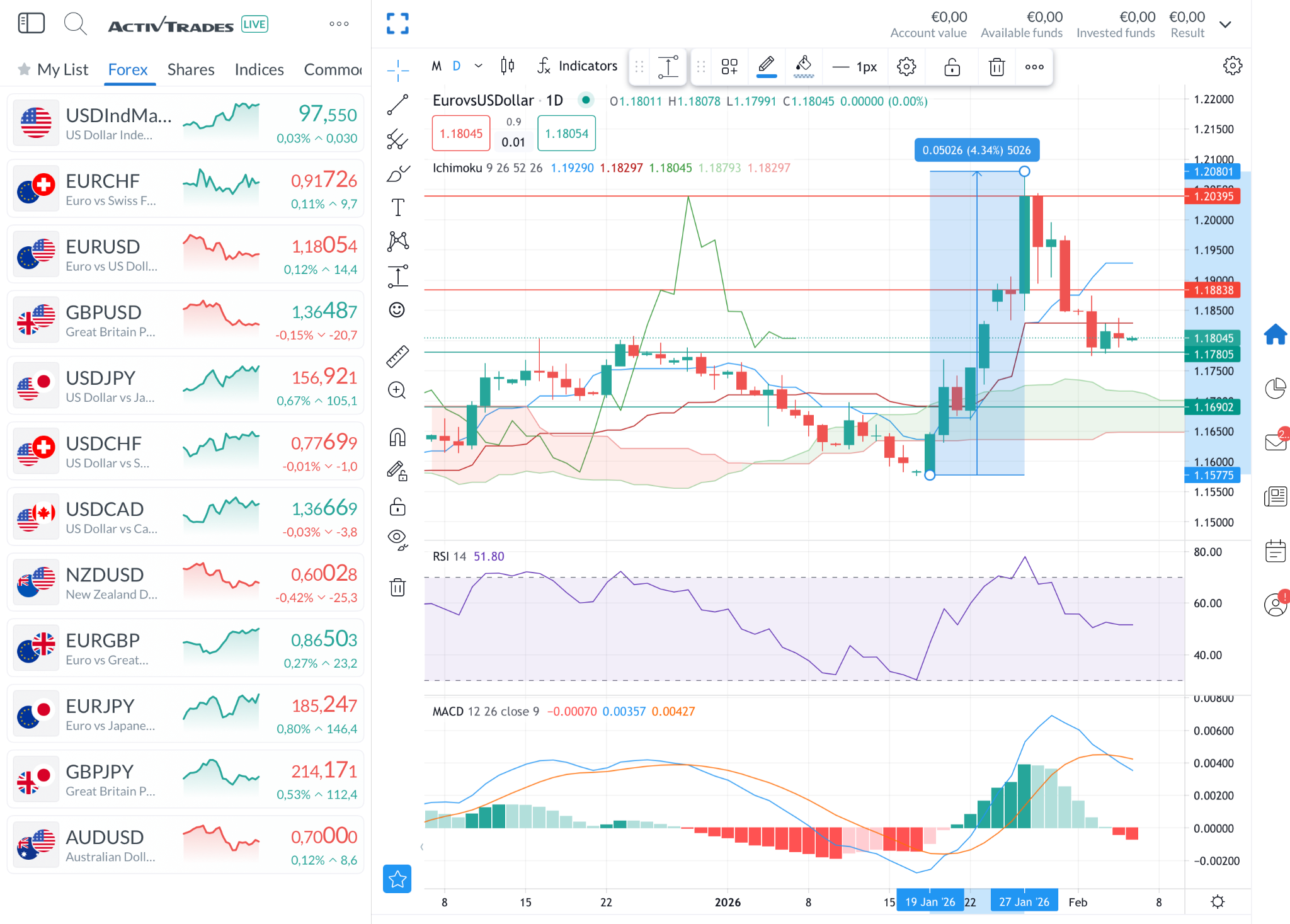
President Trump’s public desire to acquire Greenland, while seemingly unrelated to monetary policy, contributed to a broader narrative of unpredictability that rattled currency markets. More significantly, Trump’s comments questioning Federal Reserve independence and his administration’s threat to criminally indict Fed Chair Jerome Powell in January weighed on the U.S. Dollar shockwaves through financial markets.
The prospect of a less independent Federal Reserve – one that might set looser monetary policy than economic conditions warrant due to political pressure – prompted investors to reassess their dollar holdings. If the Fed were to adopt an inappropriately dovish stance under political influence, it would likely lead to higher U.S. inflation, lower real interest rates, and a weaker dollar.
The nomination of on January 30, 2026, has acted as a stabilizing force for the U.S. Dollar. Warsh’s reputation as an inflation hawk helped the greenback claw back some of its losses, as markets interpreted the choice as suggesting the Fed’s long-term commitment to price stability might remain intact despite near-term political pressures.
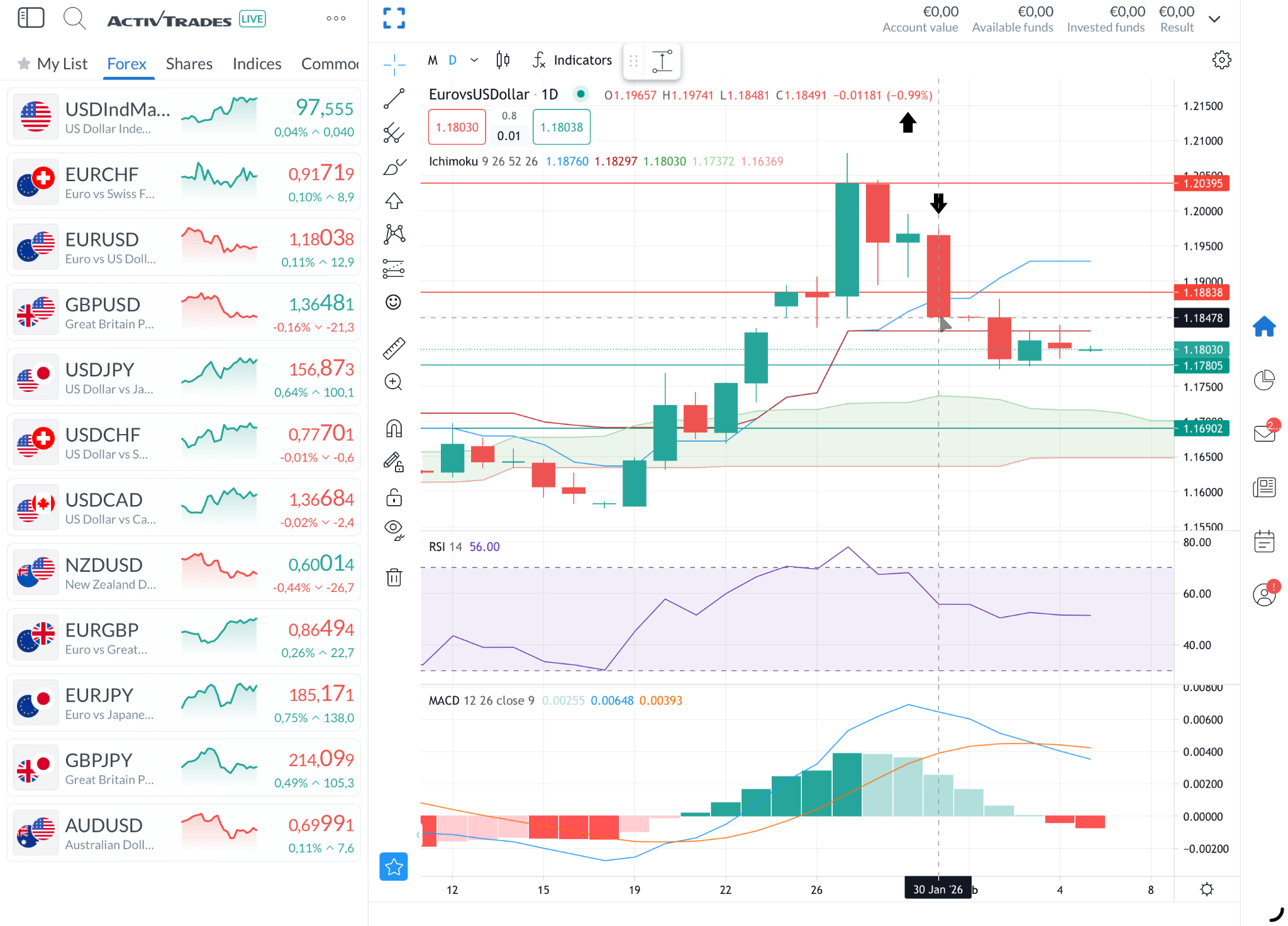
In mid-January, the ECB joined other major central banks in a rare display of solidarity with Chair Powell, issuing a collective statement that identified institutional independence as a non-negotiable requirement for price and financial stability. This coordinated defense of autonomy highlighted the global central banking community’s growing alarm regarding political encroachment on monetary policy.
EUR/USD Price Forecast
Every new EUR/USD analysis as it publishes, today's technical signal and key levels, live price — on one page.
See all EUR/USD forecastsEuro Strength: Opportunity or Threat?
For the ECB, the euro’s appreciation presents a complex challenge. On one hand, a stronger currency helps suppress inflation by reducing import costs, particularly for energy. On the other hand, it weakens European export competitiveness at precisely the wrong moment.
European exporters are already under pressure from cheap Chinese goods pricing their products out of key markets. A significantly stronger euro compounds this problem by making European exports even more expensive for foreign buyers, potentially dampening growth and employment in the eurozone’s export-oriented economies.
ECB policymakers recently expressed increasing worries about the Euro’s strength, fearing that further appreciation could drive inflation even deeper below their 2% target. While this concern briefly sparked speculation of a rate cut, those bets cooled as the EUR/USD retreated from its recent peak.
Some analysts emphasize that ECB officials monitor the speed and magnitude of currency shifts rather than fixed psychological levels like 1.20. Furthermore, the trade-weighted Euro—which tracks the currency against a broader basket of partners—remains relatively stable, suggesting the recent rally is more a result of Dollar weakness than an overheating Euro.
Can Today’s Meeting Be a Catalyst for 1.20?
The key question for forex traders is whether today’s ECB meeting and President Lagarde’s press conference will provide the catalyst to push the EUR/USD pair decisively through the 1.20 level.
Bullish Scenario for the EUR/USD
If Lagarde downplays concerns about euro strength, emphasizes the ECB’s comfort with current inflation trends, and reinforces the message that rates will remain on hold for a while barring major shocks, the euro could strengthen. Any language suggesting the ECB is more worried about undershooting its inflation target than overshooting it could also support the currency. If markets interpret the press conference as dovish relative to the Fed’s stance (particularly given ongoing concerns about Fed independence), the EUR/USD could head towards the 1.20 level.
Neutral Scenario for the EUR/USD
More likely, Lagarde will strike a carefully balanced tone, acknowledging both upside and downside risks to inflation, expressing satisfaction with the current policy stance, and avoiding any strong directional signals. She will likely address euro strength concerns by noting the ECB monitors the currency closely but focuses on the trade-weighted measure and the pace of change rather than specific levels. This balanced approach would probably leave the EUR/USD consolidating in its current range, with the move toward 1.20 postponed until clearer directional signals emerge.
Bearish Scenario for the EUR/USD
If Lagarde expresses genuine concern about the euro’s recent appreciation and its potential deflationary impact, or if she signals greater openness to resuming rate cuts if disinflationary pressures intensify, the euro could weaken. Any suggestion that the ECB is contemplating policy adjustments to counter unwanted currency strength would likely trigger euro selling.
The Wildcard in All of This?
The ongoing uncertainty around U.S. policy and Fed independence. Even if Lagarde strikes a neutral tone, further deterioration in the dollar due to political developments in Washington could push the EUR/USD higher regardless of ECB messaging.
The Bottom Line
Today’s ECB meeting is unlikely to produce a policy surprise, but President Lagarde’s press conference could influence the euro’s near-term trajectory. The central bank finds itself in an unusual position of having achieved its primary mandate – inflation at target – but facing genuine uncertainty about whether the next move should be tightening or easing.
For the EUR/USD, the path to 1.20 depends less on ECB policy than on the broader dollar narrative. If concerns about Federal Reserve independence continue to simmer, or if U.S. economic data disappoints, the euro could push through that level even with a neutral ECB. Conversely, if dollar weakness stabilizes and the ECB signals discomfort with euro strength, the currency pair may struggle to break higher.
What should traders focus on? Lagarde’s language around euro appreciation, inflation risks, and the balance of policy options. While the ECB is expected to remain on hold for the foreseeable future, any hints about the direction of the next eventual move – or the threshold for triggering that move – could provide important trading signals for the months ahead.
Sources: Reuters, Wall Street Journal, European Central Bank