
DAX Soars on Hopes of Ukraine War Ending
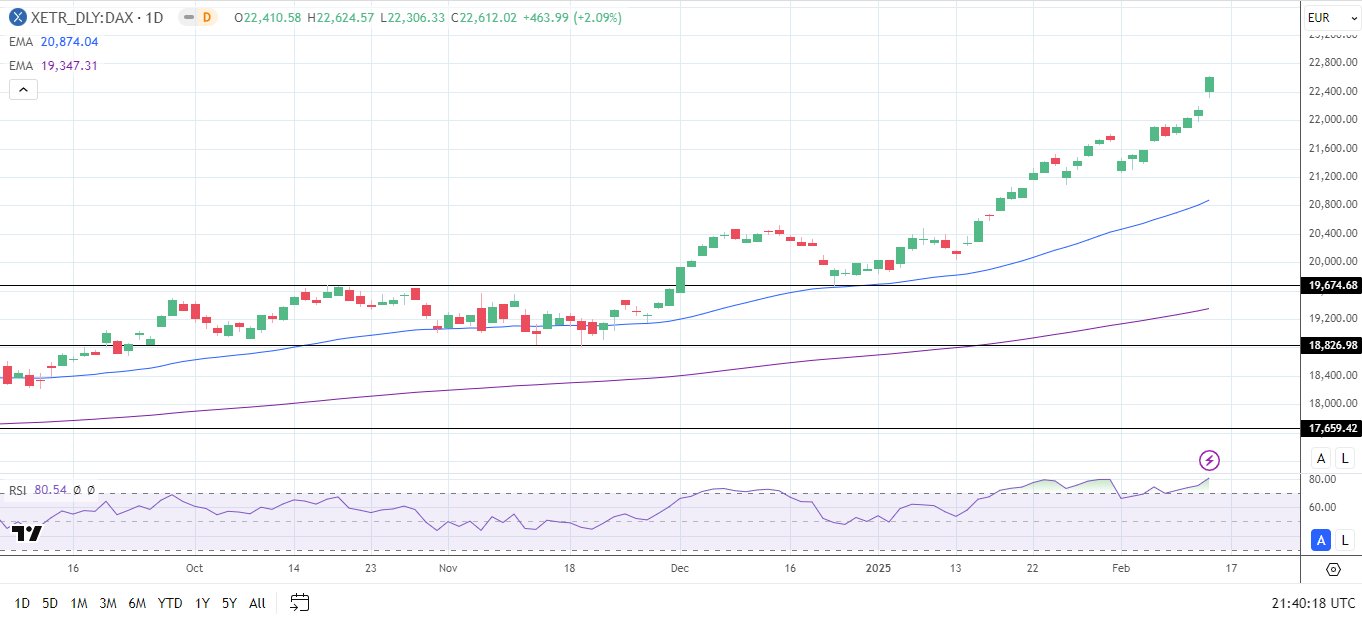
Geopolitical developments and corporate earnings results sent European bourses soaring as Trump signaled a potential end to the Ukraine war within 20 days of taking office. On Thursday, February 13, the DAX surged 2.09%, following Wednesday’s 0.50% gain, closing at a record high of 22,612.

Trump Signals a Potential Peace Deal
On February 12, US President Trump suggested the Ukraine war could end soon, following phone calls with Russian President Putin and Ukrainian President Zelenskyy. On social media, Trump said:
“I have asked Secretary of State Marco Rubio, Director of the CIA John Ratcliffe, National Security Advisor Michael Waltz, and Ambassador and Special Envoy Steve Witkoff, to lead the negotiations which, I feel strongly, will be successful.”
The ECB may view a conflict resolution as a positive supply shock, further easing inflationary pressures. After adding 1-2 percentage points to Eurozone inflation in 2022-2023, an end to the conflict could gradually ease inflationary pressures in member states dependent on Russian energy.
Sector Highlights: Siemens Leads Auto Stocks Rally
Upbeat corporate earnings results and forward guidance fueled the strongest session in a year.
Siemens AG, a barometer of the German economy, soared 7.26% after reporting better-than-expected Q1 profits.
DAX Price Forecast
Every new DAX analysis as it publishes, today's technical signal and key levels, live price — on one page.
See all DAX forecastsMeanwhile, the auto sector stole the limelight as investors reacted to Ukraine war developments. Volkswagen surged 6.44%, BMW gained 6.06%, while Mercedes-Benz Group rallied 5.40%. Porsche closed 4.50% higher.
German Inflation Trends and ECB Rate Outlook
Germany’s annual inflation rate dropped from 2.6% in December to 2.3% in January. While still above the ECB’s 2% target, the pullback may boost hopes of aggressive ECB rate cuts to bolster the Eurozone economy.
Oliver Rakau, Chief German Economist and ECB commentator at Oxford Economics commented on Germany’s inflation report:
“January was a good month for German disinflation. Core was flat m/m, the lowest in 2.5 yrs. Today’s detailed CPI release also shows that it wasn’t just a fluke due to a few areas. The breadth of inflation was down a lot with a nice disinflationary shift of the distribution.”
German Wholesale Prices: An Inflation Indicator
On Friday, February 14, German wholesale data will influence sentiment toward the ECB rate path. Economists expect wholesale prices to rise 0.1% year-on-year in January, mirroring December’s increase.
If wholesale prices remain subdued, they could support a softer inflation outlook and a more dovish ECB rate path, boosting demand for German stocks. However, an unexpected spike in wholesale prices may raise concerns about inflation, impacting sentiment toward German-listed stocks.
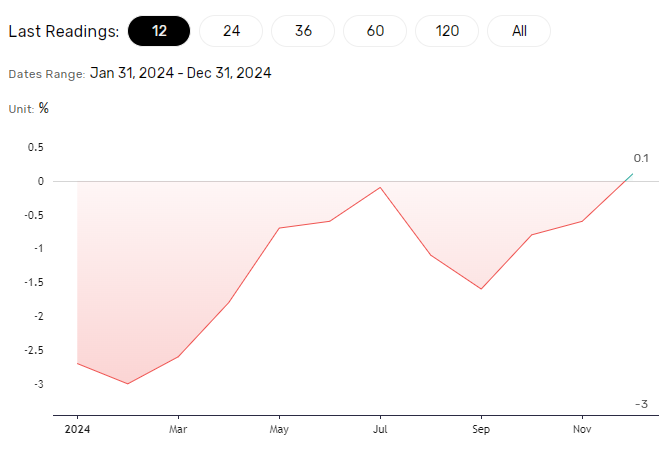
Other stats include a second estimate of GDP and employment data. However, these will likely play second fiddle to tariff developments, geopolitical risks, and central bank chatter.
US Economic Data Raise Rate Cut Bets
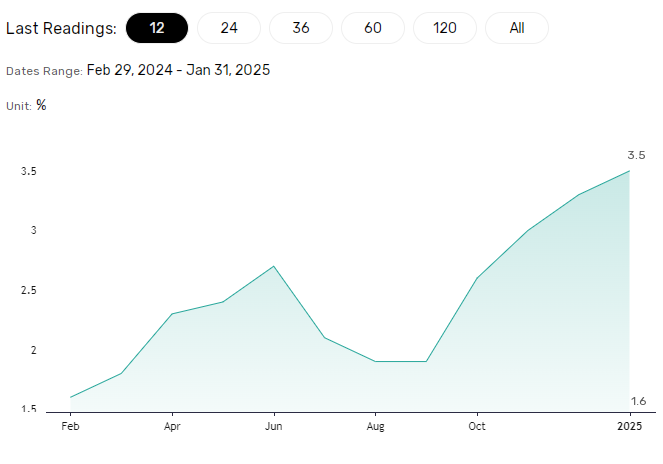
Meanwhile, US economic data raised hopes for a less hawkish Fed rate path. Producer prices ex Food, Energy, and Trade rose 3.4% year-on-year in January, down from 3.5% in December.
January’s figures suggested softening demand, with producers passing cost savings on to customers. Economists consider producer prices a leading inflation indicator, signaling a dampening in inflationary pressures.
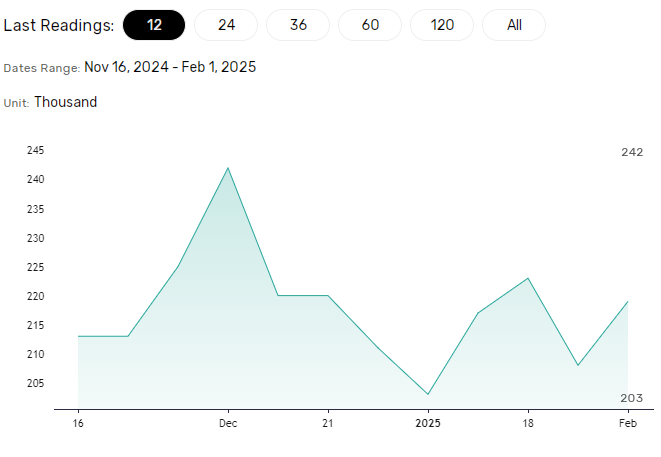
US initial jobless claims fell to 213k (week ending February 8), down from 220k (week ending February 1), signaling a stable labor market. The modest drop in claims had a limited impact on the Fed rate path.
US Markets React to Treasury Yield Slump
US equity markets rallied on Thursday, February 13, driven by US tariff developments and key economic data. The Nasdaq Composite Index rallied 1.50%, while the Dow and S&P 500 rose 0.77% and 1.04%, respectively.
President Trump softened his stance on reciprocal tariffs, easing global trade war concerns. He announced plans to match tariffs imposed by other countries, potentially effective in the coming weeks or possibly longer. The timeline allows room for trade negotiations to avert sweeping US tariffs.
In the bond markets, 10-year US Treasury yields tumbled to a low of 4.515% as investors considered US tariff updates and Ukraine war developments. The slump in yields supported risk assets, with markets increasing bets on a Fed rate cut in the first half of 2025.
Key Focus: US Retail Sales Report
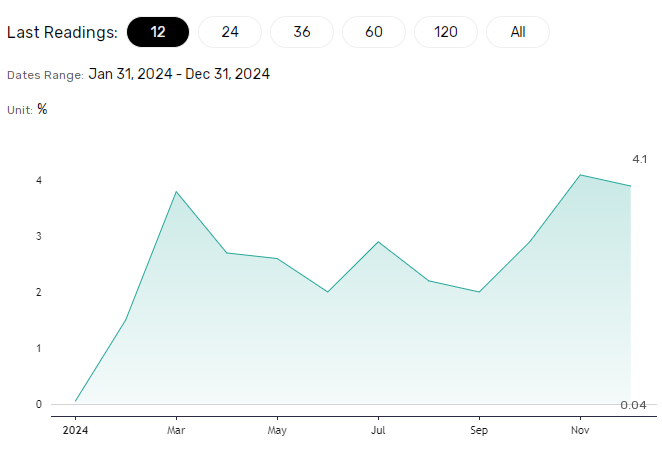
On Friday, February 14, US retail sales data wraps up a pivotal week for global markets. Economists forecast retail sales to rise 3.7% year-on-year in January, down from 3.9% in December.
A softer reading could signal easing demand-driven inflationary pressures, strengthening Fed rate cut bets. Rising expectations of an H1 2025 Fed rate cut could boost risk sentiment.
Conversely, a jump in retail sales may impact hopes for multiple Fed rate cuts, weighing on German-listed stocks.
Beyond the retail sales report, trade developments and FOMC members’ insights into the Fed’s rate path require consideration.
Near-Term Outlook
The DAX’s performance hinges on German inflation data, US retail sales, and central bank forward guidance.
- Weaker data and more dovish central bank rate signals could push the DAX toward 23,000.
- Strong data and falling bets on central bank rate cuts may pressure rate-sensitive German stocks, potentially dragging the Index toward 22,000.
The DAX is also exposed to US trade policy and geopolitics. Escalating tariffs on EU goods or setbacks in Ukraine peace talks could pressure the Index. Conversely, progress on peace negotiations and constructive US-EU trade talks may drive the DAX to fresh highs.
As of Friday morning, futures indicated a weak start. DAX futures tumbled 117 points, while the Nasdaq 100 mini gained 27 points.
DAX Technical Indicators
Daily Chart
After Thursday’s breakout, the DAX sits well above the 50-day and 200-day Exponential Moving Averages (EMAs). The EMAs affirm bullish price signals.
A breakout above the February 13 record high of 22,625 could signal a move toward 22,750. A break above 22,750 may enable the bulls to target the 23,000.
Conversely, if the DAX drops below 22,500, the 22,350 level will likely come into play.
With the 14-day Relative Strength Index (RSI) at 80.54, the DAX remains in overbought territory (above 70 RSI). Selling pressure could intensify at the record high of 22,625.
Conclusion: Key Drivers to Watch
Traders should monitor German inflation data, US retail sales, and central bank statements for market direction.
Additionally, tariff developments and Ukraine war-related news will also dictate market direction.
Access our latest analysis here for a deeper dive into how global market dynamics influence the DAX.