This also followed a positive session in the US, with all major equity indices on the front foot; the Philadelphia Semiconductor Index (SOX) also rose by 5%.
Equities appear content to look through the recent escalation in the Middle East, focussing instead on corporate earnings. Alphabet will report its numbers later today, with the Cap Ex story commanding centre stage and the US$190 billion spending promise – double its actual 2025 expenditure of US$91.4 billion. I think the question preoccupying markets right now is whether these key US mega caps can continue to shoulder the market and keep pace with lofty expectations.
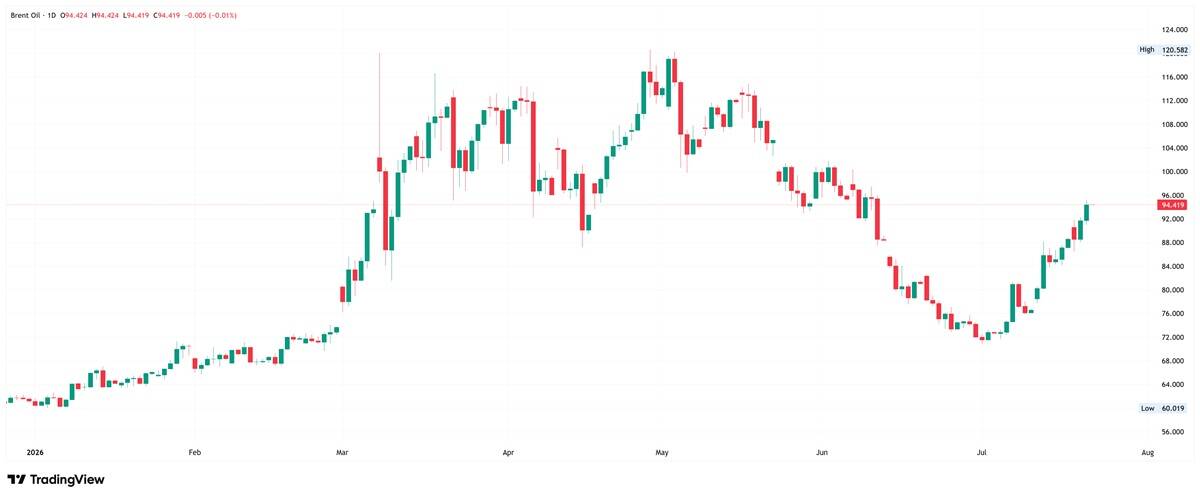
The situation remains fluid. Are we going to get these two sides around the table? Will the situation remain contained? The Houthis’ threat to blockade Saudi shipping in the Red Sea likewise remains a source of concern. Washington’s line, delivered by US Secretary of State Marco Rubio in Manila, is that talks remain possible, but Tehran is not showing the seriousness required.
Technically, I am not seeing any obvious resistance on Brent after absorbing offers around US$90.87, with US$97.94 resistance drawing attention, just south of US$100.
Yen Firmly on Intervention Watch
In the FX space, the JPY weakened further on Tuesday, pushing USD/JPY to a high of ¥163.24 – levels not seen since 1986 and firmly placing the yen on intervention watch. I think it is fair to say that Japan’s MoF has its finger on the trigger, but will it be enough? If history is anything to go by, it is unlikely to have much of a long-term impact. We would need to see the Fed shift to an easing bias and the BoJ also hike to have any chance of stopping this rally.
Brent Oil Price Forecast
Every new Brent Oil analysis as it publishes, today's technical signal and key levels, live price — on one page.
See all Brent Oil forecastsElsewhere, the USD gained across the G10 pack yesterday, lifting the USD index. The GBP found modest support following the June UK CPI inflation data landing earlier this morning. Both YY headline and services price pressures eased marginally, though YY core inflation remained unchanged at 2.6%. On balance, this was a mixed bag and a difficult one to scalp.
UK Politics Front and Centre Ahead of Autumn Budget
UK PM Andy Burnham is making himself at home at Number 10. John Healey’s appointment as Chancellor was welcomed by markets, seen as a safer alternative to other names reportedly in the hat. However, neither UK government borrowing costs nor the GBP reacted well after Burnham signalled at the beginning of the week that he would use flexibility within the fiscal rules, though things have since calmed down.
Burnham also used his first Cabinet meeting to promise fiscal discipline alongside cost-of-living relief – something that markets will watch closely as the Autumn Budget approaches.
Thin Calendar Ahead: Eyes on Tomorrow’s Data Slate
In terms of today’s data, the docket is thin. Tomorrow’s schedule, however, is busy, kicking off with Australian jobs data, followed by an ECB update and then US weekly unemployment claims.
Written by FP Markets Chief Market Analyst, Aaron Hill