Iran & Oman Deal Underpins Oil Prices
In the Gulf, Iran and Oman have reportedly reached an agreement to reopen the Strait of Hormuz. The two sides have been in talks in the last few weeks, and Tehran has said the US has no involvement, which is odd, as US President Trump has said the talks are going well.
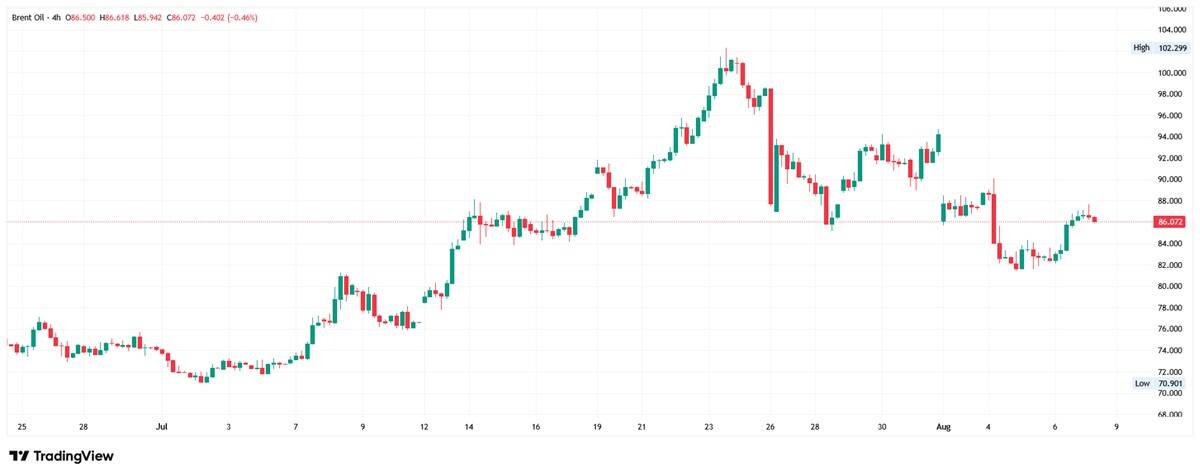
We are certainly in uncharted waters here, with many cogs turning at once. The US went to war, threatening Iran with retaliation if it does not agree to talks. However, on day 160 of this ‘5-week conflict’, it appears the arrangement is that Tehran will look after incoming vessels on the waterway, and Oman will take care of outgoing ships. Importantly, the deal also bans ships from the US, Israel, and hostile countries, which has naturally provided some impetus for oil bulls; Brent crude rallied 4.6% and punched back above its 200-day SMA around US$81.06.
Trump’s Political Tightrope
It is not entirely clear what the US view is at this point, and what the recent developments will mean for the current US blockade, which is still in place, and, of course, the nuclear negotiations.
I think the issue here is that we are about 90 days away from the US midterms, and Trump is stuck in a war he cannot get out of – 60% of the US disapprove of the conflict, and inflation remains elevated.
Yields Bear Flatten
US Treasuries bear flattened yesterday, with the front end bearing the brunt of the move as traders price in a greater chance the Fed leans hawkish rather than cuts – markets are now assigning roughly a 30% probability to a hike at September’s meeting, rising to around 90% by year-end.
The rise in oil prices has only added to that repricing, feeding into inflation expectations. The benchmark 10-year sits around 4.68%, with the 30-year at roughly 5.2%.
Brent Oil Price Forecast
Every new Brent Oil analysis as it publishes, today's technical signal and key levels, live price — on one page.
See all Brent Oil forecastsQuiet Session in Equities
In the equities space, US benchmark equity indexes finished modestly in the red yesterday, with breadth in the S&P 500 showing over 300 names down on the day, with only about 190 gaining ground (the remaining constituents were unchanged). In terms of sector performance, it was relatively quiet, with only one really doing anything: energy (XLE), up 1.5% amid the rise in oil prices.
It’s US Jobs Day!
On the data front, the headline event today will be the July US non-farm payrolls report out at 12:30 pm GMT.
Heading into this week’s US jobs report, Monday saw the US ISM manufacturing PMI come in stronger at the headline level. Production also jumped, employment returned to growth, and the prices component eased. Tuesday brought the June JOLTS report, which showed fewer job openings, a modest jump in hiring, and an unchanged quits rate.
Wednesday saw the July ADP print, which revealed a deceleration in private-sector job growth, with the service sector doing much of the heavy lifting and wage growth for job changers elevated. Alongside this, we had the July ISM services PMI land. Unlike the manufacturing component, the headline barely budged, but the employment component slid into contractionary territory, essentially reaffirming what the ADP report stated.
Economists estimate that the US economy added 80,000 jobs – the current whisper number is around 79,000 – up from 57,000 in June; the estimate range is broad, from 140,000 to 10,000. However, according to the forecast distribution, anything below 40,000 would certainly catch my attention, while north of 120,000 would be considered a surprise. I think one of the questions markets have is whether June’s soft print was a blip or the start of something else. The report is also taking on more significance due to the lack of communication from Fed Chairman Kevin Warsh.
Unemployment is expected to remain at 4.2%, with an estimate range between 4.3% and 4.1%. You will recall that June’s print showed the unemployment rate tick lower from 4.3%, but it was for the wrong reasons. It was due to a drop in participation. 720,000 people left the active labour force – a drop of around 500,000 employed workers and 220,000 job seekers who stopped their search entirely.
In terms of what this report could mean for the Fed’s reaction function, a soft jobs report will likely pare back Fed rate-hike bets, drive US Treasuries higher, and weigh on the buck. But I do not see a solid print tempting the Fed to hike rates at this juncture; the majority of focus may then shift to the inflation side of the mandate. In this case, next week’s July CPI data could be the more important data point for how the Fed reacts in September.
Written by FP Markets Chief Market Analyst, Aaron Hill