US-Iran Interim Deal on the Table
The Strait of Hormuz is expected to reopen, and markets have responded as you would imagine this morning. However, before getting carried away, this is an interim deal that has yet to be signed, so forgive me for erring on the side of caution here given President Trump’s track record.
Despite the optimistic opening this morning, specifics of the US-Iran deal are somewhat lacking, and even if an interim arrangement materialises, markets will still have to contend with negotiations. Issues such as whether the Strait will be toll-free, Iran’s nuclear programme, and sanctions relief have yet to be decided; essentially, the market is STILL trading on hope.
Textbook Risk-on Open
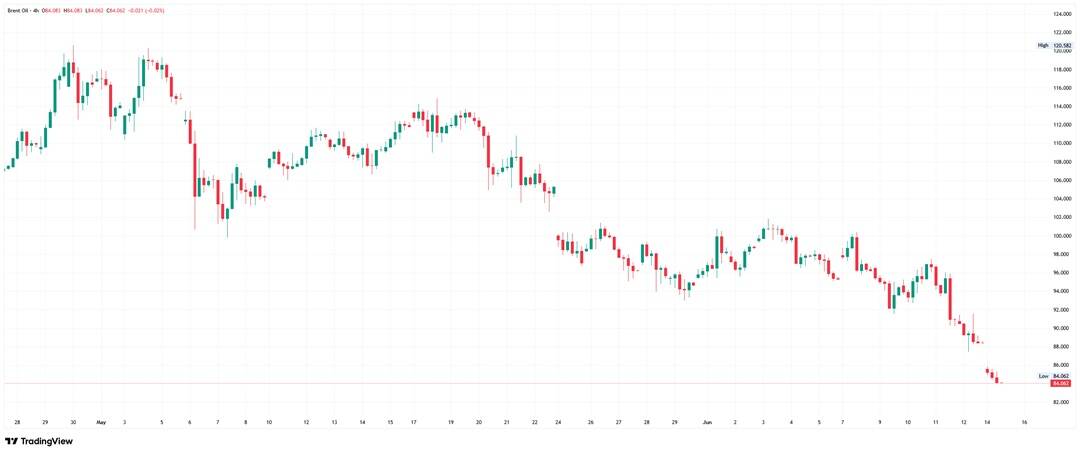
It was a textbook open this morning. Oil benchmarks – Brent crude and WTI – opened lower, down about 4%, and Brent hit a low of US$83/barrel, the lowest level since March. Regional equity indices in Asia-Pacific have surged higher, with Japan’s Nikkei 225 refreshing a record high of 69,682. European and US equity index futures also indicate an optimistic start to the week. Meanwhile, the USD index is taking a hit, down 0.4%, and US Treasury yields have eased across the curve.
In the equities space, SpaceX (SPCX) also made its long-awaited stock market debut on Friday, and the reception was extraordinary. Having priced at US$135, the shares opened at US$150 and surged as high as US$176 before settling around the US$160 mark – a gain of roughly 25% on the day, making it the largest IPO in history. The float is tiny relative to total shares outstanding, meaning passive index-tracking funds will be forced buyers as inclusion decisions land, potentially driving further volatility in both directions.
Week Ahead: Central Banks in Focus
Today’s calendar offers no tier-1 event risk, though the week ahead is incredibly busy. We have a slew of central bank updates to get our teeth into, including the BoJ and the RBA tomorrow, the Fed on Wednesday, and the SNB and the BoE on Thursday.
In addition to central bank events, we have May UK CPI inflation, May US retail sales, and Q1 26 New Zealand GDP on Wednesday, followed by the April UK jobs report and weekly US unemployment claims on Thursday, with UK May retail sales landing on Friday.
AUD/USD Price Forecast
Every new AUD/USD analysis as it publishes, today's technical signal and key levels, live price — on one page.
See all AUD/USD forecastsRBA and BoJ in the Spotlight
For tomorrow’s Asia session, the BoJ and the RBA take centre stage.
Investors have assigned a 97% probability that the RBA keeps the cash rate unchanged at 4.35%, with 14 bps of tightening implied by year-end. This follows three consecutive rate hikes, with the previous decision via an 8-1 vote.
Heading into the event, we have a mixed picture. YY CPI inflation reached 4.2% in April (easing from 4.6% in March), while the RBA’s preferred measures of inflation – YY trimmed mean – rose 3.4% from 3.3%, and the YY weighted median remained unchanged at 3.5% for a third consecutive month. In terms of the jobs market, April unemployment rose to 4.5% from 4.3%, and employment change fell by nearly 19,000, down from 23,000. The Q1 26 GDP also came in at 0.3%, easing from 0.9% in Q4 25, which leaves the annual growth rate at 2.5%, down from the prior year’s 2.6%.
Growth easing and the softer jobs market help justify a pause decision, consistent with the Board’s recent comments that monetary policy is well positioned to respond to developments. However, inflation clearly remains a concern – you may recall that at the previous meeting, RBA Governor Michele Bullock said that ‘second-round effects could lead to even higher and persistent inflation and if so would require even more tightening in monetary policy to get inflation under control’.
Unlike the RBA, the BoJ is widely expected to raise the policy rate by 25 bps tomorrow to 1.0% – a rate not seen since 1995. Inflationary pressures and soft demand for the JPY are forcing the central bank’s hand. Even with Governor Ueda hospitalised – leaving the decision to just eight members, with Deputy Governor Himino leading the charge – the institutional pressure to defend the ¥160 barrier on USD/JPY and to combat a 6.3% wholesale inflation jump means a hawkish 25 bp hike is firmly on the table.
Communication Is Everything
An RBA rate pause and a BoJ hike are unlikely to deliver much of a bang. For the RBA, how the AUD responds will largely depend on Bullock’s message: will she lean on sticky inflation (AUD-positive) or centre her discussion on weakening jobs and growth data (AUD-negative)?
For the BoJ, much the same applies: as the rate hike is largely baked into prices already, it will be more about the forward guidance: how aggressively Himino signals the path ahead, and whether any softening of the bond taper programme undermines the hawkish narrative. With USD/JPY already through ¥160 and MoF intervention very much alive, a dovish misstep could prove costly. Will Himino lean hawkish, defending the yen (JPY-positive), or strike a cautious tone on the taper, leaving the yen exposed (JPY-negative)?
A Word of Warning
It is worth noting that the Middle East remains the dominant macro variable this week. With the deal unsigned until Friday and key details still absent, three full trading days of potential headline risk sit between now and confirmation. Whatever Bullock and Himino say tomorrow, a single disruptive headline from the region could override the lot.
Written by FP Markets Chief Market Analyst, Aaron Hill