
Spot Gold (XAUUSD) is trading at $4,567.78, down $84.50 or 1.82% Friday. The session high was $4,665.45. The low was $4,531.99. That range tells the whole story. Gold tried to hold earlier gains and got sold hard. The U.S. Dollar Index cleared 99. The 10-Year U.S. Treasury yield hit 4.53%, close to its highest level in a year. When both of those move against gold at the same time in the same session this is what it looks like.

Technical Outlook
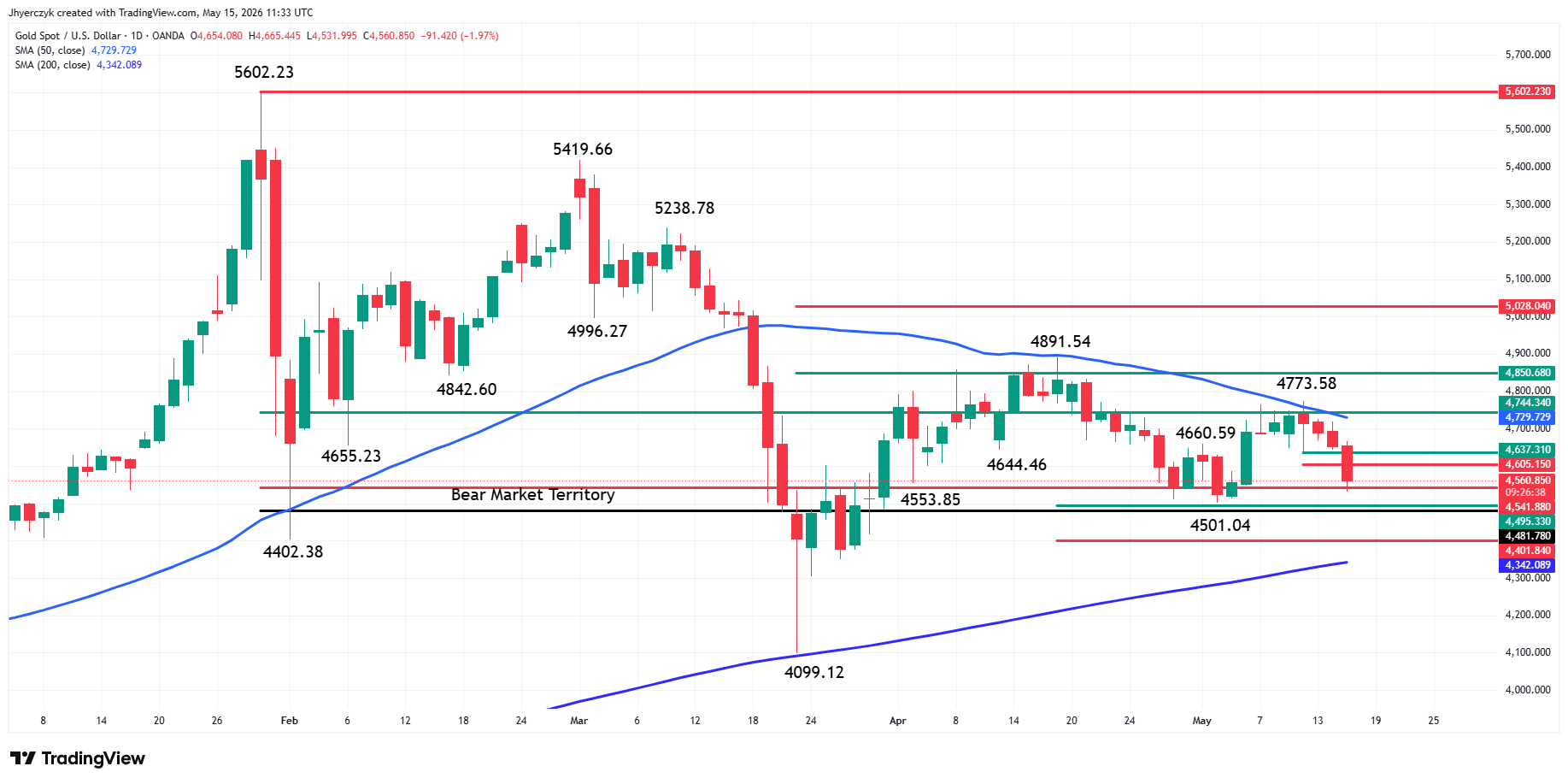
Spot Gold failed to overtake the 50-day moving average at $4,729.85 and a key 50% level at $4,744.34 earlier in the week, starting a three-day decline that led to today’s acceleration to the downside. Contributing to the move was a breakdown under the short-term retracement zone at $4,637.31 to $4,605.15.
The market did find some support today at a long-term 61.8% level at $4,541.88, but so far that has only yielded a short technical bounce. If this level fails later in the session, we could see a further decline into another retracement zone at $4,495.33 to $4,401.84. Inside this zone is $4,481.78. This line represents a 20% decline from the all-time high, which separates the bull market from a bear market.
All of these levels represent the last potential support before the 200-day MA, which controls the long-term trend.
The Dollar Is Running the Show
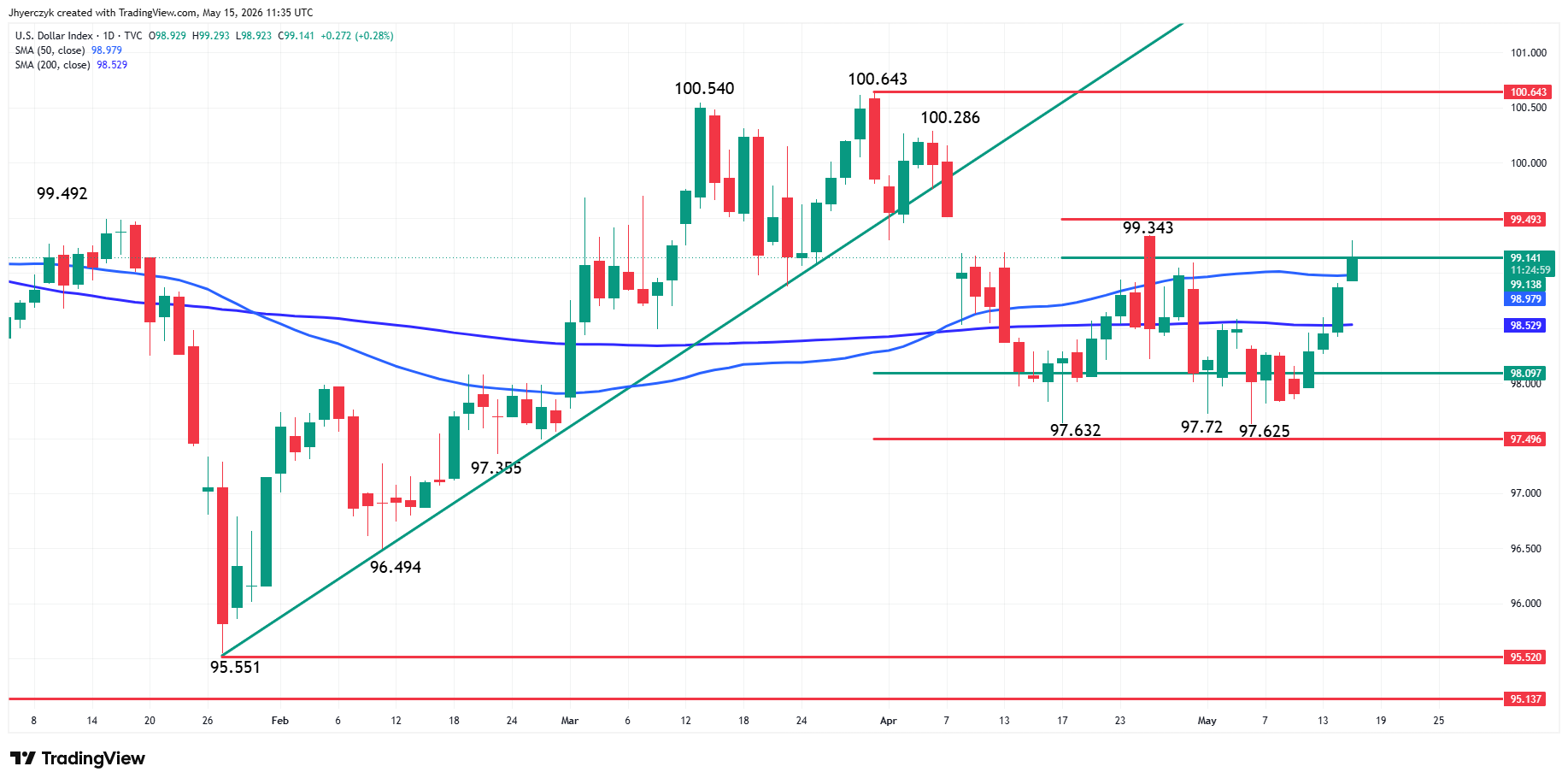
The U.S. Dollar Index cleared 99 Friday after posting gains every session this week. That move has one driver. Three consecutive hot inflation prints changed the Fed outlook completely. Before this week traders were still holding onto some hope that rate cuts were possible later this year. That hope is gone. The market now believes the Fed holds rates elevated through year end at minimum and some traders are starting to price in another hike. When the rate cut story dies the dollar runs and when the dollar runs gold pays for it.
Gold Price Forecast
Every new Gold analysis as it publishes, today's technical signal and key levels, live price — on one page.
See all Gold forecastsGold is priced globally in dollars. Every point the U.S. Dollar Index gains makes Spot Gold (XAUUSD) more expensive for every buyer outside the United States. That demand fades quietly at first and then accelerates when momentum traders pile into the dollar position. Friday looked like the acceleration phase and the intraday reversal from $4,665.45 to $4,531.99 confirmed it. That is a $133 range in one session and it did not happen randomly.
Three Inflation Prints Changed Everything
Tuesday was CPI. Wednesday was PPI. Thursday was import prices. Every one came in above expectations and every one pushed the rate cut timeline further out. The cumulative effect is what Friday is about. Three sessions of data telling the same story forced traders to reprice the Fed outlook all at once. Before this week some investors were still positioned for eventual easing. That positioning is getting unwound right now and gold is absorbing the selling that comes with it.
The import price number that landed Thursday deserves specific attention. Fuel costs posted their biggest monthly increase in four years. That feeds directly into every layer of the inflation system. Consumer prices. Producer prices. Import prices. When energy costs run this hot this fast the Fed has no path to cuts and the market is not pretending otherwise anymore.
Yields Are the Other Half of the Problem
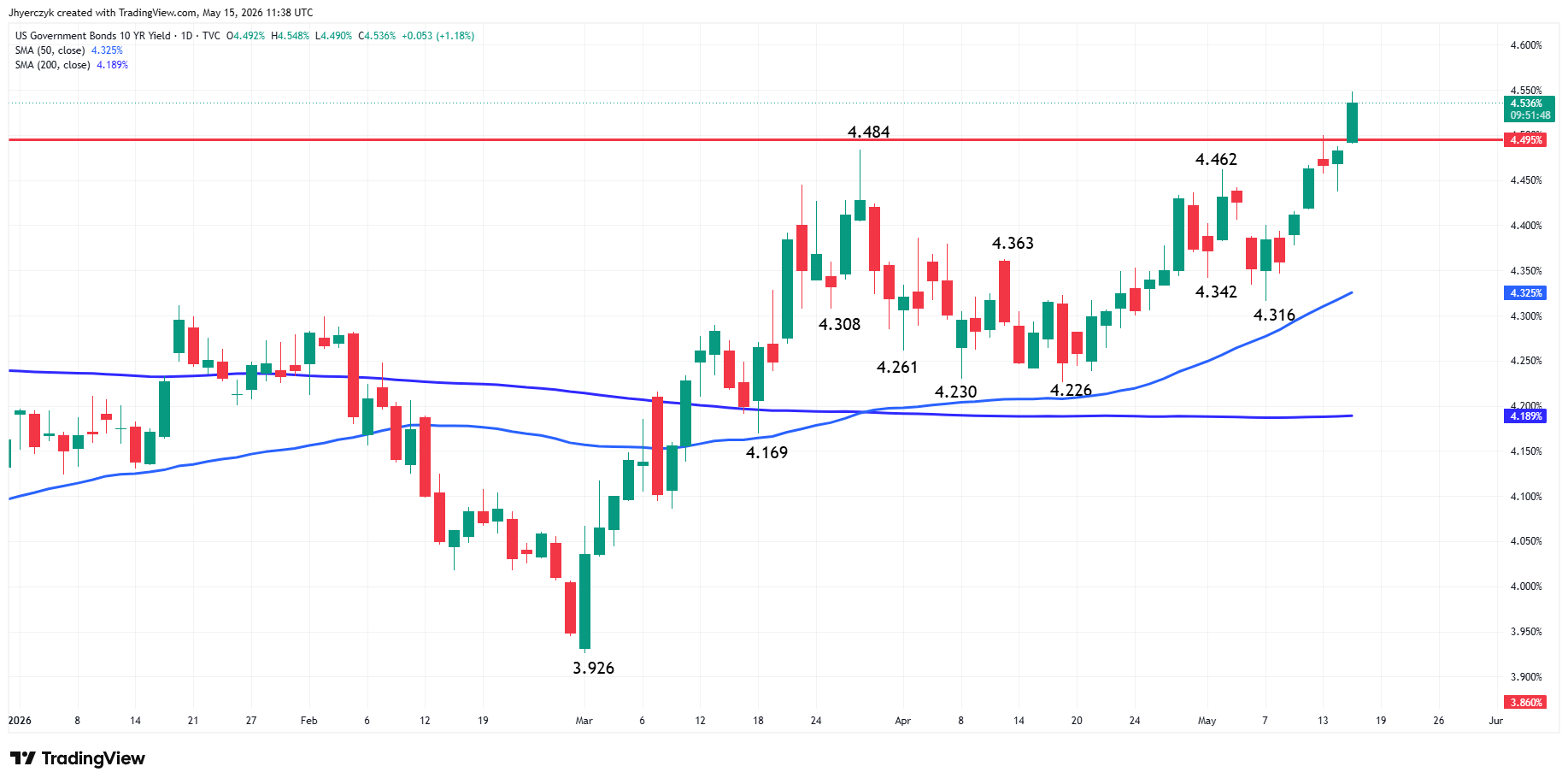
The 10-Year U.S. Treasury yield at 4.53% is close to its highest level in a year. That number matters for gold in a specific way. Gold pays nothing. A 10-Year yield above 4.5% means investors can sit in government bonds considered among the safest investments in the world and collect more than 4.5% annually. The argument for holding a non-yielding metal against that alternative gets harder every basis point yields climb. Traders who bought gold earlier this year while yields were lower are now doing the math and some of them are not liking the answer. The profit taking that follows is orderly at first and then accelerates when a key support level breaks. Friday was the acceleration.
Why Geopolitical Risk Is Not Saving Gold Today
The Middle East conflict is still live. The Strait of Hormuz is still partially restricted. Under normal conditions that backdrop provides a floor under gold. This week it did not. The inflation story is louder than the geopolitical story right now and the market is focused entirely on the Fed outlook, Treasury yields and the dollar. Safe-haven demand exists but it is getting overwhelmed the same way it has been since late February. War escalation means higher oil. Higher oil means higher inflation. Higher inflation means the Fed stays on hold. That chain ends with gold lower not higher and Friday confirmed it again.
What I’m Watching
The 61.8% level at $4,541.88 held as support in Friday’s session so far but the bounce has been shallow. Lose that level into the close and $4,495.33 to $4,401.84 becomes the next test with $4,481.78 inside it. That is the line that separates bull market from bear market. The 200-day moving average is the long-term floor behind all of it.
The dollar clearing 99 and the 10-Year U.S. Treasury yield at 4.53% are the two fundamental drivers sitting on top of those chart levels right now. Until oil drops and takes inflation pressure down with it neither of those moves in gold’s favor and the path of least resistance stays lower.
If you’d like to know more about how to trade gold, please visit our educational area.