


Gold Held Monday but the Rate Trade Has Not Let Go
Gold tried to stabilize after Friday’s 3% break and could not get much done. The dollar eased Tuesday. Yields stayed high. September rate hike odds are sitting above 64% after Warsh’s Jackson Hole speech and the market is not giving the metal credit for the geopolitical bid with crude above $90.
Spot Gold (XAUUSD) settled Monday at $4,449.24, down $5.75 or 0.13%. Earlier in the session it dropped to $4,396.52, the lowest level since mid-August. Friday’s loss was the largest single-day drop since June 10. Gold is still up 9.6% for August, its best month since January. That number looks good on the monthly chart. It did not help Monday.
The second close under $4,481.78, 20% below the record high at $5,602.23, confirms gold is back in bear market territory.
Daily Spot Gold (XAUUSD) Technical Analysis
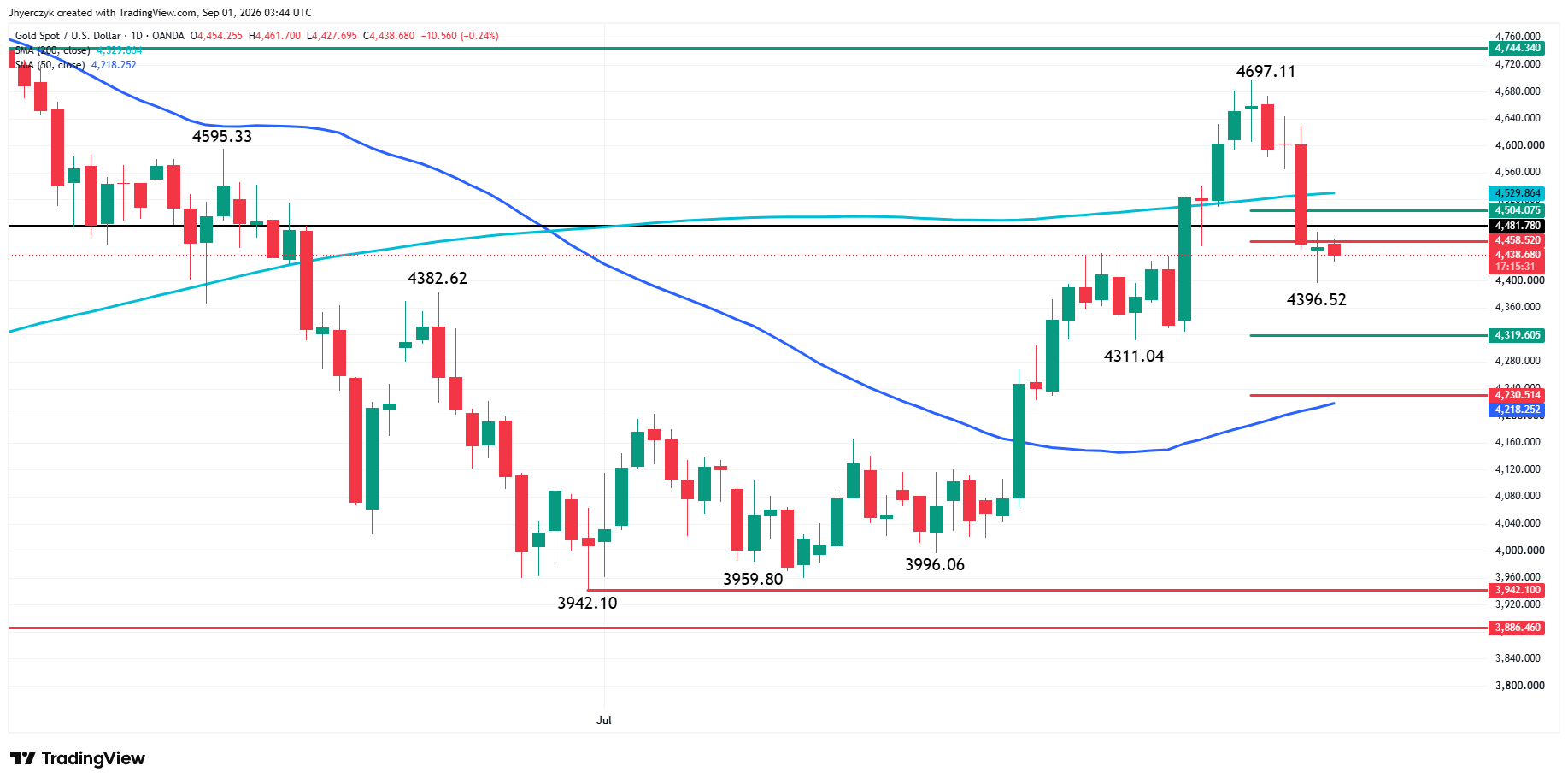
Spot gold fell sharply to $4,396.52 on Monday before bouncing back to $4,449.24 into the close. That move put it back within striking distance of a short-term retracement zone at $4,458.52 to $4,504.08. The major resistance is the 200-day moving average at $4,529.86.
The main trend is up according to the daily swing chart. A trade through $4,697.11 reaffirms the uptrend. The main trend will change to down on a move through $4,311.04.
The long-term range is $3,942.10 to $4,697.11. Its retracement zone at $4,319.60 to $4,230.51 is the primary downside target. This is followed by the next important support level and trend indicator at $4,218.34.
Warsh and Yields Took Control on Friday and Have Not Given It Back
Gold Price Forecast
Every new Gold analysis as it publishes, today's technical signal and key levels, live price — on one page.
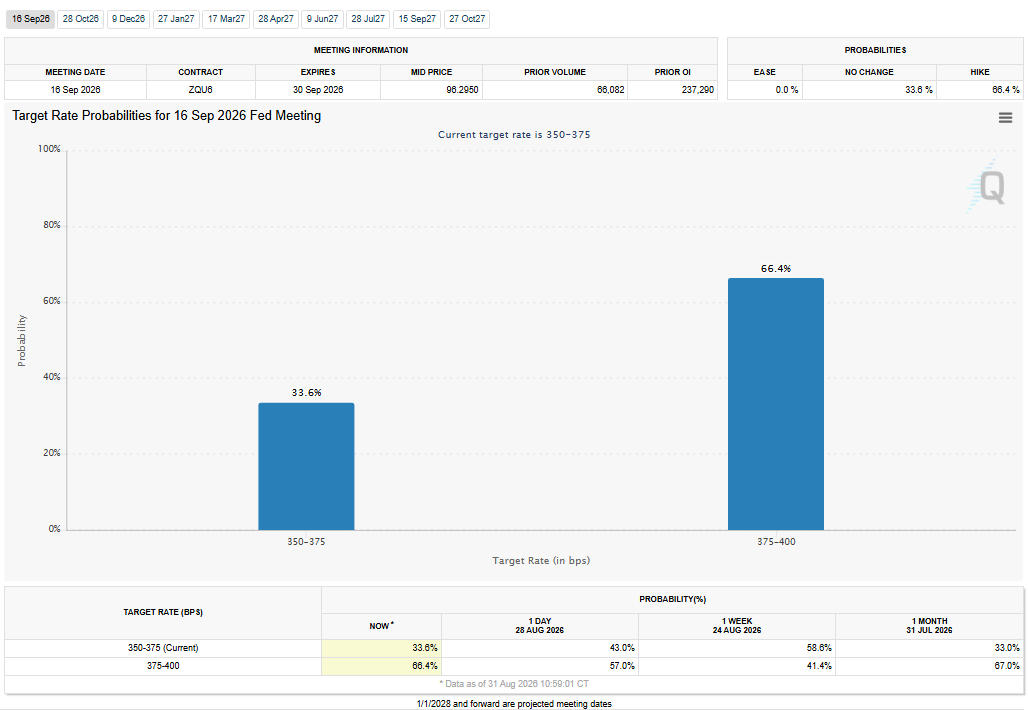
See all Gold forecastsBefore Jackson Hole, traders saw about a 36% chance of a September rate hike. After Warsh said the Fed has more work to do if inflation does not move back toward 2%, that number jumped to roughly 64% to 66%. Barclays now expects two quarter-point increases this year, September and December.
The 2-year yield jumped more than 12 basis points Friday to around 4.354%. That is the rate the gold market cares about most because it tracks Fed policy expectations directly. The move Friday was fast enough to overwhelm everything else in the metal, including the geopolitical bid from the Middle East.
The data calendar starts Tuesday. ISM manufacturing and JOLTS job openings land first. ADP employment follows later in the week. Friday’s August nonfarm payrolls report is the one that can move the September odds in either direction. Warsh gave the market a framework. The jobs number decides whether it holds.
Oil Ran on Iran and Gold Did Not Follow
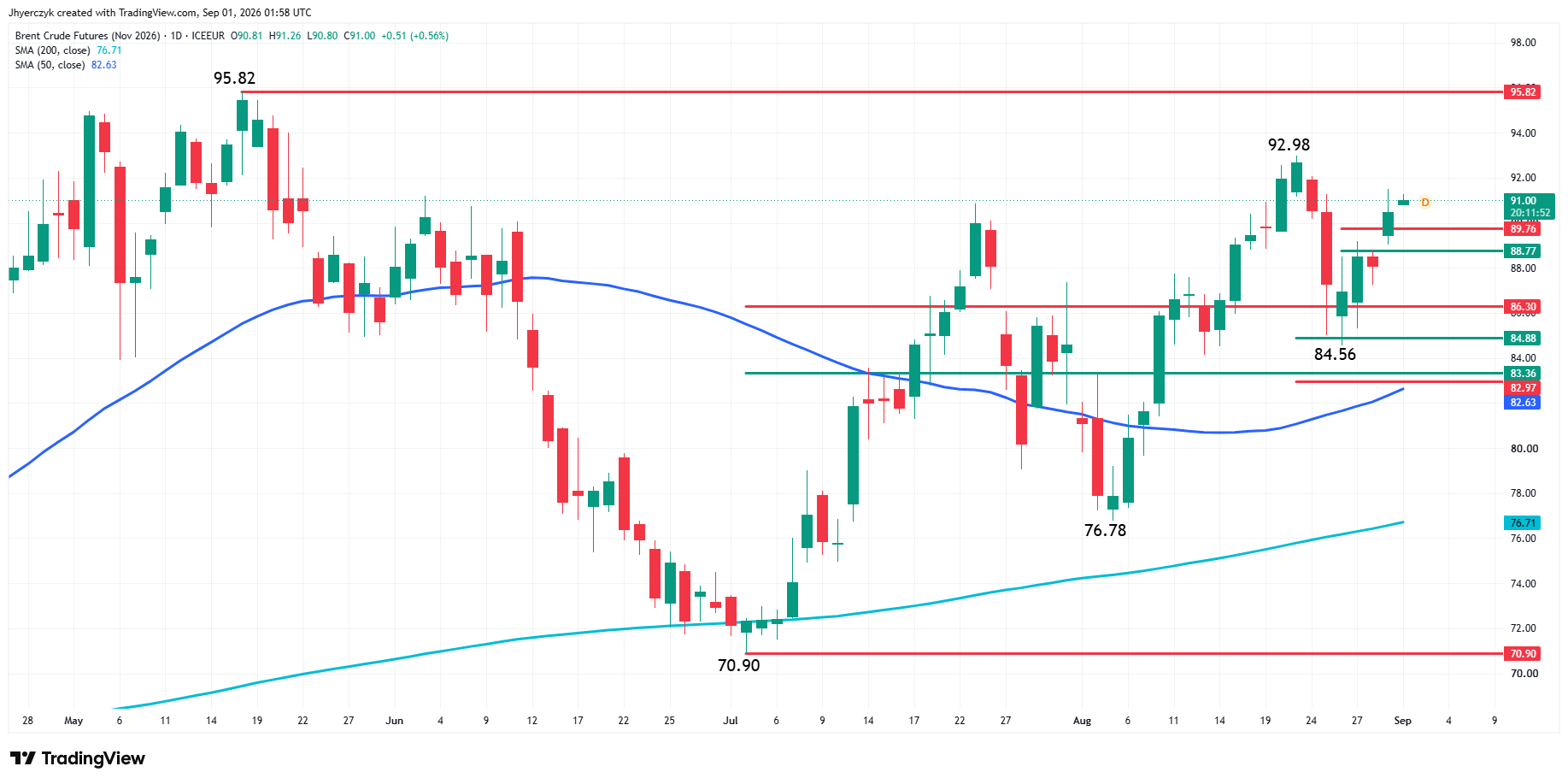
Brent crude settled up 2.71% at $90.49 Monday. WTI gained 2.83% to $85.76. The U.S. struck Iranian targets on Larak Island after weeks without a direct exchange. Tehran said it responded with attacks on U.S. bases in Jordan. The Strait of Hormuz is still disrupted.
Gold traders already know what crude above $90 does to the inflation picture. Warsh is already questioning whether price pressures have cooled enough. The metal had a geopolitical bid on the table Monday and could not use it. Oil ran higher. Gold stayed on the defensive. The rate response from Friday is still sitting on the market and crude climbing is not giving it a reason to lift.
That was the tell Monday. The Middle East headlines were supportive. The rate trade was stronger. Gold followed the rates, not the war.
The Dollar Pulled Back but Yields Did Not
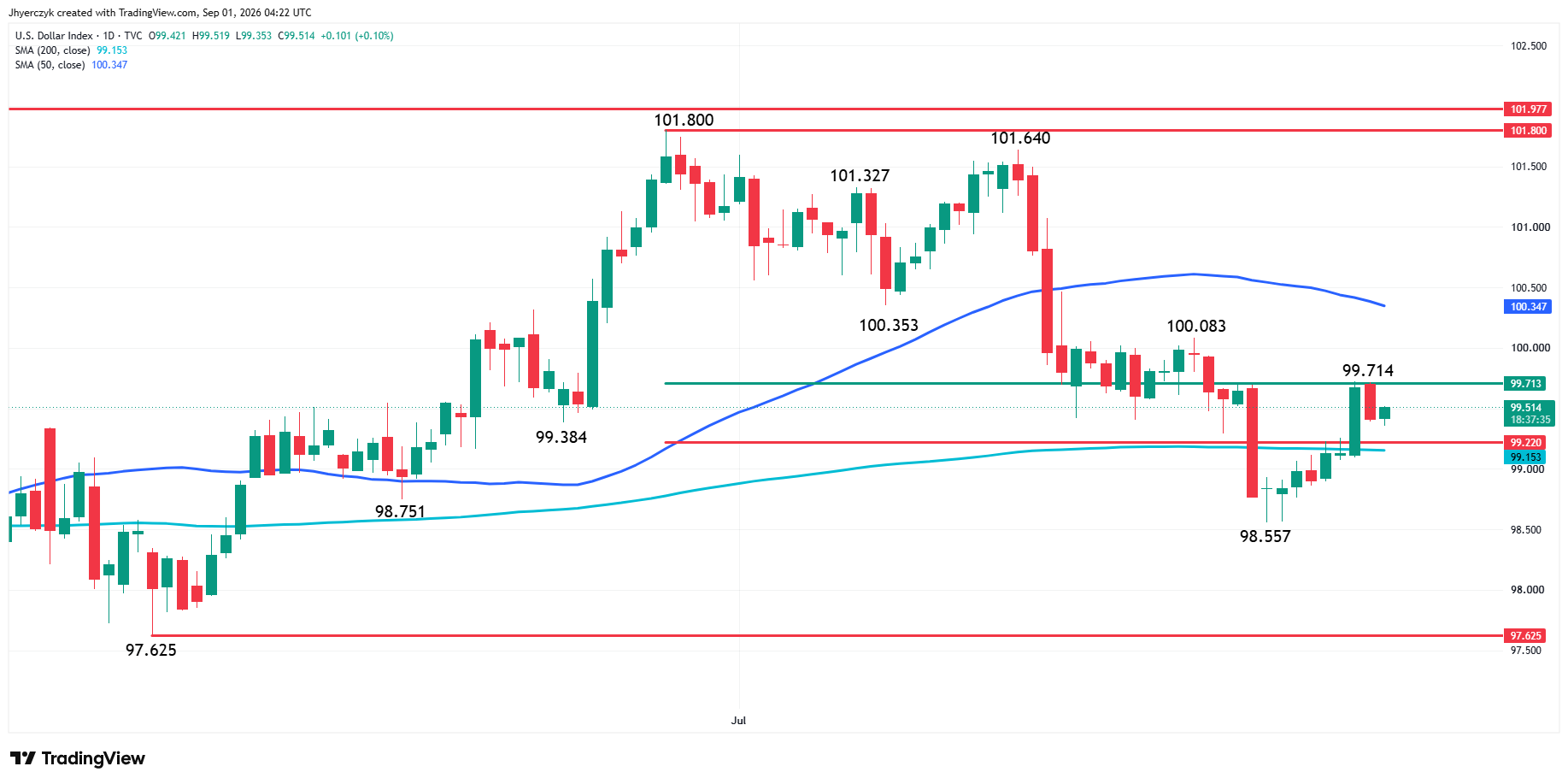
The dollar index slipped to 99.37 Tuesday after sitting near a two-week high following Warsh’s speech. The pullback helped stop gold from extending Friday’s losses. It did not start a recovery.
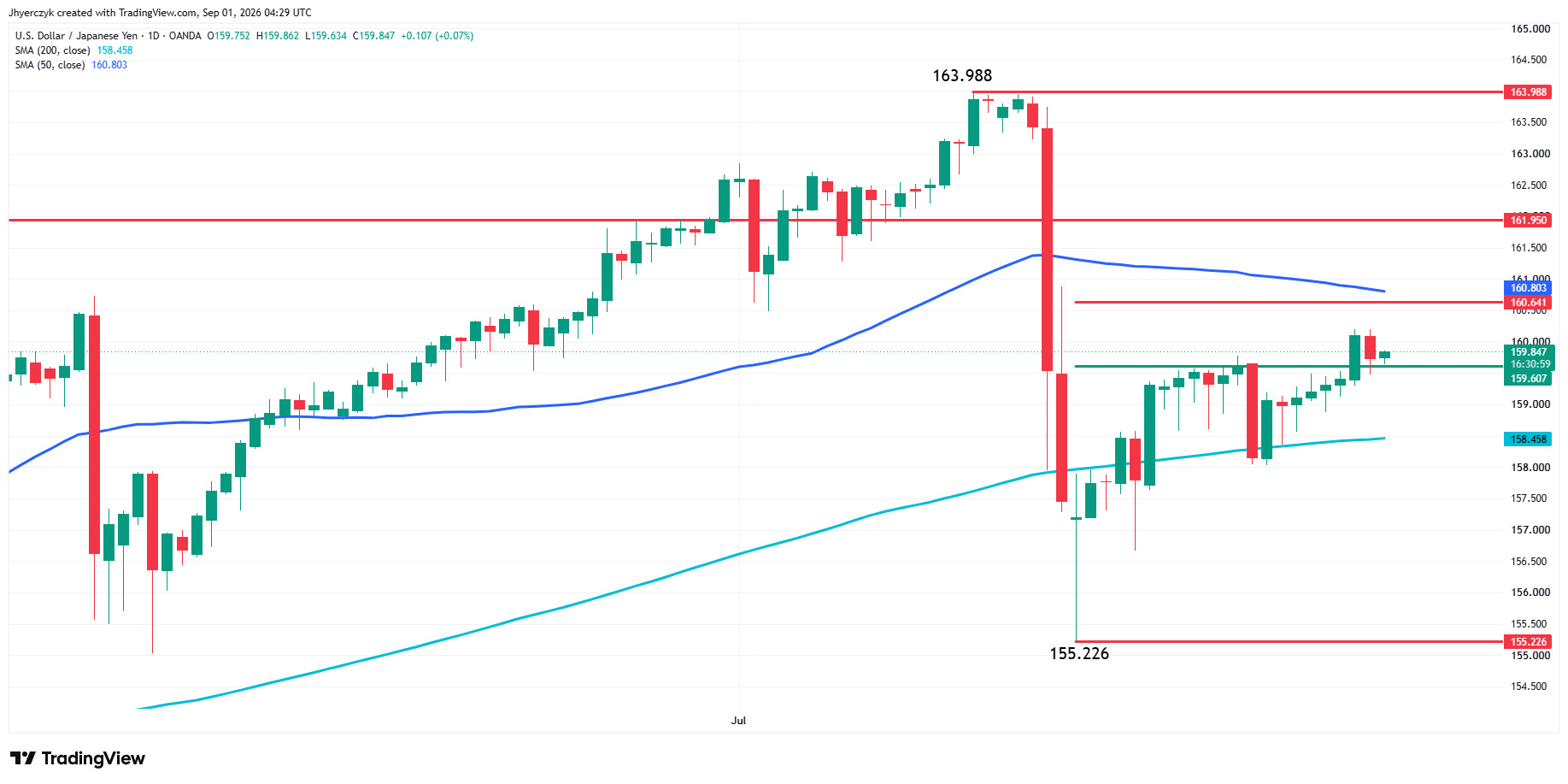
The yen is part of the picture. The Japanese currency steadied near 160 per dollar after Treasury Secretary Scott Bessent increased pressure on the Bank of Japan to raise rates later this month. Markets see a 73% chance of a BOJ hike this month. The yen had weakened past 160 in the two prior sessions before finding some support.
A softer dollar normally helps the metal. Tuesday’s dollar move did not change the gold trade because yields did not follow the dollar lower. The 2-year is still near Friday’s levels. September hike odds are still above 64%. The dollar dipped. The rate story did not.
What to Watch
Friday’s payrolls report is running the gold trade for the rest of the week. Warsh set the framework at Jackson Hole. A firm jobs number with stronger wages keeps September alive and gives sellers more room. Softer employment data forces the market to walk back the 64% hike probability and that is the only thing that gives gold a clean bid from here.
Oil above $90 keeps the inflation side of the trade pointed against the metal. The dollar pulled back Tuesday but yields held. Gold bounced off $4,396.52 Monday but is sitting under the retracement zone at $4,458.52 to $4,504.08 with the 200-day moving average at $4,529.86 above that. The downside target is the long-term retracement zone at $4,319.60 to $4,230.51. The rate story has control until the data changes it.
More Information in our Economic Calendar.