US Markets Dive as World Braces for Trump Tariffs
US equity markets faced heavy selling pressure on Tuesday, April 8, as President Trump’s tariffs took effect. The Nasdaq Composite Index and the S&P 500 slid 2.15% and 1.57%, respectively, while the Dow fell 0.84%.
Significantly, markets braced for the impact of a whopping 104% tariff on Chinese goods, raising fears of a lengthy trade war. Recession risks have also risen, impacting risk assets.
In the bond markets, 10-year US Treasury yields touched a session high of 4.304% before settling at 4.291%.
The Kobeissi Letter remarked on market conditions, stating:

“This is what you call a nightmare situation. Treasury yields are now up +10% since April 3rd while the S&P is down -10%. The 10-year note yield is currently up 55 basis points in 48 HOURS. In other words, we now have HIGHER rates with stocks pricing-in a recession. Something broke this week.”
Hang Seng Index Slides on 104% Tariff
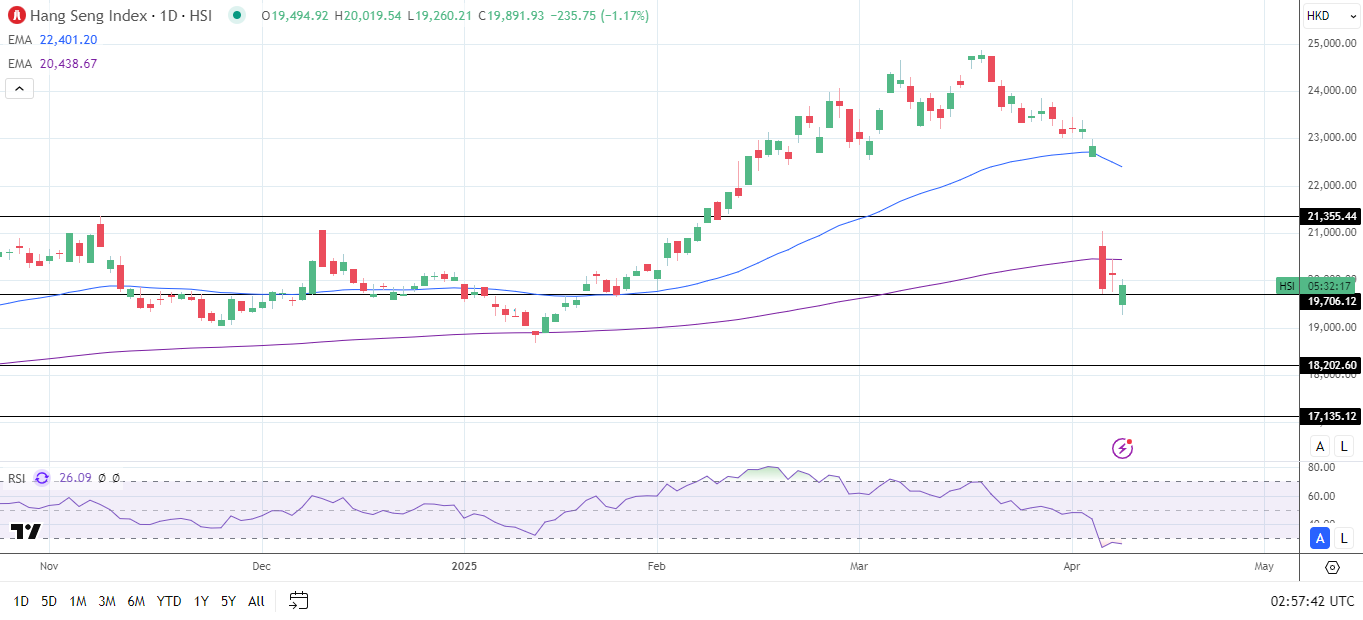
In Asia, the Hang Seng Index dropped 1.17% on Wednesday morning as investors reacted to Trump’s 104% tariff on Chinese imports. While hopes for fresh stimulus helped limit the decline, selling persisted.
Auto and tech stocks led the losses.
- The Hang Seng Technology Index fell 0.46%.
- Tech giants Alibaba (09988.HK) and Baidu (09888.HK) slid 3.12% and 3.88%, respectively.
- Li Auto Inc. (02015.HK) lost 3.88%, while NIO Inc. (09866.HK) plunged 6.77%.
Mainland China’s indices were also in the red. The CSI 300 and Shanghai Composite Index declined by 0.21% and 0.39%, respectively.
Brian Tycangco, editor and analyst at Stansberry Research, commented:
“Right about now would be a good time to hear more about stimulus from Beijing. A lot of support measures for the stock market is being provided by state funds. But what investors need to see is deeper support for businesses and addressing the potential impact events could have on mainland consumer confidence/spending.”
Still, Beijing may hold off any stimulus in hopes of tariff de-escalation before announcing more comprehensive measures.
Nikkei Price Forecast
Every new Nikkei analysis as it publishes, today's technical signal and key levels, live price — on one page.
See all Nikkei forecastsNikkei 225 Falls as 24% Tariffs Bite
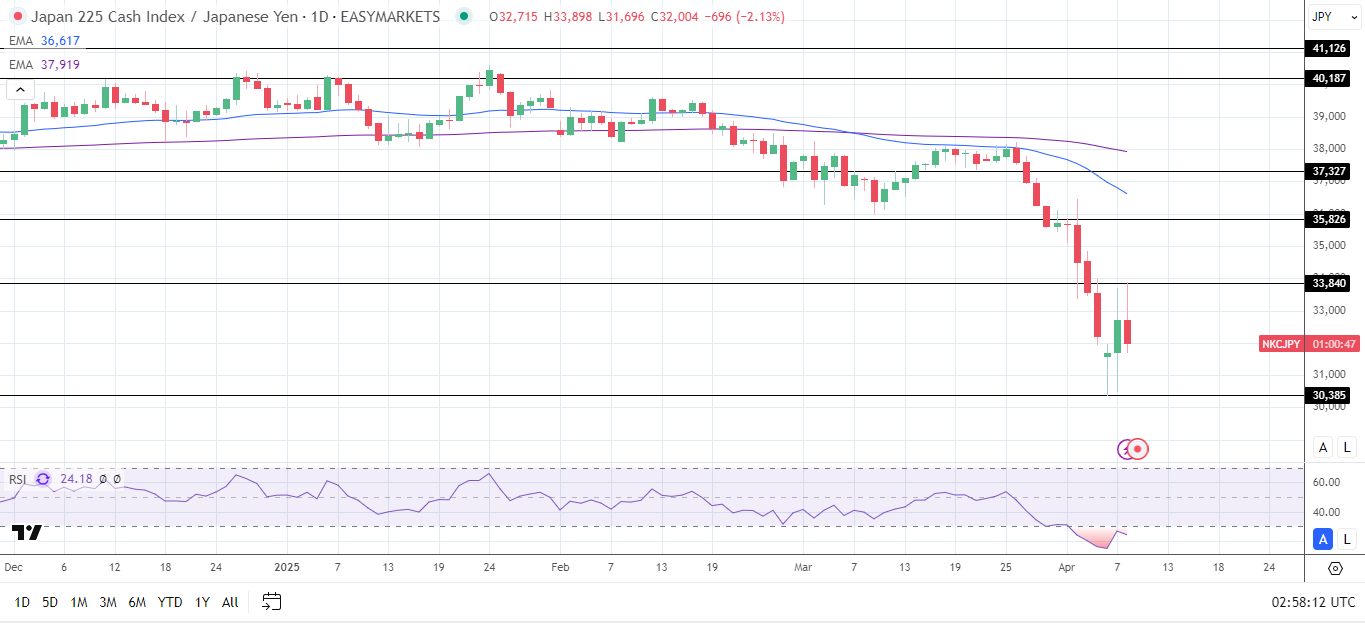
The Nikkei 225 slid 2.62% on Wednesday morning as a 24% tariff on Japanese goods took effect on April 9. Sweeping tariffs fueled demand for safe-haven assets, including the Japanese Yen, pressuring export-focused stocks. The USD/JPY fell 0.36% to 145.690 in the morning session, following Tuesday’s 1.08% loss. A stronger Yen and tariffs could weigh heavily on Japanese exports to the US and corporate earnings.
Auto and tech stocks bore the brunt of the market sell-off. Tech giant
- Softbank Group (9984) and Tokyo Electron (8035) tumbled 6.18% and 4.12%, respectively.
- Automakers Nissan Motor Corp. (7201) and Honda Motor Co (7267) dropped 4.66% and 1.09%, respectively. With Japan being the second-largest car exporter to the US, the 24% tariff threatens earnings and economic growth.
ASX 200 Falls on Mining and Oil Stock Retreats
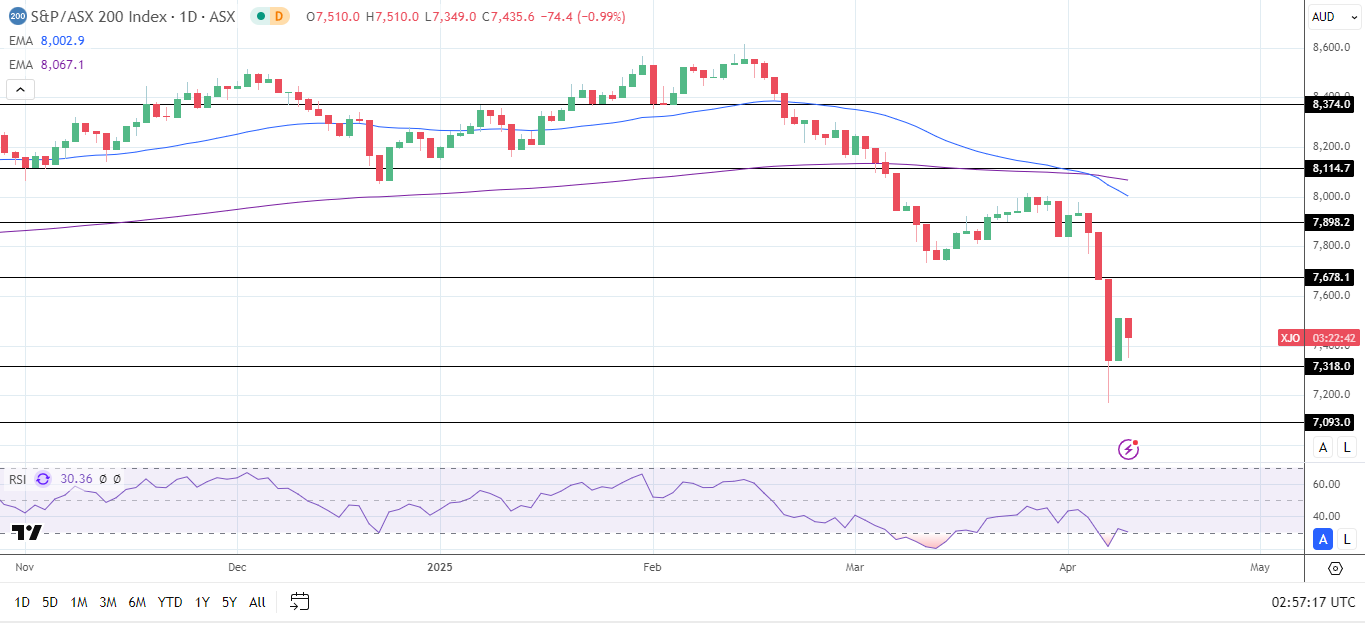
Australia’s ASX 200 fell 0.99% on Wednesday morning, tracking overnight US losses. Mining and oil stocks dragged the broader market lower amid rising recession fears.
- Woodside Energy Group Ltd. (WDS) fell 2.51%. WTI crude oil prices tumbled 4.74% overnight, dropping below $57 for the first time since February 2021 as recession fears weighed on supply-demand dynamics.
- Mining heavyweights also struggled. BHP Group Ltd. (BHP) and Rio Tinto Ltd. (RIO) slid by 2.97% and 3.91%, respectively. Iron ore spot prices plummeted 4.16% overnight.
Outlook: Trade Tariffs and Central Bank Signals in Focus
Markets remain alert to further trade retaliation and potential policy responses from Washington. Any stimulus measures from Beijing could help buffer the impact on Chinese and Hong Kong equities.
Investors should also monitor central bank commentary, as tariff developments may influence the Fed’s policy direction.
A range of market scenarios is possible, including:
- Hang Seng Index and Mainland China Markets: An escalation in the US-China trade war will likely fuel heavier losses, while a de-escalation in the trade war could trigger rebounds. However, stimulus measures from Beijing and a softer USD/CNY could soften the impact of tariffs on market sentiment.
- Nikkei 225: A stronger Japanese Yen and a 24% tariff on Japan’s exports to the US would weigh on the Index. However, a softer US stance on tariffs and a weakening Yen could boost demand for Japanese-listed stocks.
- ASX 200: Global recession risks and US-China developments will remain key drivers of ASX 200 performance.
Discover key strategies here to shield your portfolio from trade war risks.