
Home Depot heads into its upcoming earnings report with investors facing a difficult question: can the world’s largest home improvement retailer continue to grow while the housing market remains stuck between high borrowing costs, weak turnover and cautious consumers?
The company will release its fiscal second-quarter 2026 results on August 18, putting the spotlight on whether demand improved through the spring and early summer and whether its increasingly important professional customer base can compensate for weakness in discretionary home projects.
The challenge is not necessarily that consumers have stopped spending on their homes. Rather, they have become more selective about where they spend. That distinction could be crucial for Home Depot stock traders because a relatively modest change in large-ticket demand, comparable sales or management guidance could have an outsized impact on expectations.

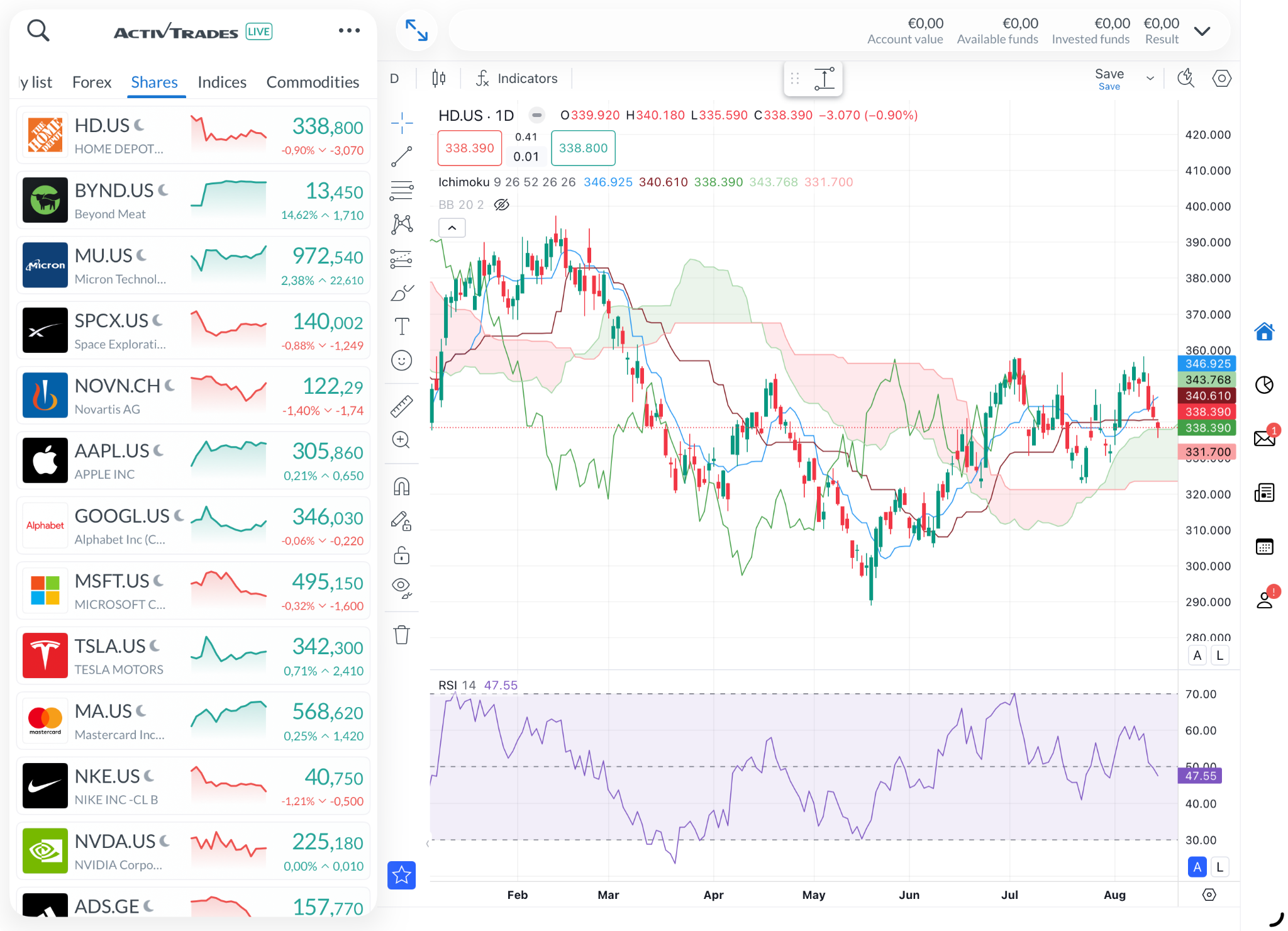
A Resilient First Quarter, But Little Evidence of a Housing Rebound
Home Depot entered the new quarter after a mixed fiscal first quarter. Revenue increased 4.8% year over year to $41.8 billion, helped in part by acquisitions and currency movements. Yet comparable sales rose only 0.6%, while comparable sales in the U.S. increased 0.4%. Net earnings declined to $3.3 billion from $3.4 billion a year earlier, with adjusted diluted EPS falling to $3.43 from $3.56.
The company was still growing, but the underlying retail environment remained subdued. Management said demand was broadly similar to fiscal 2025 despite greater consumer uncertainty and housing affordability pressure.
That makes comparable sales one of the most important figures for traders to watch in the upcoming report. Revenue growth alone could become less informative as Home Depot integrates acquisitions and expands its professional distribution operations. A stronger acceleration in organic sales would provide a more convincing signal that the underlying consumer is becoming more willing to spend.
The company has maintained its fiscal 2026 guidance, calling for total sales growth of approximately 2.5% to 4.5% and comparable sales growth between flat and 2%. It also expects adjusted operating margins of 12.8% to 13.0% and adjusted EPS growth of approximately flat to 4%.
For traders, the key question is therefore less whether Home Depot can meet its existing targets and more whether the second-quarter performance gives management a reason to raise, lower or simply reaffirm those expectations.
Housing Remains the Biggest Macro Constraint
Home Depot’s exposure to the housing cycle makes the current environment particularly difficult. Mortgage rates remain elevated, while expensive homes and limited inventory have discouraged both buyers and sellers. Existing-home sales fell 1.7% in July to an annualized 4.06 million units, while the median existing-home price rose 2% year over year to $434,100. The lack of turnover is particularly important because homeowners who do not move have less incentive to undertake the type of major renovation projects that often accompany a home purchase.
Mortgage rates also remain above 6.5%, limiting affordability and keeping the so-called mortgage-rate lock-in effect alive. Many existing homeowners remain reluctant to sell because they are holding mortgages secured at much lower rates. That reduces the supply of homes available for sale and, in turn, limits housing transactions.
This matters to Home Depot because a move generates spending. New homeowners typically need to furnish, repair, upgrade and personalize properties, while sellers can undertake projects to improve the attractiveness of their homes. When fewer homes change hands, some of this activity disappears.
The result is a bifurcated market: essential maintenance can remain relatively resilient, while discretionary projects such as major kitchen, bathroom or outdoor renovations are more vulnerable to postponement.
The Pro Customer Could Be Home Depot’s Biggest Earnings Catalyst
One of the clearest ways Home Depot is attempting to reduce this cyclicality is by expanding its professional customer business.
The Pro segment already represents roughly half of Home Depot’s revenue, and the company has invested heavily in building an end-to-end ecosystem for contractors and other professionals. The $18.25 billion acquisition of SRS Distribution in 2024 was central to that strategy, while the subsequent acquisition of GMS expanded the company’s reach in specialty building products.
This is important because professional customers tend to purchase products for ongoing construction, repair and maintenance work rather than discretionary projects by individual homeowners. That can make demand more recurring and potentially less sensitive to housing transactions.
The upcoming earnings report should therefore be read carefully for evidence that the acquisitions are generating genuine revenue synergies rather than simply adding scale. Traders should watch sales growth within the Pro business, the integration of SRS and GMS, and whether management sees additional investment requirements.
A successful integration could strengthen Home Depot’s competitive position while expanding its addressable market. The company estimates that the professional market is roughly $300 billion, leaving substantial room for share gains.
Large-ticket Spending Is the Critical Consumer Signal
Home Depot’s results could also hinge on the behaviour of consumers making bigger purchases.
The previous quarter showed that customers remained engaged, but not necessarily willing to commit to expensive projects. Management commentary around large-ticket transactions could therefore prove more important than headline revenue.
Traders should ask whether consumers are still prioritizing need-based purchases over discretionary renovations. If big-ticket demand remains weak, it would suggest that housing affordability and economic uncertainty are still suppressing the highest-value portion of the business. Conversely, a stabilization in major projects could be an early indication that consumers are becoming more comfortable with the macroeconomic environment.
This is particularly relevant because a recovery in mortgage rates could eventually unlock pent-up demand. But for now, the housing market remains constrained. The July decline in existing-home sales reinforces the view that a broad housing-led recovery has yet to materialize.
Margins, Tariffs and the Balance Sheet
Revenue is not the only area traders should monitor. Higher transportation, input and sourcing costs could create additional pressure on gross margins, particularly if tariffs raise the cost of imported merchandise.
Home Depot also carries a higher debt burden following its acquisitions. The company raised $10 billion of debt to help finance the SRS transaction and had nearly $56 billion in total debt at the end of 2025. Share repurchases have consequently been halted, making cash flow and balance-sheet discipline more relevant to the stock’s valuation.
The company’s ability to protect margins while continuing to invest in supply chain infrastructure, merchandising and its Pro network will therefore be an important part of the earnings story.
CEO Uncertainty Adds Another Layer for Traders
Home Depot also enters the report with an unusual management issue. CEO Ted Decker is taking a temporary medical leave of absence, with executives Ann-Marie Campbell and CFO Richard McPhail overseeing operations and financial matters during his absence. He is expected to return in the coming months.
For traders, the issue is less about the short-term operational impact and more about whether management provides clarity on strategic priorities and the timing of Decker’s return.
What to Focus on
Home Depot’s earnings are likely to be judged against a relatively low-growth backdrop. The most important signals will be comparable sales, large-ticket demand, Pro sales, gross and operating margins, commentary on tariffs and costs, and whether full-year guidance remains intact.
The opportunity is that Home Depot has several structural advantages. Its scale, brand recognition, supplier relationships and distribution network provide a significant competitive moat, while its expansion into professional and maintenance-related categories could make revenue less dependent on discretionary homeowner spending.
The risk is that these strengths may not be enough to overcome a housing market where affordability remains stretched and transactions remain subdued.
For HD traders, the earnings reaction may therefore depend less on whether Home Depot simply beats or misses estimates and more on what the report says about the timing of a housing recovery. If Pro demand is accelerating while large-ticket consumer spending stabilizes, the market could start pricing in a stronger second half. If management instead highlights continued caution, weak housing turnover and rising costs, investors may conclude that the recovery remains further away.
Sources: Home Depot, CNBC, MorningStar, Reuters, AP News, Barron’s, Yahoo Finance