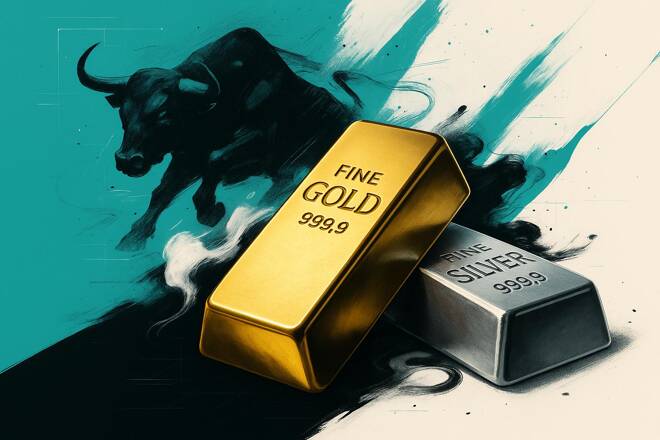
What analysts at The Gold & Silver Club formally declared in the opening months of the year – “2026 will be the Year of Hard Assets” – has now crystallized into the defining macro theme of the year.
Across global markets, capital is rotating towards scarce, tangible assets at a speed few traders anticipated. Gold has surged from below $4,000 an ounce to around $4,600, while Silver has rocketed from approximately $54 to almost $70 in just weeks.
Copper is challenging record territory. Tin has emerged as one of 2026’s standout metals. Oil remains structurally elevated. Across the Commodity complex, the message is becoming increasingly difficult to ignore:

The hard-asset repricing is accelerating and the next phase could be far more explosive.
Washington Just Gave Gold Another Reason To Run
The latest catalyst has emerged from the U.S government bond market.
With long-dated Treasury yields reaching levels not seen for almost two decades, the U.S Treasury has moved to expand its liquidity-support buyback programme for longer-duration government debt – effectively increasing its ability to remove bonds from the market when liquidity becomes strained.
This is not quantitative easing. It is not formal yield-curve control.
But markets rarely wait for policy labels.
“The significance is the direction of travel,” says Lars Hansen, Head of Research at The Gold & Silver Club. “The Treasury is signalling that disorderly increases in long-term borrowing costs are becoming increasingly uncomfortable. Gold understands exactly what that potentially means.”
America’s federal debt has now crossed the historic $40 trillion threshold, while the cost of servicing that debt continues to rise.
At the same time, major foreign holders have been reducing their exposure to U.S Treasuries.
That combination creates an increasingly difficult policy dilemma: rising debt, weaker marginal demand and borrowing costs that cannot remain elevated indefinitely without consequences.
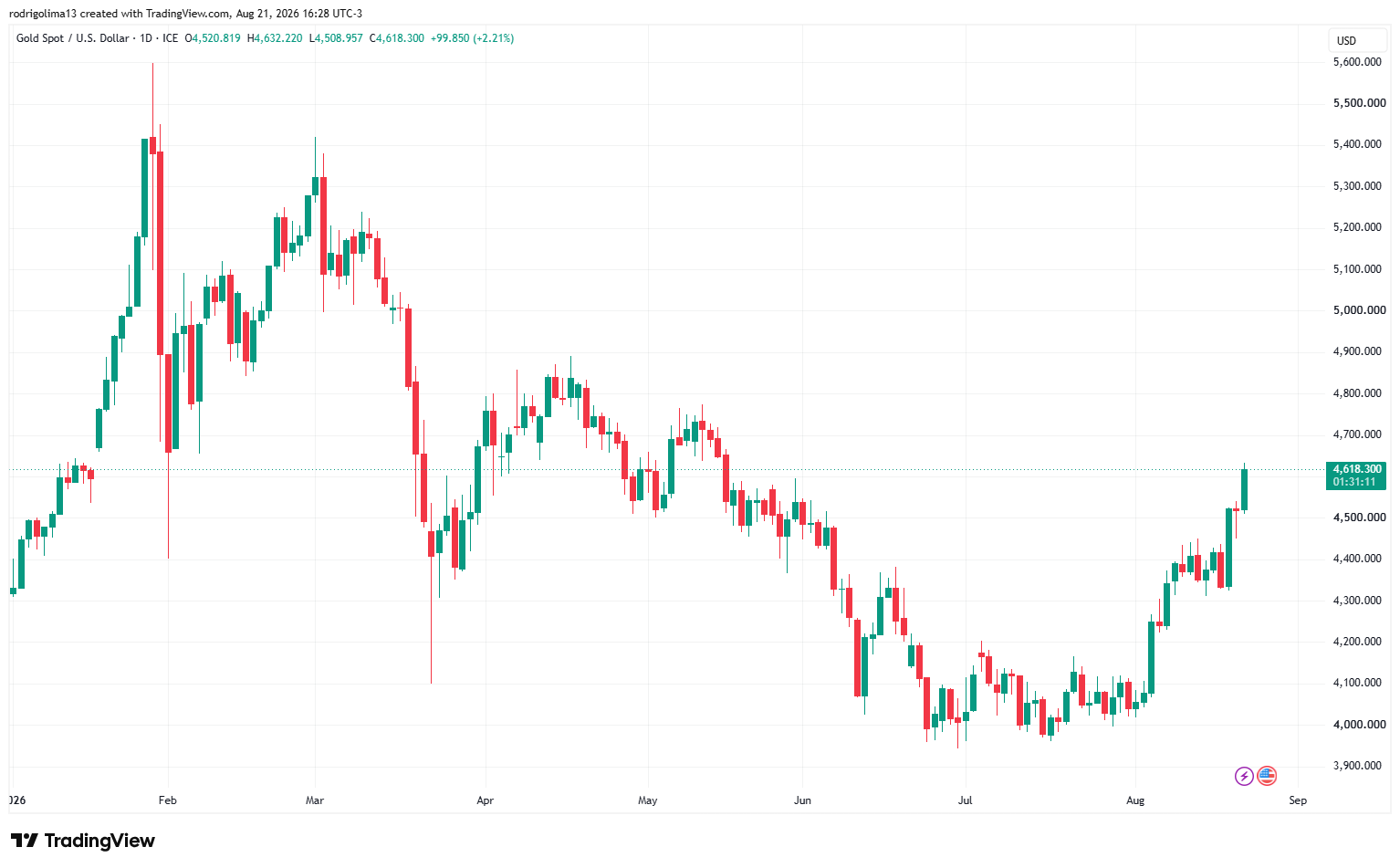
Gold year-to-date daily chart. Source: TradingView.
Gold Price Forecast
Every new Gold analysis as it publishes, today's technical signal and key levels, live price — on one page.
See all Gold forecastsThe Market Is Starting To Price The Endgame
The critical question is what happens if long-term yields continue climbing.
Treasury buybacks can improve liquidity. They cannot impose permanent control over the yield curve. Only the Federal Reserve has the balance-sheet capacity to do that on a meaningful scale.
And that is where the Gold market becomes particularly interesting.
“If policymakers are eventually forced towards renewed liquidity creation, financial repression or some form of yield suppression, the implications for Gold and Silver could be enormous,” Hansen says. “The market does not need QE4 to be announced. It only needs to believe the probability is rising.”
That probability is increasingly being reflected in price.
Silver Could Turn A Bull Market Into A Stampede
Silver’s recent performance may be the clearest warning that market psychology is changing.
Its move from roughly $54 to almost $70 represents a gain approaching 30% from its recent low – dramatically outperforming most major asset classes.
Because Silver’s investable market is considerably smaller than Gold’s, even modest institutional rotation can create lightning-fast upside acceleration.
“Gold tends to validate the macro regime; Silver monetizes the excitement,” Hansen says. “If Gold clears $4,700 and Silver breaks decisively above $75 – that’s when $100 Silver and $5,000 Gold may stop looking like distant targets and start becoming the market’s next psychological milestones.
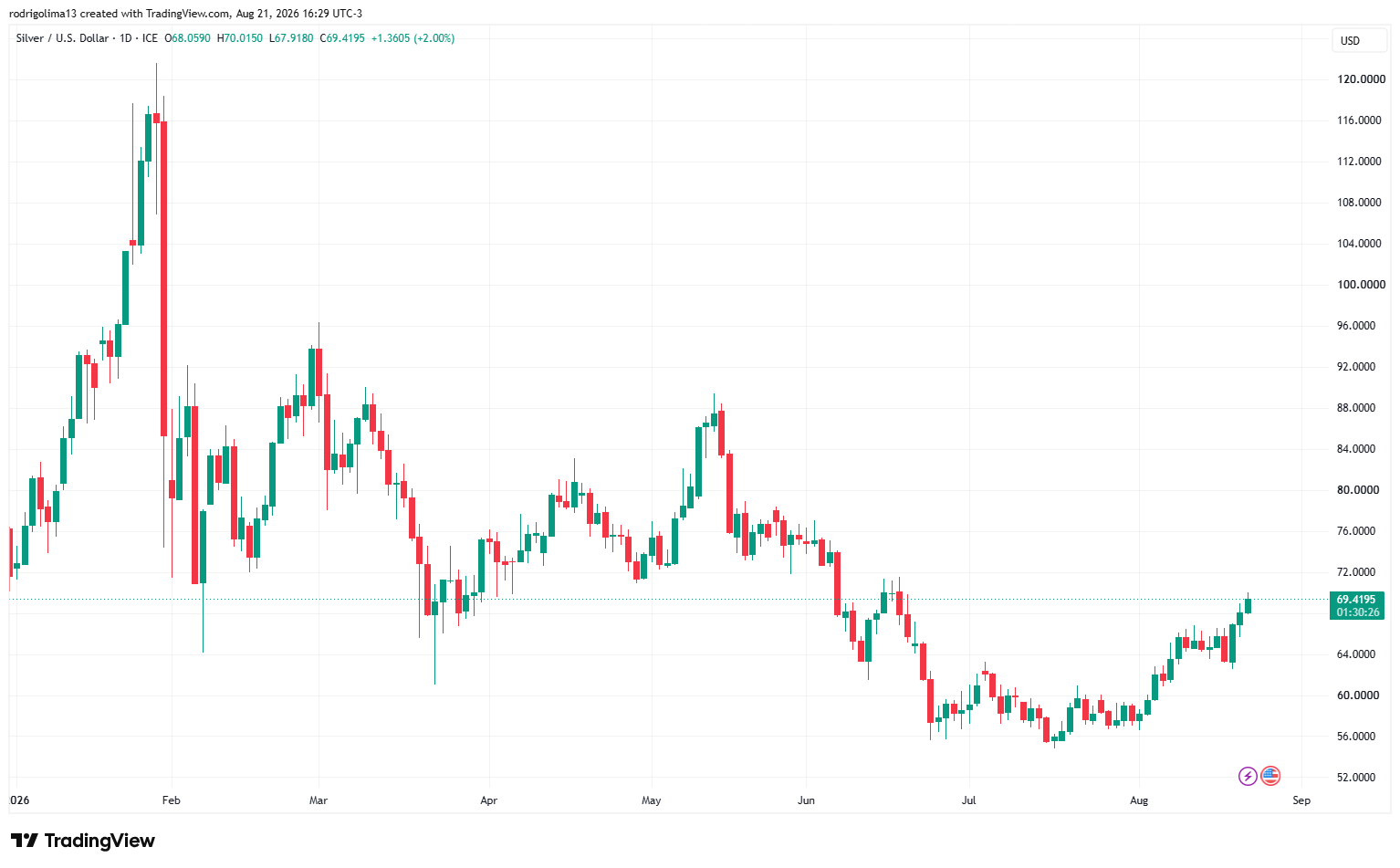
Silver year-to-date daily chart. Source: TradingView.
Fifteen Years of Calling The Big Moves
Over the past 15 years, The Gold & Silver Club has built a reputation as one of the industry’s most accurate forecasters of major precious metal price trends, a record well documented across leading financial publications and institutional research reports.
The firm’s proprietary models have consistently pinpointed major turning points in both Gold and Silver – earning GSC recognition as a trusted authority among institutional investors and private wealth clients alike.
“The largest gains in secular bull markets are rarely captured by traders who wait until everyone agrees,” Hansen says. “They are captured while the evidence is mounting, but the crowd is still hesitating.”
That may be exactly where Gold and Silver stand today.
The debt burden is accelerating. Bond markets are flashing warnings. Capital is rotating into hard assets. And the next major technical trigger is now within striking distance.
If the breakout arrives, today’s prices could quickly become the levels traders wish they had acted on earlier.
The window to position before the next leg higher will not remain open indefinitely. Once momentum accelerates, hesitation can rapidly turn into chasing.
The question now is no longer whether FOMO will arrive if Gold and Silver break higher. It is whether traders choose to act before it does – or find themselves chasing the market at significantly higher prices.
Where Are Prices Heading Next?
Where are prices heading next? Watch The Commodity Report now, for my latest price forecasts and predictions: