Overall, financial markets have risen on Tuesday as falling crude prices and easing government bond yields early in New York trading offered a bit of relief from recent inflation and fiscal concerns. Artificial intelligence remains a powerful support for equities, while European debt continues to influence currencies. The central message of the session is that improving energy supply and lower borrowing costs can support risk appetite even when the underlying economic and geopolitical issues remain.

Oil Has Provided a Very Important Catalyst
Brent fell about 2% in the morning as recovering Middle Eastern exports and an emergency reserve release reduced immediate supply anxiety, and this has been felt worldwide. The Group of Seven agreed on Friday to release 100 million barrels of crude and diesel from emergency stocks. This is a continuation of an agreement made in March.
This improvement, of course, does not establish a lasting resolution to the regional conflict. Shipping attacks around the Strait of Hormuz and fighting near Bab al-Mandeb continue to threaten transport costs, insurance, and delivery reliability. Producers use alternate routes, which helps explain why exports can recover while security risks remain elevated, but it does cost more to get there. The biggest catch here, of course, is the fact that more oil does not mean more refined products, at least not yet. It does take time to move through the system.
French Bonds in Focus
European fiscal developments supplied another major headline. Marine Le Pen proposed €140 billion in net savings by 2032 as she used this press conference to reassure investors about France’s finances. French bonds have rallied, although questions remain about the implementation and parliamentary support of this action. The euro recovered from Monday’s 17-month low as debt-market pressure eased. That being said, rising yields in this particular case have hurt the euro, while rising yields in the United States have helped the dollar.
GDP, Imports, Exports
The goods and services deficit in August widened 13.7% in the United States, with imports increasing 4.3% while exports rose 1.4%. The wider deficit can weigh on GDP through net exports, but rising imports can also accompany firm domestic demand, something that seems to be the main gist.
AI Still moving Wall Street
Corporate announcements have helped sustain enthusiasm for AI infrastructure. AMD’s chief executive said chip supply would increase sustainably and substantially in 2027 to meet demand. Google and Constellation announced an agreement enabling 890 megawatts of additional nuclear capacity, supported by a 20-year power-purchase contract. This announcement shows how investment in computing increasingly reaches electricity generation and the physical-infrastructure part of the market.
Deal activity has produced another mover, as several deals are in the works in the healthcare space. As a result, this shows a broadening of capital expenditure throughout the real economy. Often, with mergers and acquisitions, traders can read into that there is a likelihood of continued growth at the corporate level.
Falling Early Yields Trying to Help Gold
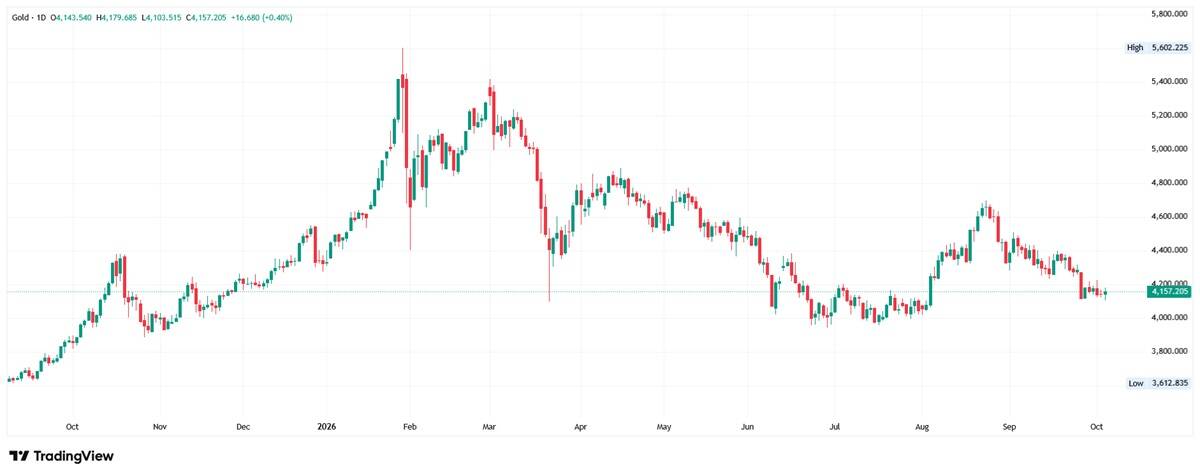
Gold has also strengthened a little bit in the U.S. morning as the dollar and yields eased their pressure on the rest of the world. But now attention is going to turn towards Federal Reserve remarks, Treasury demand, and upcoming earnings. It is worth noting that the Federal Open Market Committee meeting minutes from the last meeting are released late in the day. That could, at least in theory, open up the possibility of some type of glance into how Federal Reserve members are thinking.