The Nasdaq Index remains under pressure as the Fed’s hawkish position, higher Treasury yields and concerns about heavy AI spending weigh on technology stocks. In my view, the index may remain volatile in the short term as it approaches the key support at 26,200. But the strong corporate earnings and the long term growth of AI continue to support the broader bullish outlook. This article presents the key Fed signals, AI spending trends and technical levels that may shape the next move in the Nasdaq Index.
Agustina Patti, Financial Markets Strategist at Exness commented:
Investors still believe in AI’s long-term potential, but they’re becoming more demanding. It’s no longer enough for companies to announce bigger AI investments. Markets increasingly want to see those investments lead to stronger earnings and real business growth. At the same time, higher bond yields and uncertainty around interest rates continue to make the environment more challenging for technology stock.
Fed Interest Rate Decision Increases Pressure on the Nasdaq Index
The Federal Reserve kept the interest rates unchanged at 3.50%-3.75%, but the decision was not fully supported. Three of the 12 Federal Open Market Committee members voted for 25 basis point increase in interest rates. This split indicated a hawkish tone in the decision and revealed that some officials still have concerns about the inflation.
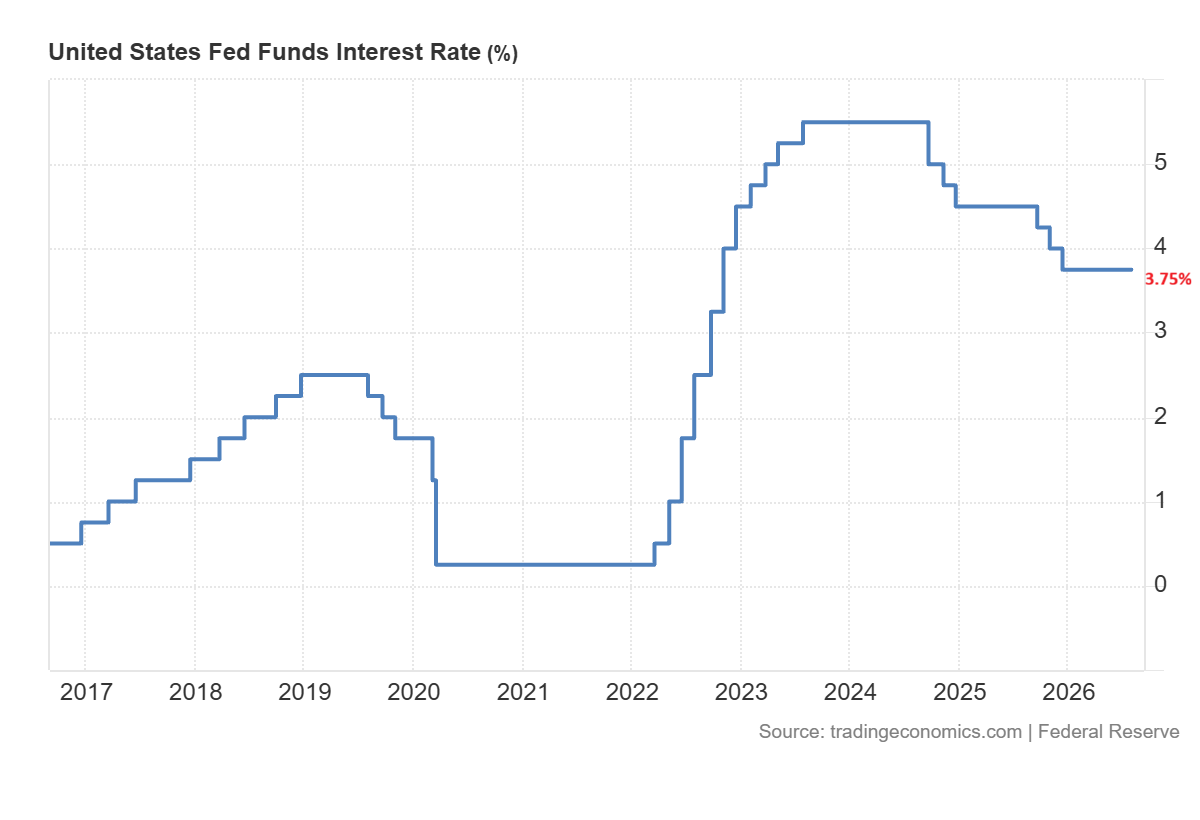
The markets were pricing in a probability of a 36% rate hike in July and 50% probability in September. But the probability of a rate hike in September increased to 65% after the Fed announcements. The expectation of higher interest rates could keep the Nasdaq choppy ahead of the next Fed meeting.
The US consumer inflation dropped to 3.5% in June while the core inflation dropped to 2.6%. Despite this drop, the inflation still remains above the Fed’s 2% target.
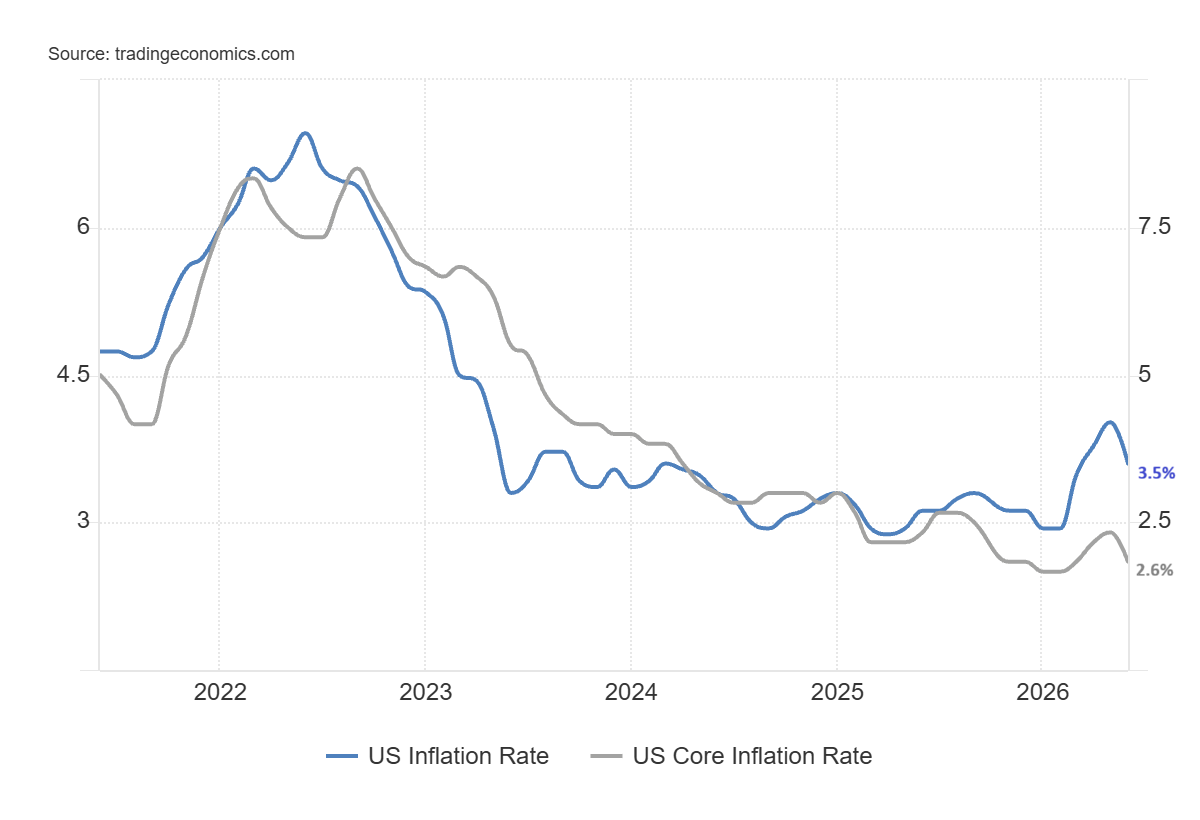
It has been more than five years since inflation exceeded this target. The tensions between the US and Iran remain elevated. The oil price also triggered a strong rebound in July after marking a low at support. The unresolved geopolitical tensions in Middle East could drive oil, fuel and food prices back up again.
Meanwhile, the 10-year Treasury yield remains positive after the US-Iran war. The yields have increased further in July to reach the key resistance area of 4.70%. An increase in yields is a negative for growth conditions and technology valuations. They also make short term Treasuries and money market funds more attractive than growth stocks.
NASDAQ 100 Price Forecast
Every new NASDAQ 100 analysis as it publishes, today's technical signal and key levels, live price — on one page.
See all NASDAQ 100 forecastsAI Spending Concerns Pressure Nasdaq Technology Stocks
The Nasdaq index is also under pressure due to the large amount of money invested in AI. The chart below shows that Amazon Inc. (AMZN), Microsoft Corp. (MSFT), Alphabet Inc. (GOOG), Meta Platforms (META) and Nvidia Corp. (NVDA) have invested heavily in AI. The capital expenditure of Amazon has reached $151 billion in 2026. On the other hand, the capital expenditure for Alphabet reached $132.40 billion.
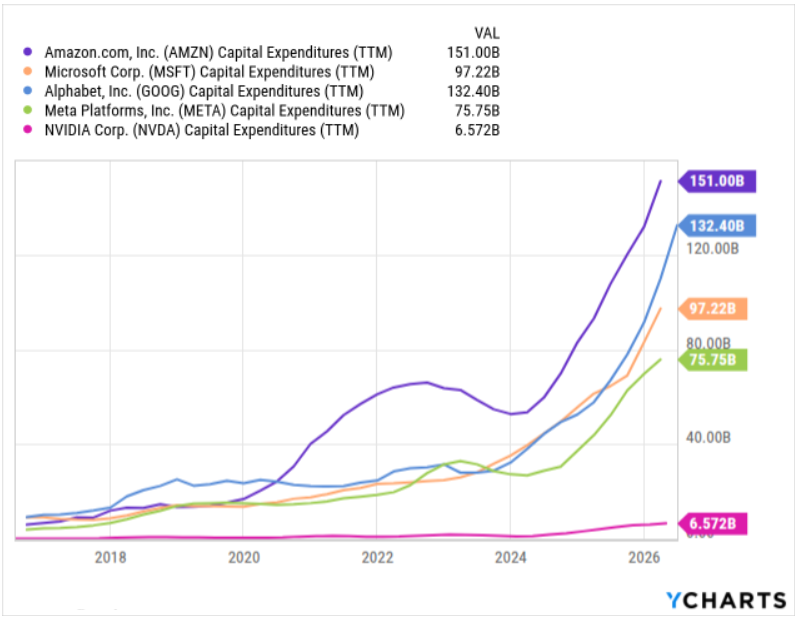
The capital expenditures of Nvidia and Amazon show the largest increase over the past ten years.
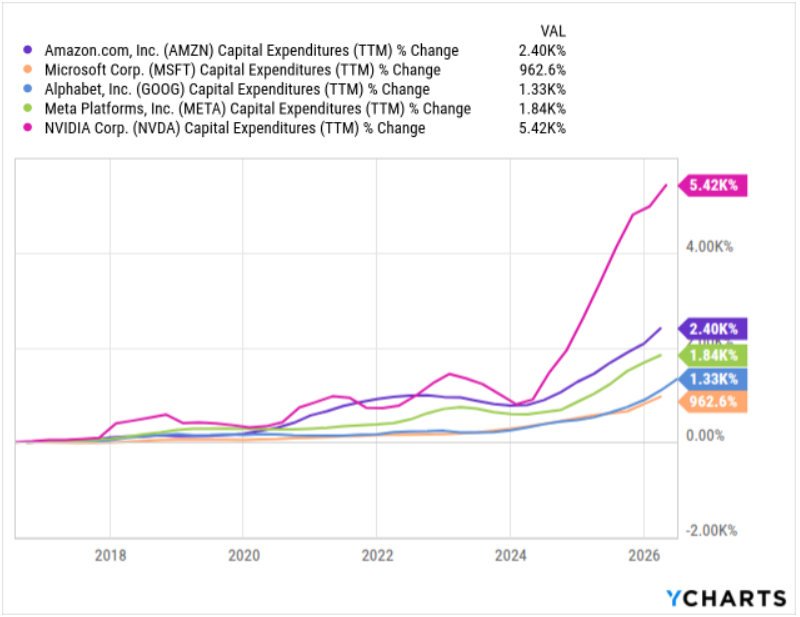
These investments are related to chips, data centers and other AI infrastructures. This spending may support the long term growth but it reduces the free cash flow in the short term. The chart below shows that the cash flow for Amazon dropped significantly with 177% over the past three years as the capital expenditure of Amazon was highest.
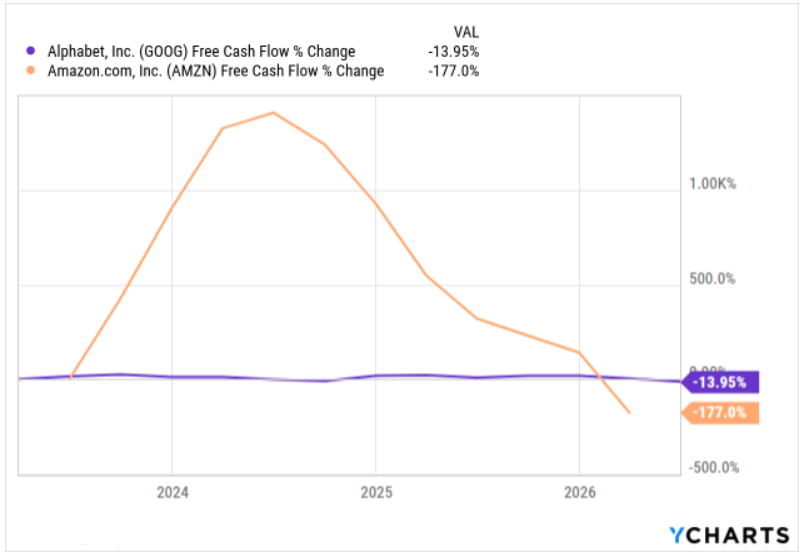
This is why the investors are more cautious. They want companies to show that their AI investments can produce stronger revenue and profits.
Meta dropped after revising its capital spending outlook. The company now expects to spend $130-$145 billion in 2026 as compared to the previous range of $125-$145 billion. The increase in the lower end indicates that Meta remains committed to the heavy AI investment.
But Microsoft gained after its cloud revenue growth exceeded the Wall Street estimates. The result showed that AI spending can generate returns when it leads to stronger demand for cloud services.
Other AI-related companies also reported weaker results. SK Hynix recorded the sixfold increase in quarterly profit. But the figure was still below the market expectations. Its shares dropped 10%. Vertiv also fell by over 15% after the quarterly revenue missed estimates.
The competition from China also adds another challenge as Chinese companies develop advanced chips and offer cheaper AI models. This could put pressure on pricing power of US technology companies. But the Fed Chair said that the AI investment was creating the foundation for future growth. This means that AI remains the important long term driver but its short term impact will depend on how quickly companies turn their spending into earnings.
Stock Market Sell-Off Signals Further Nasdaq Volatility
The sell-off in the US stock market was not limited to the Nasdaq. The S&P 500 dropped to 7,316 and hit the lowest level in a month. The Dow Jones Industrial Average dropped to 51,594. The eight of the eleven S&P 500 sectors finished lower. The industrial sector contributed the most to the drop with a 3.24% loss, followed by a 2.5% drop in information technology. These overall declines suggest that investors were cutting back across the stock market rather than selling out the AI stocks.
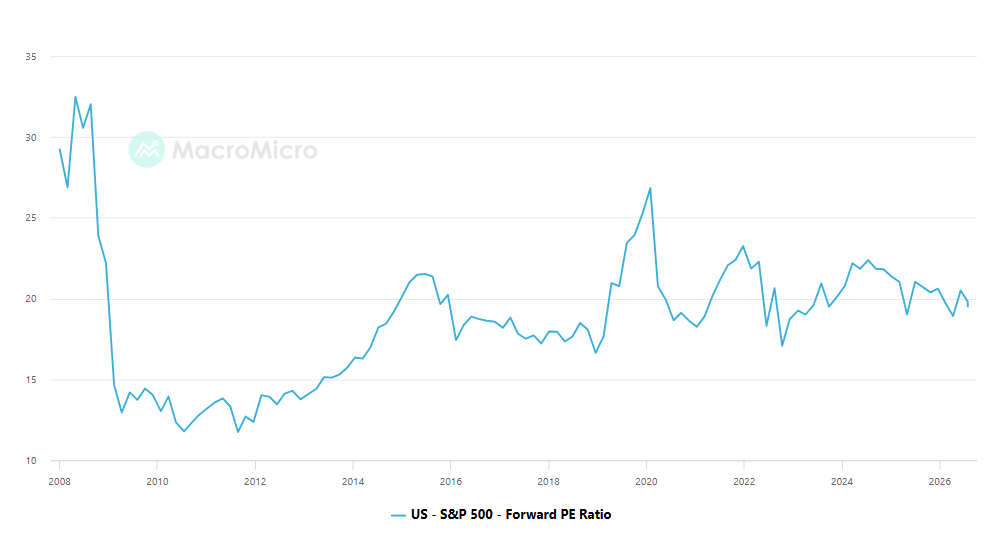
But the earnings outlook is still supportive. The S&P 500 earnings increased by 37.9% in Q2 2026. But the growth rate dropped to 25.9%. The index is currently trading at about 20 times forecast earnings slightly above its 10-year average of 19.
Ford Motor Company (F) gained after raising the profit forecast for the second time this year. This keeps the company on positive track. Visa Inc. (V) also increased after beating profit estimates while Lennox dropped after cutting its annual forecast. These results suggest that the strength of earnings has not disappeared but the index must overcome the Fed uncertainty and AI valuation concerns to begin the sustainable recovery.
Nasdaq Index Nears Key Support
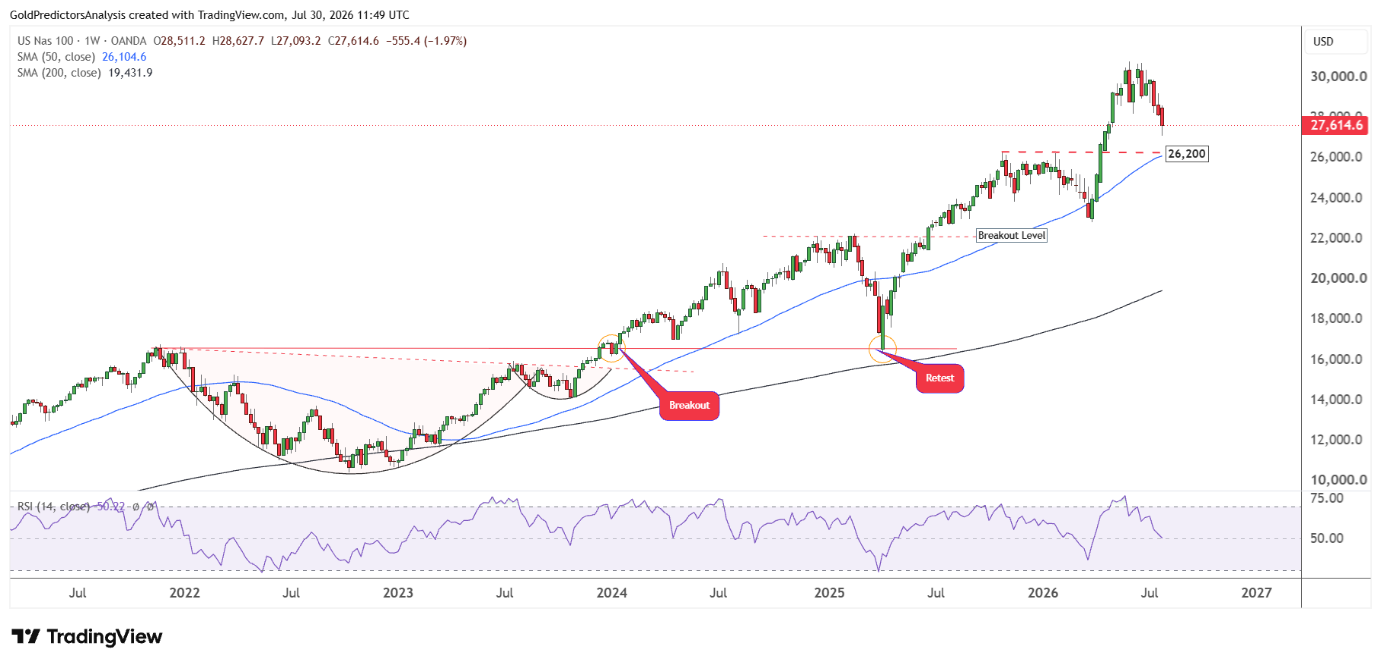
From a technical perspective, the Nasdaq Index initiated a strong correction in June 2026 after producing a high at 30,773. The index is now moving towards the primary support at 26,200. This support is also marked by the 200 SMA on the weekly chart.
As the index approaches this support, the RSI is approaching the midline which highlights the importance of this pivotal support zone. As long as the Nasdaq holds the 26,200 level, it will create another rally towards the 30,000 area. But a break below 26,200 will open the door for another drop towards the 23,000 level. The formation of a cup and handle pattern from 2021 to 2024 and strong signals at the April 2025 low indicate continued upward momentum in the setup after this correction.
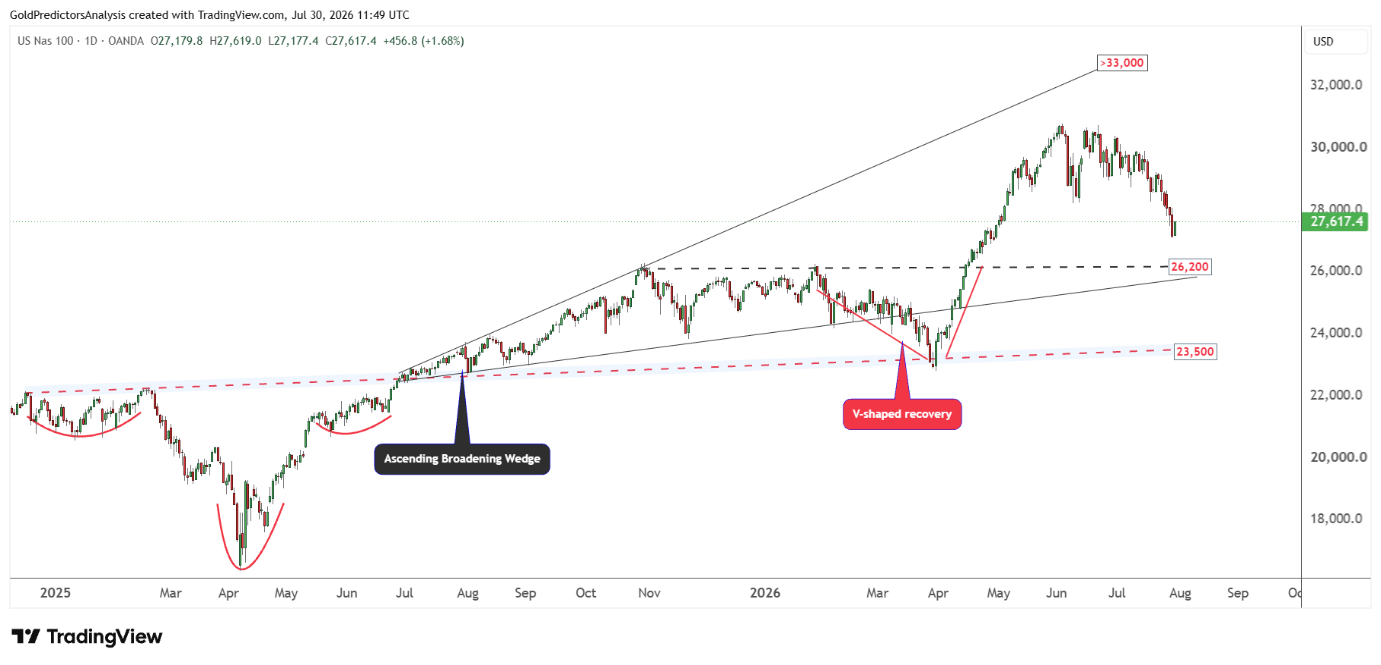
The same analysis is observed on the daily chart, which shows that the immediate support in the Nasdaq remains at 26,200. This support is also marked by the ascending broadening wedge pattern that extends from the July 2025 lows. However, a break below the 26,000 area will open the door for another drop towards the 23,500 level, which is the neckline of the inverted head and shoulders pattern that formed in April 2025. As long as the index remains above 23,500, its overall price structure remains strongly bullish.
Bottom Line
The Nasdaq Index remains under short term pressure as Fed uncertainty, higher Treasury yields and concerns about AI spending weigh on technology stocks. The strong earnings provide some support, but investors now want clear returns from large AI investments. The rising oil prices could also keep the possibility of another rate hike alive. These factors may keep the index volatile in the near term.
The 26,200 level will determine the next major move. A rebound from this support could push the Nasdaq back towards the 30,000 area. But a break below 26,200 could extend the correction towards 23,500. The broader trend remains bullish above 23,500 due to the formation of bullish structure. Therefore, the current decline may remain a correction within the long term bullish trend.