
Market Overview
WTI crude oil futures rose toward $64 per barrel as new geopolitical tensions added risk to energy markets. This increase came after security incidents along major shipping routes raised worries about possible supply disruptions in the Arabian Sea and the Strait of Hormuz.
Diplomatic efforts are ongoing, but markets responded with caution. The price increase was also supported by API data showing an 11.1 million-barrel drop in US crude inventories, the biggest decrease since June, though this still needs official confirmation.
OPEC+ has indicated that demand might pick up in March or April. A key decision on output policy is expected on March 1, so oil and natural gas forecasts remain sensitive to supply changes and geopolitical risks.

Natural Gas Price Forecast: $3.25 Consolidates as Rising Channel Faces Its First Test
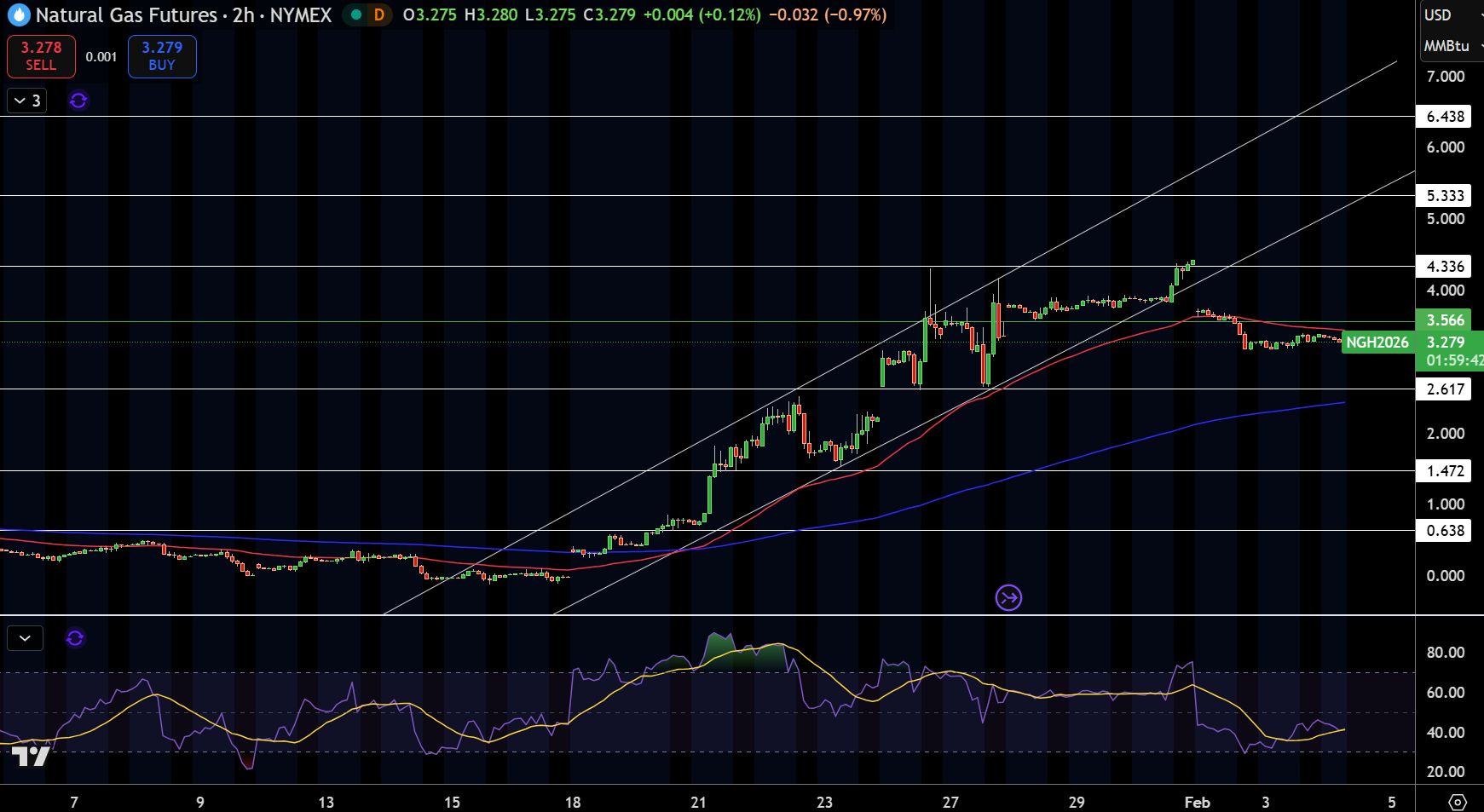
Natural gas futures are around $3.28, taking a break after a strong rally that brought prices close to the top of a rising channel. On the 2-hour chart, recent candles are smaller and overlap more, which suggests the market is consolidating instead of distributing.
The price is staying above the 50-EMA at about $3.20, and the 200-EMA near $2.60 is still moving up, which supports the overall uptrend. The recent pullback has been mild, holding above the channel support and the earlier breakout area near $3.10 to $3.15.
The RSI has dropped to around 45, showing that momentum has slowed but there is not much selling pressure. Resistance is near $3.55, and if momentum picks up again, the next resistance is closer to $4.30.
Trade idea: Consider buying on dips near $3.15, aiming for $3.55, but exit if the price falls below $3.00.
Natural Gas Price Forecast
Every new Natural Gas analysis as it publishes, today's technical signal and key levels, live price — on one page.
See all Natural Gas forecastsWTI Crude Oil Price Forecast: $63 Holds as Bulls Defend Trendline Support
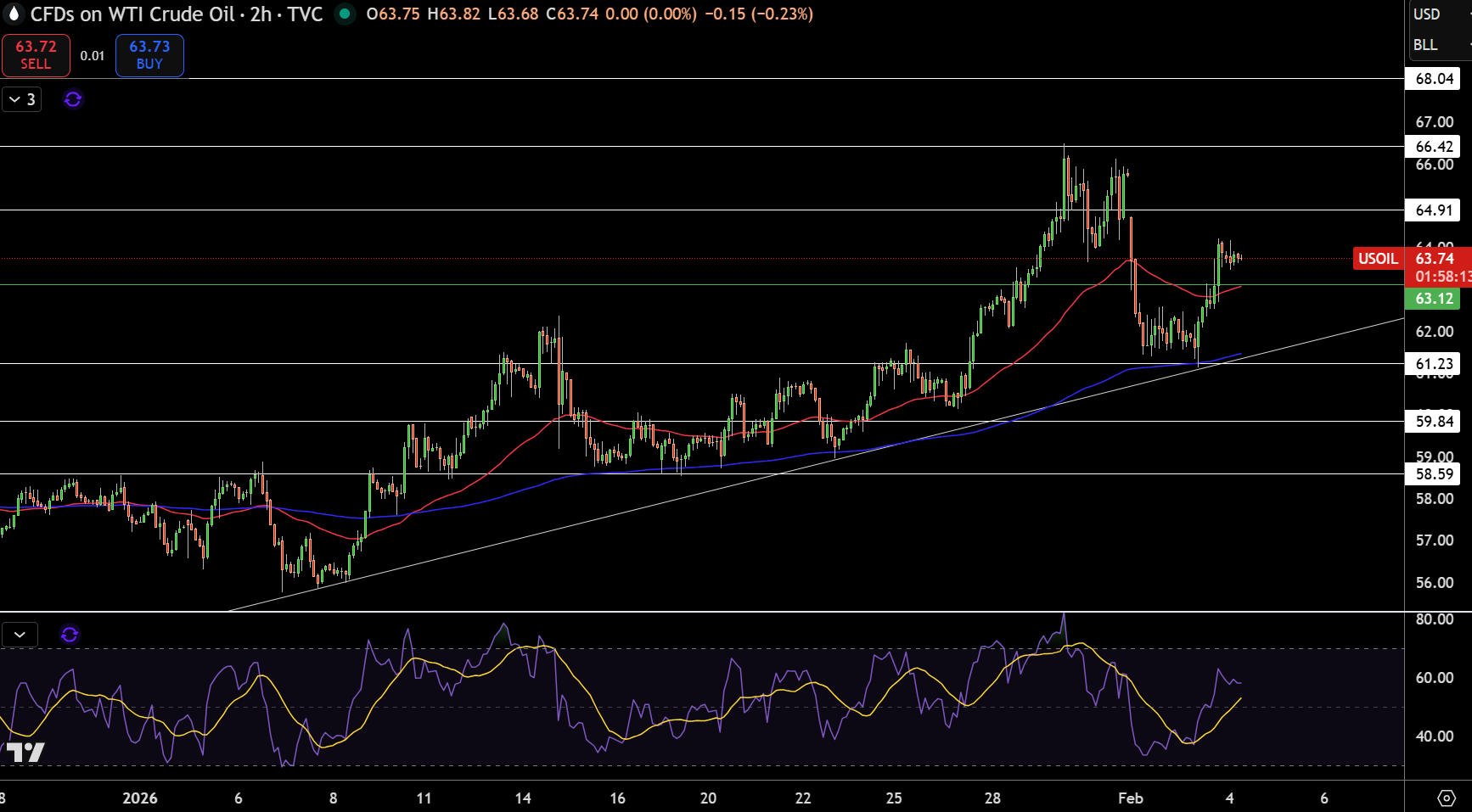
WTI crude is trading around $63.7, holding steady after a strong move up from below $60. The price is still above the rising trendline and the 200-EMA, so the overall trend remains positive.
However, the upward momentum has slowed after several attempts to break above the $66.4 resistance level. This suggests traders are taking profits instead of selling aggressively.
The 50-EMA is flattening and now provides short-term support near $63.1. If prices pull back further, they could test $61.2, but the main trend would still be intact. The RSI has dropped from overbought levels and is steady near 55, which shows the market is balanced rather than weak.
Trade idea: As long as prices stay above $62 to $63, any dips are likely just short-term corrections. If the price moves above $66.4, it could rise toward $68.
Brent Crude Oil Price Forecast: $67.70 Holds—Is the Pullback Setting Up Another Leg Higher?
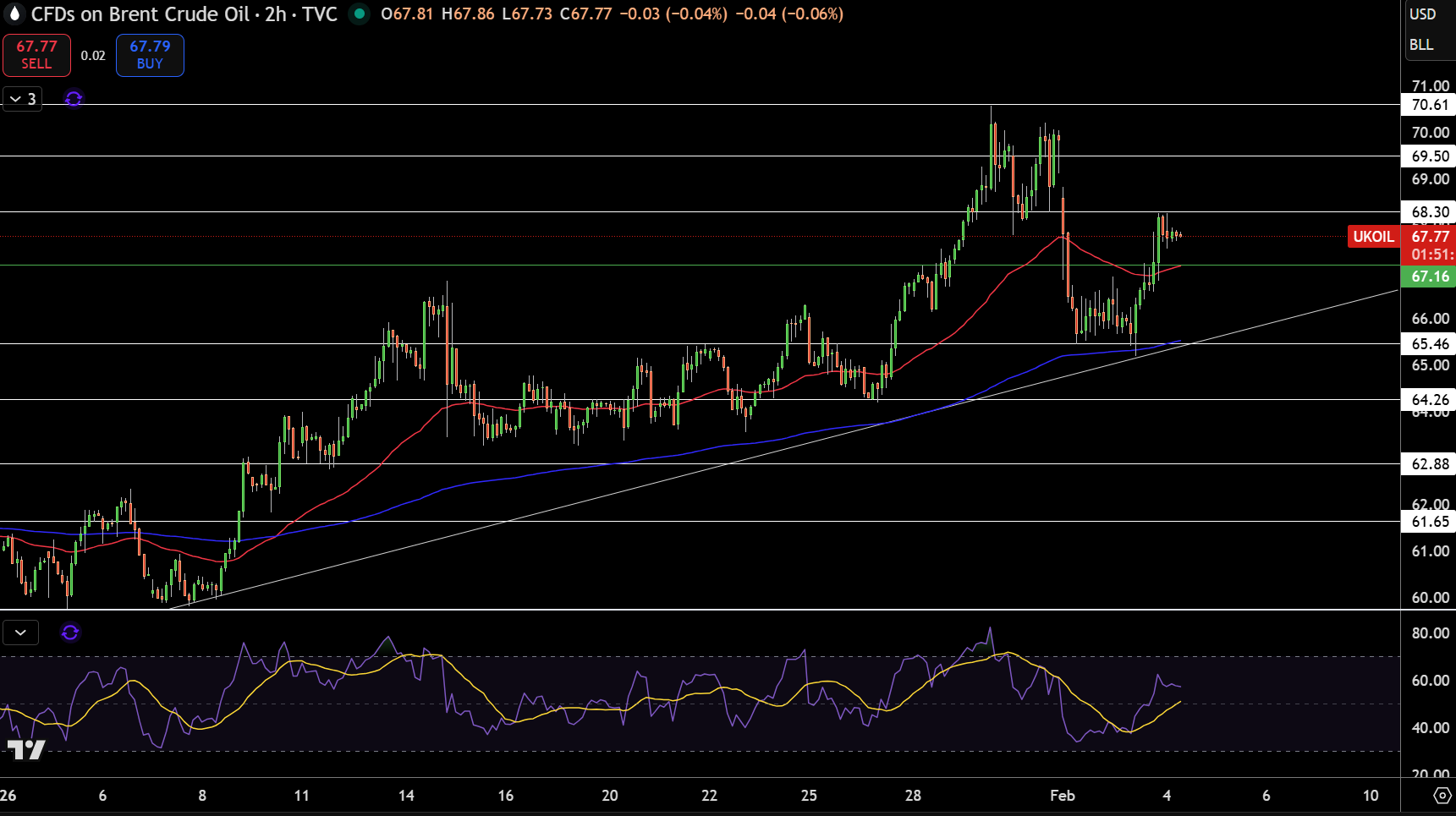
Brent crude is trading around $67.70 and has stabilized after being pushed back from the $70.60 high. On the 2-hour chart, recent candles have long lower wicks near $67.00, which suggests buyers are stepping in on dips instead of strong selling pressure.
The price is still above the rising trendline and the 200-EMA near $65.50, which keeps the overall outlook positive. The recent pullback has come close to the 38.2% Fibonacci level, an area where buyers often step in during uptrends.
The previous resistance at $68.30 is now acting as short-term resistance, while the $66.00 to $65.50 area is important support. The RSI has bounced from around 40, which shows that downward momentum is slowing, but not reversing.
Trade idea: Consider buying near $66.50 with a target of $69.50. The idea is invalid if the price falls below $65.30.