Sellers Have Pipeline Supply and Cooler Weather Working
Natural gas is lower Wednesday because the two things bulls needed this week both went the wrong way. More Permian gas is getting a pipeline to Henry Hub by September 1, and the Midwest and Northeast just lost the heat that was supposed to tighten the summer balance. The nearby contract cannot hold a bounce when the supply side keeps getting heavier and the demand side is cooling off.
February is trading more than a dollar above September at $3.717. That spread is not calling a shortage. It is pricing the risk of winter freeze-offs and regional pipeline bottlenecks that can produce violent moves even when total supply is ample. The summer trade and the winter trade are telling two different stories right now.
September natural gas futures are trading $2.675, down $0.007 or 0.26% at 12:39 GMT.

Daily September Natural Gas Futures Technical Analysis
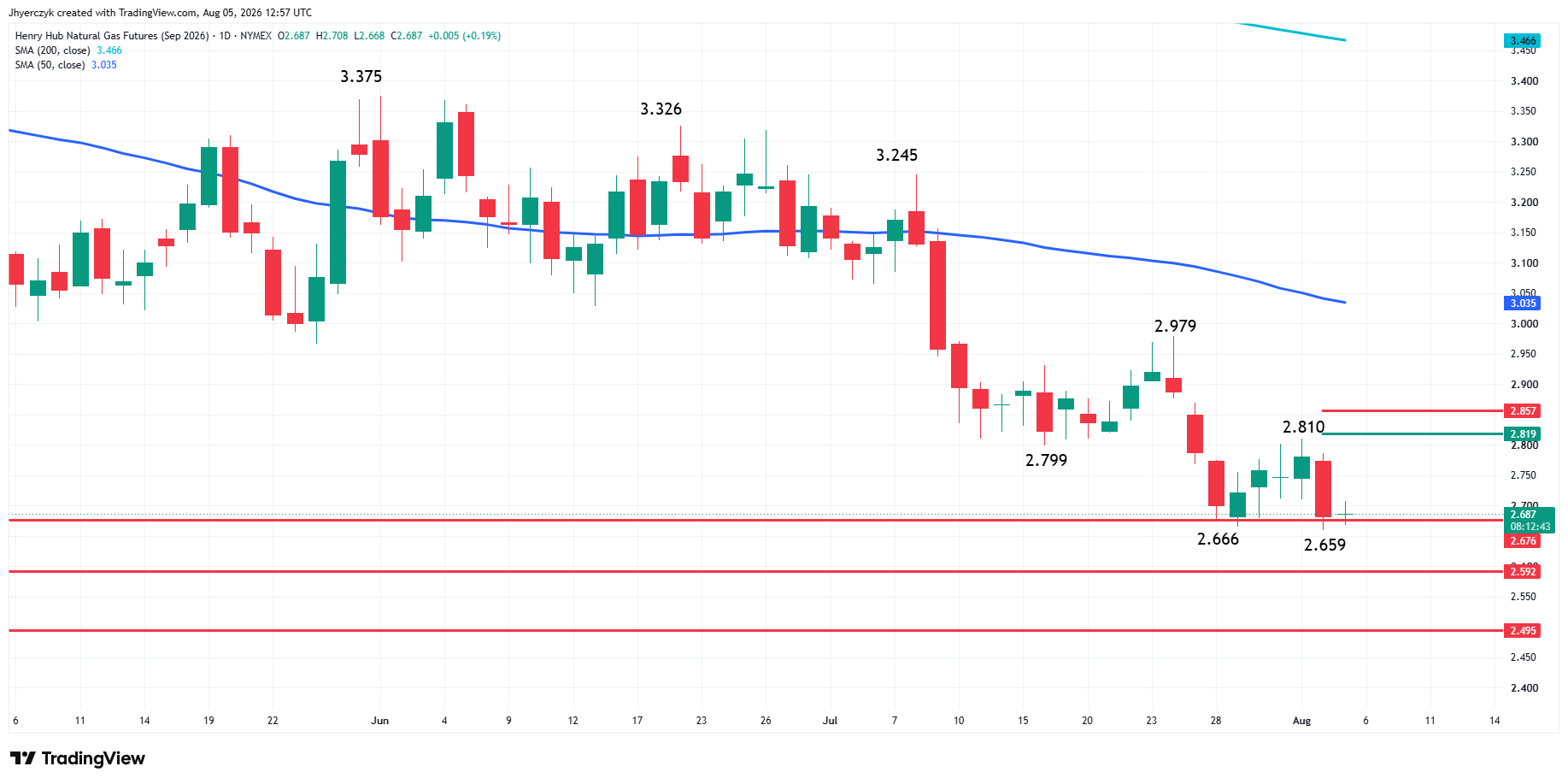
September natural gas futures are in a downtrend. The trend was reaffirmed on Tuesday when sellers took out the July 29 main bottom at $2.666. The new multi-month low is $2.659. The next key support level is $2.592.
The main range is $2.979 to $2.659. Its retracement zone is resistance at $2.819 to $2.857.
Hugh Brinson Pipeline Adds Supply at the Wrong Time
Energy Transfer said the Hugh Brinson pipeline will reach its full 1.5 Bcf per day capacity by September 1. That gives Permian producers a bigger outlet to Henry Hub in Erath, Louisiana, and the timing could not be worse for anyone looking for a tighter market.
Lower-48 production was 111.2 Bcf per day Tuesday, up 2.2% from a year ago. The rig count held at 127 last week, below February’s high of 134 but still enough to keep output elevated. Nobody is shutting in production. The pipeline gives them more room to sell it, and it arrives while storage is comfortable and power demand is easing.
Natural Gas Price Forecast
Every new Natural Gas analysis as it publishes, today's technical signal and key levels, live price — on one page.
See all Natural Gas forecastsMidwest and Northeast Lost the Heat
Commodity Weather Group shifted cooler Tuesday and now expects below-average temperatures in the Midwest and Northeast through August 18. That is the forecast change that matters. Texas and the West can stay hot but the market needs sustained heat across the population centers in the Midwest and Northeast to create the kind of cooling demand that changes storage math. When those regions cool down, gas-fired power demand drops fast.
Cash prices reflected it Tuesday. Texas, the Gulf Coast and parts of the Midwest weakened. Appalachia held up better but one stronger regional market cannot offset broad losses across the areas that set the daily tone.
The September contract does not need a cold forecast to keep falling. It just needs the current heat to keep missing the East while supply builds.
LNG Feedgas Is Steady but Not Enough
Feedgas hit 18.2 Bcf per day Tuesday, up slightly from the prior week. That keeps the bearish case from becoming completely one-sided. European storage at 57% full as of August 1, well below the five-year average of 74%, keeps the bid under U.S. exports heading into winter.
But feedgas is steady, not surging. It is running below the spring peak and it is not pulling enough supply out of the domestic market to offset new pipeline capacity, rising production and a cooler weather outlook. LNG is the floor. It is not the trigger for a rally.
Storage Surplus Has Not Gone Away
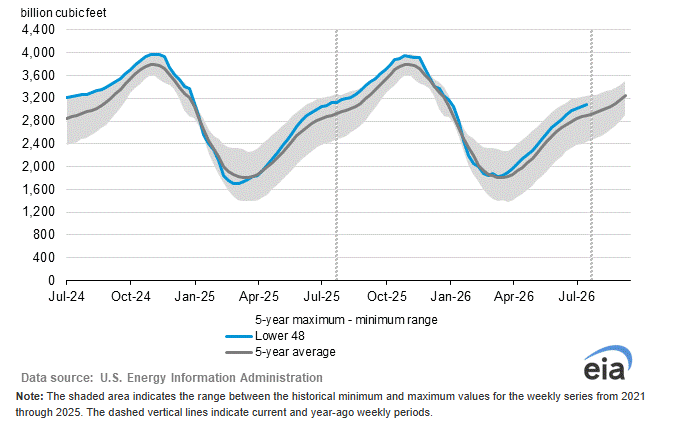
Last week’s EIA report showed a 28 Bcf build, below the 37 Bcf estimate but still above the five-year average increase of 26 Bcf. Working gas inventories are running 6.4% above the five-year seasonal average. One tighter build forced shorts to cover. It did not erase the surplus.
The next storage report is the immediate test. A build above the seasonal norm paired with cooler Eastern forecasts tells sellers the surplus is still growing. A tighter number gives buyers a reason to push back, but the market needs several of them in a row before the balance actually shifts.
What to Watch
The summer balance favors sellers and nothing from this week has changed that. More Permian supply heading to Henry Hub, production above 111 Bcf per day and cooler forecasts across the Midwest and Northeast is a combination that keeps rallies short. LNG feedgas near 18 Bcf per day is the one number holding the floor.
Thursday’s EIA storage report is the next catalyst. Another build above the five-year average with the East cooling off tells sellers the surplus is still widening. The February spread says winter is a different story, but September is not trading winter yet.
Buyers need hotter Eastern forecasts, rising feedgas and a tight storage print. Sellers have the pipeline schedule, the weather shift and inventories still building above the five-year average.
The downtrend was confirmed when the July low broke and rallies are likely to get sold into resistance until something on the demand side changes.
More Information in our Economic Calendar.