The U.S. interest rate outlook has turned more hawkish after the Federal Reserve raised the interest rate by 25 basis points in September. The new target range is 3.75%-4.00%. This was the first increase since July 2023. The median projection by the Fed now places the rate midpoint at 4.1% at the end of 2026. This is above the current midpoint of 3.875%. These projections imply one more quarter-point increase if inflation and growth remain strong. The effect is already spreading through Treasury yields, the U.S. dollar and global monetary policy.

Fed Interest Rate Forecast 2026: One More Hike Remains Likely
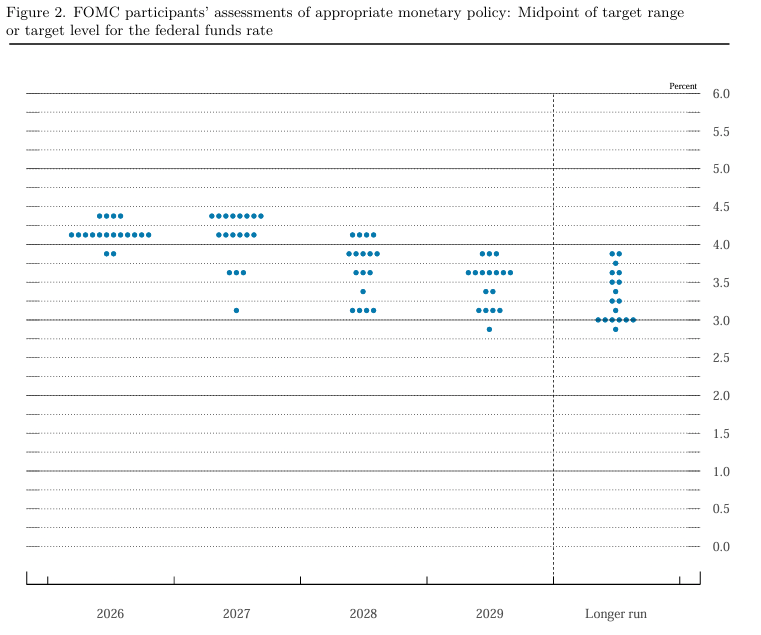
Fed Dot Plot Signals Another Rate Hike in 2026
The interest rate decision by the Fed in September received a unanimous 12-0 vote. 12 officials out of 18 saw the rate ending 2026 at 4.125%.
The four officials expected the interest rate to reach 4.375%. The remaining two believed that no further increase was needed but the Fed Chair Kevin Warsh made no firm commitment. He said that the next decision would depend on the incoming data. In my view, one more hike now looks likely but it is not guaranteed.
Inflation and Strong Demand Keep October and December in Focus
The main reason for the Fed to remain cautious is inflation. The chart below shows that the headline CPI rose 0.4% in August and 3.4% year on year. The core CPI rose 0.3% for the month and 2.4% year on year.
EUR/USD Price Forecast
Every new EUR/USD analysis as it publishes, today's technical signal and key levels, live price — on one page.
See all EUR/USD forecasts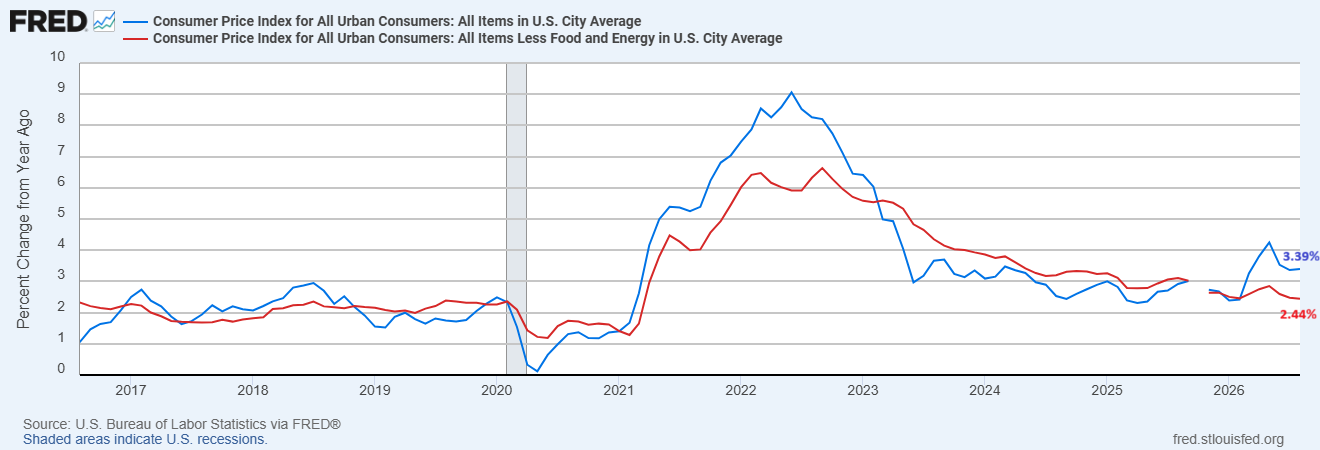
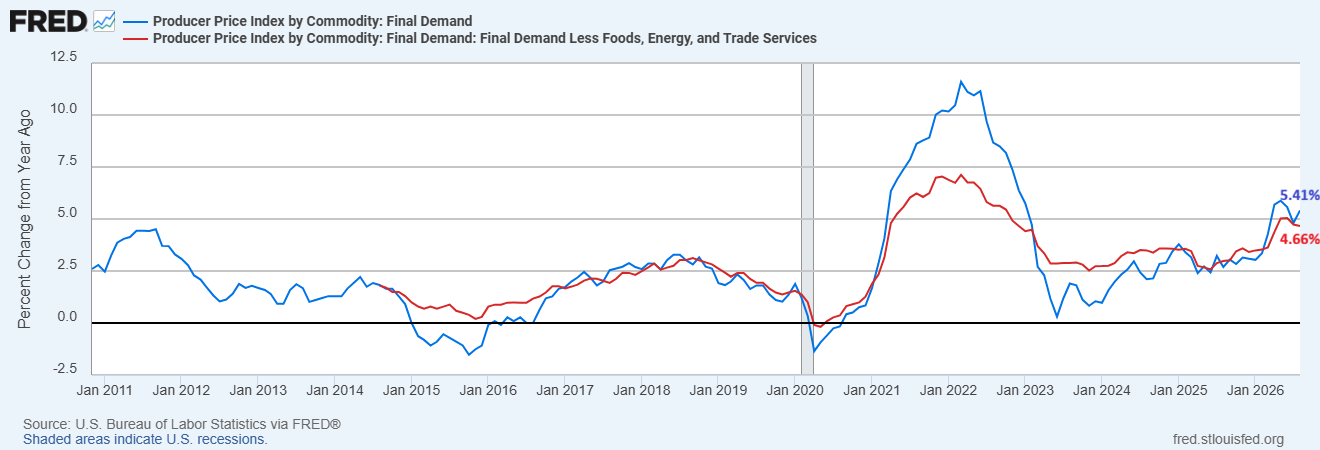
The producer prices were more worrying. The PPI increased 5.41% from a year earlier while the measure excluding food, energy and trade services increased 4.66%. Energy prices also remain a risk. The energy component of CPI increased 16.3% annually while diesel prices jumped 24.1% in the PPI report of August. These pressures could spread into transport, goods and services.
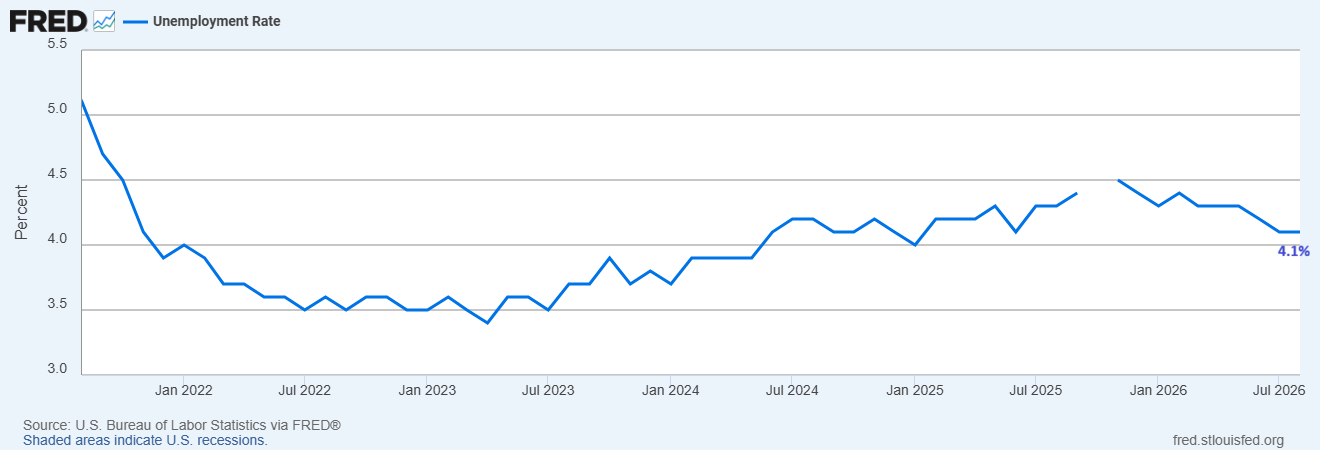
The economy still gives the Fed more room to tighten. Nonfarm payrolls increased by 162,000 in August. Unemployment remained at 4.1% while average hourly earnings increased 3.1% from a year earlier.
The second-quarter GDP grew at slower annual rate of 1.5%. But the real final sales to private domestic purchasers rose at annualized rate of 4.2%. In my view, another 25 basis point hike remains possible before the end of the year but the timing is uncertain. The Fed could act in October or December, depending on incoming inflation and economic data. A sustained decline in oil and inflation could delay the hike. A fresh rise in prices could bring it forward.
Global Interest Rate Outlook: Higher for Longer Replaces Rate Cuts
Treasury Yields Near 5% Raise Global Borrowing Costs
The bond market is already pricing in higher-for-longer interest rate outlook. The two-year Treasury yield ended at 4.75% while the 10-year yield reached 5.00%. The 10-year real yield was also high at 2.61% while the 10-year inflation breakeven stood near 2.33%.
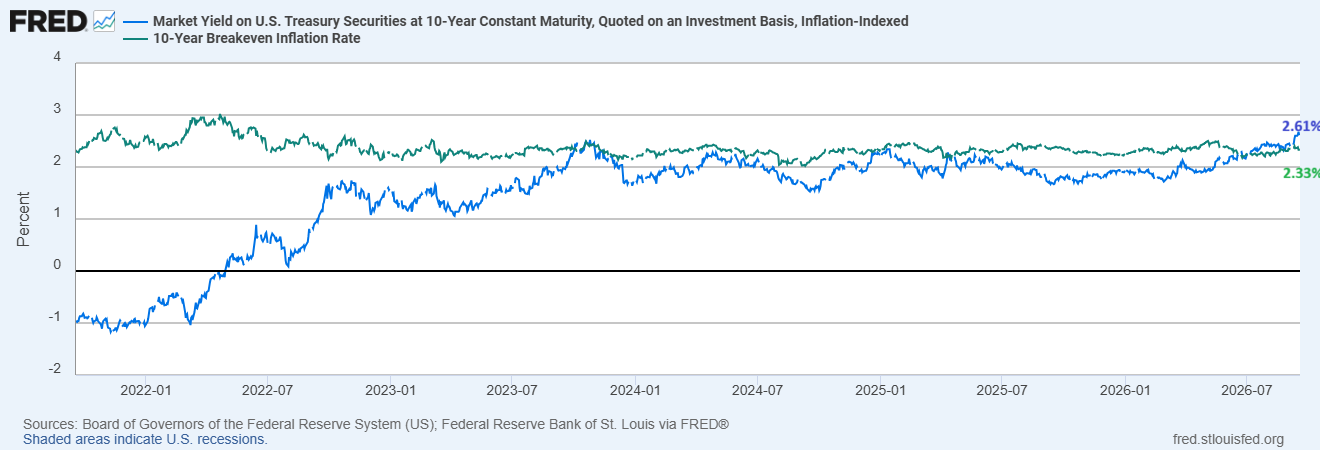
Therefore, the rise in nominal yields reflects high real returns and persistent inflation concerns. These yields attract capital to the United States. They also raise borrowing costs elsewhere and reduce the appeal of expensive equity valuations.
ECB and BoE Rate Outlook: Inflation Delays Policy Easing
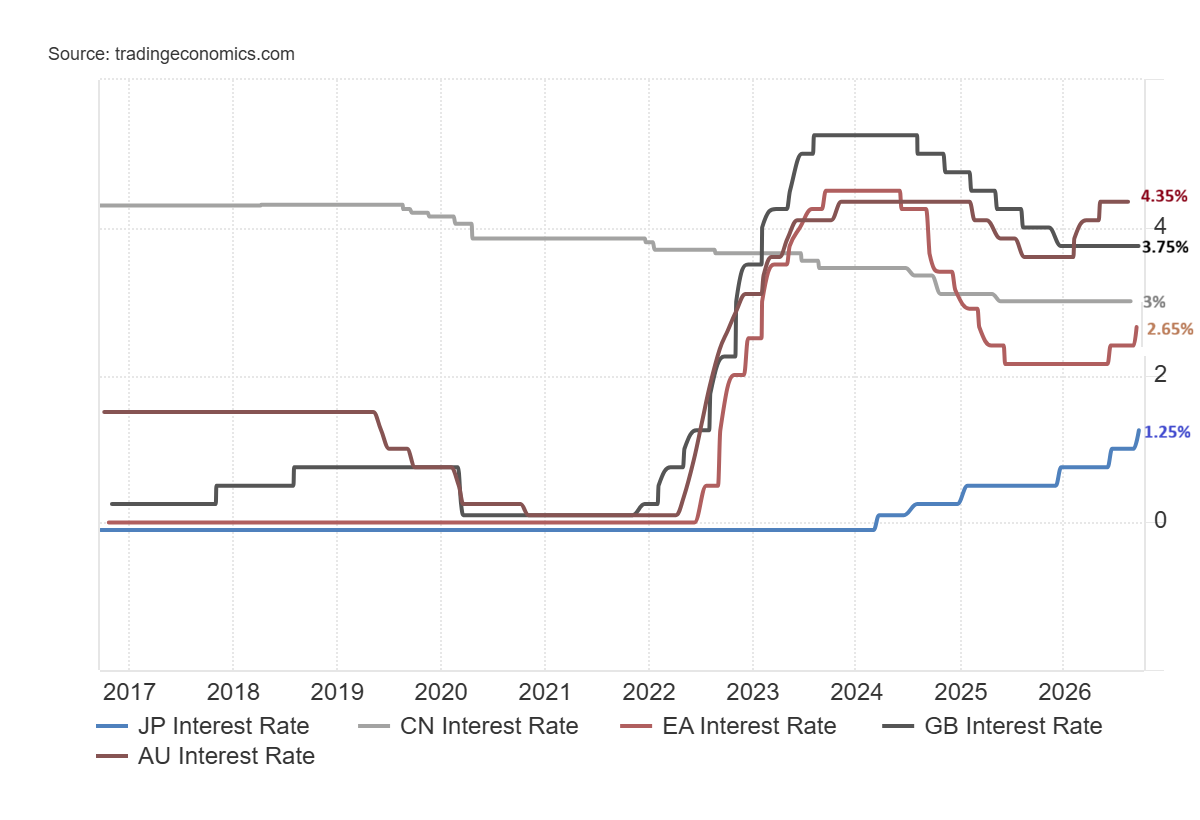
Other central banks of the developed nations also face inflation pressure. The ECB raised the deposit rate to 2.50% and the refinancing rate to 2.65%. It expects inflation of 3.0% in 2026 but growth of only 0.9%. The BoE took a different approach. It held the interest rate at 3.75% by 6-3 vote. The three dissenters wanted an increase to 4.00%.
UK inflation was 3.1% in August and the bank warned that another energy shock could push the inflation above 4% in early 2027. These figures explain why both banks are cautious despite the weaker growth.
BoJ Hikes Rates as China Holds Policy Steady
Asia presents more divided picture. The Bank of Japan raised the overnight rate to 1.25% on September 18 as energy prices, wages and yen weakness increased the risk of inflation. Australia has held the rate at 4.35% after several increases in 2026.
China has kept the one-year loan prime rate at 3.00% while consumer inflation was only 0.8% in August. This is selective global tightening phase rather than synchronized hiking cycle. A stronger dollar will limit how quickly many countries can cut rates because weaker currencies raise the costs of imports and energy.
US Dollar Index Forecast: Fed Hike Keeps DXY Above 100
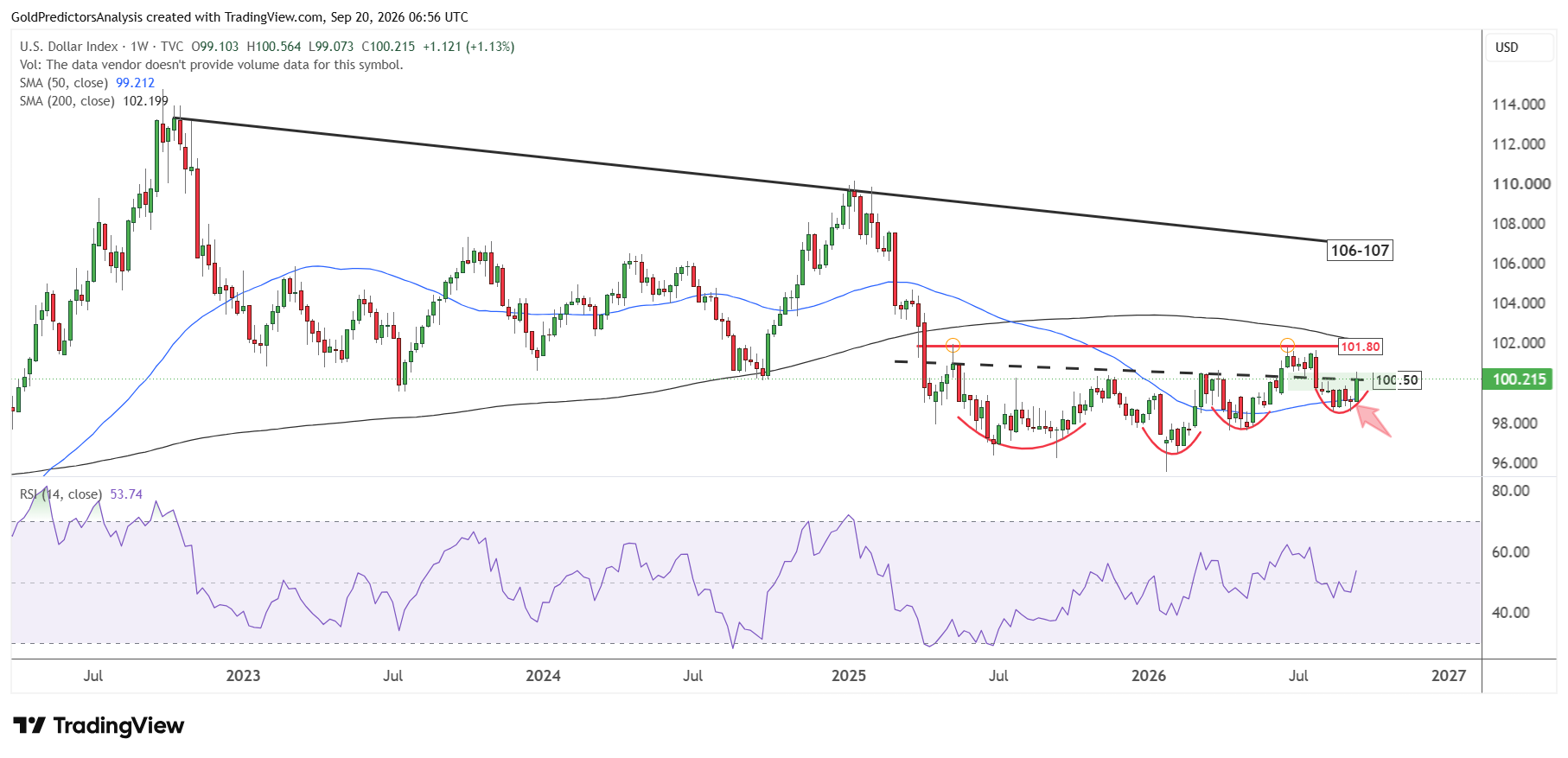
The U.S. dollar index closed near 100.21 on September 18 after touching seven-week high around 100.56. The index gained over 1% during the week. The dollar is receiving support from strong U.S. growth, Treasury yields near 5% and demand from safe havens.
The dollar outlook in the short term remains positive while the index holds above 100. A move above 100.50 could open the way toward 101.80. The dollar could extend its gains if the two-year Treasury yield stays above 4.50% and another Fed hike becomes more certain.
The main risk remains the quick drop in oil and inflation. It could reduce expectations for another rate increase and pull Treasury yields lower. A drop below 99.50 would indicate that the post-Fed dollar rally is losing momentum.
From a technical perspective, the U.S. dollar index produced a strong rebound from the 50-week SMA and gained nearly 1% to close last week at 100.20. If the U.S. dollar index remains strong, it will likely face strong resistance near 101.80.
A confirmed break above 101.80 will open the way for strong rally toward the 106-107 range. The resistance at 106-107 is defined by the descending trend line that stretches from the September 2022 high. The RSI has recovered above the midline, which suggests a positive trend in the short term.
EUR/USD Forecast: Fed Outlook Puts 1.1360 Support in Focus
EUR/USD closed near 1.1485 on September 18. The U.S. 10-year yield was close to 5.00% compared with around 3.52% for Germany’s 10-year yield.
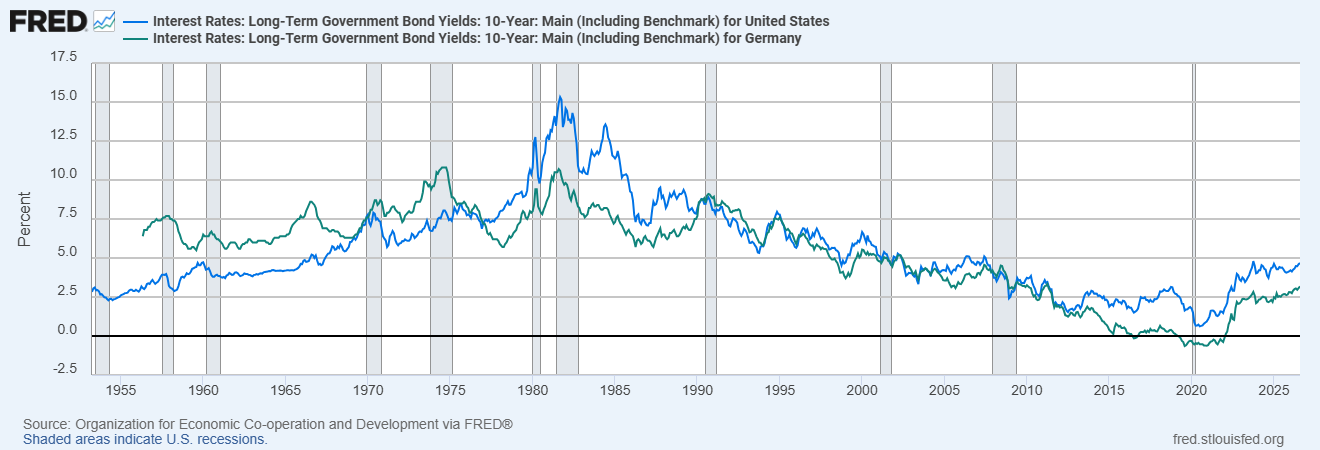
The Fed and ECB both raised rates by 25 basis points, so the current gap in their policy rate did not widen. But the Fed midpoint remains above the ECB deposit rate.
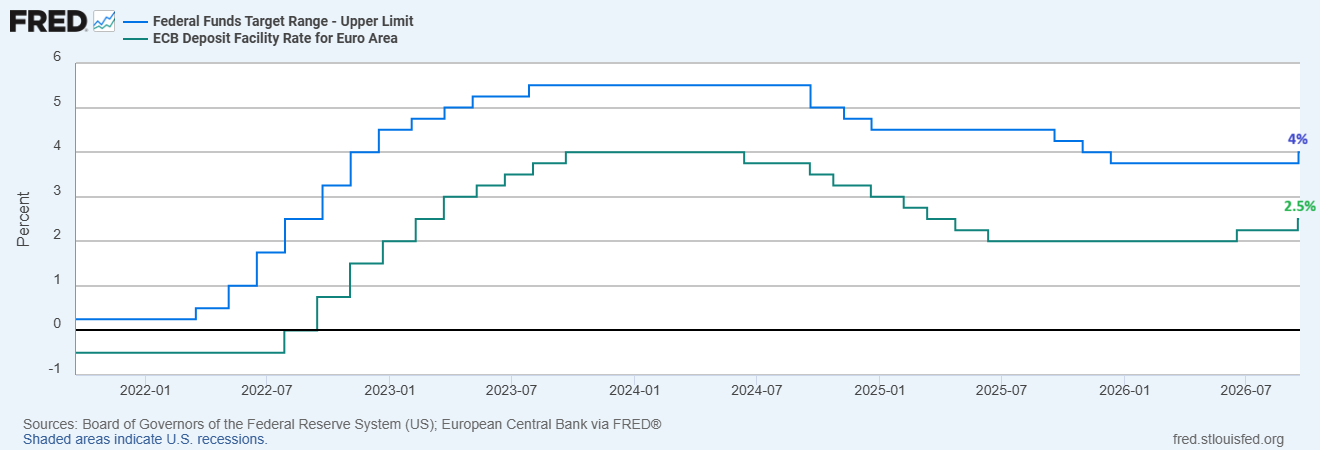
This gives U.S. debt a yield advantage of about 148 basis points. The spread supports the dollar and keeps EUR/USD near the important support area of 1.1435-1.1450.
The euro still has some support as the ECB has also tightened policy. EUR/USD could rebound to 1.1630-1.1650 if the pair maintains the 1.1360 level and U.S. yields begin to fall. Europe faces difficult energy and growth trade-off. Persistent oil and gas costs could weaken economic activity even if ECB keeps rates high.
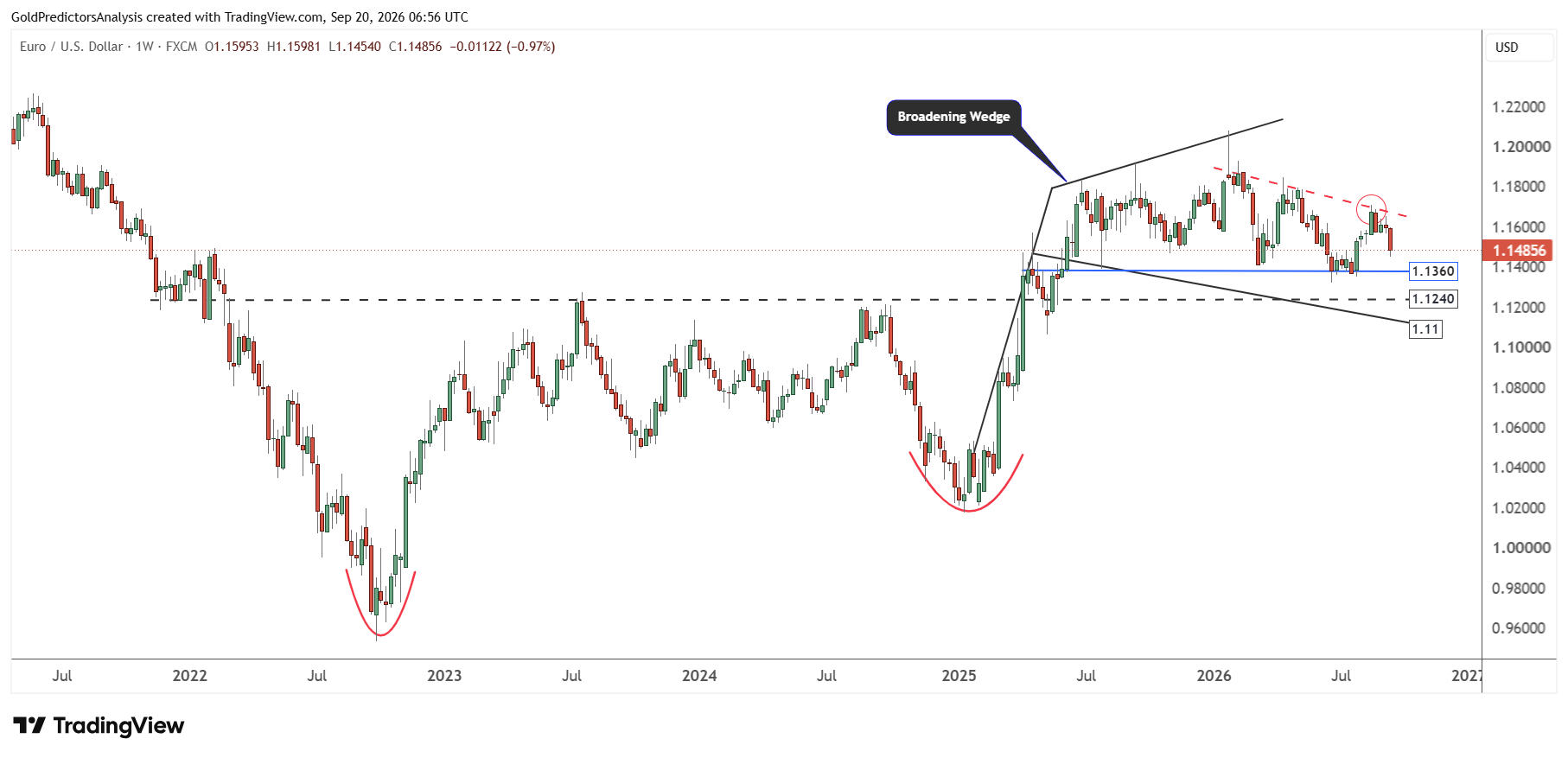
From the technical perspective, EUR/USD faced strong resistance at the descending trend line near 1.1685. This descending trend line stretches from January 2026. The strong rally in the U.S. dollar index caused a sharp drop in EUR/USD last week.
The immediate support now remains at 1.1360, which is defined by the horizontal support line. A break below 1.1360 may push EUR/USD toward 1.1240. But a break below 1.1240 will push the pair toward 1.11. This is the support level for EUR/USD in the long term.
The next move in EUR/USD will likely depend on a breakout above 100.50 in the U.S. dollar index. If the U.S. dollar index continues to rally toward 101.80, it will likely put pressure on EUR/USD in the short term and push it toward the 1.1360 and 1.1240 levels.
What to Watch Next
The interest rate outlook now favors one more hike by the Fed in 2026. The higher inflation keeps energy costs high and strong demand gives the Fed room to act. In my view, any further increase will depend on inflation and economic data. Both October and December remain possible while cooling inflation could reduce the need for another hike by the Fed. Treasury yields may remain high while Fed waits for clearer data.
This outlook may continue to support the U.S. dollar and limit the recovery in EUR/USD. A break above 100.50 in the U.S. dollar index could push the index to 101.80. This move may send EUR/USD toward 1.1360 or 1.1240. But the drop in U.S. yields could weaken the dollar and support a recovery in EUR/USD. The broader outlook for the pair remains positive while the price holds above the long term support at 1.11.
Read more: Will a 1.25% Hike Push USD/JPY Toward 150?