



Natural Gas Weekly Recap: Will Colder Weather and Supply Risks Spark a Rally?
U.S. natural gas futures climbed 8.71% last week, closing at $3.309, as traders assessed supply risks, shifting weather forecasts, and global trade tensions. Despite the gain, the market remained within the prior week’s range, signaling uncertainty and potential volatility ahead.

Will Colder Weather Arrive in Time to Boost Demand?
Early February started with a mild forecast across the southern two-thirds of the U.S., while colder conditions were confined to the northern tier. This limited overall heating demand, preventing a stronger rally in natural gas prices.
While some colder trends emerged in updated models, they weren’t aggressive enough to push prices through resistance. Traders are watching next week’s forecast closely—if the colder push extends deeper into the Midwest and East, heating demand could surge, supporting a bullish case. However, if mild weather persists, the upside potential remains capped.
EIA Storage Deficit: Tight Enough to Matter?
The latest EIA storage report showed a 174 Bcf draw, bringing total working gas to 2,397 Bcf—which is 208 Bcf lower than last year and 111 Bcf below the five-year average.
This suggests a tightening supply picture, particularly in the Midwest and South Central regions, where the largest drawdowns occurred. Salt storage in the South Central region saw an outsized 12 Bcf decline, raising concerns about near-term supply volatility.
Natural Gas Price Forecast
Every new Natural Gas analysis as it publishes, today's technical signal and key levels, live price — on one page.
See all Natural Gas forecastsFor a bullish breakout, storage draws must accelerate beyond seasonal norms, signaling a real supply strain. However, if withdrawals stay in line with expectations, the market may struggle to sustain higher prices.
China’s Tariffs: Will U.S. LNG Exports Take a Hit?
China announced a 15% tariff on U.S. LNG, effective February 10, in response to new U.S. trade measures.
While this doesn’t directly impact domestic prices, it raises long-term concerns about U.S. LNG export demand. If China cuts back on U.S. LNG purchases, global supply could build up, keeping prices in check.
To counteract this bearish risk, U.S. LNG demand from Europe and other Asian buyers would need to increase. If mild weather continues in key importing regions, we could see additional downward pressure on prices.
Market Forecast: Bullish or Bearish Next Week?
Bullish Scenario:
- Colder trends must strengthen and extend into key demand regions, particularly the Midwest and Northeast.
- Storage withdrawals need to accelerate beyond seasonal averages, signaling real supply concerns.
- LNG demand from Europe and Asia must offset any weakness from China’s tariffs.
Bearish Scenario:
- Weather models trend warmer, keeping heating demand below expectations.
- Storage draws remain in line with or below seasonal norms, reducing supply concerns.
- Global LNG markets remain oversupplied, limiting U.S. export growth.
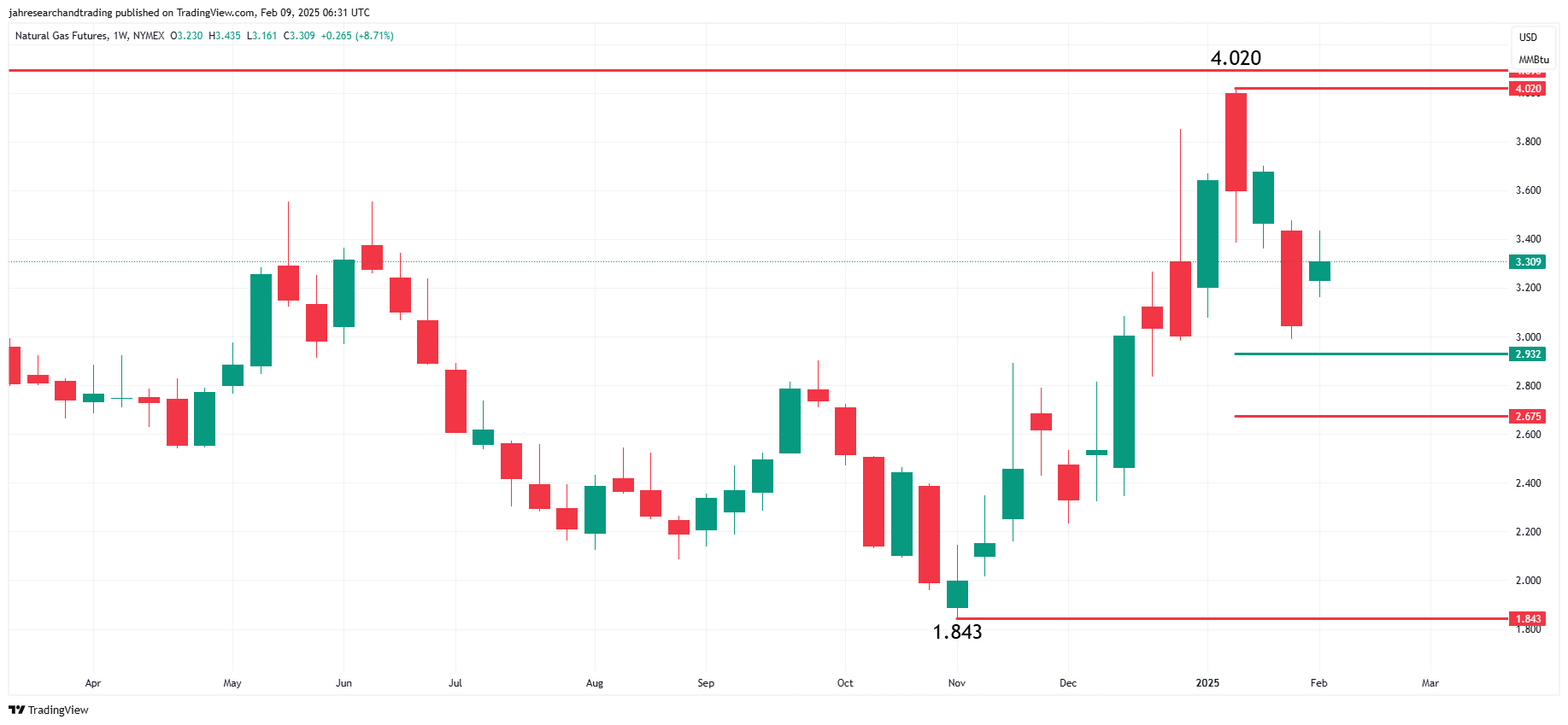
With resistance at $3.505 still unbroken, the market remains in a consolidation phase. A decisive break above $3.505 could open the door to $4.020, while a failure to rally could send prices back toward $2.932 support.
For now, the fundamentals lean slightly bearish, but next week’s weather shift holds the key. If forecasts trend colder, bulls could finally gain control—otherwise, the risk of a retest of lower support levels increases.
More Information in our Economic Calendar.


