Breakdown Extends, but Momentum Lags
Natural gas dropped to a 22-day low of $2.80 on Tuesday, triggering a continuation of the very short-term decline below $2.85. This raises the risk that the trend low of $2.78 from late February may be broken to the downside. Nonetheless, bearish momentum following the new breakdown signal was muted, with little downside follow-through.
Confirmation of the trend continuation signal occurs on a daily close below the prior $2.85. However, at the time of writing, trading remains above that level, and therefore the close may hold above it as well. This hesitation early in the move reflects a market that is weakening structurally but not yet accelerating to the downside.

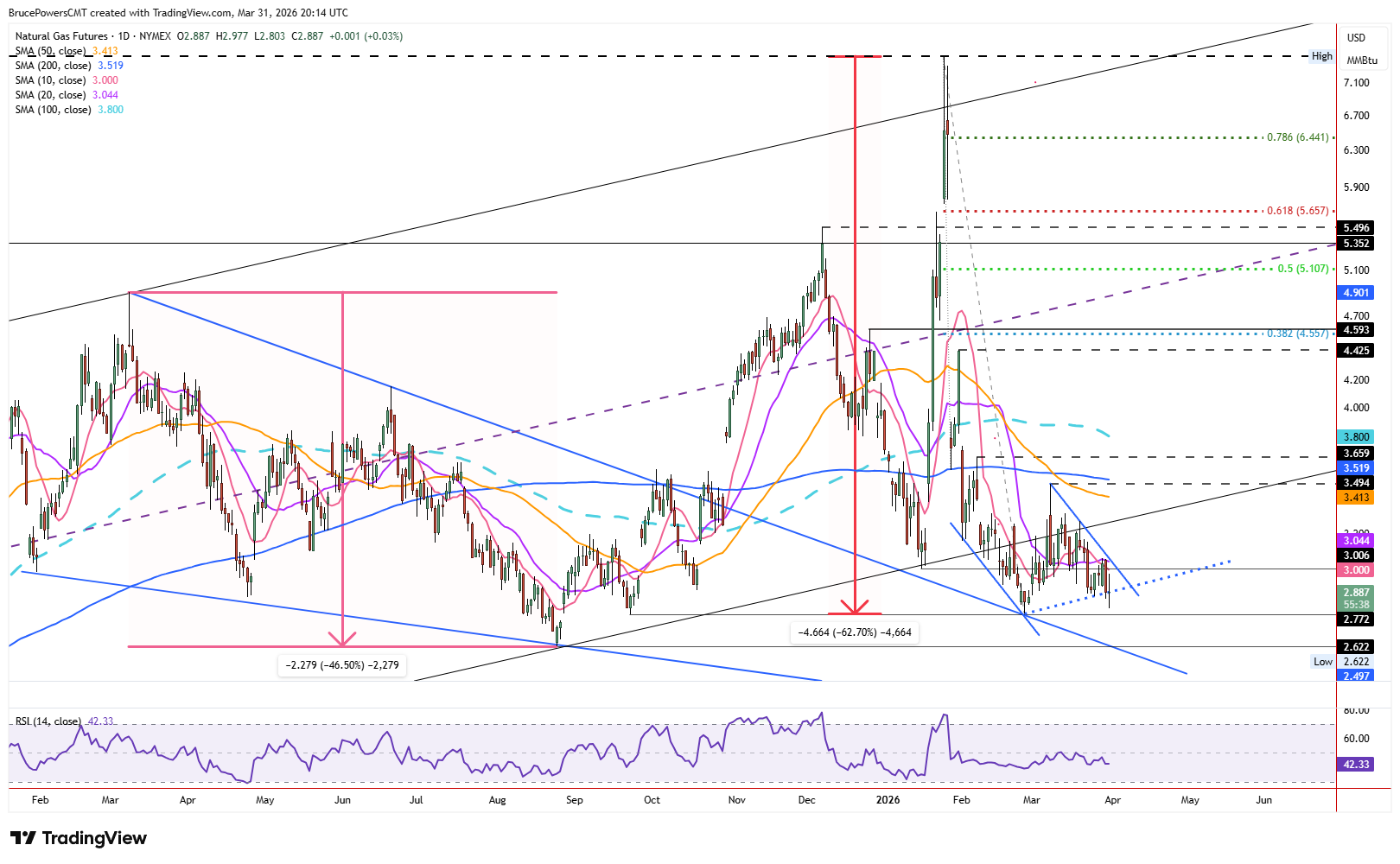
Key Support Levels and Downside Targets
A decisive decline below today’s low would signal a bearish continuation of the short-term decline, while a drop below $2.78 would confirm a continuation of the larger decline that began following the January peak of $7.44. Despite the potential for further downside thereafter, the first lower target zone is marked by the higher swing low and monthly low from August at $2.62. Depending on when that level is reached, there may also be support indicated by a long-term downtrend line in the same vicinity. That trendline previously represented the top boundary of a large falling bullish wedge that triggered to the upside in late-October, thereby reinforcing the importance of that price area as potential support on a retest.
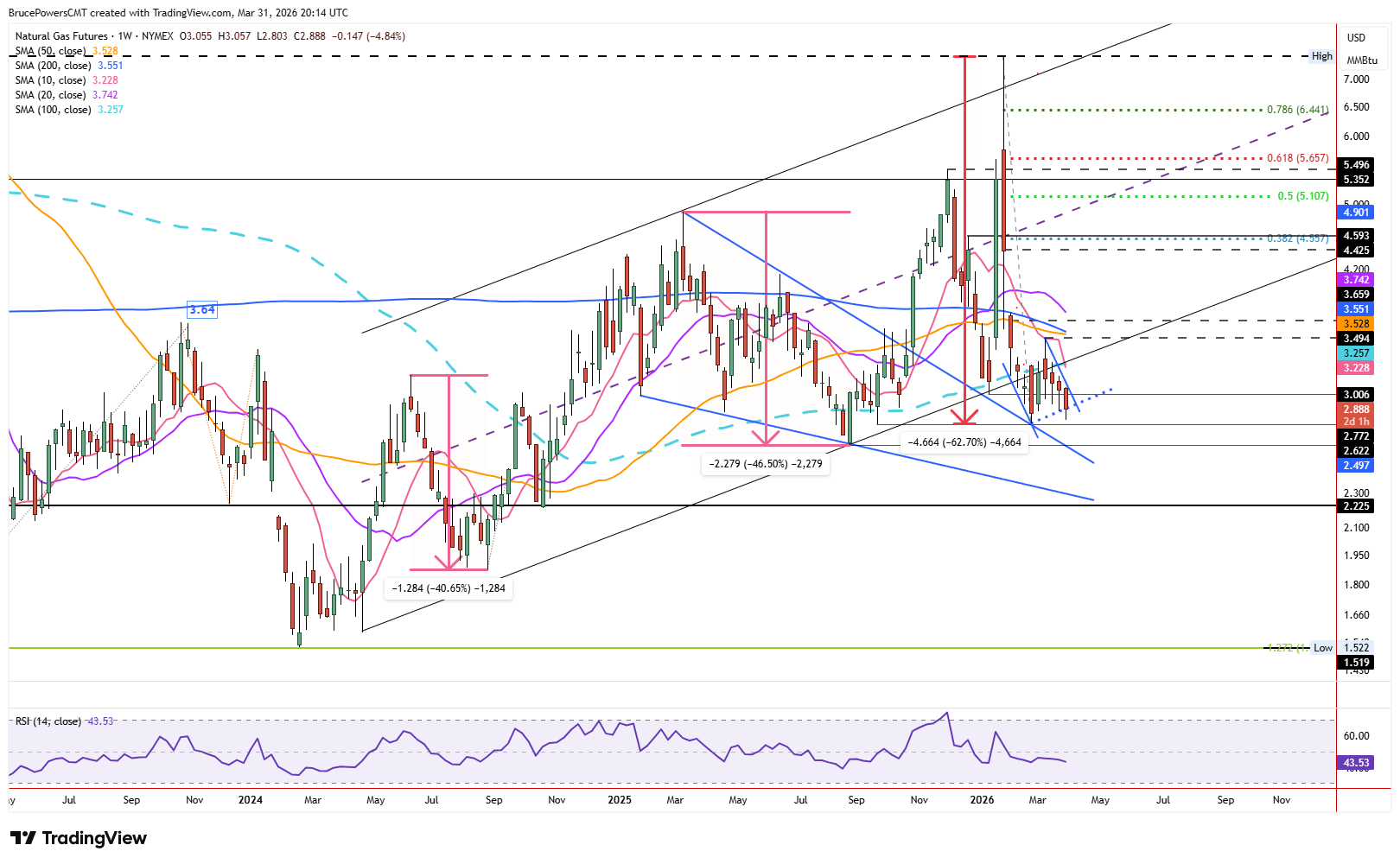
Reversal Setup Faces Converging Resistance
Given the lack of bearish momentum, the possibility of a short-term bullish reversal remains. Monday’s high of $3.06 generated an interim lower swing high and now defines key near-term resistance. A sustained advance above it will trigger a bullish reversal by invalidating the most recent lower high within the developing downtrend structure. If it is not exceeded before the end of the week, it will instead stand as the weekly high, further reinforcing its significance as resistance.
Adding to the potential importance of that pivot zone is the 20-day moving average, which is now showing resistance near this week’s high after previously marking short-term support. The short-term downtrend line is also converging near that same price area, alongside the 20-day moving average.
Major Resistance Zone Defines Trend Shift
A key resistance zone for natural gas is from around $3.41 to $3.52, consisting of the 50-day and 200-day moving averages, respectively. A rally above that high will confirm a broader bullish reversal, as it would break the squence of lower highs and signal a potential shift in trend structure. Until then, the market remains vulnerable to further downside, but with weakening bearish momentum, keeping the door open for a reversal that could challenge higher resistance zones.
Natural Gas Price Forecast
Every new Natural Gas analysis as it publishes, today's technical signal and key levels, live price — on one page.
See all Natural Gas forecastsIf you’d like to know more about how to trade natural gas, please visit our educational area.