
Natural Gas Remains Stuck Near Resistance At $3.20 – $3.25
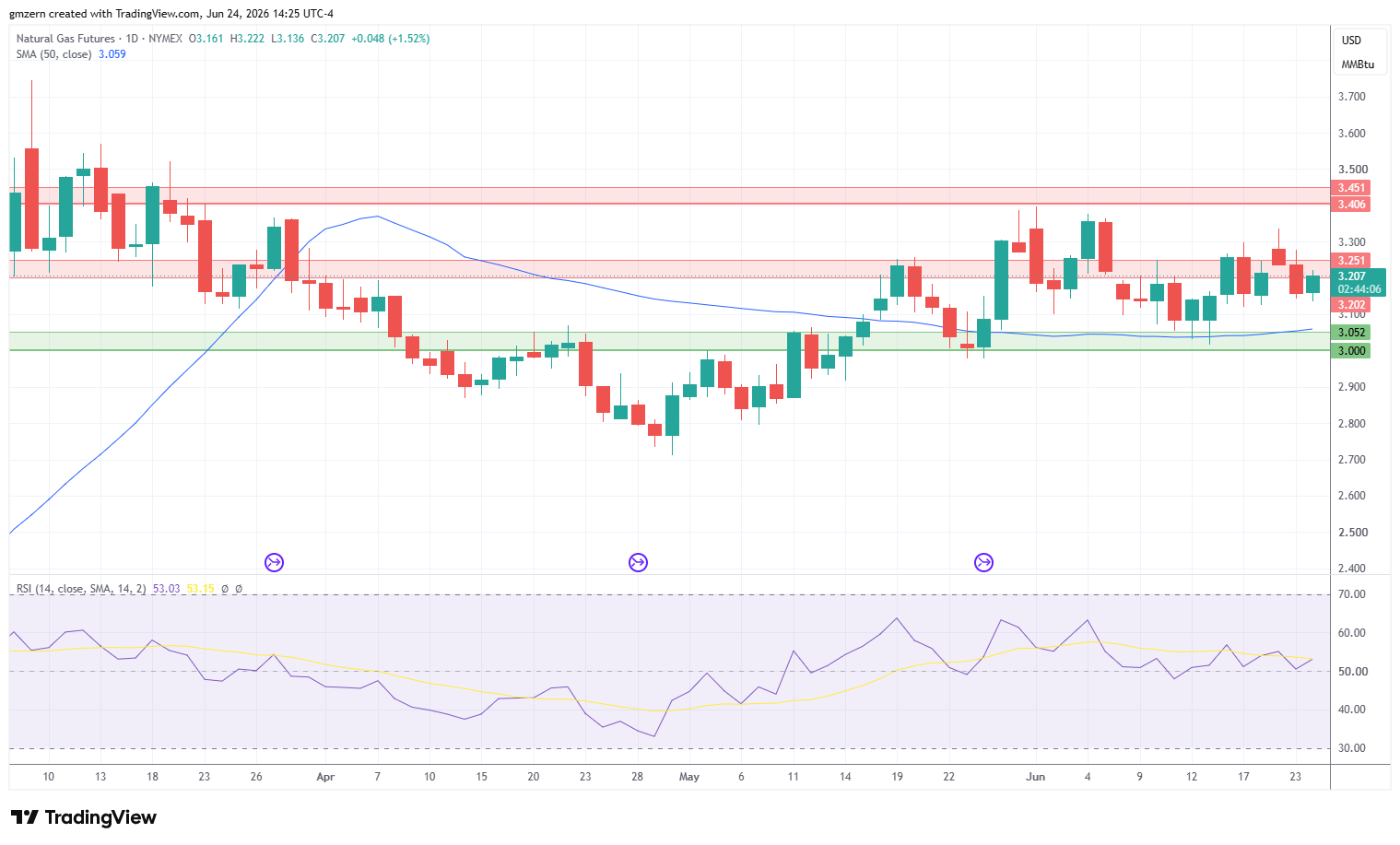
Natural gas rebounds ahead of tomorrow’s EIA report, which is expected to show that working gas in storage increased by +67 Bcf from the previous week.
The technical picture remains unchanged as natural gas is stuck near the resistance level at $3.20 – $3.25. If natural gas settles above the $3.25 level, it will move towards the resistance at $3.40 – $3.45. RSI is in the moderate territory, so there is plenty of room to gain momentum in case the right catalysts emerged.
On the support side, natural gas needs to settle below the $3.15 level to gain downside momentum in the near term. In this case, natural gas will head towards the support at $3.00 – $3.05.

WTI Oil Remains Under Strong Pressure As UAE Exports Recover
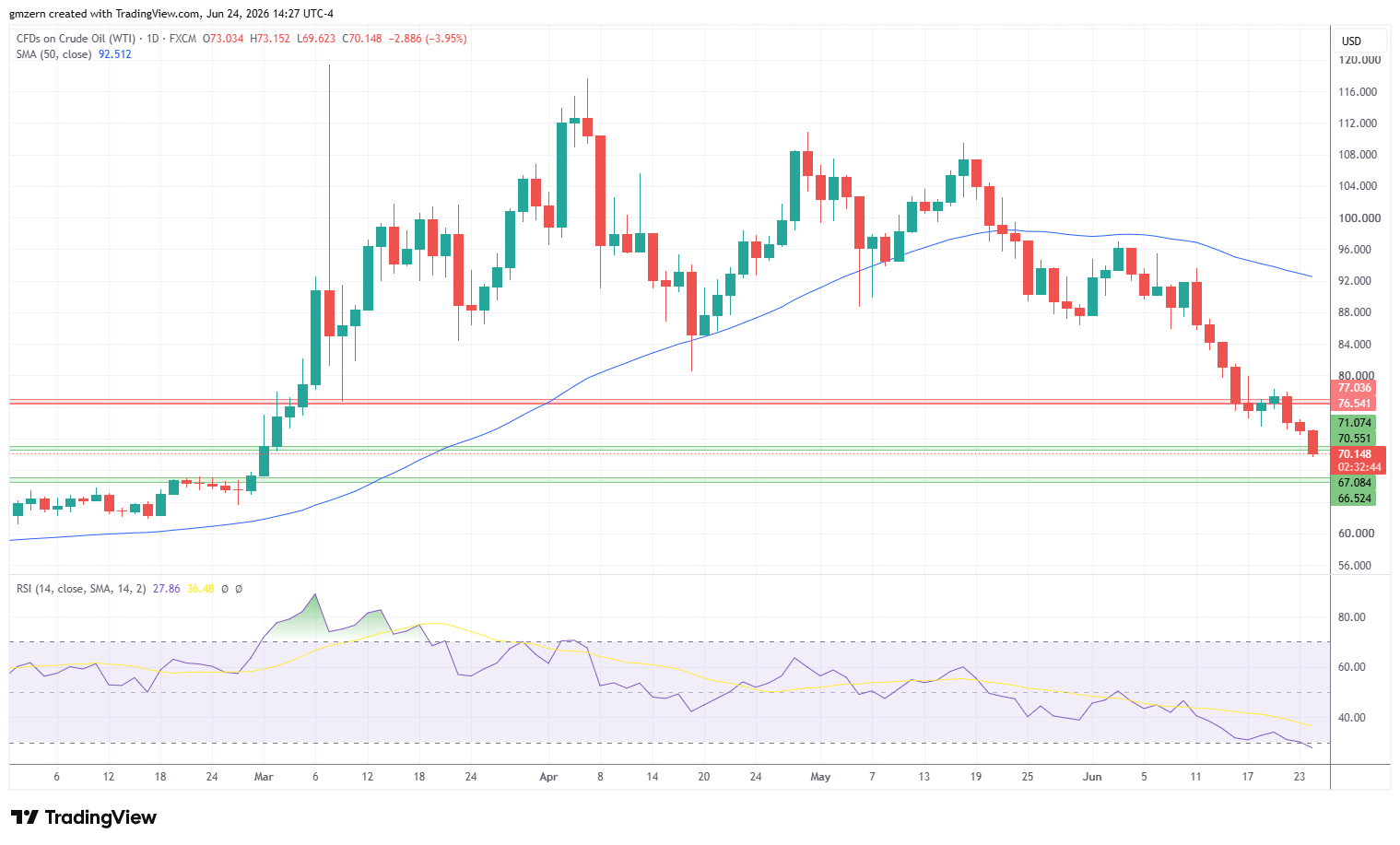
WTI oil tests new lows as traders stay focused on progress in negotiations between U.S. and Iran.
According to recent reports, a growing number of tankers is openly passing through the Strait of Hormuz. Previously, tankers going through the Strait would turn off their transponders to boost safety.
International Energy Agency estimated that United Arab Emirates has already boosted its oil exports to 85% of pre-war levels, which indicated that supply was returning at a robust pace.
It should be noted that UAE has officially left OPEC and OPEC+ on May 1, 2026, to boost production. At that time, UAE’s decision did not have an impact on oil markets as the Strait of Hormuz remained closed. In the upcoming months, this decision could be felt by the market as UAE would rush to increase production.
While negotiations between U.S. and Iran have reportedly reached progress, some key issues are unresolved. Israel’s operation against Hezbollah in Iran and Iran’s desire to charge tolls for passage through the Strait of Hormuz are among the key points which would be discussed.
Currently, WTI oil is trying to settle below the support at $70.50 – $71.00. In case this attempt is successful, WTI oil will head towards the next support level, which is located in the $66.50 – $67.00 range. RSI is in the oversold territory, but there is enough room to gain additional downside momentum in the near term.
Natural Gas Price Forecast
Every new Natural Gas analysis as it publishes, today's technical signal and key levels, live price — on one page.
See all Natural Gas forecastsBrent Oil Falls To Lowest Levels Since The Start Of Iran War
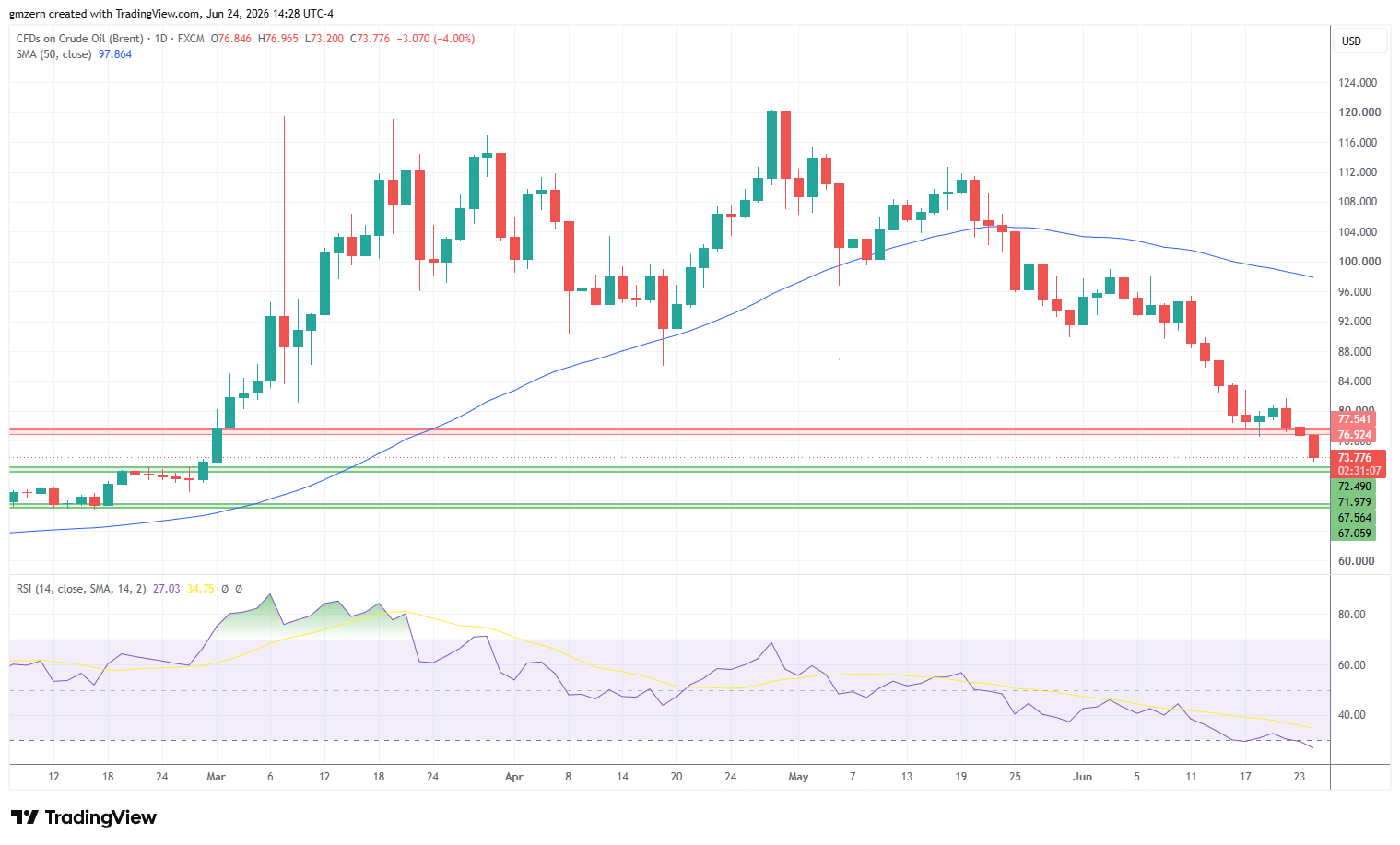
Brent oil is under strong pressure as the number of tankers going through the Strait of Hormuz is rising. At current levels, Brent oil has erased all gains that were made after U.S. and Israel started their military operation against Iran.
The nearest support level for Brent oil is located in the $72.00 – $72.50 range. A successful test of this level will push Brent oil towards the next support at $67.00 – $67.50.
The bearish trend is strong, and Brent oil will need significant positive catalysts to gain sustainable upside momentum. It remains to be seen whether such catalysts could emerge in the near term as both Iran and U.S. are interested in keeping the Strait of Hormuz open.
If you’d like to know more about how commodity markets work, please visit our educational area.