
Natural Gas Attempts To Settle Back Above $2.60
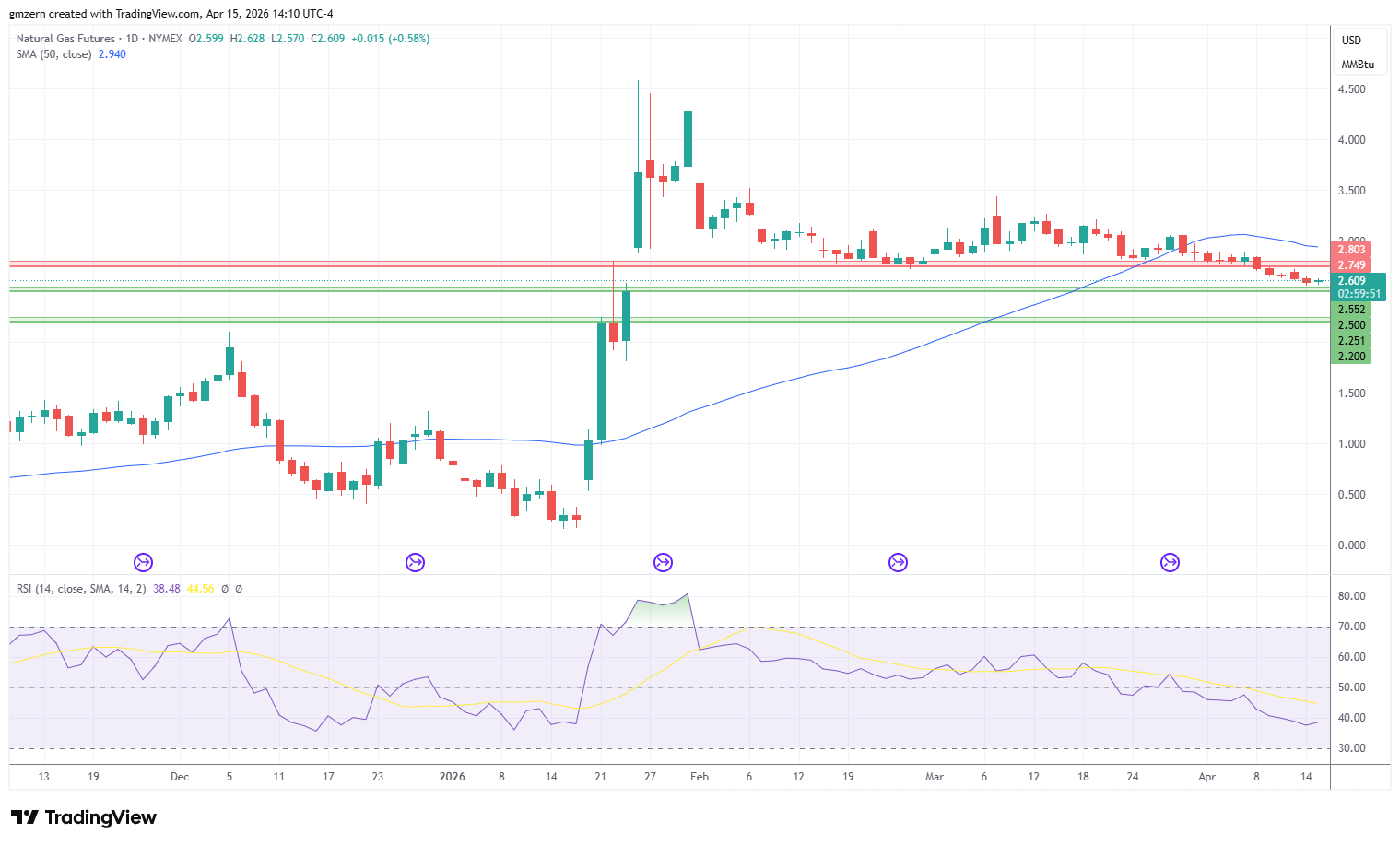
Natural gas prices attempt to rebound as traders take some profits off the table after the strong pullback and prepare for tomorrow’s EIA report.
The report is expected to show that working gas in storage increased by +55 Bcf. In the previous week, working gas in storage grew by +50 Bcf.
In case natural gas settles back above the $2.65 level, it will head towards the nearest resistance, which is located in the $2.75 – $2.80 range. A move above $2.80 will push natural gas towards the 50 MA at $2.94.
On the support side, the nearest support level for natural gas is located in the $2.50 – $2.55 range. If natural gas declines below the $2.50 level, it will move towards the next support at $2.20 – $2.25.

WTI Oil Pulls Back As U.S. And Iran May Extend Ceasefire
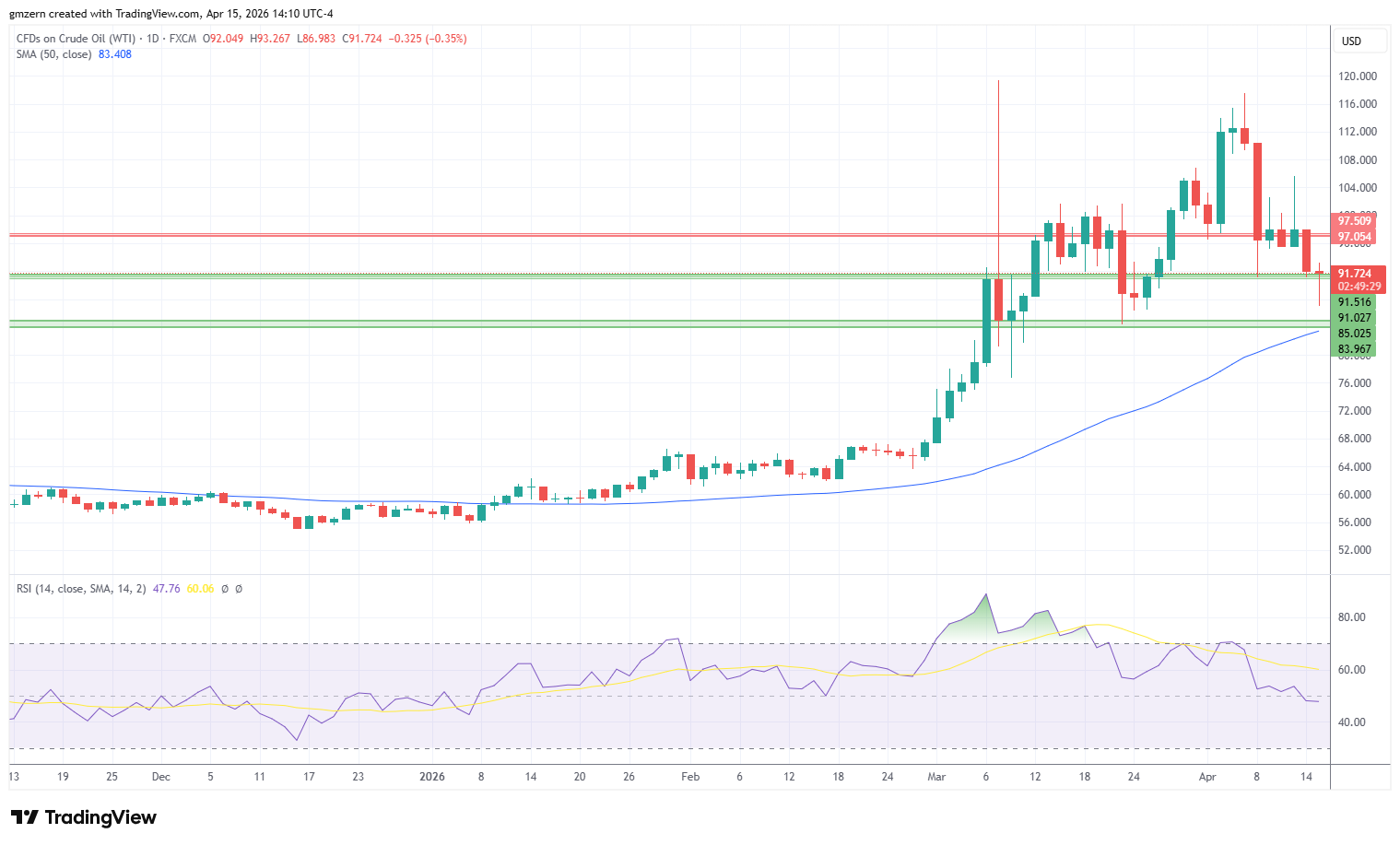
WTI oil is losing ground as traders react to the EIA report and focus on developments in the Middle East.
The EIA report indicated that crude inventories decreased by -0.9 million barrels from the previous week, compared to analyst forecast of +0.2 million barrels. At current levels, crude inventories are about 1% above the five-year average for this time of the year.
Total motor gasoline inventories declined by -6.3 million barrels, while analysts expected that they would drop by -2.1 million barrels. Distillate fuel inventories decreased by -3.1 million barrels from the previous week.
U.S. crude oil imports declined by -1.0 million bpd, averaging 5.3 million bpd. Over the past four weeks, crude oil imports averaged about 6.1 million bpd.
Strategic Petroleum Reserve decreased from 413.3 million barrels to 409.2 million barrels as U.S. sold oil to cool prices. Domestic oil production remained unchanged at 13.569 million bpd.
According to recent reports, U.S. and Iran discuss a possible extension of the current ceasefire regime to provide more time for negotiations. The countries want to extend the truce by two weeks.
Pakistan Army Chief has recently landed in Tehran to serve as a mediator for talks between U.S. and Iran. Pakistan continues to play an important role in negotiations.
From the technical point of view, WTI oil continues its attempts to settle below the support level at $91.00 – $91.50. If WTI oil settles below the $91.00 level, it will move towards the support, which is located in the $84.00 – $85.00 range. RSI is in the moderate territory, so there is plenty of room to gain momentum in case the right catalysts emerge.
On the upside, a move above the $91.50 level will open the way to the test of the resistance level at $97.00 – $97.50.
Natural Gas Price Forecast
Every new Natural Gas analysis as it publishes, today's technical signal and key levels, live price — on one page.
See all Natural Gas forecastsBrent Oil Is Mostly Flat In Choppy Trading
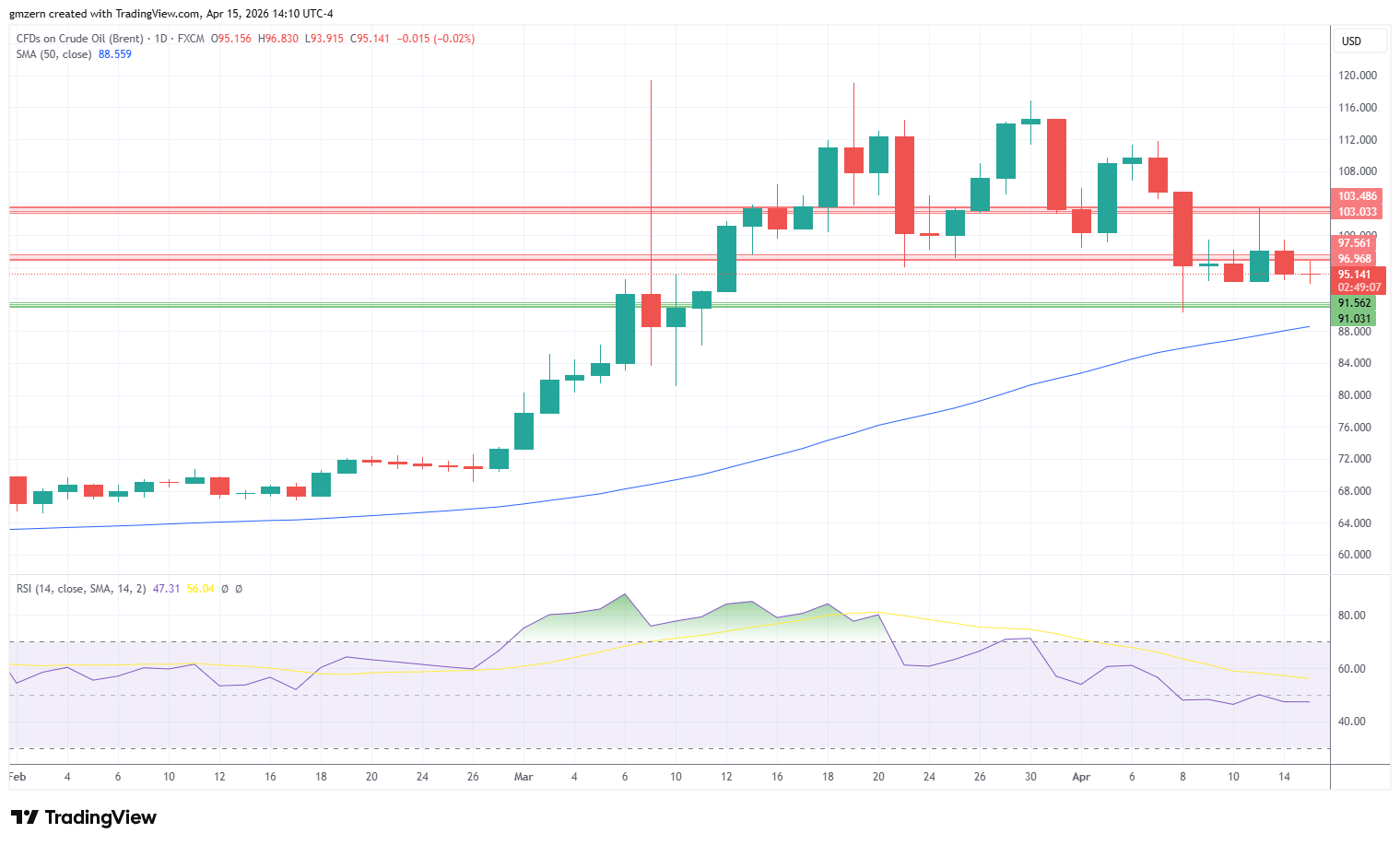
Brent oil is swinging between gains and losses as the market stabilizes after recent volatility.
The Strait of Hormuz remains closed, which is bullish for oil markets. However, futures traders focus on the potential second round of negotiations between U.S. and Iran, which may put more pressure on oil prices.
If Brent oil settles below the $95.00 level, it will move towards the nearest support level at $91.00 – $91.50. In case Brent oil declines below the $91.00 level, it will head towards the 50 MA at $88.55.
The nearest resistance level for Brent oil is located in the $97.00 – $97.50 range. A successful test of this level will push Brent oil towards the resistance at $103.00 – $103.50.
If you’d like to know more about how commodity markets work, please visit our educational area.